The United States is one of the world’s most diverse travel destinations, attracting millions of domestic and international visitors every year. From the iconic skyscrapers of New York City and the entertainment capital of Las Vegas to the sun-drenched beaches of Miami, the historic streets of Boston, and the spectacular coastal scenery of San Francisco, American cities offer an extraordinary range of experiences.
The country’s tourism appeal comes from its geographical diversity, cultural influences, entertainment industries, national landmarks, shopping districts, sporting events, museums, restaurants, and world-famous natural attractions. Visitors can explore historic American cities, experience vibrant metropolitan lifestyles, enjoy tropical beaches, discover national parks, or travel through destinations associated with music, cinema, and popular culture.
Some cities are particularly popular with international tourists, while others attract enormous numbers of domestic travellers. Consequently, there is no single definitive ranking of the most visited American cities: rankings differ depending on whether they measure international arrivals, domestic overnight visitors, total tourism trips, or hotel stays.
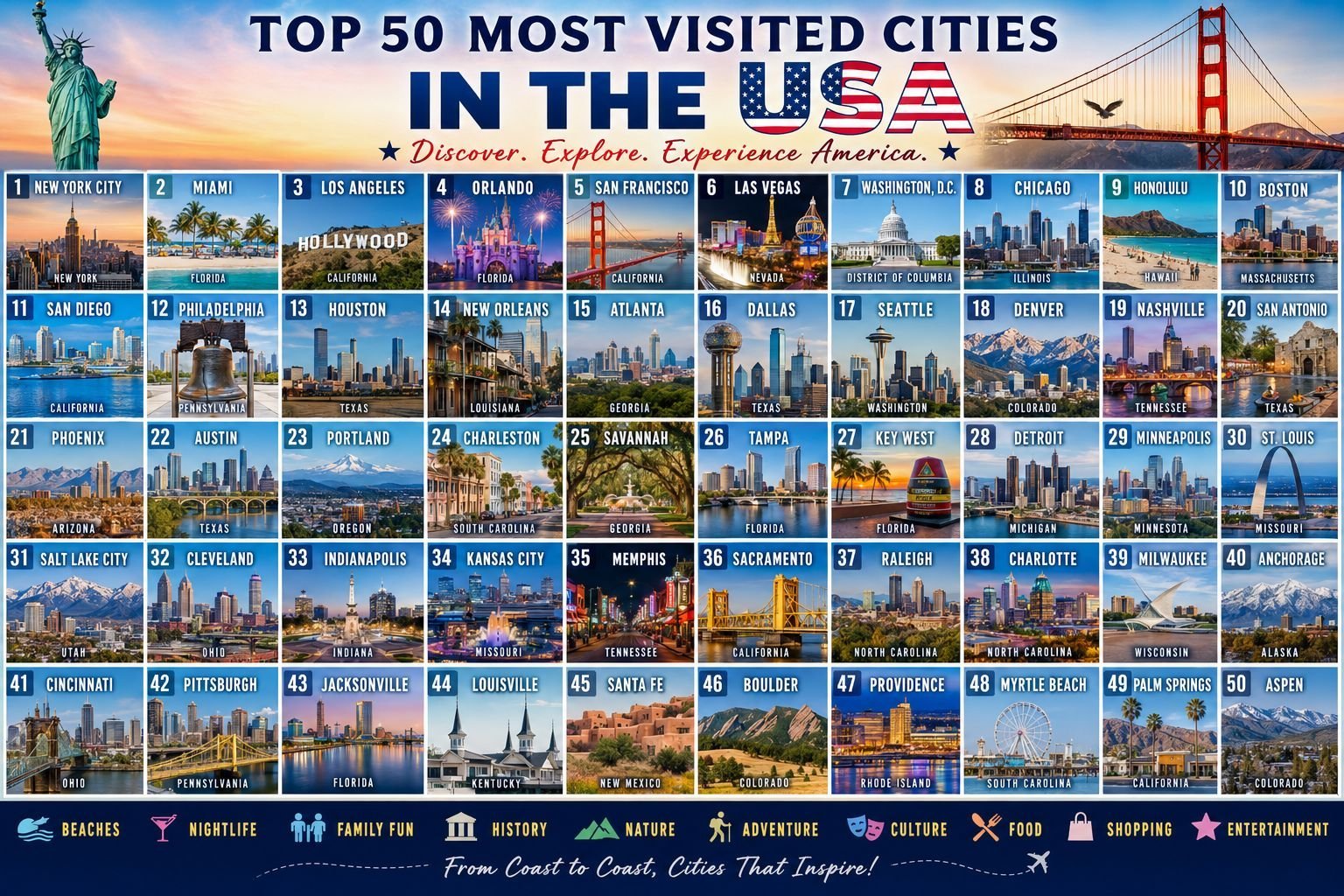
This guide explores 20 of the most popular and frequently visited cities in the United States, highlighting their tourism attractions, cultural identities, entertainment opportunities, and reasons for their international popularity.
1. The 20 Most Visited Cities in the United States
The following ranking uses comparable 2024 overseas visitor data from the National Travel and Tourism Office (NTTO), rather than mixing international arrivals with total domestic and international tourism figures. It provides a useful indication of the cities most popular with international travellers.
| Rank | City | State | Overseas visitors (2024) |
|---|---|---|---|
| 1 | New York City | New York | 9.53 million |
| 2 | Miami | Florida | 5.16 million |
| 3 | Los Angeles | California | 4.43 million |
| 4 | Orlando | Florida | 3.93 million |
| 5 | Las Vegas | Nevada | 2.59 million |
| 6 | San Francisco | California | 2.41 million |
| 7 | Washington, D.C. | District of Columbia | 1.76 million |
| 8 | Honolulu | Hawaii | 1.49 million |
| 9 | Boston | Massachusetts | 1.39 million |
| 10 | Chicago | Illinois | 1.37 million |
| 11 | Houston | Texas | 956,000 |
| 12 | Atlanta | Georgia | 900,000 |
| 13 | Fort Lauderdale | Florida | 861,000 |
| 14 | San Diego | California | 830,000 |
| 15 | Dallas | Texas | 795,000 |
| 16 | Seattle | Washington | 749,000 |
| 17 | Santa Ana | California | 629,000 |
| 18 | Flagstaff | Arizona | 615,000 |
| 19 | Tampa | Florida | 482,000 |
| 20 | Philadelphia | Pennsylvania | 471,000 |
Source: 2024 overseas visitor estimates compiled from NTTO data. Figures represent overseas visitors, not all domestic and international visitors combined. The metropolitan-area definitions and visitor-counting methodology matter when comparing cities.
2. Detailed Guide to America’s Most Popular Tourist Cities
1. New York City – New York
New York City is the most internationally visited city in the United States and one of the world’s leading centres for tourism, finance, culture, entertainment, fashion, and international business.
Often called The Big Apple, New York is famous for its extraordinary skyline, iconic landmarks, diverse neighbourhoods, world-class museums, Broadway theatres, luxury shopping streets, and multicultural atmosphere.
The city consists of five boroughs: Manhattan, Brooklyn, Queens, the Bronx, and Staten Island. Each has its own character, attractions, and cultural identity.
Top tourist attractions:
- Statue of Liberty: One of America’s most recognisable national symbols.
- Times Square: Famous for its illuminated advertising screens, theatres, and entertainment.
- Central Park: A vast green space offering walking paths, lakes, gardens, and recreational activities.
- Empire State Building: An iconic skyscraper with observation decks.
- Brooklyn Bridge: A historic bridge connecting Manhattan and Brooklyn.
- Metropolitan Museum of Art: One of the world’s most important art museums.
- Broadway: The centre of American musical theatre.
Tourism experiences: Visitors can enjoy Broadway performances, sightseeing cruises, rooftop restaurants, shopping along Fifth Avenue, international cuisine, art galleries, sporting events, and neighbourhood exploration.
Best time to visit: April to June and September to November are particularly attractive periods for sightseeing. December is popular for Christmas decorations, seasonal shopping, and festive events.
New York’s tourism industry is enormous. The city recorded approximately 65 million total visitors in 2025, including 52.4 million domestic and 12.5 million international visitors.
2. Miami – Florida
Miami is one of America’s leading international tourism destinations, attracting visitors with tropical weather, beautiful beaches, luxury hotels, cruise terminals, nightlife, shopping, and Latin American cultural influences.
Located in southeastern Florida, Miami is particularly popular with visitors from Latin America, Europe, and the Caribbean. Its multicultural identity is reflected in its architecture, restaurants, music, and everyday lifestyle.
Top tourist attractions:
- South Beach: Famous for its beaches, Art Deco architecture, and nightlife.
- Ocean Drive: A historic boulevard lined with colourful buildings, restaurants, and hotels.
- Wynwood Walls: A popular destination for street art and contemporary culture.
- Little Havana: Known for Cuban culture, traditional food, music, and Calle Ocho.
- Bayside Marketplace: A waterfront shopping and entertainment complex.
- Vizcaya Museum and Gardens: A historic estate with European-inspired architecture and gardens.
Tourism experiences: Beach holidays, yacht excursions, cruise departures, luxury shopping, Cuban cuisine, nightlife, water sports, and boat tours around Biscayne Bay.
Miami also serves as an important gateway to the Florida Keys, the Everglades, and the Caribbean.
Best time to visit: December to April, when the weather is generally warm and relatively dry.
3. Los Angeles – California
Los Angeles is one of the world’s most recognisable entertainment destinations. Known as the home of Hollywood, the city attracts tourists interested in cinema, television, celebrity culture, beaches, shopping, music, sports, and contemporary art.
Located in Southern California, Los Angeles is a vast metropolitan destination with numerous neighbourhoods and surrounding coastal communities.
Top tourist attractions:
- Hollywood Walk of Fame: Famous for stars honouring celebrities from the entertainment industry.
- Hollywood Sign: The internationally recognised symbol of Hollywood.
- Universal Studios Hollywood: A major film studio and theme park.
- Griffith Observatory: Offers panoramic views of Los Angeles and the Hollywood Sign.
- Santa Monica Pier: A famous seaside entertainment destination.
- Getty Center: A major cultural institution featuring art collections and gardens.
- Beverly Hills: Known for luxury shopping, elegant residences, and Rodeo Drive.
Tourism experiences: Film studio tours, celebrity neighbourhood sightseeing, beach holidays, shopping, surfing, museums, concerts, and sporting events.
Los Angeles is also an important starting point for road trips along the Pacific Coast Highway and excursions to destinations such as Malibu, Palm Springs, and San Diego.
Best time to visit: March to May and September to November, when temperatures are generally comfortable and visitor conditions are favourable.
4. Orlando – Florida
Orlando is one of the world’s most important family tourism destinations and a major centre of the international theme park industry.
Unlike many American cities whose tourism is based primarily on historic landmarks or cultural attractions, Orlando has built its international reputation around amusement parks, entertainment resorts, shopping, and family holidays.
The wider Orlando destination welcomed a record 76.7 million visitors in 2025, making it one of the busiest tourism destinations in the United States by total visitor numbers.
Top tourist attractions:
- Walt Disney World Resort: A vast entertainment complex containing multiple theme parks and resort hotels.
- Universal Orlando Resort: Famous for movie-themed attractions, rides, and entertainment.
- SeaWorld Orlando: A marine-themed amusement park.
- Discovery Cove: A resort-style experience featuring aquatic activities.
- ICON Park: An entertainment and dining complex featuring The Wheel.
- Lake Eola Park: A scenic urban park in downtown Orlando.
Tourism experiences: Theme park holidays, family entertainment, water parks, shopping outlets, golf courses, luxury resorts, and organised excursions.
Best time to visit: March to May and October to early December are popular periods. Summer is also busy, although it is hot, humid, and often rainy.
5. Las Vegas – Nevada
Las Vegas is internationally famous for entertainment, spectacular hotels, casinos, concerts, nightlife, shopping, and luxury resorts.
Situated in the Mojave Desert, Las Vegas has transformed itself into one of the world’s most recognisable leisure and convention destinations.
Its central entertainment district, the Las Vegas Strip, features enormous resort complexes, themed hotels, shopping centres, restaurants, and attractions.
Top tourist attractions:
- Las Vegas Strip: The city’s principal entertainment boulevard.
- Bellagio Fountains: Famous for choreographed water and music performances.
- Sphere: A distinctive entertainment venue with immersive audiovisual experiences.
- Fremont Street Experience: A pedestrian entertainment area with a large LED canopy.
- The Venetian Resort: A themed resort featuring Venetian-inspired architecture and canals.
- Red Rock Canyon: A spectacular natural landscape outside the city.
Tourism experiences: Live performances, international concerts, luxury dining, nightlife, casino entertainment, conventions, helicopter tours, and excursions to the Grand Canyon.
Best time to visit: March to May and September to November. Summer temperatures can become extremely high.
6. San Francisco – California
San Francisco is one of America’s most picturesque urban destinations. Located on the northern California coast, it is famous for its hills, historic cable cars, Victorian houses, waterfront districts, technology industry, and distinctive cultural atmosphere.
The city’s compact central districts make it particularly attractive for sightseeing, walking tours, and short city breaks.
Top tourist attractions:
- Golden Gate Bridge: One of the world’s most recognisable bridges.
- Alcatraz Island: A former federal prison and historic attraction.
- Fisherman’s Wharf: A lively waterfront district with restaurants and attractions.
- Chinatown: One of the oldest and best-known Chinese neighbourhoods in North America.
- Lombard Street: Famous for its steep, winding section.
- Golden Gate Park: A large urban park containing gardens, museums, and recreational facilities.
Tourism experiences: Bay cruises, cable car rides, cycling, wine-country excursions, waterfront dining, museum visits, and sightseeing tours.
San Francisco is also a convenient base for visiting Napa Valley, Sonoma County, and the coastal landscapes of Northern California.
Best time to visit: September and October are particularly attractive, although spring and summer also bring considerable tourism.
7. Washington, D.C. – District of Columbia
Washington, D.C., the capital of the United States, is one of the country’s most important destinations for historical, political, educational, and cultural tourism.
The city is internationally recognised for its national monuments, government buildings, memorials, museums, and important historical institutions.
Unlike many American destinations where entertainment and shopping dominate tourism, Washington offers a particularly rich concentration of educational and cultural attractions.
Top tourist attractions:
- White House: The official residence and workplace of the US president.
- United States Capitol: The seat of the US Congress.
- Lincoln Memorial: A major national monument dedicated to Abraham Lincoln.
- Washington Monument: An iconic obelisk honouring George Washington.
- National Mall: A historic public area surrounded by important monuments and museums.
- Smithsonian National Air and Space Museum: One of the world’s best-known aviation and space museums.
- National Gallery of Art: A major art museum with extensive collections.
Tourism experiences: Historical walking tours, museum visits, monument sightseeing, river cruises, educational excursions, and seasonal festivals.
Best time to visit: March to May and September to November. Spring is especially popular because of the National Cherry Blossom Festival.
8. Honolulu – Hawaii
Honolulu is the capital and principal tourism gateway of Hawaii. Located on the island of Oahu, it combines tropical beaches, volcanic scenery, Polynesian cultural traditions, luxury resorts, and American urban infrastructure.
The city is especially popular with visitors seeking beach holidays, water sports, outdoor adventures, and a tropical island atmosphere.
Top tourist attractions:
- Waikiki Beach: One of the most famous beaches in the Pacific.
- Diamond Head: A volcanic crater offering spectacular hiking opportunities.
- Pearl Harbor National Memorial: A historic site associated with the Second World War.
- Iolani Palace: The former royal residence of the Hawaiian monarchy.
- Hanauma Bay: A renowned marine conservation area.
- Manoa Falls: A scenic waterfall surrounded by tropical vegetation.
Tourism experiences: Surfing, snorkelling, diving, hiking, traditional Hawaiian cultural performances, boat excursions, and scenic coastal drives.
Best time to visit: April to June and September to November are attractive periods for avoiding some of the busiest holiday seasons.
9. Boston – Massachusetts
Boston is one of the oldest and most historically significant cities in the United States. It played a central role in the American Revolution and remains an important destination for history, education, healthcare, business, and cultural tourism.
The city’s historic neighbourhoods, universities, waterfront, museums, and distinctive New England atmosphere attract visitors throughout the year.
Top tourist attractions:
- Freedom Trail: A historic walking route connecting important American Revolutionary sites.
- Boston Common: One of America’s oldest public parks.
- Faneuil Hall Marketplace: A historic marketplace with shops, restaurants, and entertainment.
- Harvard University: One of the world’s most prestigious universities.
- Museum of Fine Arts Boston: A major art museum.
- New England Aquarium: A popular marine attraction.
Tourism experiences: Historical walking tours, university visits, harbour cruises, seafood restaurants, museums, shopping, and professional sports events.
Best time to visit: May to October, with autumn particularly attractive for New England foliage.
10. Chicago – Illinois
Chicago is one of the most important cultural, commercial, and architectural destinations in the United States.
Located on the southwestern shore of Lake Michigan, the city is famous for its impressive skyscrapers, architectural heritage, museums, jazz and blues traditions, sporting culture, and distinctive food scene.
Chicago has played a major role in the development of modern American architecture and remains an important centre for international conferences and business tourism.
Top tourist attractions:
- Millennium Park: Home to the famous Cloud Gate sculpture, commonly known as The Bean.
- Navy Pier: A waterfront entertainment complex.
- Willis Tower: A famous skyscraper featuring the Skydeck observation attraction.
- Art Institute of Chicago: One of America’s leading art museums.
- Field Museum: A major natural history museum.
- Chicago Riverwalk: A popular waterfront pedestrian area.
Tourism experiences: Architecture cruises, museum visits, jazz and blues concerts, lakefront recreation, shopping, and food tours featuring Chicago-style deep-dish pizza.
Best time to visit: May to October, when the weather is generally suitable for outdoor activities.
11. Houston – Texas
Houston is one of the largest cities in the United States and an important centre for energy, medicine, aerospace, technology, international business, and cultural tourism.
The city is particularly famous for its association with American space exploration through NASA’s Johnson Space Center.
Top tourist attractions:
- Space Center Houston: The official visitor centre of NASA’s Johnson Space Center.
- Houston Museum of Natural Science: A major science and natural history museum.
- Houston Museum District: A concentration of museums and cultural institutions.
- Hermann Park: A major urban park.
- Buffalo Bayou Park: A scenic green space with walking and cycling paths.
Tourism experiences: Space exploration exhibitions, museum visits, professional sports, international cuisine, shopping, and cultural festivals.
Best time to visit: February to April and October to November, when temperatures are generally more comfortable.
12. Atlanta – Georgia
Atlanta is a major economic, cultural, and transportation centre in the southeastern United States. It is known for its civil rights history, music industry, film production, international airport, professional sports, and modern urban attractions.
The city has also become increasingly recognised through its television and film industries.
Top tourist attractions:
- Georgia Aquarium: One of the world’s major public aquariums.
- World of Coca-Cola: A museum dedicated to the internationally recognised beverage brand.
- Martin Luther King Jr. National Historical Park: A significant civil rights heritage destination.
- Centennial Olympic Park: A legacy of the 1996 Summer Olympic Games.
- Atlanta Botanical Garden: A popular botanical attraction.
- High Museum of Art: A leading art museum in the southeastern United States.
Tourism experiences: Historical tours, music and film experiences, museums, shopping, sporting events, and food tourism.
Best time to visit: March to May and September to November.
13. Fort Lauderdale – Florida
Fort Lauderdale is a coastal destination famous for its beaches, boating culture, luxury waterfront properties, canals, shopping, and cruise tourism.
Sometimes called the Venice of America, the city has an extensive network of navigable waterways and is an important centre for the international yachting industry.
Top tourist attractions:
- Fort Lauderdale Beach: A popular Atlantic coastline destination.
- Las Olas Boulevard: Known for shopping, restaurants, and galleries.
- Bonnet House Museum and Gardens: A historic estate surrounded by tropical gardens.
- Hugh Taylor Birch State Park: A natural area offering outdoor recreation.
- Riverwalk Fort Lauderdale: A waterfront district with cultural and recreational attractions.
Tourism experiences: Yacht charters, canal cruises, beach holidays, fishing, diving, luxury accommodation, and shopping.
Best time to visit: December to April.
14. San Diego – California
San Diego is one of California’s most attractive coastal destinations. It combines pleasant weather, Pacific beaches, historic architecture, family attractions, a strong food culture, and proximity to the Mexican border.
Its relaxed lifestyle and extensive coastline make it particularly popular for family holidays and outdoor tourism.
Top tourist attractions:
- San Diego Zoo: An internationally recognised zoological attraction.
- Balboa Park: A cultural complex containing museums, gardens, and historic buildings.
- La Jolla Cove: Famous for coastal scenery and marine wildlife.
- USS Midway Museum: A museum aboard a historic aircraft carrier.
- Coronado Beach: A popular sandy beach near the historic Hotel del Coronado.
Tourism experiences: Surfing, sailing, whale watching, family attractions, cycling, seafood dining, and beach holidays.
Best time to visit: March to November.
15. Dallas – Texas
Dallas is an important business, shopping, sports, and cultural destination in northern Texas. Together with nearby Fort Worth, it forms part of the large Dallas–Fort Worth metropolitan region.
The city is known for its modern skyline, business districts, museums, professional sports, shopping centres, and distinctive Texan identity.
Top tourist attractions:
- Dealey Plaza: A historic location associated with the assassination of President John F. Kennedy.
- The Sixth Floor Museum: A museum documenting the Kennedy assassination and its historical context.
- Reunion Tower: An observation tower offering panoramic city views.
- Dallas Museum of Art: A major art institution.
- Klyde Warren Park: An urban park built over a major roadway.
Tourism experiences: Shopping, museums, sporting events, entertainment, restaurants, and excursions to Fort Worth’s historic Stockyards.
Best time to visit: March to May and September to November.
16. Seattle – Washington
Seattle is a major Pacific Northwest destination known for its waterfront, coffee culture, technology industry, music heritage, natural surroundings, and modern architecture.
Surrounded by mountains, forests, and waterways, Seattle is particularly attractive to travellers interested in combining city tourism with outdoor exploration.
Top tourist attractions:
- Space Needle: The city’s most recognisable landmark.
- Pike Place Market: A historic public market famous for seafood, local products, and independent businesses.
- Chihuly Garden and Glass: An exhibition dedicated to glass art.
- Museum of Pop Culture: A museum exploring music, science fiction, and popular culture.
- Seattle Waterfront: A scenic area with restaurants, piers, and maritime attractions.
Tourism experiences: Coffee tours, harbour cruises, museums, hiking, kayaking, seafood restaurants, and excursions to Mount Rainier National Park.
Best time to visit: June to September, when the weather is generally drier.
17. Santa Ana – California
Santa Ana is located in Orange County in Southern California. Although it is less internationally famous than nearby Los Angeles or Anaheim, it is an important urban destination with cultural attractions, historic architecture, shopping, and access to the wider Orange County tourism region.
Its location makes it convenient for visitors exploring Southern California’s beaches, theme parks, and coastal communities.
Top tourist attractions:
- Bowers Museum: A museum featuring international art and cultural collections.
- Downtown Santa Ana: Known for restaurants, galleries, entertainment, and historic buildings.
- Discovery Cube Orange County: A science museum offering interactive exhibitions.
- Santa Ana Zoo: A family-friendly zoological attraction.
Tourism experiences: Cultural tourism, shopping, Mexican-American cuisine, family attractions, and excursions to nearby Orange County beaches and Anaheim.
Best time to visit: March to November.
18. Flagstaff – Arizona
Flagstaff is a smaller destination than most cities on this list, but it occupies an important position in American nature and adventure tourism.
Located in northern Arizona, the city is surrounded by forests, mountains, volcanic landscapes, and historic sites. It also serves as one of the principal gateways to the Grand Canyon.
Its location along historic Route 66 makes it attractive to road-trippers and visitors exploring the American Southwest.
Top tourist attractions:
- Grand Canyon National Park: One of the world’s most famous natural landmarks.
- Walnut Canyon National Monument: Known for ancient cliff dwellings.
- Lowell Observatory: A historic astronomical research and visitor attraction.
- Historic Route 66: A historic American highway route.
- Arizona Snowbowl: A mountain resort offering seasonal outdoor activities.
Tourism experiences: Grand Canyon excursions, hiking, skiing, mountain biking, stargazing, camping, and scenic road trips.
Best time to visit: May to October for hiking and sightseeing; winter for snow-related activities.
19. Tampa – Florida
Tampa is a major tourism destination on Florida’s Gulf Coast. The city offers a combination of waterfront attractions, theme parks, cultural districts, professional sports, cruise tourism, and access to nearby beaches.
Tampa’s historic Ybor City district reflects the city’s Cuban, Spanish, and Italian immigrant heritage.
Top tourist attractions:
- Busch Gardens Tampa Bay: A major theme park with roller coasters and wildlife attractions.
- Tampa Riverwalk: A waterfront pedestrian route connecting several attractions.
- The Florida Aquarium: A popular marine attraction.
- Ybor City: Famous for its cigar-making history and cultural heritage.
- Tampa Museum of Art: A cultural attraction featuring modern and classical art.
Tourism experiences: Theme parks, cruises, waterfront dining, cultural tourism, baseball, American football, and excursions to Clearwater Beach and St. Petersburg.
Best time to visit: November to April.
20. Philadelphia – Pennsylvania
Philadelphia is one of the most historically significant cities in the United States. As the birthplace of American independence and the location of the signing of the Declaration of Independence, it attracts visitors interested in American history, architecture, culture, and education.
The city combines colonial-era buildings with modern skyscrapers, major museums, public parks, sports facilities, and an internationally recognised food culture.
Top tourist attractions:
- Independence Hall: The historic building where the Declaration of Independence and US Constitution were debated and adopted.
- Liberty Bell: An important symbol of American independence.
- Philadelphia Museum of Art: A major art museum.
- Reading Terminal Market: A historic indoor food market.
- Eastern State Penitentiary: A historic former prison and museum.
- Benjamin Franklin Parkway: A grand boulevard connecting important cultural attractions.
Tourism experiences: Historical walking tours, museums, art exhibitions, food tours, professional sports, and shopping.
Best time to visit: April to June and September to October.
3. Other Important Tourist Destinations in the United States
Although the 20 cities above provide a useful international tourism ranking, several other American destinations are extremely popular with domestic travellers and international holidaymakers.
These destinations are particularly important for regional tourism, entertainment, nature, cultural experiences, and family holidays.
21. New Orleans – Louisiana
Famous for jazz, blues, Creole cuisine, Mardi Gras, historic French Quarter architecture, and Mississippi River cruises.
22. Nashville – Tennessee
Known as Music City, Nashville attracts visitors through country music, live performances, recording studios, and musical heritage.
23. Anaheim – California
A major family holiday destination, best known for Disneyland Resort, convention facilities, and entertainment.
24. Phoenix – Arizona
Popular for desert landscapes, golf resorts, hiking, luxury accommodation, and outdoor recreation.
25. Charleston – South Carolina
An attractive historic coastal city known for colonial architecture, gardens, Southern cuisine, and waterfront scenery.
26. Savannah – Georgia
Famous for its historic squares, oak-lined streets, historic houses, riverfront, and Southern charm.
27. Portland – Oregon
Attracts visitors through its food culture, independent shops, gardens, coffee houses, and proximity to natural attractions.
28. St. Petersburg – Florida
A popular Gulf Coast destination known for beaches, art museums, waterfront attractions, and sunshine.
4. America’s Most Important Tourism Regions
American tourism is not concentrated exclusively in large cities. Several regions have developed internationally recognised tourism industries based on beaches, national parks, mountains, historical attractions, and entertainment.
Florida
Miami, Orlando, Tampa, Fort Lauderdale, Key West, Naples, Clearwater, and the Florida Keys offer beaches, theme parks, cruises, nature, and luxury resorts.
California
Los Angeles, San Francisco, San Diego, Sacramento, Santa Barbara, Monterey, and Napa Valley combine urban tourism, coastal scenery, wine tourism, and outdoor activities.
Hawaii
Honolulu, Maui, Kauai, and the Big Island attract visitors through beaches, volcanic landscapes, tropical forests, surfing, and Polynesian culture.
American Southwest
Las Vegas, Flagstaff, Phoenix, Sedona, Page, and the Grand Canyon region offer desert adventures, geological landscapes, scenic drives, and outdoor recreation.
New England
Boston, Portland, Providence, Newport, Salem, and the landscapes of Vermont and New Hampshire are known for colonial heritage, autumn colours, coastal towns, and historic architecture.
Pacific Northwest
Seattle, Portland, Olympic National Park, Mount Rainier, and the Columbia River Gorge offer forests, mountains, waterfalls, and outdoor adventures.
5. Most Famous Natural Attractions Near American Cities
Many international visitors combine metropolitan sightseeing with excursions to America’s national parks, beaches, mountains, and natural landmarks.
Some of the country’s most important natural tourism destinations include:
| Natural attraction | State / region | Nearby tourism gateway |
|---|---|---|
| Grand Canyon | Arizona | Flagstaff, Las Vegas |
| Yellowstone National Park | Wyoming, Montana, Idaho | Jackson, Bozeman |
| Yosemite National Park | California | San Francisco, Fresno |
| Niagara Falls | New York | Buffalo |
| Monument Valley | Arizona, Utah | Flagstaff |
| Great Smoky Mountains | Tennessee, North Carolina | Gatlinburg, Asheville |
| Everglades National Park | Florida | Miami, Naples |
| Zion National Park | Utah | Las Vegas, St. George |
| Death Valley National Park | California, Nevada | Las Vegas |
| Rocky Mountain National Park | Colorado | Denver, Estes Park |
These destinations are particularly attractive for road trips, photography, camping, hiking, wildlife observation, and adventure tourism.
6. The Best American Cities for Different Types of Tourism
Not every traveller visits the United States for the same reason. Some prefer shopping and entertainment, while others are interested in history, architecture, beaches, or nature.
The following comparison helps identify destinations according to their principal tourism characteristics.
| Tourism category | Recommended cities |
|---|---|
| Shopping | New York, Miami, Los Angeles, Chicago |
| Family holidays | Orlando, Anaheim, San Diego, Tampa |
| Beaches | Miami, Honolulu, San Diego, Fort Lauderdale |
| History and heritage | Boston, Philadelphia, Washington, D.C., New Orleans |
| Entertainment and nightlife | Las Vegas, New York, Miami, Nashville |
| Architecture | Chicago, New York, San Francisco |
| Museums and art | New York, Washington, D.C., Chicago, Boston |
| Music tourism | Nashville, New Orleans, Memphis, Austin |
| Luxury tourism | Miami, Las Vegas, Los Angeles, Honolulu |
| Nature and adventure | Flagstaff, Seattle, Denver, Phoenix |
| Business tourism | New York, Chicago, Atlanta, Houston, San Francisco |
| Food tourism | New York, New Orleans, Chicago, Miami, San Francisco |
7. Best Time to Visit the United States
The United States has several climatic zones, so the ideal time to travel depends on the destinations and activities included in an itinerary.
| Season | Months | Popular destinations |
|---|---|---|
| Spring | March–May | Washington, D.C., New York, Boston, California |
| Summer | June–August | Hawaii, California, New York, Seattle, national parks |
| Autumn | September–November | Boston, Chicago, New York, New England |
| Winter | December–February | Miami, Orlando, Honolulu, Las Vegas, Southern California |
Spring: An excellent season for exploring major cities, historic districts, gardens, and cultural attractions. Washington, D.C., is especially popular during the cherry blossom season.
Summer: The main holiday season for many domestic travellers. Coastal destinations, national parks, and family attractions experience significant demand.
Autumn: One of the most attractive seasons for visiting the northeastern United States. New England is particularly famous for its autumn foliage.
Winter: Florida and Hawaii are popular destinations for travellers seeking warmer temperatures. New York and Chicago also attract visitors for Christmas celebrations, shopping, and winter entertainment.
8. Transportation Between the Most Visited American Cities
The United States has an extensive transportation network connecting its principal tourism destinations. However, distances between cities can be considerable, making transportation planning an important part of any itinerary.
Air travel
Domestic flights are often the fastest way to travel between distant cities. Major airports include:
- John F. Kennedy International Airport (JFK) – New York.
- Los Angeles International Airport (LAX) – Los Angeles.
- Miami International Airport (MIA) – Miami.
- Orlando International Airport (MCO) – Orlando.
- Harry Reid International Airport (LAS) – Las Vegas.
- San Francisco International Airport (SFO) – San Francisco.
- O’Hare International Airport (ORD) – Chicago.
- Hartsfield-Jackson Atlanta International Airport (ATL) – Atlanta.
Car rental and road trips
Renting a car is particularly useful for exploring California, Florida, Arizona, Nevada, and the national parks.
Popular driving routes include:
- Los Angeles – San Diego.
- Los Angeles – San Francisco.
- Miami – Key West.
- Miami – Orlando.
- Las Vegas – Grand Canyon.
- San Francisco – Yosemite National Park.
- Boston – New York – Philadelphia – Washington, D.C.
Rail transportation
Amtrak operates passenger railway services connecting many major American cities. Rail travel is particularly useful along the Northeast Corridor, linking Boston, New York, Philadelphia, Baltimore, and Washington, D.C.
Public transportation
Major cities such as New York, Chicago, Boston, Washington, D.C., and San Francisco have extensive public transportation networks, including subway, metro, commuter rail, and bus services.
9. How Many Days Should You Spend in America’s Most Visited Cities?
The ideal length of stay depends on the size of the city, the number of attractions, and whether visitors plan to explore surrounding destinations.
| City | Suggested stay |
|---|---|
| New York City | 5–7 days |
| Miami | 3–5 days |
| Los Angeles | 4–6 days |
| Orlando | 5–7 days |
| Las Vegas | 3–4 days |
| San Francisco | 3–4 days |
| Washington, D.C. | 3–4 days |
| Honolulu | 5–7 days |
| Boston | 2–4 days |
| Chicago | 3–4 days |
| Houston | 2–3 days |
| Atlanta | 2–3 days |
| Fort Lauderdale | 2–3 days |
| San Diego | 3–5 days |
| Dallas | 2–3 days |
| Seattle | 3–4 days |
| Philadelphia | 2–3 days |
These are suggested sightseeing durations, not minimum requirements. Visitors planning extensive excursions, theme park holidays, or national park road trips should allow additional time.
10. Suggested Multi-City Tourism Itineraries
For international visitors, combining several destinations in one journey is often an excellent way to experience different aspects of American culture and geography.
Itinerary 1: America’s East Coast
- New York City – 5 days.
- Philadelphia – 2 days.
- Washington, D.C. – 3 days.
- Boston – 3 days.
This itinerary combines American history, architecture, museums, shopping, and major metropolitan attractions.
Itinerary 2: Florida and the Southeast
- Miami – 4 days.
- Key West – 2 days.
- Fort Lauderdale – 2 days.
- Orlando – 5 days.
- Tampa – 2 days.
This journey is ideal for beaches, theme parks, cruise tourism, family holidays, and coastal road trips.
Itinerary 3: California and the Pacific Coast
- Los Angeles – 4 days.
- San Diego – 3 days.
- Santa Barbara – 1–2 days.
- Big Sur and Monterey – 2 days.
- San Francisco – 4 days.
This itinerary combines major cities, Pacific coastline, beaches, national parks, and scenic driving routes.
Itinerary 4: The American Southwest
- Las Vegas – 3 days.
- Grand Canyon – 2 days.
- Flagstaff – 1–2 days.
- Sedona – 2 days.
- Monument Valley – 1–2 days.
This route is especially attractive for nature tourism, photography, desert landscapes, hiking, and adventure travel.
11. Why the United States Is One of the World’s Leading Tourism Destinations
The international popularity of American cities is supported by several major advantages.
1. Cultural diversity
American cities are home to communities with origins from all over the world. This creates a remarkable variety of languages, cuisines, festivals, traditions, and cultural experiences.
2. Entertainment and popular culture
Hollywood, Broadway, Las Vegas, Nashville, New Orleans, and other entertainment centres have helped establish the United States as a global destination for music, film, theatre, and nightlife.
3. Shopping and luxury tourism
New York, Miami, Los Angeles, Las Vegas, and Chicago offer extensive shopping opportunities, ranging from international luxury brands to independent boutiques and large shopping malls.
4. Historical heritage
The United States has numerous destinations associated with independence, political development, immigration, civil rights, industrialisation, and important historical events.
5. Natural diversity
From tropical beaches and desert landscapes to forests, mountains, glaciers, and national parks, the country offers extraordinary geographical diversity.
6. International connectivity
Major airports connect American cities with Europe, Asia, Latin America, Africa, and other international markets, supporting both leisure and business tourism.
7. Accommodation and tourism infrastructure
The country has a broad accommodation industry, including international hotel chains, luxury resorts, boutique hotels, motels, holiday apartments, and budget accommodation.
12. The Best Cities to Visit in the United States
The United States offers one of the world’s most varied urban tourism experiences. Its most visited destinations represent different aspects of American history, culture, lifestyle, entertainment, and geography.
New York City stands out as the leading international tourism destination, with its iconic skyline, museums, theatres, shopping districts, and multicultural atmosphere. Miami and Los Angeles attract visitors through beaches, entertainment, luxury tourism, and international lifestyles. Orlando has established itself as one of the world’s most important family holiday destinations, while Las Vegas is internationally recognised for its entertainment and resort industry.
San Francisco, Boston, Washington, D.C., Chicago, and Philadelphia offer a different experience through architecture, history, museums, and cultural attractions. Meanwhile, Honolulu, San Diego, Fort Lauderdale, and Tampa demonstrate the importance of coastal and beach tourism in the American travel industry.
Beyond these major metropolitan destinations, cities such as New Orleans, Nashville, Charleston, Savannah, Phoenix, and Anaheim add further diversity to the country’s tourism landscape.
Whether travelling for business, shopping, entertainment, history, family holidays, nature, or adventure, the United States provides an extensive collection of destinations capable of accommodating almost every type of traveller.
For international visitors, exploring several American cities in one journey is an excellent way to discover the country’s remarkable geographical scale and cultural diversity.