New York City is one of the world’s most popular urban destinations, offering an extraordinary combination of historic landmarks, museums, parks, observation decks, entertainment venues and cultural attractions. For a first-time visitor, the following ten attractions provide a strong introduction to the city’s history, architecture and culture.
1. Statue of Liberty
Statue of Liberty
The Statue of Liberty is one of the most recognizable symbols of the United States and one of New York City’s most important tourist attractions. Located on Liberty Island in New York Harbor, the monumental statue was a gift from France to the United States and was dedicated in 1886.
Visitors can take a ferry to Liberty Island and explore the grounds around the statue. Depending on ticket availability, visitors can also enter the pedestal or climb to the crown.
The nearby Ellis Island National Museum of Immigration can be included in the same ferry trip, making this an excellent attraction for visitors interested in American immigration history.
Highlights:
Statue of Liberty
Liberty Island
Statue pedestal
Crown access
New York Harbor views
Ellis Island
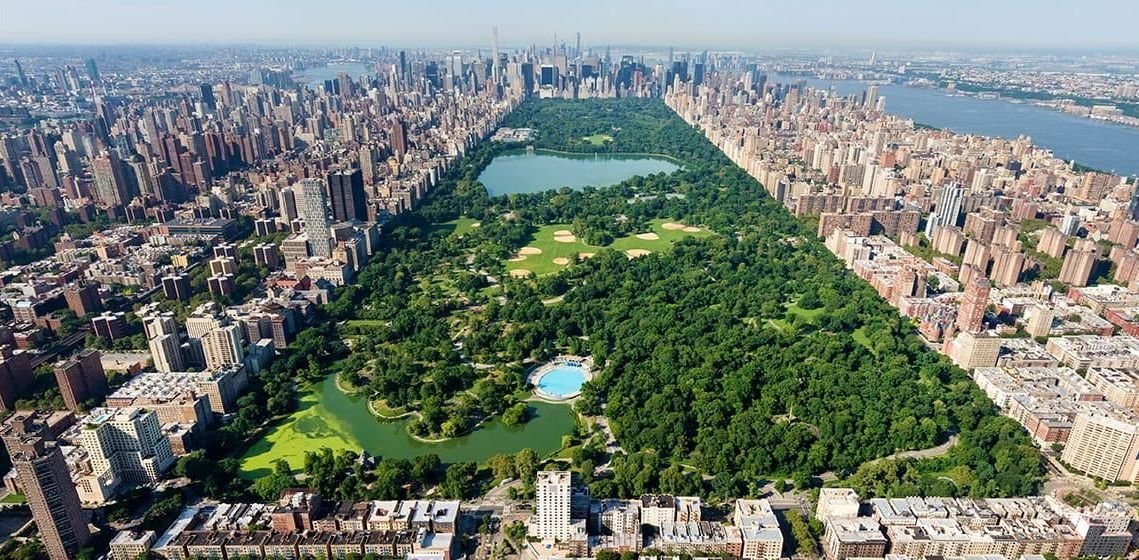
2. Central Park
Central Park
Central Park is one of the world’s most famous urban parks. Covering approximately 843 acres, it stretches across Manhattan from 59th Street to 110th Street.
The park offers a remarkable contrast to the surrounding skyscrapers and contains lakes, gardens, wooded areas, bridges, lawns, playgrounds and cultural landmarks.
Some of the most famous places inside the park include Bethesda Terrace, Bethesda Fountain, Bow Bridge, The Mall, the Great Lawn, Belvedere Castle, Strawberry Fields and the Jacqueline Kennedy Onassis Reservoir.
Visitors can walk, cycle, picnic, row boats, photograph the landscape or simply relax.
Highlights:
Bethesda Terrace
Bow Bridge
The Mall
Great Lawn
Central Park Zoo
Belvedere Castle
Strawberry Fields
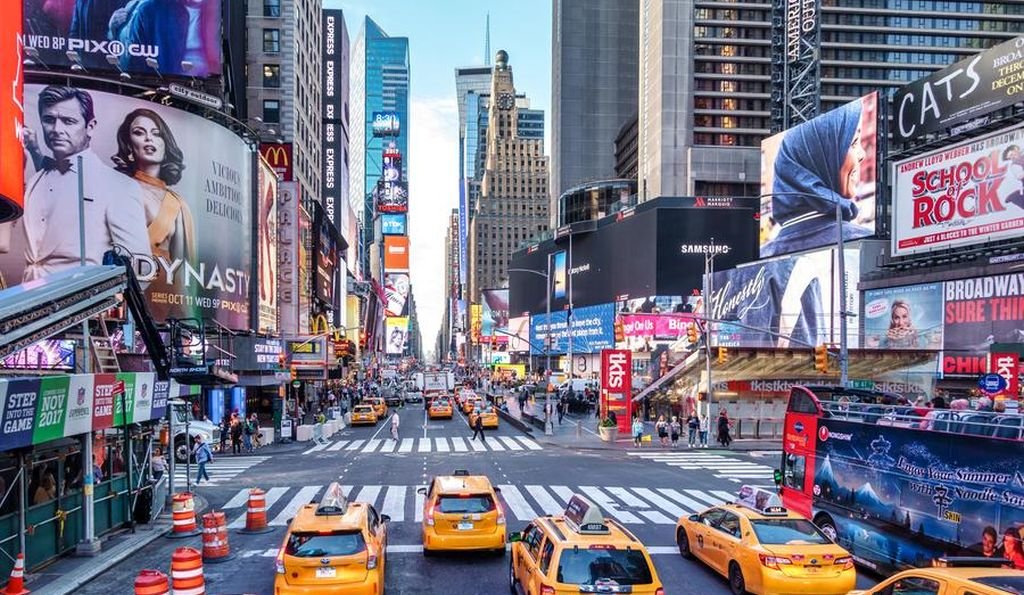
3. Times Square
Times Square
Known as the **”Crossroads of the World,” Times Square is one of the most recognizable places in New York.
The area is famous for enormous digital billboards, Broadway theaters, restaurants, shops and its constantly moving crowds.
Times Square is particularly impressive after dark, when its electronic advertising screens illuminate the surrounding buildings.
It is also the location of New York City’s world-famous New Year’s Eve Ball Drop.
Highlights:
Giant digital billboards
Broadway theaters
Times Square pedestrian plazas
One Times Square
New Year’s Eve celebration
Restaurants and shopping
Street performers
4. Empire State Building
Empire State Building
The Empire State Building is one of the most famous skyscrapers in the world.
Completed in 1931, the Art Deco skyscraper became an immediate symbol of New York City and remains one of Manhattan’s most popular attractions.
Visitors can go to observation decks on the upper floors for panoramic views across Manhattan and the surrounding metropolitan area.
The building is particularly impressive at sunset and after dark, when the city lights stretch across the horizon.
Highlights:
86th-floor observation deck
102nd-floor observation deck
Manhattan skyline views
Art Deco architecture
Nighttime illumination
5. Brooklyn Bridge
Brooklyn Bridge
The Brooklyn Bridge is one of New York City’s most historic bridges and an outstanding location for walking and photography.
Completed in 1883, it connects Manhattan and Brooklyn across the East River.
The elevated pedestrian promenade provides views of:
Manhattan skyline
East River
Brooklyn
Statue of Liberty
Brooklyn Bridge Park
Walking across the bridge is one of the classic New York experiences.
A particularly attractive time to visit is early morning or around sunset.
6. One World Trade Center and the 9/11 Memorial
One World Trade Center
Lower Manhattan is home to One World Trade Center, the tallest building in the Western Hemisphere, and the 9/11 Memorial & Museum.
The One World Observatory provides panoramic views from high above Lower Manhattan.
Nearby, the 9/11 Memorial occupies the footprints of the former World Trade Center towers. Two large reflecting pools mark the locations of the original towers, with the names of those who died in the attacks inscribed around them.
The nearby museum documents the history and consequences of the September 11 attacks.
Highlights:
One World Observatory
9/11 Memorial
9/11 Memorial Museum
Oculus
Lower Manhattan skyline
7. Metropolitan Museum of Art
Metropolitan Museum of Art
The Metropolitan Museum of Art, usually known simply as the Met, is one of the world’s great art museums.
Located on Fifth Avenue beside Central Park, the museum contains an enormous collection representing thousands of years of human history and artistic achievement.
Its collections include:
Ancient Egyptian art
Greek and Roman art
European paintings
Asian art
Islamic art
American art
Sculpture
Decorative arts
Costumes and textiles
Musical instruments
The museum is large enough that seeing everything in one visit is unrealistic. Visitors should select the collections that interest them most.
8. Rockefeller Center
Rockefeller Center
Rockefeller Center is a large complex of Art Deco buildings in Midtown Manhattan.
It is particularly famous for 30 Rockefeller Plaza, Radio City Music Hall, its seasonal Christmas tree and the Top of the Rock observation deck.
Top of the Rock provides excellent views of Manhattan, including a particularly famous view toward the Empire State Building.
The complex is also close to Fifth Avenue, St. Patrick’s Cathedral and Central Park.
Highlights:
Top of the Rock
Radio City Music Hall
Rockefeller Plaza
Christmas tree
Ice skating rink
NBC Studios
Art Deco architecture
9. Broadway and the Theater District
Broadway Theatre District
Broadway is synonymous with New York’s theater culture.
The Broadway theater district is concentrated around Times Square and Midtown Manhattan and features some of the world’s most famous theatrical productions.
Visitors can choose from musicals, dramas, comedies and family-oriented productions.
Seeing a Broadway show is particularly popular for first-time visitors because the experience combines New York’s entertainment history with the atmosphere of the Theater District.
Highlights:
Broadway musicals
Broadway plays
Historic theaters
Times Square
Theater District restaurants
TKTS ticket opportunities
10. Grand Central Terminal
Grand Central Terminal
Grand Central Terminal is one of New York City’s most impressive historic buildings.
Opened in 1913, the Beaux-Arts terminal is famous for its monumental Main Concourse, enormous arched windows and astronomical ceiling mural.
Although it remains a functioning transportation hub, it is also a major tourist attraction.
Visitors can explore the Main Concourse, see the famous four-faced clock, discover the Whispering Gallery and explore restaurants and shops throughout the complex.
Highlights:
Main Concourse
Celestial ceiling
Four-faced clock
Whispering Gallery
Vanderbilt Hall
Historic architecture
Top 10 New York Attractions at a Glance
#
Attraction
Best Known For
1
Statue of Liberty
American symbol and harbor views
2
Central Park
Nature, recreation and scenery
3
Times Square
Billboards, entertainment and Broadway
4
Empire State Building
Iconic skyscraper and observation deck
5
Brooklyn Bridge
Historic architecture and skyline views
6
One World Trade Center & 9/11 Memorial
Skyline, history and remembrance
7
Metropolitan Museum of Art
World-class art collections
8
Rockefeller Center
Top of the Rock and Art Deco architecture
9
Broadway
Theater and musical performances
10
Grand Central Terminal
Historic architecture and transportation
How to Visit These Attractions
These ten attractions can be grouped geographically, making sightseeing easier.
Midtown Manhattan
Times Square
Empire State Building
Rockefeller Center
Broadway
Grand Central Terminal
These attractions are relatively close together and can be explored over one or two days.
Central Park and Museum Mile
Central Park
Metropolitan Museum of Art
These can easily be combined into a full day, particularly for visitors interested in art and architecture.
Lower Manhattan
Statue of Liberty
One World Trade Center
9/11 Memorial
A Lower Manhattan itinerary can also include the Financial District, Wall Street and Battery Park.
Brooklyn and the East River
Brooklyn Bridge
The bridge can be combined with Brooklyn Bridge Park, DUMBO and the Brooklyn waterfront.
Best Attractions for Different Interests
Interest
Attractions
History
Statue of Liberty, 9/11 Memorial, Grand Central Terminal
Architecture
Empire State Building, Rockefeller Center, Brooklyn Bridge
Museums
Metropolitan Museum of Art
Nature
Central Park
Entertainment
Broadway, Times Square
Photography
Brooklyn Bridge, Central Park, Empire State Building
Families
Central Park, Times Square, Statue of Liberty
City views
Empire State Building, Top of the Rock, One World Observatory
Shopping
Times Square, Fifth Avenue, Rockefeller Center
New York’s history and identity
Statue of Liberty, Central Park, Times Square, Grand Central Terminal
New York City has far more than ten attractions, but these landmarks provide a strong introduction to the city. Together they showcase the different sides of New York: history, architecture, culture, entertainment, art, nature and spectacular city views.
For a first visit, combining Central Park and the Metropolitan Museum of Art, Times Square, Broadway and Rockefeller Center, and Lower Manhattan with the Statue of Liberty and 9/11 Memorial can create a comprehensive New York sightseeing experience.
Central Park is one of the world’s most famous urban parks and one of the most important landmarks in New York City. Located in the heart of Manhattan, the park provides a vast green landscape surrounded by skyscrapers, museums, residential neighborhoods, hotels and some of the city’s most recognizable attractions.
Covering approximately 843 acres (341 hectares), Central Park stretches from 59th Street to 110th Street and from Fifth Avenue to Eighth Avenue. It is not simply a large lawn or recreational area: the park contains lakes, ponds, wooded areas, gardens, bridges, historic structures, sports facilities, walking paths, playgrounds, a zoo and numerous cultural landmarks.
Central Park is a place where visitors can walk, cycle, relax, photograph scenery, enjoy nature, visit attractions, have a picnic or simply escape the intensity of Manhattan.
Where Is Central Park?
Central Park is located in Manhattan, New York City, between:
Fifth Avenue – east
Eighth Avenue/Central Park West – west
59th Street – south
110th Street – north
The park is bordered by some of Manhattan’s most famous neighborhoods, including the Upper East Side, Upper West Side and Harlem.
Its central location makes it easy to combine with other attractions.
Nearby attractions include:
Metropolitan Museum of Art
American Museum of Natural History
Rockefeller Center
Fifth Avenue
Columbus Circle
Lincoln Center
Times Square
Carnegie Hall
Guggenheim Museum
Museum of Modern Art
History of Central Park
Central Park was created during the 19th century as New York City’s population expanded rapidly.
Before the park was developed, this part of Manhattan contained a mixture of rocky terrain, farms, homes, roads and small settlements.
City leaders increasingly recognized the need for a large public park where residents could enjoy fresh air, recreation and nature.
In 1857, the city held a competition to select a design for the park.
The winning proposal was the Greensward Plan, created by landscape architect Frederick Law Olmsted and architect Calvert Vaux.
Their design was revolutionary for its time.
Rather than simply creating a rectangular open field, Olmsted and Vaux designed a complex landscape containing:
Meadows
Woodlands
Lakes
Bridges
Curving roads
Walking paths
Gardens
Recreational spaces
Scenic viewpoints
Construction began in the 1850s, and Central Park gradually became one of the most ambitious urban landscape projects of the era.
Frederick Law Olmsted and Calvert Vaux
The designers of Central Park were Frederick Law Olmsted and Calvert Vaux.
Olmsted is particularly important in the history of American landscape architecture. His approach emphasized the psychological and social benefits of accessible public landscapes.
Central Park was designed to give New Yorkers the impression of escaping the dense city.
Although the park is surrounded by skyscrapers, many areas were deliberately designed so that buildings would disappear from view or become less visually dominant.
This principle remains one of the most impressive aspects of Central Park today.
The Landscape of Central Park
Central Park is carefully designed but often feels like a natural landscape.
It contains several distinct environments.
The Great Lawn
The Great Lawn is one of the park’s best-known open spaces.
Located around the middle of the park, it provides a huge recreational area where visitors can:
Relax
Have picnics
Play sports
Read
Sunbathe
Watch performances
Enjoy views of Manhattan’s skyline
The Great Lawn is especially popular during warm weather.
Bethesda Terrace and Bethesda Fountain
Bethesda Terrace is one of Central Park’s most famous architectural landmarks.
Located near the center of the park, the terrace overlooks the lake and Bethesda Fountain.
The centerpiece is the famous Angel of the Waters statue.
The fountain was designed by Emma Stebbins and dedicated in 1873. The statue represents the purification of water and became one of the most recognizable sculptures in Central Park.
The terrace itself is also famous for its decorated arcade.
Visitors often stop here for photographs, especially because the location combines architecture, water, trees and skyline views.
The Mall
The Mall is a broad tree-lined promenade leading toward Bethesda Terrace.
It is one of the most photographed locations in the park.
The pathway is particularly beautiful during autumn, when the trees surrounding the promenade turn yellow, orange and brown.
The Mall has historically been associated with public gatherings, musicians, artists and leisurely walks.
Bow Bridge
Bow Bridge is one of the most romantic and recognizable bridges in Central Park.
The elegant cast-iron bridge crosses the lake and provides excellent views of:
The Lake
Manhattan skyscrapers
Trees
Boating activity
Central Park’s surrounding landscape
It has become particularly popular for wedding photographs and engagement photography.
The Lake
The Lake is one of Central Park’s most scenic bodies of water.
Visitors can rent rowboats and explore the water while enjoying views of the park and Manhattan skyline.
The Lake is especially beautiful in spring and autumn.
The combination of water, trees, bridges and skyscrapers creates one of Central Park’s signature landscapes.
Conservatory Water
Located on the eastern side of Central Park, Conservatory Water is a popular destination for families.
The water is famous for model sailboats, particularly during warmer months.
The area is also surrounded by sculptures and gardens and provides a quieter experience than some of the park’s larger attractions.
Strawberry Fields
Strawberry Fields is a memorial to John Lennon, the former member of The Beatles who lived nearby at the Dakota apartment building.
The memorial includes the famous “Imagine” mosaic, created in tribute to Lennon.
Located near Central Park West and 72nd Street, Strawberry Fields attracts Beatles fans and visitors from around the world.
It is one of the more peaceful and reflective areas of Central Park.
The Dakota
The Dakota is located immediately outside Central Park West, close to Strawberry Fields.
This historic residential building is famous for its distinctive architecture and association with John Lennon.
Visitors cannot generally enter the private residential building, but its exterior is a popular stop for people exploring Strawberry Fields and the Upper West Side.
Central Park Zoo
The Central Park Zoo is located near Fifth Avenue on the eastern side of the park.
The zoo is home to a variety of animals and provides an attraction particularly suitable for families.
It is relatively small compared with some major metropolitan zoos, making it possible to combine a visit with other Central Park attractions.
Belvedere Castle
Belvedere Castle is one of the most unusual structures in Central Park.
Built in the 19th century, the small stone castle sits on Vista Rock, one of the highest points in the park.
From its elevated position, visitors can obtain impressive views of:
Central Park
Turtle Pond
The Great Lawn
Surrounding Manhattan buildings
The castle is also associated with weather observation and has historically housed meteorological equipment.
Shakespeare Garden
Located near Belvedere Castle, Shakespeare Garden is a landscaped garden inspired by plants mentioned in the works of William Shakespeare.
It provides a quieter experience than the park’s major promenades and is particularly attractive during spring and summer.
The Ramble
The Ramble is a wooded area near the Lake.
Its winding paths, trees, rocks and naturalistic landscape create the impression of being far away from Manhattan.
Birdwatchers particularly appreciate the area because Central Park is an important stopover for migratory birds.
Conservatory Garden
At the northern end of Central Park, the Conservatory Garden provides a more formal garden environment.
It is divided into three distinct sections:
French Garden
Italian Garden
English Garden
The garden is particularly attractive during spring, when flowers are in bloom.
Compared with the heavily visited southern areas of Central Park, this northern attraction can provide a quieter sightseeing experience.
Jacqueline Kennedy Onassis Reservoir
The Jacqueline Kennedy Onassis Reservoir occupies a large area between approximately 86th and 96th Streets.
It is famous for its walking and running path and spectacular views of Manhattan’s skyline.
The reservoir is especially popular among runners and walkers.
During spring, visitors can also see flowering trees around sections of the path.
The Metropolitan Museum of Art
The Metropolitan Museum of Art, commonly called the Met, sits along Fifth Avenue on the eastern edge of Central Park.
It is one of the world’s major art museums.
Its collections cover thousands of years of art and include:
Ancient Egyptian art
Greek and Roman art
European paintings
Asian art
Islamic art
American art
Sculpture
Decorative arts
Costumes
Musical instruments
A visit to Central Park can easily be combined with a visit to the Met.
American Museum of Natural History
On the western side of Central Park is the American Museum of Natural History.
It is particularly famous for exhibitions concerning:
Dinosaurs
Human evolution
Space
Animals
Earth sciences
Anthropology
Biodiversity
Families can easily combine the museum with a walk through Central Park.
Activities in Central Park
Central Park offers an unusually large number of recreational activities.
Walking
Walking is the easiest way to experience the park.
Because the park is enormous, visitors should choose a particular area rather than attempting to see everything in a short period.
Cycling
Cycling is another popular way to explore Central Park.
The park has designated cycling routes, while many internal pedestrian paths have restrictions.
Running
Central Park is one of New York’s most famous running destinations.
The loop around the park is approximately 6 miles (9.7 km).
Rowing
Rowboats can be rented seasonally at the Loeb Boathouse area.
Horse Carriages
Horse-drawn carriage rides have long been associated with Central Park and remain a recognizable tourist activity.
Picnicking
The park contains numerous excellent picnic locations.
Popular areas include:
Sheep Meadow
Great Lawn
Conservatory Garden surroundings
Areas around the Lake
Photography
Central Park is one of New York’s best locations for photography because it combines nature and skyscrapers.
Sheep Meadow
Sheep Meadow is a large open lawn in the southern portion of Central Park.
It provides excellent views toward the Manhattan skyline and is particularly popular during warm weather.
It is an ideal place to relax after exploring Midtown Manhattan.
Central Park in the Four Seasons
Spring
Spring is one of the most attractive times to visit Central Park.
Visitors can enjoy:
Cherry blossoms
Flowering gardens
Fresh green foliage
Pleasant walking temperatures
The Conservatory Garden and areas around the Reservoir are particularly attractive during this season.
Summer
Summer brings the greatest amount of outdoor activity.
Central Park becomes a major recreational space for New Yorkers and tourists.
Expect:
Picnics
Cycling
Running
Outdoor performances
Boating
Sunbathing
Family activities
Autumn
Autumn is arguably one of the most visually spectacular periods.
The park’s trees turn various shades of:
Yellow
Orange
Red
Brown
The Mall, Bow Bridge, The Lake and the Reservoir are especially popular for autumn photography.
Winter
Winter transforms Central Park into a completely different landscape.
Snow can create beautiful scenery around:
Bethesda Terrace
The Lake
Bow Bridge
The Mall
The Reservoir
The park is also home to Wollman Rink, where visitors can ice skate during the winter season.
Central Park in Films and Popular Culture
Central Park has appeared in countless films, television programs, photographs and music videos.
Its combination of natural scenery and Manhattan architecture makes it one of the most recognizable filming locations in the world.
The park has frequently been used as a setting for:
Romantic scenes
Family films
Crime dramas
Comedies
Christmas movies
Television series
Music videos
As a result, many international visitors recognize Central Park before ever visiting New York.
Central Park and Wildlife
Central Park is not simply landscaped scenery.
It supports a surprisingly diverse range of wildlife.
Visitors may encounter:
Squirrels
Ducks
Geese
Turtles
Birds
Fish
Hawks
Owls
Other migratory birds
The park’s location along the Atlantic Flyway makes it particularly significant for bird migration.
Birdwatching is especially popular around The Ramble, The Lake and the Reservoir.
Central Park for Families
Central Park is one of the city’s best destinations for families.
Children can enjoy:
Playgrounds
The Central Park Zoo
Model boats
Horse-drawn carriages
Open lawns
Wildlife
Ice skating
Walking trails
Children’s performances
Families can also combine the park with the nearby American Museum of Natural History.
Central Park for Couples
Central Park is one of New York’s most popular romantic destinations.
Popular locations for couples include:
Bow Bridge
Bethesda Fountain
The Lake
Conservatory Garden
Strawberry Fields
The Mall
Sheep Meadow
The park is frequently used for engagement photographs, wedding photography and proposals.
Central Park for Photographers
Central Park offers an extraordinary variety of photographic opportunities.
Landscape photography
The Lake, Reservoir and Great Lawn provide open views.
Architecture
Bethesda Terrace and Belvedere Castle offer historic architectural subjects.
Wildlife
The Ramble and Reservoir are particularly interesting for bird photography.
Cityscape
The park’s skyline views provide opportunities to photograph Manhattan from an unusual perspective.
Seasonal photography
Each season dramatically changes the appearance of the park.
How Long Should You Spend in Central Park?
Because Central Park is so large, the amount of time required depends on what you want to see.
Visit length
Suggested experience
1 hour
Southern Central Park and Bethesda area
2 hours
Bethesda Terrace + The Mall + Bow Bridge + Lake
3–4 hours
Major landmarks in the southern and central sections
Half day
Central Park + museum
Full day
Extensive park exploration + museum + dining
For first-time visitors, 2–4 hours is a useful starting point.
Trying to walk through the entire park without a plan can be tiring.
Central Park Walking Route for First-Time Visitors
A practical sightseeing route could begin near 59th Street.
Suggested route:
1. Columbus Circle
Begin at the southwestern corner.
↓
2. Sheep Meadow
Walk north into the park.
↓
3. The Mall
Continue toward Bethesda Terrace.
↓
4. Bethesda Terrace and Fountain
Spend time exploring the terrace and arcade.
↓
5. The Lake
Walk toward the water.
↓
6. Bow Bridge
Cross the famous bridge.
↓
7. The Ramble
Explore the wooded area.
↓
8. Belvedere Castle
Continue toward the castle.
↓
9. Great Lawn
Finish around the central section.
This route covers several of Central Park’s most famous landmarks without requiring visitors to explore the entire 843-acre park.
Transportation to Central Park
Central Park is surrounded by subway stations.
Visitors can reach different sections using various subway lines depending on their destination.
For example:
59th Street–Columbus Circle is convenient for the southwestern corner.
72nd Street provides access to the west side and Strawberry Fields.
86th Street provides access to central areas.
96th Street provides access to the Reservoir.
110th Street provides access to the northern part of the park.
Buses also operate along several streets bordering Central Park.
Best Time to Visit Central Park
There is no single best time for everyone.
Early morning
Ideal for:
Runners
Photographers
Quiet walks
Wildlife observation
Midday
Good for:
Families
Museums
Picnics
General sightseeing
Late afternoon
Excellent for:
Photography
Walking
Relaxation
Combining the park with a museum visit
Autumn
Particularly attractive for foliage photography.
Spring
Excellent for flowers and gardens.
Practical Tips for Visiting Central Park
Wear comfortable shoes
The park is enormous, and walking distances can quickly become longer than expected.
Bring water
Especially during warm weather.
Plan your route
Central Park contains hundreds of paths and landmarks. A map can help you avoid wasting time.
Don’t underestimate distances
A location that appears close on a map may take considerably longer to reach on foot.
Combine the park with a museum
The Metropolitan Museum of Art and American Museum of Natural History are both directly adjacent to the park.
Visit different sections
The southern portion is generally more heavily visited, while northern areas can feel quieter.
Respect wildlife
Do not feed animals or disturb birds and other wildlife.
Check seasonal attractions
Activities such as boating and ice skating operate according to seasonal schedules.
Central Park and New York City’s Skyline
One of the most remarkable things about Central Park is the contrast between nature and architecture.
From many locations inside the park, visitors can look through trees and across open lawns toward some of the world’s most recognizable skyscrapers.
This juxtaposition is one of the reasons Central Park has become such an iconic urban landscape.
The park demonstrates that a major modern city does not have to be completely dominated by buildings.
Central Park Visitor Information at a Glance
Category
Information
Location
Manhattan, New York City
Size
Approximately 843 acres
Length
About 2.5 miles
Width
About 0.5 miles
Opened
19th century
Designers
Frederick Law Olmsted and Calvert Vaux
Famous landmarks
Bethesda Terrace, Bow Bridge, The Mall, Belvedere Castle
Museums nearby
Metropolitan Museum of Art, American Museum of Natural History
Activities
Walking, cycling, running, boating, picnicking
Family attractions
Central Park Zoo, playgrounds, model boats
Best seasons
Spring and autumn for scenery
Winter attraction
Ice skating
Recommended visit
2–4 hours or longer
Central Park is much more than a green space in the middle of Manhattan. It is an extraordinary example of landscape design, a recreational center for millions of New Yorkers and visitors, a wildlife habitat, a cultural landmark and one of the most recognizable symbols of New York City.
Its combination of lakes, forests, gardens, lawns, bridges, historic buildings, sculptures and spectacular views of Manhattan’s skyline makes it different from almost any other major city park.
For first-time visitors, the area around Bethesda Terrace, The Mall, The Lake and Bow Bridge provides an excellent introduction. Those with more time can continue toward Belvedere Castle, the Great Lawn, the Reservoir and the northern sections of the park.
Central Park is also particularly easy to incorporate into a larger New York itinerary. A visitor can spend the morning exploring the park, visit the Metropolitan Museum of Art in the afternoon, walk down Fifth Avenue, and finish the day around Rockefeller Center or Times Square.
In many ways, Central Park provides the perfect contrast to Manhattan’s skyscrapers: a vast landscape of nature and open space at the center of one of the world’s great cities.
The United States is home to an incredible variety of landmarks, from bustling urban parks and iconic monuments to breathtaking natural wonders. Based on recent travel data and visitor reviews, here are some of the most popular attractions you won’t want to miss.
🏙️ The Most Popular Attractions in the U.S.
To give you a clear picture, here are the top-rated attractions according to two major 2025-2026 rankings:
Rank
Top U.S. Attractions (2025)
Top U.S. Experiences (2026)
1
Central Park, New York City
Lower Antelope Canyon & Horseshoe Bend Tour, AZ
2
National Mall, Washington, D.C.
Grand Canyon + Hoover Dam Tour, AZ/NV
3
Balboa Park, San Diego
Clear Kayak Tour of Shell Key Preserve, FL
4
Smithsonian Natural History Museum, D.C.
Chicago Architecture River Cruise, IL
5
Times Square, New York City
History and Hauntings of Salem Tour, MA
6
Rockefeller Center, New York City
Central Park Pedicab Tour, New York City
7
Niagara Falls, NY
9/11 Memorial & Ground Zero Tour, New York City
8
Golden Gate Park, San Francisco
Majestic Circle Island Tour, Honolulu, HI
9
Magic Kingdom Park, Orlando
Salute to Pearl Harbor & USS Arizona, HI
10
Brooklyn Bridge Park, New York City
Niagara Falls in 1 Day Tour, NY/Canada
🗽 A Closer Look at Iconic U.S. Landmarks
Beyond the lists above, certain landmarks are famous worldwide for their history, architecture, and cultural significance.
🏛️ Man-Made Masterpieces & Historic Sites
Statue of Liberty (New York, NY): A universal symbol of freedom and democracy, gifted by France in 1886. Visitors can explore the pedestal or climb 354 steps to the crown for a stunning view of the New York Harbor .
Empire State Building (New York, NY): The iconic Art Deco skyscraper offers one of the most famous observation decks in the world. The building is known for its ever-changing colored lights that celebrate holidays and special events .
Lincoln Memorial (Washington, D.C.): A beautiful Greek Doric-style temple housing a 19-foot tall statue of Abraham Lincoln. The site of Martin Luther King Jr.’s “I Have a Dream” speech, it is consistently the most-visited monument in D.C., attracting around 6 million people annually .
Independence Hall (Philadelphia, PA): The “birthplace of American democracy,” where the Declaration of Independence and the U.S. Constitution were debated and adopted .
Mount Rushmore (Keystone, SD): A massive granite sculpture featuring the 60-foot-tall faces of four U.S. presidents. It took 14 years to complete and represents the first 150 years of American history .
⛰️ Natural Wonders & Outdoor Destinations
Grand Canyon (Arizona): Carved by the Colorado River over millions of years, this 277-mile-long natural wonder offers spectacular views and hiking trails. Adventurous visitors can walk out on the glass-bottomed Skywalk .
Niagara Falls (New York): A powerful set of three waterfalls straddling the U.S.-Canada border. The “Maid of the Mist” boat tour takes you close enough to feel the mist of the thundering water .
Yellowstone National Park (Wyoming): America’s first national park, known for its incredible geothermal features like the Old Faithful geyser and colorful hot springs, as well as its large wildlife populations .
Yosemite National Park (California): A nature lover’s paradise famous for its towering granite cliffs like El Capitan and Half Dome, giant sequoia trees, and the powerful Yosemite Falls, one of the tallest waterfalls in North America .
Times Square is one of the world’s most recognizable urban destinations and one of the most visited places in New York City. Famous for its enormous digital billboards, Broadway theaters, pedestrian plazas, restaurants, shops, street performers and New Year’s Eve celebration, Times Square represents the energetic, constantly changing character of Manhattan.
Often called the “Crossroads of the World,” Times Square is much more than a brightly illuminated intersection. It is a major entertainment district, transportation hub, commercial center and cultural meeting place. The district extends well beyond the famous central plaza, incorporating parts of the Theater District and the area around 42nd Street.
The Times Square Alliance defines its district as extending approximately from 40th Street to 53rd Street between Sixth and Eighth Avenues, together with the historic Restaurant Row on West 46th Street between Eighth and Ninth Avenues. The area contains dozens of theaters, hundreds of dining options and numerous hotels.
Where Is Times Square?
Times Square is located in Midtown Manhattan, at the intersection of Broadway, Seventh Avenue and 42nd Street.
The principal public space is roughly centered around:
Times Square Manhattan, New York, NY 10036 United States
Times Square
Its location makes it exceptionally convenient for visitors exploring Manhattan. It is close to several major attractions, including:
Broadway theaters
Rockefeller Center
Radio City Music Hall
Bryant Park
Grand Central Terminal
Fifth Avenue
Central Park
Hudson Yards
Madison Square Garden
Empire State Building
The Museum of Modern Art
Because so many subway lines serve the surrounding area, Times Square is also one of the easiest places from which to begin exploring New York.
The History of Times Square
From Longacre Square to Times Square
Times Square was not always called Times Square.
During the 19th century, the area was known as Longacre Square, a name associated with London’s carriage district. The neighborhood was considerably quieter and less developed than the modern entertainment district.
The arrival of electricity, public transportation and commercial development transformed the area dramatically during the late 19th and early 20th centuries. Advertising signs and electric illumination helped establish the visual identity that eventually became one of Times Square’s defining characteristics.
The New York Times Arrives
The decisive change came when newspaper publisher Adolph Ochs, owner of The New York Times, selected the area for the newspaper’s new headquarters.
The newspaper moved into the new Times Building in January 1905. The intersection was subsequently renamed Times Square.
The building became known as the Times Tower, and although The New York Times later moved elsewhere, the tower remained an architectural and symbolic centerpiece of the district.
Today the building is generally known as One Times Square.
One Times Square
The Birth of the New Year’s Eve Tradition
One of Times Square’s most famous traditions began shortly after the district received its new name.
The first Times Square New Year’s Eve celebration associated with the new headquarters of The New York Times took place in 1904. The newspaper organized a celebration to mark the opening of its new building.
The famous Ball Drop tradition followed soon afterward and eventually became an annual event.
Today, the Times Square New Year’s Eve celebration is an international television event. Hundreds of thousands of people traditionally gather in the area, while a worldwide audience watches the Ball Drop.
During World War II, the illuminated celebration was temporarily altered because New York imposed a wartime dimout. The Ball was not used in the usual manner in 1942 and 1943.
Times Square and Broadway
Perhaps the most important reason Times Square became internationally famous is its connection with Broadway theater.
The surrounding Theater District developed into one of the world’s great centers of live theatrical entertainment. By the early 20th century, many major theaters had moved into the Times Square area.
Today, Broadway is one of the principal attractions for visitors to New York.
The surrounding district contains more than 39 theaters, according to the Times Square Alliance, and offers productions ranging from huge musical productions to serious dramas and long-running theatrical classics.
For many international visitors, a trip to New York is not complete without seeing a Broadway show.
Broadway Theater Experience
Visitors can:
Attend a major Broadway musical
See a Broadway drama
Purchase same-day discounted tickets
Explore historic theaters
Walk along Broadway before or after a performance
Have dinner in the Theater District
Visit Times Square after dark
The combination of theater, restaurants, hotels and nightlife makes the area particularly active in the evening.
The Bright Lights of Times Square
The enormous electronic advertising screens are probably the feature most closely associated with modern Times Square.
Buildings around the intersection are covered with giant digital displays, illuminated advertisements and constantly changing video screens.
The effect is particularly dramatic after sunset.
Unlike a conventional historic square, Times Square has an intentionally commercial and theatrical visual identity. The advertisements themselves have become part of the attraction.
Visitors commonly spend time simply walking through the pedestrian plazas, looking at the screens and photographing the illuminated buildings.
Times Square Pedestrian Plazas
One of the major changes in modern Times Square has been the transformation of sections of Broadway into pedestrian-oriented public spaces.
Broadway between approximately 42nd and 47th Streets has been closed to regular vehicle traffic, creating large areas where visitors can sit, walk and observe the activity.
The pedestrian plazas have significantly changed the experience of visiting Times Square.
Instead of viewing the district primarily from sidewalks surrounded by traffic, visitors can stand in the middle of the area and experience the buildings and screens from a much wider perspective.
Father Duffy Square
At the northern end of Times Square is Father Duffy Square, an important public space associated with the Theater District.
The square contains the statue of Father Francis Patrick Duffy, a military chaplain and former pastor of Holy Cross Church.
A statue of actor, composer and playwright George M. Cohan is also located in the area, reflecting Times Square’s long relationship with American theater.
The area is particularly recognizable because of the large red steps known as the TKTS stairs, where visitors frequently sit and watch the activity below.
TKTS and Broadway Tickets
The TKTS booth beneath the red steps at Father Duffy Square is associated with discounted same-day theater tickets.
For travelers hoping to see Broadway without paying the full standard ticket price, checking official ticket availability and discount options can be worthwhile.
Availability changes according to the individual production and day. The Times Square Alliance directs visitors to the Theater Development Fund for current ticket information.
Because Broadway shows vary considerably in popularity, visitors should not assume that every show will have discounted tickets available.
Things to Do in Times Square
There is no single way to experience Times Square. Some visitors spend only 30 minutes taking photographs, while others spend several hours combining sightseeing, shopping, dining and theater.
1. Walk Through Times Square
The simplest activity is also one of the most enjoyable.
Walk from 42nd Street toward 47th Street and explore the pedestrian plazas.
During the day, the area has a different atmosphere from nighttime, when the illuminated signs become the dominant feature.
2. Watch the Digital Billboards
The enormous electronic screens are a major part of the Times Square experience.
Take time to stand in the center and look upward. The scale of the advertising displays becomes much more impressive when viewed from the pedestrian plazas.
3. See a Broadway Show
For theater enthusiasts, Broadway is the main attraction.
Depending on the season, visitors can choose from musicals, dramas, family productions and other theatrical performances.
It is advisable to check the official production website or authorized ticketing source before purchasing.
4. Visit One Times Square
The historic Times Tower occupies the small triangular site at the center of the intersection.
The building has a particularly important place in the history of Times Square because the area received its name following the construction of The New York Times headquarters.
In recent years, One Times Square has also been redeveloped as a year-round visitor destination. New York City tourism information describes new immersive experiences connected with the history of the building, Times Square and the Ball Drop tradition.
5. Experience Times Square at Night
Times Square is spectacular after dark.
The combination of:
Digital billboards
Theater marquees
Street performers
Crowds
Restaurants
Taxis
Police activity
Illuminated skyscrapers
creates an atmosphere unlike almost anywhere else in New York City.
Nighttime is when Times Square most strongly resembles the image seen in movies, television programs and travel photography.
Times Square for Families
Times Square can be an exciting destination for families, particularly because many attractions are concentrated within walking distance.
Family-friendly activities include:
Visiting Broadway shows suitable for children
Exploring large toy and entertainment stores
Watching street performers
Photographing the billboards
Walking through the pedestrian plazas
Visiting nearby Central Park
Exploring Rockefeller Center
Dining at family-oriented restaurants
The Times Square Alliance maintains dedicated visitor information for families and accessibility resources.
Parents should remember that the area can become extremely crowded, particularly during major events and holiday periods.
Shopping in Times Square
Times Square is surrounded by major international brands, souvenir stores, fashion retailers, entertainment stores and specialty shops.
Visitors can purchase:
New York souvenirs
Clothing
Toys
Broadway merchandise
Sports merchandise
Gifts
Candy
Electronics and accessories
The district is particularly convenient for visitors who want to combine sightseeing with shopping because many stores remain open into the evening.
Restaurants and Food in Times Square
Times Square offers an enormous range of dining choices.
The Times Square Alliance reports more than 200 international dining options in the broader district.
Visitors can find restaurants serving:
American cuisine
Italian food
Japanese cuisine
Chinese food
Korean cuisine
Mexican food
Indian cuisine
Mediterranean dishes
Burgers
Pizza
Steaks
Fast food
Desserts
Restaurant Row
One particularly important dining area is Restaurant Row, located on West 46th Street between Eighth and Ninth Avenues.
This street has a long association with the Theater District and offers restaurants convenient for visitors attending Broadway performances.
Street Performers and Characters
Street entertainment is another recognizable part of the Times Square experience.
Visitors may encounter:
Musicians
Dancers
Costumed characters
Living-statue performers
Magicians
Artists
Photographers
Promotional performers
If you choose to take a photograph with a costumed performer, it is sensible to clarify whether a payment is expected before taking the photograph.
Times Square and Public Art
Times Square is not exclusively a commercial environment.
The district also hosts public art projects and cultural programs.
Times Square Arts works with contemporary artists and cultural organizations to use the district’s public spaces and electronic screens as platforms for artistic projects.
The Times Square Alliance also organizes public programming, concerts and cultural events.
In 2026, for example, its TSQ LIVE program returned with free outdoor performances featuring musicians, DJs, dancers and other performers.
This mixture of advertising, entertainment and public art is an important part of Times Square’s modern identity.
Times Square New Year’s Eve
The Times Square New Year’s Eve Ball Drop is perhaps the most internationally famous event associated with New York City.
On December 31, enormous crowds traditionally gather around Times Square to watch the illuminated Ball descend from One Times Square shortly before midnight.
The event has been taking place in some form for more than a century.
The celebration has become a global symbol of the arrival of the New Year, with international television audiences following the event.
Visiting on New Year’s Eve
Anyone considering attending should understand that it is very different from an ordinary visit.
The area becomes exceptionally crowded, pedestrian movement is restricted, security procedures are extensive, and visitors may spend many hours outdoors.
For travelers who simply want to see Times Square, another day may provide a much more comfortable experience.
Times Square by Day vs. Night
Feature
Daytime
Nighttime
Billboards
Very visible
Extremely dramatic
Crowds
Usually busy
Often very busy
Photography
Good
Excellent for illuminated scenes
Theater
Active
Particularly lively
Restaurants
Busy
Very busy
Atmosphere
Urban sightseeing
Entertainment and nightlife
Families
Convenient
Still popular
Walking
Easy but crowded
Busy, especially around theaters
Both experiences are worthwhile.
However, first-time visitors who want to experience the iconic image of Times Square should include an evening visit.
Transportation to Times Square
Times Square is one of the best-connected areas in Manhattan.
The 42nd Street–Times Square subway complex connects travelers with several subway services.
Visitors can also reach Times Square by:
Subway
Bus
Taxi
Ride-hailing services
Walking
Bicycle
For most tourists already staying in Manhattan, public transportation or walking is generally the most practical way to reach the district.
Driving directly into the center of Times Square is usually less convenient because of congestion and pedestrian restrictions.
The Times Square Alliance provides current information about transportation, parking, accessibility and pedestrianized streets.
Hotels Near Times Square
Times Square and the surrounding Theater District contain a large concentration of hotels.
The area can be particularly convenient for visitors who want to:
Attend Broadway shows
Explore Midtown Manhattan
Visit Rockefeller Center
Walk to Fifth Avenue
Access Central Park
Use public transportation
Experience Manhattan nightlife
The trade-off is that hotels in this area can be expensive, particularly during holidays, major events and peak tourist periods.
Travelers looking for lower prices can compare accommodations farther from Times Square while remaining near a subway station.
Attractions Near Times Square
One of Times Square’s greatest advantages is its central location.
Rockefeller Center
Located a short walk north of Times Square, Rockefeller Center is famous for its observation deck, NBC studios, Radio City Music Hall and seasonal Christmas tree.
Radio City Music Hall
One of New York’s most famous entertainment venues, Radio City Music Hall is located close to Times Square.
Bryant Park
Bryant Park provides a green public space just south of Times Square, behind the New York Public Library.
Fifth Avenue
The famous shopping avenue is easily accessible from Times Square.
Central Park
Central Park begins several blocks north of the Theater District.
Empire State Building
The Empire State Building is farther south but can be reached relatively easily by subway or on foot.
Grand Central Terminal
Grand Central Terminal is another major Manhattan landmark within walking distance of Times Square.
Times Square’s Transformation
Times Square has experienced dramatic changes over its history.
During the early 20th century it became a center of theater, entertainment and nightlife. Later, particularly from the Great Depression onward, parts of the district developed a reputation for adult entertainment, crime and social problems.
The situation became especially difficult during the second half of the 20th century.
By the 1970s and 1980s, Times Square had become associated with prostitution, adult theaters, drug markets and high crime. The Times Square Alliance’s historical account describes the severe deterioration of the district during this period.
Beginning in the late 20th century, major redevelopment efforts transformed the area.
The district gradually became more heavily oriented toward:
Tourism
Broadway theater
Corporate offices
Retail
Restaurants
Family entertainment
Public spaces
Large-scale advertising
The result is the Times Square that visitors recognize today.
Why Times Square Became Famous
Several factors explain its global importance.
1. Broadway
Its proximity to the world’s most famous commercial theater district established Times Square as an entertainment capital.
2. Advertising
The giant illuminated signs created a visual identity that became synonymous with modern New York.
3. Transportation
The area’s subway and transportation connections brought enormous numbers of people through the district.
4. New Year’s Eve
The annual Ball Drop turned Times Square into a global New Year’s symbol.
5. Popular Culture
Times Square has appeared extensively in films, television programs, music videos, advertisements and photographs.
6. Tourism
Its central Manhattan location makes it an easy stop for visitors exploring multiple major attractions.
Times Square in Popular Culture
Few urban locations have appeared as frequently in popular culture as Times Square.
Its distinctive combination of skyscrapers, neon signs, Broadway marquees and crowds has made it a natural setting for movies and television.
For international audiences, Times Square often functions as a visual shorthand for New York City itself.
A photograph showing the bright billboards of Times Square can immediately communicate:
New York City.
Best Time to Visit Times Square
Times Square can be visited throughout the year.
Spring
Spring brings comfortable temperatures and is a good period for walking around Midtown.
Summer
Summer generally brings large numbers of tourists and long daylight hours. Evening visits can be particularly lively.
Autumn
Fall is an excellent season for combining Times Square with walks through Midtown and Central Park.
Winter
Winter provides a completely different atmosphere, especially around Christmas and New Year’s Eve.
The holiday season is extremely popular, but temperatures can be cold and crowds can be substantial.
How Much Time Do You Need?
A quick visit can take 30–60 minutes.
However, if you want to combine Times Square with Broadway, shopping, restaurants and nearby attractions, you could easily spend half a day or an entire evening in the area.
Suggested itinerary
1 hour: Walk through Times Square and photograph the major landmarks.
Full day: Times Square + Rockefeller Center + Fifth Avenue + Bryant Park + Broadway or another evening attraction.
Practical Travel Tips
Visit both during the day and at night
The atmosphere changes dramatically after sunset.
Wear comfortable shoes
Times Square is best explored on foot.
Watch your belongings
Large crowds create opportunities for pickpocketing, as in other major tourist areas.
Be careful around traffic
Even with pedestrianized areas, Times Square remains surrounded by busy Manhattan streets.
Check Broadway schedules in advance
Popular shows can sell out, particularly during peak travel periods.
Compare restaurant prices
Restaurants in the immediate tourist core can be expensive. Walking several blocks away can provide additional choices.
Be aware of street performers
Clarify the price before accepting a photograph or service from a performer.
Use the subway
The subway provides convenient access to Times Square and other parts of Manhattan.
Don’t plan your entire New York trip around Times Square
Times Square is a major attraction, but many of New York’s most interesting neighborhoods are elsewhere. Use it as one part of a broader Manhattan itinerary.
Times Square as a Symbol of New York City
Times Square represents several aspects of New York simultaneously.
It is:
A theater district
A commercial center
A tourist attraction
A transportation hub
A public gathering place
An advertising landmark
A nightlife destination
A cultural venue
A location for major public events
Its identity has changed repeatedly over more than a century, from Longacre Square to the newspaper-centered district of the early 1900s, through periods of decline and redevelopment, to today’s globally recognized entertainment destination.
The Times Square Alliance, established in 1992, continues to work on public safety, sanitation, arts, major events, economic development and promotion of local businesses in the district.
Times Square Visitor Summary
Category
Information
Location
Midtown Manhattan, New York City
Main intersection
Broadway, Seventh Avenue & 42nd Street
Historic name
Longacre Square
Renamed
Times Square in the early 20th century
Most famous for
Broadway, billboards and New Year’s Eve
Main attraction
Times Square pedestrian plaza
Nearby theater district
Broadway/Theater District
Public transportation
Extensive subway and bus connections
Best experience
Daytime and after dark
Recommended visit
1 hour to a full day
Major annual event
New Year’s Eve Ball Drop
Shopping
Extensive
Dining
International cuisine and Restaurant Row
Family friendly
Yes, with many nearby attractions
Photography
Particularly impressive after sunset
Times Square is one of the defining landmarks of New York City. Its importance comes not from a single monument but from the combination of Broadway theater, enormous electronic advertising, public spaces, restaurants, shopping, transportation, entertainment and more than a century of history.
For a first-time visitor to New York, walking through Times Square provides an immediate introduction to the scale and energy of Manhattan. The experience is particularly memorable after dark, when thousands of lights illuminate the surrounding buildings and Broadway theaters.
At the same time, Times Square is only one part of New York City. Its central location makes it an excellent starting point for exploring the surrounding Theater District, Rockefeller Center, Fifth Avenue, Bryant Park, Central Park and other Midtown attractions.