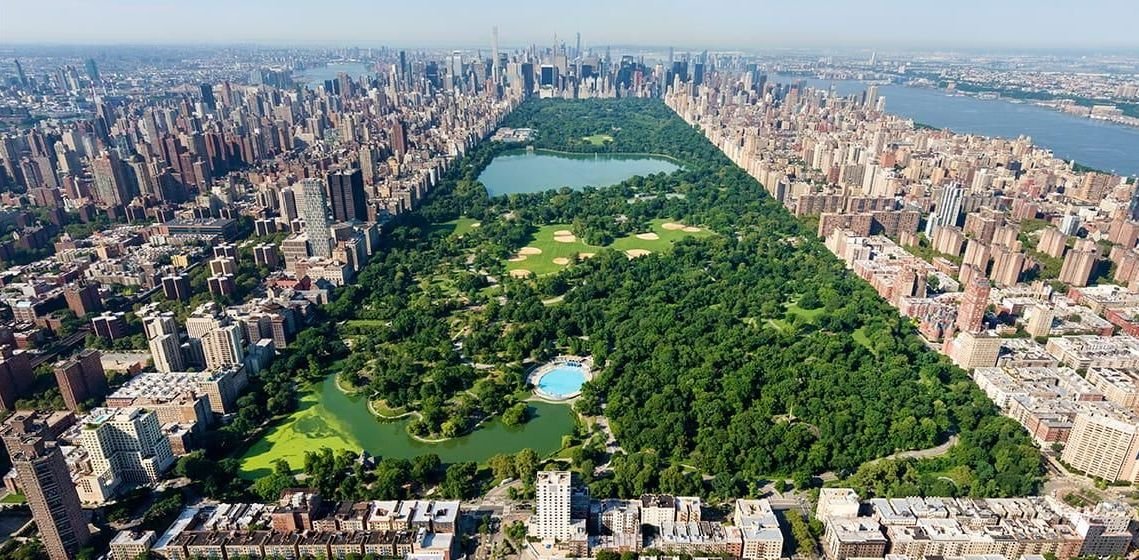
Central Park is one of the world’s most famous urban parks and one of the most important landmarks in New York City. Located in the heart of Manhattan, the park provides a vast green landscape surrounded by skyscrapers, museums, residential neighborhoods, hotels and some of the city’s most recognizable attractions.
Covering approximately 843 acres (341 hectares), Central Park stretches from 59th Street to 110th Street and from Fifth Avenue to Eighth Avenue. It is not simply a large lawn or recreational area: the park contains lakes, ponds, wooded areas, gardens, bridges, historic structures, sports facilities, walking paths, playgrounds, a zoo and numerous cultural landmarks.
Central Park is a place where visitors can walk, cycle, relax, photograph scenery, enjoy nature, visit attractions, have a picnic or simply escape the intensity of Manhattan.
Where Is Central Park?
Central Park is located in Manhattan, New York City, between:
- Fifth Avenue – east
- Eighth Avenue/Central Park West – west
- 59th Street – south
- 110th Street – north
The park is bordered by some of Manhattan’s most famous neighborhoods, including the Upper East Side, Upper West Side and Harlem.
Its central location makes it easy to combine with other attractions.
Nearby attractions include:
- Metropolitan Museum of Art
- American Museum of Natural History
- Rockefeller Center
- Fifth Avenue
- Columbus Circle
- Lincoln Center
- Times Square
- Carnegie Hall
- Guggenheim Museum
- Museum of Modern Art
History of Central Park
Central Park was created during the 19th century as New York City’s population expanded rapidly.
Before the park was developed, this part of Manhattan contained a mixture of rocky terrain, farms, homes, roads and small settlements.
City leaders increasingly recognized the need for a large public park where residents could enjoy fresh air, recreation and nature.
In 1857, the city held a competition to select a design for the park.
The winning proposal was the Greensward Plan, created by landscape architect Frederick Law Olmsted and architect Calvert Vaux.
Their design was revolutionary for its time.
Rather than simply creating a rectangular open field, Olmsted and Vaux designed a complex landscape containing:
- Meadows
- Woodlands
- Lakes
- Bridges
- Curving roads
- Walking paths
- Gardens
- Recreational spaces
- Scenic viewpoints
Construction began in the 1850s, and Central Park gradually became one of the most ambitious urban landscape projects of the era.
Frederick Law Olmsted and Calvert Vaux
The designers of Central Park were Frederick Law Olmsted and Calvert Vaux.
Olmsted is particularly important in the history of American landscape architecture. His approach emphasized the psychological and social benefits of accessible public landscapes.
Central Park was designed to give New Yorkers the impression of escaping the dense city.
Although the park is surrounded by skyscrapers, many areas were deliberately designed so that buildings would disappear from view or become less visually dominant.
This principle remains one of the most impressive aspects of Central Park today.
The Landscape of Central Park
Central Park is carefully designed but often feels like a natural landscape.
It contains several distinct environments.
The Great Lawn
The Great Lawn is one of the park’s best-known open spaces.
Located around the middle of the park, it provides a huge recreational area where visitors can:
- Relax
- Have picnics
- Play sports
- Read
- Sunbathe
- Watch performances
- Enjoy views of Manhattan’s skyline
The Great Lawn is especially popular during warm weather.
Bethesda Terrace and Bethesda Fountain
Bethesda Terrace is one of Central Park’s most famous architectural landmarks.
Located near the center of the park, the terrace overlooks the lake and Bethesda Fountain.
The centerpiece is the famous Angel of the Waters statue.
The fountain was designed by Emma Stebbins and dedicated in 1873. The statue represents the purification of water and became one of the most recognizable sculptures in Central Park.
The terrace itself is also famous for its decorated arcade.
Visitors often stop here for photographs, especially because the location combines architecture, water, trees and skyline views.
The Mall
The Mall is a broad tree-lined promenade leading toward Bethesda Terrace.
It is one of the most photographed locations in the park.
The pathway is particularly beautiful during autumn, when the trees surrounding the promenade turn yellow, orange and brown.
The Mall has historically been associated with public gatherings, musicians, artists and leisurely walks.
Bow Bridge
Bow Bridge is one of the most romantic and recognizable bridges in Central Park.
The elegant cast-iron bridge crosses the lake and provides excellent views of:
- The Lake
- Manhattan skyscrapers
- Trees
- Boating activity
- Central Park’s surrounding landscape
It has become particularly popular for wedding photographs and engagement photography.
The Lake
The Lake is one of Central Park’s most scenic bodies of water.
Visitors can rent rowboats and explore the water while enjoying views of the park and Manhattan skyline.
The Lake is especially beautiful in spring and autumn.
The combination of water, trees, bridges and skyscrapers creates one of Central Park’s signature landscapes.
Conservatory Water
Located on the eastern side of Central Park, Conservatory Water is a popular destination for families.
The water is famous for model sailboats, particularly during warmer months.
The area is also surrounded by sculptures and gardens and provides a quieter experience than some of the park’s larger attractions.
Strawberry Fields
Strawberry Fields is a memorial to John Lennon, the former member of The Beatles who lived nearby at the Dakota apartment building.
The memorial includes the famous “Imagine” mosaic, created in tribute to Lennon.
Located near Central Park West and 72nd Street, Strawberry Fields attracts Beatles fans and visitors from around the world.
It is one of the more peaceful and reflective areas of Central Park.
The Dakota
The Dakota is located immediately outside Central Park West, close to Strawberry Fields.
This historic residential building is famous for its distinctive architecture and association with John Lennon.
Visitors cannot generally enter the private residential building, but its exterior is a popular stop for people exploring Strawberry Fields and the Upper West Side.
Central Park Zoo
The Central Park Zoo is located near Fifth Avenue on the eastern side of the park.
The zoo is home to a variety of animals and provides an attraction particularly suitable for families.
It is relatively small compared with some major metropolitan zoos, making it possible to combine a visit with other Central Park attractions.
Belvedere Castle
Belvedere Castle is one of the most unusual structures in Central Park.
Built in the 19th century, the small stone castle sits on Vista Rock, one of the highest points in the park.
From its elevated position, visitors can obtain impressive views of:
- Central Park
- Turtle Pond
- The Great Lawn
- Surrounding Manhattan buildings
The castle is also associated with weather observation and has historically housed meteorological equipment.
Shakespeare Garden
Located near Belvedere Castle, Shakespeare Garden is a landscaped garden inspired by plants mentioned in the works of William Shakespeare.
It provides a quieter experience than the park’s major promenades and is particularly attractive during spring and summer.
The Ramble
The Ramble is a wooded area near the Lake.
Its winding paths, trees, rocks and naturalistic landscape create the impression of being far away from Manhattan.
Birdwatchers particularly appreciate the area because Central Park is an important stopover for migratory birds.
Conservatory Garden
At the northern end of Central Park, the Conservatory Garden provides a more formal garden environment.
It is divided into three distinct sections:
- French Garden
- Italian Garden
- English Garden
The garden is particularly attractive during spring, when flowers are in bloom.
Compared with the heavily visited southern areas of Central Park, this northern attraction can provide a quieter sightseeing experience.
Jacqueline Kennedy Onassis Reservoir
The Jacqueline Kennedy Onassis Reservoir occupies a large area between approximately 86th and 96th Streets.
It is famous for its walking and running path and spectacular views of Manhattan’s skyline.
The reservoir is especially popular among runners and walkers.
During spring, visitors can also see flowering trees around sections of the path.
The Metropolitan Museum of Art
The Metropolitan Museum of Art, commonly called the Met, sits along Fifth Avenue on the eastern edge of Central Park.
It is one of the world’s major art museums.
Its collections cover thousands of years of art and include:
- Ancient Egyptian art
- Greek and Roman art
- European paintings
- Asian art
- Islamic art
- American art
- Sculpture
- Decorative arts
- Costumes
- Musical instruments
A visit to Central Park can easily be combined with a visit to the Met.
American Museum of Natural History
On the western side of Central Park is the American Museum of Natural History.
It is particularly famous for exhibitions concerning:
- Dinosaurs
- Human evolution
- Space
- Animals
- Earth sciences
- Anthropology
- Biodiversity
Families can easily combine the museum with a walk through Central Park.
Activities in Central Park
Central Park offers an unusually large number of recreational activities.
Walking
Walking is the easiest way to experience the park.
Because the park is enormous, visitors should choose a particular area rather than attempting to see everything in a short period.
Cycling
Cycling is another popular way to explore Central Park.
The park has designated cycling routes, while many internal pedestrian paths have restrictions.
Running
Central Park is one of New York’s most famous running destinations.
The loop around the park is approximately 6 miles (9.7 km).
Rowing
Rowboats can be rented seasonally at the Loeb Boathouse area.
Horse Carriages
Horse-drawn carriage rides have long been associated with Central Park and remain a recognizable tourist activity.
Picnicking
The park contains numerous excellent picnic locations.
Popular areas include:
- Sheep Meadow
- Great Lawn
- Conservatory Garden surroundings
- Areas around the Lake
Photography
Central Park is one of New York’s best locations for photography because it combines nature and skyscrapers.
Sheep Meadow
Sheep Meadow is a large open lawn in the southern portion of Central Park.
It provides excellent views toward the Manhattan skyline and is particularly popular during warm weather.
It is an ideal place to relax after exploring Midtown Manhattan.
Central Park in the Four Seasons
Spring
Spring is one of the most attractive times to visit Central Park.
Visitors can enjoy:
- Cherry blossoms
- Flowering gardens
- Fresh green foliage
- Pleasant walking temperatures
The Conservatory Garden and areas around the Reservoir are particularly attractive during this season.
Summer
Summer brings the greatest amount of outdoor activity.
Central Park becomes a major recreational space for New Yorkers and tourists.
Expect:
- Picnics
- Cycling
- Running
- Outdoor performances
- Boating
- Sunbathing
- Family activities
Autumn
Autumn is arguably one of the most visually spectacular periods.
The park’s trees turn various shades of:
- Yellow
- Orange
- Red
- Brown
The Mall, Bow Bridge, The Lake and the Reservoir are especially popular for autumn photography.
Winter
Winter transforms Central Park into a completely different landscape.
Snow can create beautiful scenery around:
- Bethesda Terrace
- The Lake
- Bow Bridge
- The Mall
- The Reservoir
The park is also home to Wollman Rink, where visitors can ice skate during the winter season.
Central Park in Films and Popular Culture
Central Park has appeared in countless films, television programs, photographs and music videos.
Its combination of natural scenery and Manhattan architecture makes it one of the most recognizable filming locations in the world.
The park has frequently been used as a setting for:
- Romantic scenes
- Family films
- Crime dramas
- Comedies
- Christmas movies
- Television series
- Music videos
As a result, many international visitors recognize Central Park before ever visiting New York.
Central Park and Wildlife
Central Park is not simply landscaped scenery.
It supports a surprisingly diverse range of wildlife.
Visitors may encounter:
- Squirrels
- Ducks
- Geese
- Turtles
- Birds
- Fish
- Hawks
- Owls
- Other migratory birds
The park’s location along the Atlantic Flyway makes it particularly significant for bird migration.
Birdwatching is especially popular around The Ramble, The Lake and the Reservoir.
Central Park for Families
Central Park is one of the city’s best destinations for families.
Children can enjoy:
- Playgrounds
- The Central Park Zoo
- Model boats
- Horse-drawn carriages
- Open lawns
- Wildlife
- Ice skating
- Walking trails
- Children’s performances
Families can also combine the park with the nearby American Museum of Natural History.
Central Park for Couples
Central Park is one of New York’s most popular romantic destinations.
Popular locations for couples include:
- Bow Bridge
- Bethesda Fountain
- The Lake
- Conservatory Garden
- Strawberry Fields
- The Mall
- Sheep Meadow
The park is frequently used for engagement photographs, wedding photography and proposals.
Central Park for Photographers
Central Park offers an extraordinary variety of photographic opportunities.
Landscape photography
The Lake, Reservoir and Great Lawn provide open views.
Architecture
Bethesda Terrace and Belvedere Castle offer historic architectural subjects.
Wildlife
The Ramble and Reservoir are particularly interesting for bird photography.
Cityscape
The park’s skyline views provide opportunities to photograph Manhattan from an unusual perspective.
Seasonal photography
Each season dramatically changes the appearance of the park.
How Long Should You Spend in Central Park?
Because Central Park is so large, the amount of time required depends on what you want to see.
| Visit length | Suggested experience |
|---|---|
| 1 hour | Southern Central Park and Bethesda area |
| 2 hours | Bethesda Terrace + The Mall + Bow Bridge + Lake |
| 3–4 hours | Major landmarks in the southern and central sections |
| Half day | Central Park + museum |
| Full day | Extensive park exploration + museum + dining |
For first-time visitors, 2–4 hours is a useful starting point.
Trying to walk through the entire park without a plan can be tiring.
Central Park Walking Route for First-Time Visitors
A practical sightseeing route could begin near 59th Street.
Suggested route:
1. Columbus Circle
Begin at the southwestern corner.
↓
2. Sheep Meadow
Walk north into the park.
↓
3. The Mall
Continue toward Bethesda Terrace.
↓
4. Bethesda Terrace and Fountain
Spend time exploring the terrace and arcade.
↓
5. The Lake
Walk toward the water.
↓
6. Bow Bridge
Cross the famous bridge.
↓
7. The Ramble
Explore the wooded area.
↓
8. Belvedere Castle
Continue toward the castle.
↓
9. Great Lawn
Finish around the central section.
This route covers several of Central Park’s most famous landmarks without requiring visitors to explore the entire 843-acre park.
Transportation to Central Park
Central Park is surrounded by subway stations.
Visitors can reach different sections using various subway lines depending on their destination.
For example:
- 59th Street–Columbus Circle is convenient for the southwestern corner.
- 72nd Street provides access to the west side and Strawberry Fields.
- 86th Street provides access to central areas.
- 96th Street provides access to the Reservoir.
- 110th Street provides access to the northern part of the park.
Buses also operate along several streets bordering Central Park.
Best Time to Visit Central Park
There is no single best time for everyone.
Early morning
Ideal for:
- Runners
- Photographers
- Quiet walks
- Wildlife observation
Midday
Good for:
- Families
- Museums
- Picnics
- General sightseeing
Late afternoon
Excellent for:
- Photography
- Walking
- Relaxation
- Combining the park with a museum visit
Autumn
Particularly attractive for foliage photography.
Spring
Excellent for flowers and gardens.
Practical Tips for Visiting Central Park
Wear comfortable shoes
The park is enormous, and walking distances can quickly become longer than expected.
Bring water
Especially during warm weather.
Plan your route
Central Park contains hundreds of paths and landmarks. A map can help you avoid wasting time.
Don’t underestimate distances
A location that appears close on a map may take considerably longer to reach on foot.
Combine the park with a museum
The Metropolitan Museum of Art and American Museum of Natural History are both directly adjacent to the park.
Visit different sections
The southern portion is generally more heavily visited, while northern areas can feel quieter.
Respect wildlife
Do not feed animals or disturb birds and other wildlife.
Check seasonal attractions
Activities such as boating and ice skating operate according to seasonal schedules.
Central Park and New York City’s Skyline
One of the most remarkable things about Central Park is the contrast between nature and architecture.
From many locations inside the park, visitors can look through trees and across open lawns toward some of the world’s most recognizable skyscrapers.
This juxtaposition is one of the reasons Central Park has become such an iconic urban landscape.
The park demonstrates that a major modern city does not have to be completely dominated by buildings.
Central Park Visitor Information at a Glance
| Category | Information |
|---|---|
| Location | Manhattan, New York City |
| Size | Approximately 843 acres |
| Length | About 2.5 miles |
| Width | About 0.5 miles |
| Opened | 19th century |
| Designers | Frederick Law Olmsted and Calvert Vaux |
| Famous landmarks | Bethesda Terrace, Bow Bridge, The Mall, Belvedere Castle |
| Museums nearby | Metropolitan Museum of Art, American Museum of Natural History |
| Activities | Walking, cycling, running, boating, picnicking |
| Family attractions | Central Park Zoo, playgrounds, model boats |
| Best seasons | Spring and autumn for scenery |
| Winter attraction | Ice skating |
| Recommended visit | 2–4 hours or longer |
Central Park is much more than a green space in the middle of Manhattan. It is an extraordinary example of landscape design, a recreational center for millions of New Yorkers and visitors, a wildlife habitat, a cultural landmark and one of the most recognizable symbols of New York City.
Its combination of lakes, forests, gardens, lawns, bridges, historic buildings, sculptures and spectacular views of Manhattan’s skyline makes it different from almost any other major city park.
For first-time visitors, the area around Bethesda Terrace, The Mall, The Lake and Bow Bridge provides an excellent introduction. Those with more time can continue toward Belvedere Castle, the Great Lawn, the Reservoir and the northern sections of the park.
Central Park is also particularly easy to incorporate into a larger New York itinerary. A visitor can spend the morning exploring the park, visit the Metropolitan Museum of Art in the afternoon, walk down Fifth Avenue, and finish the day around Rockefeller Center or Times Square.
In many ways, Central Park provides the perfect contrast to Manhattan’s skyscrapers: a vast landscape of nature and open space at the center of one of the world’s great cities.
Leave a Reply
You must be logged in to post a comment.