Tag: Travel USA

  • Wisconsin: Lakes, Life, & Legends

    Wisconsin is one of the great surprises of American travel, a state that rewards curiosity with an abundance of natural beauty, cultural richness, culinary distinction, and genuine warmth of character that exceeds almost every expectation. Situated between the Great Lakes and the Mississippi River in the heart of the upper Midwest, Wisconsin is a state of glacially sculpted landscapes, pristine inland lakes, dramatic river valleys, and a shoreline along Lake Michigan and Lake Superior that rivals any coastal destination in the country for beauty and recreational opportunity. It is a state shaped by successive waves of immigration from Scandinavia, Germany, Poland, and a dozen other European countries, each leaving behind traditions of food, craftsmanship, and community life that persist to this day. It is the Dairy State, the Cheese State, the home of the Green Bay Packers and the birthplace of the American progressive political tradition, a place of ice fishing shacks and supper clubs, of Frank Lloyd Wright and Georgia O’Keeffe, of Harley-Davidson motorcycles and some of the finest craft beer in the country. Wisconsin is, in the very best sense of the phrase, genuinely itself, a state with a strong and deeply felt identity that makes it one of the most rewarding and authentic travel destinations in the American Midwest.

    Milwaukee: A City of Beer, Culture, and the Lake
    Milwaukee is one of the great underappreciated cities of the American Midwest, a former industrial powerhouse on the western shore of Lake Michigan that has reinvented itself as a destination of genuine cultural sophistication, outstanding natural beauty, and a food and drink scene that draws on the city’s deep German and European heritage while embracing contemporary creativity with enthusiasm. It is a city of handsome Victorian architecture, world-class museums, a magnificent lakefront, passionate sports culture, and a neighborhood character as strong and distinctive as any city of its size in the country.

    The Milwaukee Art Museum is the cultural crown jewel of the city and one of the most architecturally spectacular museum buildings in the United States. The Santiago Calatrava-designed Quadracci Pavilion, completed in 2001, is a masterpiece of structural engineering and architectural poetry, its movable brise soleil of white steel fins opening and closing each day like the wings of an enormous bird, creating a kinetic spectacle on the lakefront that draws visitors as much for the architecture as for the art within. The museum’s permanent collection encompasses over 30,000 works spanning antiquity to the present, with particular strength in German Expressionism, American decorative arts, folk and self-taught art, and a haiku garden that provides a contemplative counterpoint to the drama of the Calatrava exterior. The museum’s lakefront setting, with the blue expanse of Lake Michigan stretching to the horizon, gives it one of the finest natural settings of any art museum in the country.

    The Milwaukee Public Museum is one of the oldest and most distinguished natural history museums in the United States, a beloved institution whose dioramas of North American wildlife, recreated Streets of Old Milwaukee, and extraordinary butterfly vivarium have enchanted generations of Milwaukee residents and visitors. The museum’s natural history collections are among the most comprehensive in the Midwest, and its ongoing renovation and reimagining promise to make it an even more powerful institution in the years ahead. The adjacent Planetarium adds a cosmic dimension to the museum’s exploration of the natural world.

    The Harley-Davidson Museum is one of the most visited attractions in Wisconsin and a pilgrimage destination for motorcycle enthusiasts from around the world. Harley-Davidson was founded in Milwaukee in 1903, and the museum traces the history of the iconic American brand with a collection of over 450 motorcycles spanning the entire history of the company, from the first crude machines built in a small wooden shed to the custom-painted, chrome-adorned machines of the present day. The museum’s campus on the Menomonee River includes a restaurant, a gift shop of extraordinary scope, and outdoor spaces that host concerts, rallies, and community events. Even visitors with no particular interest in motorcycles find the museum’s story of American manufacturing, design, and cultural impact compelling and beautifully told.

    The Pabst Mansion is one of the finest Flemish Renaissance Revival houses in the United States, the former home of Captain Frederick Pabst, the German immigrant who built one of the greatest brewing empires in American history. The house, completed in 1892, is a treasury of decorative art and craftsmanship, its rooms filled with carved woodwork, painted ceilings, elaborate tile work, and furnishings of extraordinary quality. Tours of the mansion provide a vivid window into the lives of Milwaukee’s German-American industrial aristocracy in the Gilded Age.

    The Historic Third Ward is Milwaukee’s premier arts and entertainment district, a beautifully preserved neighborhood of nineteenth-century brick warehouse buildings that has been transformed into a vibrant hub of galleries, restaurants, boutiques, and the acclaimed Milwaukee Public Market. The market, modeled on urban food markets in Seattle and other cities, houses an outstanding collection of local food vendors offering artisan cheeses, fresh fish from Lake Michigan, locally made charcuterie, craft spirits, and an extraordinary range of Wisconsin food products. The Third Ward’s gallery scene, its independent fashion boutiques, and its concentration of excellent restaurants make it the most walkable and rewarding neighborhood in the city for visitors.

    The Milwaukee Riverwalk follows both banks of the Milwaukee River through the heart of the city for over three miles, connecting the Historic Third Ward, the downtown entertainment district, and the trendy Brady Street neighborhood in a pedestrian-friendly promenade lined with restaurants, bars, galleries, and public art. The riverwalk is at its most beautiful in summer, when the river reflects the lights of the surrounding buildings and the outdoor dining terraces fill with the sounds of conversation and music.

    Fiserv Forum, home of the Milwaukee Bucks NBA team, is one of the finest basketball arenas in the country, its dramatic glass exterior and innovative fan experience design reflecting the investment the city has made in its sporting infrastructure. The Bucks, led by Giannis Antetokounmpo to an NBA championship in 2021, have become one of the most celebrated teams in professional basketball and a source of enormous civic pride. American Family Field, home of the Milwaukee Brewers baseball team, is a retractable-roof stadium that provides a comfortable and thoroughly enjoyable baseball experience in a city that embraces the sport with genuine passion.

    Milwaukee’s food and drink culture is deeply rooted in its German and European heritage. The city has more than its share of taverns, supper clubs, and breweries that carry the traditions of old Milwaukee into the present with genuine authenticity. Usinger’s Famous Sausage, operating on Old World Third Street since 1880, produces bratwurst, summer sausage, and a remarkable range of traditional German charcuterie that has been a Milwaukee institution for generations. The Friday night fish fry, a Wisconsin tradition of almost religious significance, reaches its apotheosis in Milwaukee, where dozens of restaurants and supper clubs serve beer-battered cod, perch, and bluegill with potato pancakes, coleslaw, and rye bread in an atmosphere of communal pleasure that captures something essential about Midwestern social life.

    The Milwaukee craft beer scene is one of the finest in the country, a fitting legacy for a city that was once the brewing capital of the United States. Lakefront Brewery, Sprecher Brewing, MKE Brewing, and dozens of other craft breweries have established Milwaukee as a destination for beer tourism, and the city’s annual Summerfest, held on the lakefront each summer, is the largest music festival in the world by attendance, drawing over a million visitors to its multiple stages over eleven days.

    Madison: Capital City on the Isthmus
    Madison, the state capital and home of the University of Wisconsin, is one of the most consistently beloved and livable cities in the United States, a place of intellectual energy, political passion, natural beauty, and a quality of daily life that regularly earns it recognition as one of the finest places to live in America. The city occupies a narrow isthmus between two glacial lakes, Lake Mendota and Lake Monona, creating a natural setting of extraordinary beauty that gives Madison its distinctive character and provides an abundance of recreational opportunity in every season.

    The Wisconsin State Capitol is the dominant feature of Madison’s skyline and one of the most beautiful capitol buildings in the United States. Its dome, the only granite dome in the country and one of the largest by volume in the world, rises 284 feet above the city and can be seen from miles away across the surrounding lakes and farmland. The interior is a masterpiece of American Beaux-Arts design, its four wings radiating from the central rotunda in a symmetrical composition of marble, mosaics, and allegorical paintings that represents the finest American craftsmanship of the early twentieth century. Free tours of the building are offered daily, and the observation deck near the base of the dome provides magnificent views of the isthmus and the surrounding lakes.

    State Street, the pedestrian mall connecting the Capitol to the University of Wisconsin campus, is the social and commercial heart of Madison, a lively boulevard of independent restaurants, bars, bookshops, music venues, galleries, and food carts that reflects the city’s progressive character and its blend of political activism, academic culture, and youthful energy. The street’s Saturday Dane County Farmers Market, which circles the Capitol Square from late April through November, is the largest producers-only farmers market in the United States, drawing tens of thousands of shoppers and visitors each week to its extraordinary concentration of local cheeses, baked goods, vegetables, meats, flowers, and crafts.

    The University of Wisconsin-Madison campus is one of the most beautiful in the United States, its lakeshore setting, historic buildings, and Memorial Union Terrace creating an environment of scholarly elegance and natural beauty. The Memorial Union Terrace on the shore of Lake Mendota is one of the most beloved public spaces in Wisconsin, its distinctive sunburst chairs arranged on a lakeside terrace where students, faculty, and visitors gather to drink beer from the union’s own brewery, listen to live music, and watch the sailboats on the lake. The experience of sitting on the Terrace on a warm summer evening with a Union beer and a view of the sunset over Lake Mendota is one of the quintessential Wisconsin pleasures.

    The Chazen Museum of Art on the UW campus is one of the largest university art museums in the country, with a collection of over 20,000 works and a consistently strong program of exhibitions and events. The Wisconsin Historical Museum on the Capitol Square is an excellent introduction to the history of Wisconsin and the upper Midwest, and the adjacent Wisconsin Veterans Museum honors the state’s military heritage with moving and well-curated exhibitions.

    The Olbrich Botanical Gardens on the eastern shore of Lake Monona is one of the finest botanical gardens in the Midwest, with 16 acres of outdoor gardens and a stunning Thai Pavilion and garden donated by the Royal Thai Government that is the only one of its kind in the United States. The indoor Bolz Conservatory, a glass pyramid housing a tropical ecosystem with free-flying birds and blooming plants, provides a lush escape in the depths of the Wisconsin winter.

    Door County: Wisconsin’s Peninsula Paradise
    Door County, the long finger of land that juts into Lake Michigan between Green Bay and Lake Michigan proper, is one of the most beautiful and distinctive vacation destinations in the Midwest, a peninsula of cherry orchards, limestone bluffs, lighthouses, artist communities, and pristine lakefront villages that draws visitors from across the region with a charm that is genuinely irresistible.

    The county encompasses five state parks, ten lighthouses, and a shoreline of over 300 miles that provides an abundance of opportunity for swimming, kayaking, sailing, fishing, hiking, and cycling in a landscape of particular beauty and intimacy. Peninsula State Park, the jewel of the Door County state park system, encompasses nearly 3,800 acres of limestone bluffs, hardwood forest, and Lake Michigan shoreline, with 20 miles of hiking trails, an 18-hole golf course, a summer theater program, and some of the finest cycling terrain in Wisconsin. The views from Eagle Bluff and Eagle Tower within the park across the water to the islands of Green Bay are among the most beautiful in the state.

    The towns of Door County each have their own distinct character and appeal. Fish Creek, a village of Victorian-era buildings clustered around a harbor, is the most charming and most visited of the county’s communities, its Main Street of galleries, restaurants, and shops providing an ideal base for exploring the surrounding parks and shoreline. Ephraim, the most visually coherent of the Door County villages, is a community of white-painted buildings on a hillside above Eagle Harbor that maintains a historic character of almost New England neatness and beauty. Sister Bay is the commercial hub of the northern peninsula, known for its waterfront restaurants, the famous goats on the roof of Al Johnson’s Swedish Restaurant, and its lively summer social scene. Sturgeon Bay, the county seat and the only city on the peninsula, is a working shipbuilding town with a strong maritime heritage, excellent restaurants, and a downtown of handsome historic commercial buildings.

    Door County cherries are among the most celebrated agricultural products in Wisconsin, and the peninsula’s orchards produce an extraordinary harvest of Montmorency tart cherries each July. The cherry harvest draws visitors who pick their own fruit at farm orchards, and the county’s restaurants, bakeries, and food shops incorporate cherries into everything from pie and jam to wine and salsa. Door County cherry pie is a local institution, and the fish boil, another local tradition in which whitefish, potatoes, and onions are cooked in an enormous kettle over an open wood fire before the boilover of the fire creates a dramatic finale, is an essential Door County dining experience.

    Washington Island, reached by ferry from the tip of the peninsula, is a quiet and deeply peaceful community of farms, forests, and rocky shores that retains a Scandinavian character reflecting the Norwegian and Icelandic settlers who established themselves here in the nineteenth century. Schoolhouse Beach on Washington Island, one of only five beaches in the world composed entirely of smooth white limestone rocks rather than sand, is one of the most unusual and beautiful beaches in the Great Lakes region.

    Green Bay: Titletown USA
    Green Bay, a mid-sized city on the southern shore of Green Bay at the mouth of the Fox River, is known around the world as the home of the Green Bay Packers, the most storied franchise in the history of the National Football League and the only community-owned major professional sports team in the United States. The Packers are not merely a football team in Green Bay — they are the central institution of community life, a source of identity and pride so intense that it colors every aspect of the city’s self-understanding.

    Lambeau Field, the home of the Packers since 1957, is one of the most famous and beloved sports venues in the United States, a cathedral of professional football that has been dramatically expanded and modernized while retaining the essential character that makes it unique. The stadium’s south end zone atrium houses the Packers Hall of Fame, one of the finest sports museums in the country, whose collection of memorabilia, trophies, and interactive exhibits tells the story of the franchise from its founding by Curly Lambeau in 1919 through its record thirteen NFL championships. Tours of the stadium are offered year-round and include access to the field, the locker rooms, and the press box, providing an experience that is genuinely moving for fans of the game. Attending a Packers home game at Lambeau Field on a cold December afternoon, with 80,000 green-and-gold-clad fans generating an atmosphere of almost physical intensity, is one of the most memorable sporting experiences in America.

    The National Railroad Museum in Green Bay is one of the finest railroad museums in the United States, housing an extraordinary collection of historic locomotives and rolling stock including General Dwight D. Eisenhower’s World War II command train. The museum’s outdoor collection of full-size trains and its excellent interpretive program make it a fascinating destination for visitors of all ages.

    The Wisconsin Dells: Waterpark Capital of the World
    The Wisconsin Dells, a resort area in the center of the state built around a dramatic gorge carved by the Wisconsin River through sandstone formations, has evolved over the past century into one of the most visited tourist destinations in the Midwest, claiming the title of Waterpark Capital of the World with a concentration of indoor and outdoor waterparks unmatched anywhere on earth.

    The natural Dells themselves, the rocky gorge of the Wisconsin River with its fantastically eroded sandstone formations carved into shapes with names like Witches Gulch and Lone Rock, are genuinely beautiful and worth exploring by boat tour or kayak independent of the resort commercial development that has grown up around them. The original Wisconsin Dells boat tours, which have been operating since the 1870s, provide the finest way to appreciate the geological drama of the gorge.

    The waterpark resorts of the Dells, led by the massive Kalahari, Great Wolf Lodge, and Wilderness Resort complexes, provide family entertainment on an enormous scale, with indoor waterparks that operate year-round allowing visitors to enjoy waterslides, wave pools, and lazy rivers regardless of the Wisconsin weather outside. The sheer concentration of family entertainment options, from go-karts and mini golf to escape rooms and ziplines, makes the Wisconsin Dells one of the most comprehensive family vacation destinations in the country.

    The Apostle Islands: Lake Superior’s Wilderness Archipelago
    The Apostle Islands National Lakeshore, located on the Bayfield Peninsula in far northern Wisconsin, is one of the most spectacular and least visited units of the national park system, an archipelago of twenty-one forested islands in the cold, clear waters of Lake Superior that offers sea kayaking, sailing, hiking, camping, and lighthouse exploration of extraordinary quality in a setting of wild and austere beauty.

    The islands are characterized by dramatic sea caves carved into their sandstone shores by the relentless action of Lake Superior’s waves, creating formations of haunting beauty that glow orange and red in the late afternoon light. In winter, when the lake freezes sufficiently, the sea caves fill with spectacular ice formations that can be reached by walking across the frozen lake, creating one of the most surreal and beautiful natural spectacles in the United States. The ice caves draw visitors from across the country in years when the ice is thick enough to walk on safely.

    The historic lighthouses of the Apostle Islands, nine in total and the largest collection of lighthouses in the national park system, are among the finest surviving examples of late nineteenth-century lighthouse architecture in the Great Lakes region. Several are accessible by ferry and offer tours in summer, providing a window into the isolated and demanding lives of the lighthouse keepers who maintained them.

    Bayfield, the small town on the mainland that serves as the gateway to the Apostle Islands, is one of the most charming communities in Wisconsin, its Victorian commercial buildings and hillside setting above the harbor creating an atmosphere of old-fashioned resort elegance. The town’s apple orchards, which produce exceptional fruit in the Lake Superior microclimate, are celebrated each autumn at the Bayfield Apple Festival, one of the finest harvest festivals in the upper Midwest.

    Frank Lloyd Wright’s Wisconsin
    Wisconsin holds a special place in the history of American architecture as the birthplace and spiritual home of Frank Lloyd Wright, the greatest American architect of the twentieth century, whose revolutionary ideas about organic architecture, the integration of buildings with their natural surroundings, and the democratization of beautiful design were shaped by his deep connection to the Wisconsin landscape.

    Taliesin, Wright’s home, studio, and school near Spring Green in the rolling hills of the Wisconsin River valley, is the most important single site in American architectural history still in existence, a complex of buildings that Wright continually designed, redesigned, and rebuilt over the course of sixty years and that represents the most complete expression of his architectural philosophy in built form. The Taliesin Fellowship, which Wright founded in 1932 as a school of architecture integrated with agricultural and communal life, continues to operate as the Frank Lloyd Wright School of Architecture, and the buildings and landscape of Taliesin remain in continuous use and development. Tours of the complex are offered seasonally and provide an unparalleled opportunity to experience Wright’s genius in the landscape that inspired it.

    The House on the Rock, located near Spring Green not far from Taliesin, is one of the most bizarre and fascinating attractions in the United States, a structure built by Alex Jordan beginning in the 1940s on a 60-foot chimney of rock that has grown into an enormous and labyrinthine complex of rooms, galleries, and exhibits filled with collections of extraordinary eccentricity and scale. The world’s largest carousel, a room-sized orchestra of automated instruments, a model circus of almost incomprehensible complexity, and collections of armor, dolls, and Tiffany glass create an experience that defies easy categorization but leaves virtually every visitor simultaneously bewildered and delighted.

    Wisconsin’s Supper Club Culture
    No discussion of Wisconsin travel would be complete without extended attention to the supper club, one of the most distinctive and beloved American dining traditions, which reached its fullest development in Wisconsin and remains most purely itself in the small towns and lakeshores of the upper Midwest.

    The Wisconsin supper club is a particular kind of restaurant that emerged in the 1930s and 1940s, typically located on a lake or highway outside of town, featuring a lounge where guests are expected to have a cocktail before dinner, a menu anchored by prime rib, steaks, and Friday night fish fry, a relish tray of raw vegetables and pickled items delivered to the table before the meal, and an atmosphere of relaxed conviviality and genuine hospitality that is unlike anything else in American dining. The Old Fashioned cocktail, made with brandy rather than whiskey in the Wisconsin tradition, is the canonical supper club drink, and the experience of sipping a brandy Old Fashioned in the lounge of a Wisconsin supper club while waiting for a table is one of the most authentically regional experiences in American food culture.

    Famous supper clubs across Wisconsin, from Smoky’s Club in Madison to the Red Circle Inn in Nashotah to Eddie’s Supper Club in Hayward, continue to uphold the traditions of the form with genuine pride, and seeking them out is one of the great pleasures of Wisconsin travel.

    The Wisconsin Northwoods
    The vast lake country of northern Wisconsin, known simply as the Northwoods, is one of the great wild landscapes of the upper Midwest, a region of thousands of glacial lakes, pine and hardwood forests, rivers and streams, and small resort towns that has been a destination for summer vacationers from Milwaukee, Chicago, and the Twin Cities for well over a century.

    The Northwoods lakes offer exceptional fishing for walleye, muskie, bass, and panfish, and the pursuit of the muskellunge, the largest and most elusive freshwater game fish of the region, has created a culture of fishing obsession that is deeply and authentically northern Wisconsin. Hayward, in Sawyer County, is the self-proclaimed Muskie Capital of the World, and the Freshwater Fishing Hall of Fame there houses an extraordinary collection of fishing memorabilia and a building-sized fiberglass muskie that visitors can walk through for a panoramic view of the surrounding lakes and forests.

    The Chequamegon-Nicolet National Forest encompasses over 1.5 million acres of northern Wisconsin and provides an extraordinary range of outdoor recreation, from hiking and mountain biking in summer to cross-country skiing and snowmobiling in winter. The American Birkebeiner, a 50-kilometer cross-country ski race from Cable to Hayward, is the largest cross-country ski race in North America and one of the premier Nordic ski events in the world, drawing thousands of competitors each February in a celebration of winter sport and Wisconsin’s Scandinavian heritage.

    Wisconsin Cheese and Culinary Culture
    Wisconsin is the Dairy State and the Cheese State, the producer of more cheese varieties and greater cheese volume than any other state in the country, and the culinary identity of Wisconsin is inseparable from its extraordinary dairy heritage. Wisconsin produces over 600 varieties of cheese, more than any country in the world other than France, and the quality of the state’s artisan and farmstead cheeses has earned it international recognition among serious food lovers.

    The cheese culture of Wisconsin is best experienced through its farmers markets, its farmstead creameries, and its cheese factories, many of which offer tours and tastings. Monroe, in Green County in southwestern Wisconsin, is the self-proclaimed Swiss Cheese Capital of America, its Swiss immigrant heritage preserved in its cheese-making traditions and its biennial Cheese Days celebration. The Roth Cheese and Emmi Roth factories in Monroe offer tours that illuminate the craft of making traditional Swiss varieties in an American context.

    Pleasant Ridge Reserve, made by Uplands Cheese Company near Dodgeville, has won more Best of Show awards at the American Cheese Society competition than any other cheese in the country, and the farmstead operation’s commitment to pasture-based dairying and traditional alpine cheese-making methods has made it one of the most celebrated artisan food producers in the United States.

    Practical Travel Information
    Wisconsin’s climate is genuinely four-seasonal, with each season offering its own particular pleasures and challenges. Summers are warm and often beautiful, with long days, abundant sunshine, and temperatures that rarely become oppressively hot in the northern parts of the state. The lake country and the Door County peninsula enjoy a moderate lake effect that keeps summer temperatures pleasant. Autumn is spectacular, with hardwood foliage across the state turning brilliant gold, orange, and red from late September through mid-October. Winter is cold, snowy, and long, but Wisconsinites embrace it with a spirit of outdoor adventure and social warmth that makes the season genuinely rewarding. Spring arrives slowly but brings the return of migrating birds, emerging wildflowers, and the opening of fishing season with considerable celebration.

    General Mitchell International Airport in Milwaukee and Dane County Regional Airport in Madison are the primary gateways to the state, with connections to major cities across the country. Amtrak serves Milwaukee and several other Wisconsin cities on the Hiawatha and Empire Builder routes. For most of the state, particularly the Northwoods, the Door Peninsula, and the Apostle Islands region, a rental car is essential.

    Wisconsin is consistently among the most affordable states for travel in the upper Midwest, with reasonable accommodation rates, exceptional value in its restaurants and supper clubs, and a wealth of free or low-cost natural attractions including state parks, lake beaches, and hiking trails.

    Conclusion
    Wisconsin is a state that gives generously to those who seek it out, a place of deep seasonal rhythms, strong community character, extraordinary natural beauty, and a food and drink culture rooted in the land and in generations of European immigrant tradition. It is a state where the Packers and the Friday fish fry and the supper club Old Fashioned and the Dane County Farmers Market and the Apostle Islands sea caves and the Taliesin tour and the Door County cherry pie all exist in the same authentic and deeply felt regional identity, a Wisconsin identity that is as particular and as irreducible as any in America. Travelers who come to Wisconsin looking for the genuine article will find it here, in every season and in every corner of the state, offered with the straightforward warmth and quiet pride that are the defining characteristics of the Wisconsin character.
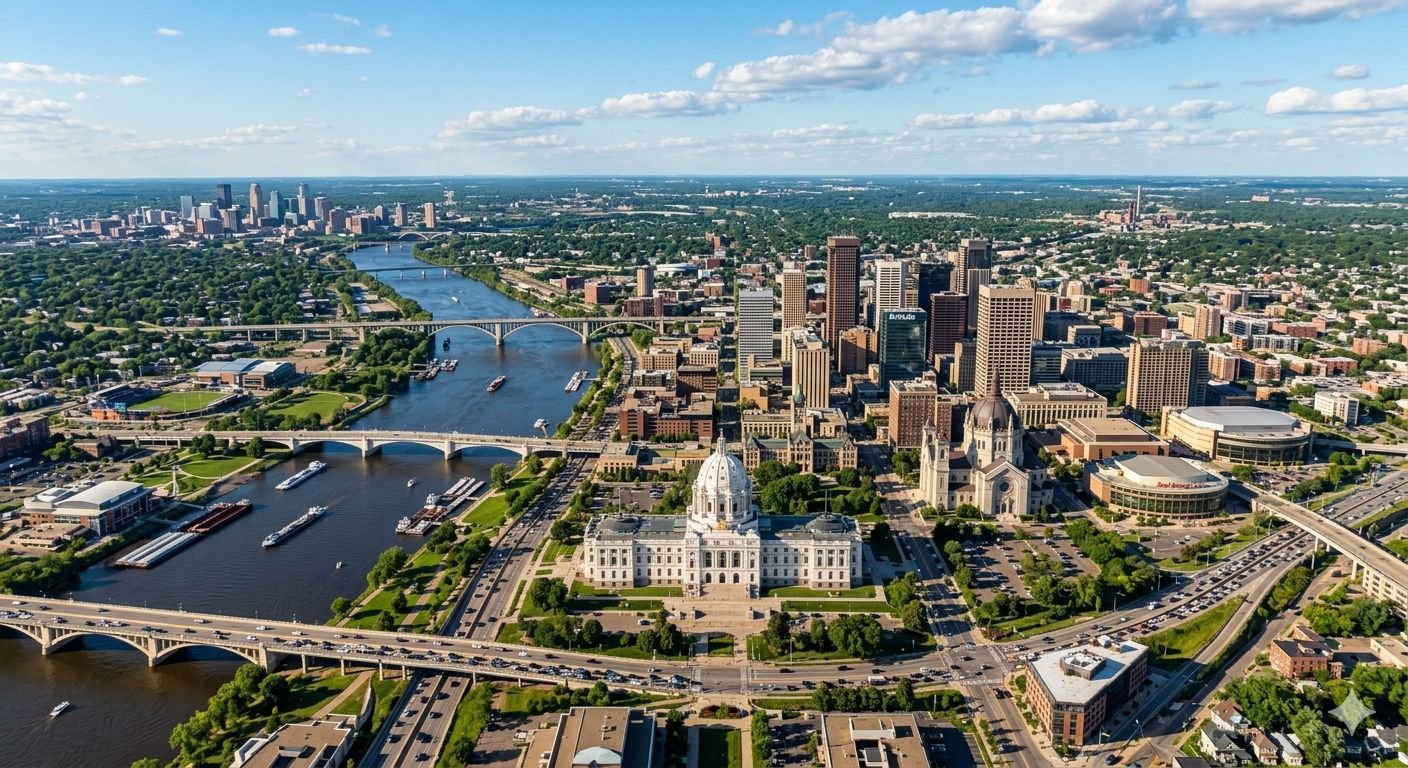
  • Minnesota: Where the Wild Meets the Warmth

    Minnesota is one of the most naturally magnificent and culturally distinctive states in the United States, a land of extraordinary lakes, vast forests, sweeping prairies, and a quality of light that photographers and painters have pursued for generations without ever quite capturing its full beauty. It is a state shaped by glaciers that retreated ten thousand years ago and left behind a landscape of such richness and variety that it continues to astonish those who encounter it for the first time. Minnesota is the Land of Ten Thousand Lakes, though the actual count exceeds fourteen thousand, and water defines the state in ways both literal and spiritual, from the headwaters of the Mississippi River in the north to the dramatic shore of Lake Superior in the northeast to the wild rice lakes of the Ojibwe homeland to the chain of metropolitan lakes that give Minneapolis its distinctive urban character. It is also a state of remarkable cultural vitality, home to one of the finest orchestras in the world, a theater scene that rivals any city of comparable size in the country, a culinary tradition rooted in Scandinavian and Eastern European immigrant heritage that has been transformed by waves of new immigration into one of the most diverse and exciting food cultures in the Midwest. Minnesota is a state that takes its winters seriously and its summers joyfully, that builds skyway systems to connect its downtown buildings and then fills its parks and lakes with outdoor enthusiasts the moment the temperature rises above freezing. It is, in the very best sense, a state that knows who it is, and the traveler who takes the time to discover it will find a place of beauty, intelligence, warmth, and genuine character that leaves a lasting impression.

    Minneapolis: City of Lakes and Culture
    Minneapolis is one of the great American cities, a place of architectural ambition, cultural sophistication, natural beauty, and a quality of urban life that consistently places it among the most livable cities in the United States. Built on the banks of the Mississippi River at the Falls of Saint Anthony, the only natural waterfall on the river and the power source that drove the flour and lumber mills that made Minneapolis one of the most productive industrial cities in nineteenth-century America, Minneapolis has evolved into a dynamic, progressive, and genuinely cosmopolitan city that offers the traveler an extraordinary range of experiences across every domain of urban life.

    The Minneapolis Institute of Art, known universally as Mia, is one of the great encyclopedic art museums of the United States, housing a permanent collection of over 90,000 works spanning five thousand years of human creativity across every culture and medium. The museum’s collection of Asian art is among the finest in the country, and its holdings of period rooms, decorative arts, Impressionist and Post-Impressionist paintings, and works by Minnesota artists are equally distinguished. Remarkably, admission to the permanent collection is entirely free, making Mia one of the most accessible major art museums in the country and a genuine gift to the city and its visitors.

    The Walker Art Center is one of the most important contemporary art museums in the United States, a consistently challenging and intellectually stimulating institution that has been presenting the most significant contemporary art, film, dance, theater, and music for decades and remains at the cutting edge of contemporary cultural life. The adjacent Minneapolis Sculpture Garden, an eleven-acre outdoor gallery anchored by the iconic Spoonbridge and Cherry sculpture by Claes Oldenburg and Coosje van Bruggen, is one of the most beloved public spaces in Minneapolis, its collection of large-scale sculptures providing a setting for outdoor enjoyment in all seasons. The Spoonbridge and Cherry has become the defining symbol of Minneapolis’s cultural identity, reproduced on everything from coffee mugs to public murals, and seeing it in person for the first time is a moment of genuine delight.

    The Guthrie Theater, located in a dramatic building designed by Jean Nouvel on the banks of the Mississippi River, is one of the finest regional theaters in the United States and a landmark of Minneapolis’s extraordinary performing arts culture. The building’s cantilevered Endless Bridge, extending 178 feet over the river below with no exterior support, is one of the most thrilling architectural experiences in the city, providing dizzying views of the Mississippi and the Stone Arch Bridge from a vantage point that seems to float in mid-air. The theater’s commitment to classical and contemporary drama of the highest quality has made it one of the most respected theatrical institutions in the country.

    The Mill City Museum, built into the ruins of the Washburn A Mill that was once the largest flour mill in the world, is one of the finest history museums in the Midwest, its dramatic setting within the fire-scarred ruins of the mill creating an experience that is simultaneously architecturally spectacular and historically illuminating. The museum’s Flour Tower ride, an eight-story theatrical journey through the history of the mill and the flour milling industry that made Minneapolis the Mill City, is one of the most innovative museum experiences in the country. The surrounding Mill District neighborhood, developed on the historic industrial riverfront, is one of the most beautifully designed urban districts in Minneapolis, with the Stone Arch Bridge, a converted railroad bridge now open to pedestrians and cyclists, providing a magnificent vantage point for views of the Falls of Saint Anthony and the Minneapolis skyline.

    The Chain of Lakes in southwest Minneapolis is the defining natural feature of the city and the foundation of its remarkable quality of urban outdoor life. Lakes Harriet, Calhoun (now officially Bde Maka Ska), Cedar, Isles, and the smaller Brownie Lake are connected by parkways and trails that form a continuous loop of over thirteen miles through some of the most beautiful urban parkland in the United States. In summer, the lakes are dotted with sailboats, kayaks, and canoes, their beaches filled with swimmers and sunbathers, their surrounding parkways alive with cyclists, runners, and walkers. In winter, the frozen lakes become venues for ice skating, ice fishing, cross-country skiing, and the uniquely Minnesotan art of walking across a frozen lake to a fish house with a thermos of coffee and a sense of seasonal contentment. The Lake Harriet Bandshell hosts free outdoor concerts throughout the summer, and the historic streetcar line that runs between Lakes Harriet and Calhoun provides a charming connection between two of the finest urban lakes in the country.

    Nicollet Mall, the pedestrian and transit spine of downtown Minneapolis, is a sixteen-block promenade of shops, restaurants, hotels, and cultural institutions that serves as the commercial heart of the city. The Hennepin Theatre District, anchored by the Orpheum, State, and Pantages theaters, all magnificently restored historic movie palaces of the 1920s, presents Broadway touring productions, concerts, and performing arts events of national caliber. The Target Center, home of the Minnesota Timberwolves NBA team, and Target Field, home of the Minnesota Twins baseball team, anchor the sports end of downtown, with Target Field in particular providing one of the most beautiful downtown ballpark experiences in major league baseball, its open concourses framing views of the Minneapolis skyline and the surrounding neighborhoods.

    Minneapolis’s food scene has been transformed over the past two decades into one of the most exciting and diverse in the Midwest, reflecting both the city’s deep Scandinavian and Eastern European roots and the extraordinary wave of immigration from Somalia, Southeast Asia, Latin America, and East Africa that has made Minneapolis one of the most culturally diverse cities in the interior of the country. The Somali community centered on the Cedar-Riverside neighborhood has established Minneapolis as the home of the largest Somali diaspora population in the United States, and the restaurants and markets of the neighborhood offer some of the most authentic Somali cuisine available outside of East Africa. The Hmong Village and the Minneapolis Farmers Market are extraordinary cultural and culinary destinations that reflect the richness of the city’s immigrant communities.

    The First Avenue music venue, a converted Greyhound bus depot on the edge of downtown, is one of the most legendary music clubs in the United States, the venue where Prince filmed much of Purple Rain and where an extraordinary roster of musicians have performed over its more than fifty years of operation. Prince, who was born and died in the Minneapolis area, defined the city’s musical identity in a way that few artists have ever defined a place, and the legacy of his extraordinary career is felt throughout the city, from the murals on the walls of North Minneapolis to the purple lighting on landmarks across the downtown.

    Saint Paul: The Quieter Twin
    Saint Paul, the state capital of Minnesota, sits on the eastern bank of the Mississippi River across from Minneapolis and has always occupied a particular position in the Twin Cities relationship, the quieter, more conservative, more historically rooted of the two cities, with a character that is in many ways more European and more architecturally coherent than its more famous twin.

    The Minnesota State Capitol in Saint Paul is one of the finest capitol buildings in the United States, its self-supporting dome, the third largest in the world after Saint Peter’s in Rome and the United States Capitol, rising above the city in a composition of classical grandeur that reflects the ambitions of a young and prosperous state at the turn of the twentieth century. The interior is a treasure house of American mural painting and architectural decoration, with Kenyon Cox’s magnificent lunettes in the Governor’s Reception Room and Edward Simmons’s series of murals in the dome among the finest examples of American academic painting in existence. Free tours of the building are offered daily.

    The Science Museum of Minnesota, perched on the bluffs above the Mississippi River in downtown Saint Paul, is one of the finest science museums in the country, with exceptional permanent exhibitions on the natural history of Minnesota, the archaeology and cultures of the Mississippi River Valley, human biology, and a paleontology collection of national significance. The museum’s Omnitheater provides an immersive large-format film experience, and the outdoor terrace offers sweeping views of the Mississippi River and the surrounding bluffs.

    Summit Avenue in Saint Paul is one of the best preserved Victorian residential boulevards in the United States, a four-and-a-half-mile stretch of grand houses representing every architectural style popular between 1850 and 1930, from Italianate and Second Empire to Romanesque Revival and Colonial Revival, occupied by the industrialists, railroad barons, and merchant princes who built Saint Paul into one of the wealthiest cities in nineteenth-century America. The James J. Hill House, the massive Richardsonian Romanesque mansion built by the Empire Builder of the Great Northern Railway, is the finest and most important of the Summit Avenue houses and offers tours that illuminate the extraordinary life of one of the most powerful men in American economic history. F. Scott Fitzgerald was born in Saint Paul and lived on Summit Avenue as a young man, and the neighborhood’s atmosphere of genteel prosperity and social ambition is palpable in his early fiction.

    The Saint Paul Winter Carnival, held each January and February, is the oldest winter festival in the United States, a celebration of winter that includes ice sculpture competitions, snow sculpture displays, and the construction of an ice palace that has in some years reached extraordinary scale. The festival reflects the Minnesota approach to winter, which is neither denial nor resignation but genuine celebration, a determination to find joy and community in the season rather than merely endure it.

    Grand Avenue in Saint Paul is one of the finest shopping and dining streets in the Twin Cities, a boulevard of Victorian commercial buildings housing independent restaurants, boutiques, bookshops, and galleries that reflect the neighborhood’s historic character and its contemporary vitality. The Macalester-Groveland and Summit Hill neighborhoods surrounding Grand Avenue are among the most beautifully preserved residential neighborhoods in the Twin Cities, their streets of Victorian and Craftsman houses providing a setting of urban elegance that rewards aimless walking and exploration.

    Duluth and the North Shore of Lake Superior
    Duluth, at the western tip of Lake Superior and the head of the Great Lakes shipping system, is one of the most dramatically situated cities in the United States, its downtown and neighborhoods rising steeply from the lake on a hillside that provides panoramic views of the largest freshwater lake in the world by surface area. Lake Superior is not merely a body of water in Duluth — it is a presence, a vast and sometimes tempestuous inland sea whose moods and colors dominate the life of the city and define its character.

    The Aerial Lift Bridge, one of the most distinctive mechanical bridges in the United States, spans the ship canal between the Duluth harbor and Lake Superior and rises to allow the enormous lake freighters that still carry iron ore, grain, and coal through the Great Lakes to pass beneath it. Watching a thousand-foot ore boat glide silently through the canal beneath the raised bridge, close enough to touch if you could reach far enough, is one of the most unexpectedly thrilling experiences in Minnesota. The Duluth Shipping News website and app allow visitors to track incoming vessels and time their visits to the canal accordingly.

    Canal Park, the revitalized district surrounding the ship canal and the Aerial Lift Bridge, is the most visited area of Duluth, its restaurants, hotels, shops, and the excellent Lake Superior Maritime Visitor Center providing an accessible introduction to the city and the lake. The Lakewalk, a paved promenade extending along the lakefront from Canal Park, provides a magnificent walk along the rocky shore with views of the lake, the harbor, and the lift bridge. The Great Lakes Aquarium, the only all-freshwater aquarium in the United States, explores the extraordinary ecology of Lake Superior and the Great Lakes with genuine scientific depth and engaging presentation.

    Glensheen, the magnificent Jacobean Revival mansion built by mining and railroad baron Chester Congdon on the Lake Superior shoreline, is one of the most beautiful historic houses in the upper Midwest and one of the most visited attractions in Duluth. The 39-room mansion and its extensive grounds, preserved almost exactly as they appeared when the Congdon family occupied them, provide a window into the extraordinary wealth generated by the Minnesota iron ranges in the early twentieth century. The house is also the site of one of the most notorious murders in Minnesota history, the 1977 killing of Elisabeth Congdon and her nurse, a crime that has become part of the house’s dark mythology.

    The North Shore of Lake Superior, extending from Duluth northeast to the Canadian border, is one of the most beautiful drives in the United States, Minnesota Highway 61 following the rocky shoreline past waterfalls, state parks, fishing villages, and the dramatic rocky headlands of the Sawtooth Mountains. John Steinbeck drove this route in his journey across America described in Travels with Charley and was moved by the grandeur of the lake and the landscape, and the road retains the power to move travelers today.

    Gooseberry Falls State Park, one of the most popular state parks in Minnesota, is located on the North Shore and features a series of waterfalls on the Gooseberry River as it descends to Lake Superior through a landscape of ancient basalt rock, boreal forest, and dramatic gorges. The park’s visitor center, hiking trails, and Lake Superior shoreline make it an ideal introduction to the North Shore landscape. Split Rock Lighthouse State Park, further up the shore, preserves one of the most photographed lighthouses in the United States, a 1910 lighthouse and fog signal building perched on a sheer 130-foot cliff above the lake, its classic lines and dramatic setting making it one of the most beautiful structures in Minnesota.

    The Boundary Waters Canoe Area Wilderness, in the far northeastern corner of Minnesota along the Canadian border, is one of the most extraordinary wilderness areas in the United States, a million-acre roadless wilderness of over a thousand lakes and streams accessible only by canoe or on foot. The BWCAW, as it is universally known, offers a canoe camping experience of unparalleled quality in the lower forty-eight states, its interconnected lake and portage system allowing paddlers to travel for weeks through a landscape of ancient Canadian Shield rock, boreal forest, and water of extraordinary clarity without encountering a road or a building. The night sky over the BWCAW, far from any light pollution, is among the darkest and most star-filled in the eastern half of the country, and the experience of paddling a canoe across a glassy wilderness lake under a sky brilliant with stars is one that stays with visitors for the rest of their lives. Ely, the small town at the southern gateway to the BWCAW, is a charming and authentic wilderness outfitting community with excellent outfitters, guides, and the International Wolf Center, one of the finest wildlife education institutions in the country.

    The Iron Range: Industrial Heritage and Natural Beauty
    The Iron Range of northeastern Minnesota, stretching across St. Louis, Itasca, and Koochiching counties, is one of the most historically significant and geologically remarkable landscapes in the United States, the region that produced the iron ore that built the industrial might of twentieth-century America and shaped the lives of the immigrant communities from Finland, Slovenia, Croatia, Italy, and dozens of other countries that came to work its mines.

    The Hull-Rust Mahoning Mine in Hibbing is the largest open-pit iron mine in the world, a man-made canyon over three miles long, two miles wide, and 535 feet deep that has been operating continuously since 1895 and has produced more iron ore than any other mine in history. The view from the observation deck above the mine is one of the most staggering industrial landscapes anywhere, a testament to the extraordinary scale of human ambition and its environmental consequences that no visitor can observe without a complex mixture of awe and reflection.

    Hibbing is also the birthplace of Bob Dylan, one of the greatest American artists of the twentieth century, and the Bob Dylan Center in nearby Duluth, along with the Dylan-related sites in Hibbing including the house where he grew up and the school where he performed his first concerts, draw pilgrims from around the world who come to trace the origins of one of the most influential musical and literary careers in American history.

    The Minnesota Discovery Center in Chisholm is the finest museum of Iron Range history in the region, its outdoor exhibits including a reconstructed mining village, a working narrow-gauge railroad, and actual mining equipment of extraordinary scale providing a deeply engaging exploration of the industrial and social history of the region. The Leonidas Overlook at the adjacent mine site provides views comparable to those at Hull-Rust.

    The Finnish-American heritage of the Iron Range is preserved and celebrated at the Finnish American Heritage Center in Embarrass, one of the coldest communities in the contiguous United States, where traditional Finnish sauna culture, rye bread baking, and log building traditions have been maintained with remarkable fidelity by descendants of the original immigrant settlers.

    The Mississippi River Headwaters
    Itasca State Park, in the lake country of north-central Minnesota, is one of the most historically significant and naturally beautiful state parks in the United States, home to Lake Itasca, the source of the Mississippi River, the greatest river system in North America. The river begins here as a clear, cold stream flowing out of the northern end of Lake Itasca, no more than a foot deep and twenty feet wide, and visitors can wade across the Mississippi River at its source, a genuinely moving experience that connects them to one of the defining geographical features of the continent.

    The park encompasses over 32,000 acres of old-growth forest, over 100 lakes, and a remarkable diversity of wildlife including bald eagles, ospreys, loons, black bears, white-tailed deer, and moose. The wilderness drive through the old-growth forest of the park passes trees that were already a century old when Columbus reached the Americas, and the ancient forest atmosphere of massive pines and cathedral light is deeply affecting. Itasca’s Peace Pipe Vista and the Preacher’s Grove, where enormous old-growth red pines tower over the visitor, are among the most awe-inspiring natural environments in Minnesota.

    The Mississippi River downstream from its source flows through a landscape of extraordinary beauty and historical significance, passing through the Leech Lake and Mille Lacs Lake regions before descending through Saint Cloud and the Twin Cities to its confluence with the Minnesota and St. Croix rivers. The Great River Road, a National Scenic Byway that follows the Mississippi from Lake Itasca to the Iowa border, is one of the finest long-distance drives in the country, passing through river towns, bluff country, wildlife refuges, and landscapes of genuine grandeur.

    Voyageurs National Park
    Voyageurs National Park, in the border lake country of northern Minnesota near International Falls, is one of the most unusual and least visited national parks in the country, a water-based wilderness that can only be fully experienced by boat. The park encompasses four large lakes, Rainy Lake, Kabetogama Lake, Namakan Lake, and Sand Point Lake, and hundreds of smaller lakes and islands in a landscape shaped by the same glacial forces that created the Boundary Waters to the east.

    The park takes its name from the French-Canadian fur traders who paddled their birchbark canoes through this lake country in the seventeenth, eighteenth, and nineteenth centuries, trading with the Ojibwe people and carrying beaver pelts to the markets of Montreal and beyond. The voyageur tradition of long-distance canoe travel across the northern lakes has been revived as a recreational pursuit, and paddling the same waters that the voyageurs navigated provides a deeply evocative connection to this remarkable chapter of North American history.

    Voyageurs is one of the finest stargazing destinations in the eastern half of the United States, its dark skies and water-reflected heavens creating conditions for astronomical observation that are among the best available without traveling to truly remote locations. The park has been designated an International Dark Sky Park, and ranger-led astronomy programs on summer nights provide a profound and humbling connection to the cosmos.

    The Minnesota Prairie and the Southwest
    The southwestern corner of Minnesota, where the glaciated prairie meets the Minnesota River valley, is a landscape of tremendous historical significance and surprising natural beauty that is often overlooked by travelers focused on the northern lake country and the Twin Cities.

    Pipestone National Monument preserves the sacred catlinite quarries where Native American peoples from across the Great Plains have been quarrying the distinctive red stone used to make ceremonial pipes for at least three centuries, and probably much longer. The monument is a place of deep spiritual significance for many Native peoples, and the visitor center provides respectful and illuminating interpretation of the cultural importance of the site. Native American artisans demonstrate the making of pipes in the cultural center, and the walking trail around the quarry and the stunning Winnewissa Falls provides a beautiful complement to the cultural experience.

    The Laura Ingalls Wilder sites in Walnut Grove and the surrounding area draw visitors from around the world who come to connect with the landscape that inspired the beloved Little House on the Prairie books. Walnut Grove, the small town on Plum Creek where Laura Ingalls Wilder lived as a child, maintains a museum and an annual Wilder Pageant that celebrates her life and work with genuine affection. The landscape of the southwest Minnesota prairie, flat and vast and sky-dominated, is essentially unchanged from the world Wilder described, and standing in it with the wind moving through the grass and the horizon stretching in every direction provides an immediate and powerful connection to her writing.

    Minnesota’s State Parks and Outdoor Recreation
    Minnesota’s state park system is one of the finest in the United States, encompassing 75 state parks and recreation areas that protect some of the most beautiful and ecologically significant landscapes in the state. The diversity of the system reflects the extraordinary variety of Minnesota’s natural geography, from the boreal forest and Canadian Shield landscapes of the north to the hardwood forests and river bluffs of the southeast to the prairie pothole wetlands of the southwest.

    Tettegouche State Park on the North Shore is one of the most ruggedly beautiful parks in the state, its dramatic basalt cliffs, sea stacks, and waterfalls on the Baptism River creating a landscape of raw geological power. Palisade Head, a 350-foot volcanic cliff face rising directly from Lake Superior, is one of the most dramatic geological features in Minnesota and a destination for rock climbers from across the country. Whitewater State Park in the southeastern bluff country protects a landscape of unusual geological character, its dolomite bluffs and clear trout streams creating a microclimate that supports plant and animal communities normally found much further south. Interstate State Park at Taylors Falls preserves the Dalles of the Saint Croix River, a dramatic gorge of ancient basalt columns carved by glacial meltwater into formations of striking geometric beauty.

    The Boundary Waters, the North Shore, and the state’s thousands of lakes provide fishing opportunities of extraordinary quality, and Minnesota fishing culture is a genuine and deeply felt tradition that connects communities across the state to the natural world and to each other. The opener of the walleye season on the second weekend of May is a near-religious event in Minnesota, with hundreds of thousands of anglers taking to the lakes in a celebration of spring and the outdoors that is one of the most genuinely Minnesotan of all experiences.

    The Twin Cities Food Scene
    The Twin Cities food scene has undergone a remarkable transformation in the past two decades, evolving from a regional reputation built on Scandinavian-influenced comfort food into one of the most exciting and nationally recognized culinary environments in the Midwest. The region’s extraordinary ethnic diversity has been the primary engine of this transformation, with the Somali, Hmong, Mexican, East African, and Southeast Asian communities each contributing culinary traditions of great depth and quality.

    The Midtown Global Market in Minneapolis is one of the finest examples of a culturally diverse urban food market in the United States, its former Sears building housing vendors from over twenty countries offering everything from Ecuadorian ceviche to Ethiopian injera to Salvadoran pupusas to Hmong sausage. The market is a genuinely democratic and joyful space that reflects the extraordinary diversity of the Twin Cities in the most pleasurable possible way.

    The Scandinavian heritage of Minnesota is still traceable in the food culture of the region, from the lefse and lutefisk that appear at church suppers and family gatherings to the Swedish and Norwegian baked goods available at specialty shops and bakeries across the state. The American Swedish Institute in Minneapolis, housed in a magnificent turn-of-the-century mansion and a striking contemporary addition, celebrates the Scandinavian heritage of the upper Midwest with exhibitions, cultural programming, and an excellent restaurant called Fika that offers contemporary Swedish cuisine of genuine quality.

    Practical Travel Information
    Minnesota’s climate is one of the most dramatic in the continental United States, with temperature extremes that range from forty below zero in the depths of winter to ninety degrees in the height of summer. The winters are genuinely cold and often snowy, but Minnesotans have developed a culture of winter outdoor activity and indoor sociability that makes the season more bearable and often genuinely enjoyable for visitors who come prepared. The summers are warm, beautiful, and filled with outdoor activity, festivals, and the particular joy of a Minnesota summer day on a lake. Spring and autumn are transitional but often spectacular, with the fall foliage of the hardwood forests in the southeast and the lakeshores of the north providing some of the most beautiful color displays in the upper Midwest.

    Minneapolis-Saint Paul International Airport is the primary gateway to Minnesota, a major hub with extensive domestic and international connections. Amtrak’s Empire Builder serves the Twin Cities on its Chicago to Seattle route, and a network of regional airports serves Duluth, Rochester, Bemidji, International Falls, and other communities across the state. For much of Minnesota, particularly the north country and the prairie southwest, a rental car is essential.

    Conclusion
    Minnesota is a state that rewards the traveler who comes without fixed expectations and allows the place to reveal itself at its own pace. It is a state of quiet grandeur and sudden drama, of urban sophistication and profound wilderness, of Scandinavian reserve and genuine warmth, of long cold winters and summers so beautiful they justify everything. It is a state where the loon’s call across a wilderness lake at dusk and the roar of the crowd at a Twins game on a summer night and the silence of a January morning on a frozen lake and the smell of a fresh walleye fry in a supper club are all part of the same coherent and deeply felt identity. Minnesota does not announce itself loudly or demand attention. It simply exists, in its lakes and forests and prairies and cities, with a beauty and a character so genuine and so deeply rooted that the traveler who discovers it tends to return, year after year, drawn back by something that is difficult to name but impossible to forget.

  • Alabama: Where Every Road Feels Like Home

    Alabama: Where Every Road Feels Like Home

    Alabama occupies a special and often underappreciated place in the American South. Stretching from the Tennessee River valley in the north to a sliver of Gulf Coast shoreline in the south, from the Appalachian foothills of the northeast to the black belt prairies of the center, Alabama is a state of remarkable geographic variety, profound historical significance, and a warmth of hospitality that feels genuinely unforced. It is a state that has lived through some of the most dramatic and consequential chapters in American history, from the birth of the Confederacy to the crucible of the Civil Rights Movement, and that history is present and accessible in ways that make Alabama one of the most important destinations in the country for travelers interested in understanding who Americans are and how they came to be.

    Alabama is also, perhaps unexpectedly, a state of considerable natural beauty. The Appalachian ridges of the northeast, the cypress swamps of the Mobile-Tensaw Delta, the white sand beaches of the Gulf Coast, the rolling hills of horse country around Uniontown and Camden, and the broad lakes created by the Tennessee Valley Authority’s network of dams all offer landscapes that surprise visitors accustomed to thinking of the Deep South as flat and featureless. Add to this a food culture of extraordinary depth and invention, a music heritage that contributed fundamentally to American rock and roll and country music, and a growing constellation of world-class museums and cultural institutions, and the picture of a destination far more rewarding than its reputation suggests begins to take shape.

    A Brief Introduction
    Alabama covers about 52,000 square miles and is home to roughly five million people. It became the twenty-second state in 1819, and Montgomery served as the first capital of the Confederacy before that distinction passed to Richmond, Virginia. The state’s history before, during, and after the Civil War is central to understanding its present, and nowhere in the country are the wounds and the progress of that history more visibly and honestly confronted than in Montgomery’s remarkable cluster of civil rights memorials and museums.
    The state divides geographically into several distinct regions. The Tennessee Valley in the north is defined by the broad river valley and the string of lakes created by TVA dams. The Appalachian Highlands of the northeast include the state’s most dramatic scenery. The Piedmont and the Talladega National Forest occupy the east-central portion. The Black Belt, named for its dark, fertile soil rather than any racial connotation, stretches across the center. The Coastal Plain covers the south, and Mobile Bay and the Gulf Coast define the state’s southern edge.

    Montgomery: History in Every Direction
    Montgomery, the state capital, sits in the center of Alabama and carries more historical weight per square mile than almost any other American city of its size. It is a place where the story of the Confederacy and the story of the Civil Rights Movement intersect on the same streets, sometimes within sight of one another, creating a layered and often uncomfortable but deeply important experience for visitors willing to engage with it fully.

    The Alabama State Capitol, completed in 1851, sits on a hill at the top of Dexter Avenue and is one of the finest Greek Revival public buildings in the South. It was here, on the portico, that Jefferson Davis was inaugurated as President of the Confederacy in February 1861. It was also here, at the foot of the same steps, that Martin Luther King Jr. and thousands of civil rights marchers arrived at the end of the Selma to Montgomery Voting Rights March in March 1965, one of the defining moments of the entire Civil Rights Movement. The proximity of these two events on the same ground is among the most historically charged juxtapositions in America.
    Dexter Avenue King Memorial Baptist Church, a few blocks from the capitol, was Martin Luther King Jr.’s first pastoral assignment and the organizational hub of the Montgomery Bus Boycott of 1955 and 1956, which launched the modern Civil Rights Movement. Tours of the church, including its remarkable basement mural depicting the history of the movement, are available and deeply moving.

    The National Memorial for Peace and Justice, opened in 2018 on a hill overlooking downtown Montgomery and created by the Equal Justice Initiative, is the most powerful and important memorial built in the United States in a generation. It is dedicated to the more than 4,000 African Americans who were lynched in the South between Reconstruction and World War II, and its design, featuring 800 steel monuments hanging from the roof of an open pavilion, each inscribed with the names of victims from a particular county, creates an experience of collective grief and moral reckoning that is unlike anything else in American public life. Adjacent to the memorial is The Legacy Museum, also operated by Equal Justice Initiative, which traces the history of racial terror, mass incarceration, and the continuing legacy of slavery in America through interactive exhibits, testimony, and art. Both institutions are essential.

    Rosa Parks Museum, on the campus of Troy University in downtown Montgomery, occupies the site of the bus stop where Rosa Parks was arrested in December 1955, the event that sparked the bus boycott. The museum tells the story of Parks and the boycott with admirable depth and detail. The Dexter Parsonage Museum, where King and his family lived during the boycott years, has been restored to its 1950s appearance and offers an intimate look at the private life of a very public figure.

    Beyond the civil rights history, Montgomery has other considerable attractions. The Montgomery Museum of Fine Arts holds a strong collection of American art and is one of the finer regional art museums in the South. The Alabama Department of Archives and History is one of the oldest state archives in the country and holds an extraordinary collection of documents, photographs, and artifacts relating to Alabama history. Old Alabama Town is a complex of restored 19th-century structures in downtown Montgomery that recreates life in antebellum and postbellum Alabama.

    The food scene in Montgomery is better than most visitors expect, with a growing number of independent restaurants drawing on Alabama’s rich culinary traditions alongside newer, more contemporary establishments. The city’s white barbecue sauce, a tangy, mayonnaise-based condiment that is Alabama’s most distinctive culinary contribution, is available throughout the state but is particularly well represented in the Montgomery area.

    Birmingham: Renaissance City
    Birmingham, in north-central Alabama, is the state’s largest city and has undergone one of the most remarkable urban transformations in the American South over the past three decades. Founded in 1871 at the intersection of two railroad lines near deposits of coal, iron ore, and limestone, it grew explosively into the South’s great industrial city, known as the Pittsburgh of the South. Its heavy industry declined in the latter half of the twentieth century, but Birmingham has reinvented itself with considerable success as a center of medicine, education, technology, and culture, while also grappling honestly and publicly with its painful role in the Civil Rights Movement.

    The Birmingham Civil Rights Institute, across from Kelly Ingram Park in the historic Fourth Avenue district, is one of the finest civil rights museums in the country. Its permanent collection traces the history of racial segregation and the movement to end it through immersive exhibits, film, photography, and artifacts, covering not only Birmingham’s specific history but placing it in the broader context of American racial history. The institute faces Kelly Ingram Park, where in May 1963 Bull Connor’s police turned fire hoses and attack dogs on peaceful demonstrators, including children, in scenes that shocked the nation and helped accelerate passage of the Civil Rights Act. Sculptures in the park recreate these events with stark and affecting power. Across the street, 16th Street Baptist Church, where four young girls were killed in a Ku Klux Klan bombing in September 1963, remains an active congregation and offers tours of its historic sanctuary.

    But Birmingham is far more than its history of racial conflict. The city’s Southside neighborhood, centered on Five Points South, has developed into one of the most vibrant dining and nightlife districts in the South, with an outstanding and varied restaurant scene that has garnered significant national attention. Highlands Bar and Grill, the restaurant of chef Frank Stitt, is considered one of the finest restaurants in the South and has been instrumental in developing the farm-to-table, Southern-focused cuisine that now defines the city’s culinary identity. The Cahaba Brewing Company, Good People Brewing, and a growing craft brewery community add to the city’s appeal for food and drink travelers.

    The Birmingham Museum of Art is among the largest municipal art museums in the Southeast and holds an exceptional collection that includes outstanding holdings of Asian decorative arts, European old masters, American art, and the largest collection of Wedgwood outside of England. The Barber Vintage Motorsports Museum, on the eastern edge of the city, is a genuine world wonder for anyone interested in motorcycles and racing. Its collection of more than 1,400 motorcycles and racing cars, displayed in a beautifully designed facility on the grounds of a road racing circuit, is simply without peer anywhere in the world.

    Red Mountain Park, on the ridge of Red Mountain overlooking the city from the south, offers more than fifteen miles of trails through former iron ore mining terrain, with industrial ruins, ziplines, and spectacular views of the Birmingham skyline. At the summit of Red Mountain stands the Vulcan statue, a fifty-six-foot cast iron figure of the Roman god of the forge, the largest cast iron statue in the world and Birmingham’s beloved symbol. The Vulcan Park and Museum at the statue’s base tells the story of Birmingham’s iron and steel industry.
    The Railroad Park, a nineteen-acre linear park along the rail lines at the foot of Red Mountain, is the centerpiece of Birmingham’s downtown revitalization and one of the finest urban parks in the South, with beautifully designed landscapes, water features, and an amphitheater that hosts concerts and events throughout the year. Adjacent to it is Regions Field, home of the Birmingham Barons minor league baseball team, which draws large crowds and contributes to the area’s weekend energy.

    Selma and the Black Belt
    Selma, about fifty miles west of Montgomery along the Alabama River, is a small city of about 17,000 people that holds an outsized place in American history. It was here, on March 7, 1965, on the Edmund Pettus Bridge over the Alabama River, that state troopers attacked a column of peaceful civil rights marchers in an episode of televised brutality so shocking that it galvanized national opinion and led directly to the passage of the Voting Rights Act of 1965. The day is known as Bloody Sunday, and it was a turning point not only in the Civil Rights Movement but in American history.

    The Edmund Pettus Bridge, still in use as a working road bridge, has become one of the most pilgrimage-worthy sites in American civic life. Walking across it, as thousands do every year, is a simple but surprisingly affecting act. The National Voting Rights Museum and Institute, at the foot of the bridge, tells the story of the voting rights struggle with photographs, artifacts, and testimony from people who were present. Selma hosts a Bridge Crossing Jubilee each March to commemorate Bloody Sunday, and in years marking significant anniversaries, presidents and national figures have attended.

    Beyond its civil rights significance, Selma preserves a remarkable antebellum streetscape along its riverside Bluff neighborhood, including some of the finest antebellum architecture in Alabama. Sturdivant Hall, an 1853 neoclassical mansion, is open as a museum and is considered one of the finest examples of antebellum architecture in the South.
    The Black Belt region surrounding Selma is one of the most historically rich and economically challenged areas of the United States. Its deep, fertile soil made it the heartland of Alabama’s antebellum cotton culture, worked by an enslaved population that in some counties outnumbered the white population by several to one. The legacy of that history is everywhere in the Black Belt, in the ruined plantation houses collapsing back into the red earth, in the shotgun houses of small towns, and in the African American churches that were the community anchors through the darkest years of segregation and are still the social centers of their communities today.

    Cahaba, about twelve miles southwest of Selma, was Alabama’s first state capital, abandoned in 1826 after repeated flooding. Today Old Cahawba Archaeological Park preserves the ruins of the town site, including the brick columns of antebellum mansions standing in a field of wildflowers beside the Cahaba River. In late May, the park is famous for the blooming of the Cahaba lily, a rare aquatic plant endemic to a small number of Alabama rivers, which produces spectacular white flowers in the river shallows. The Cahaba River itself is one of the most biodiverse rivers in North America, home to an extraordinary number of endemic fish, mussel, and plant species.

    Huntsville: Rockets and Redstone
    Huntsville, in the Tennessee Valley in northern Alabama, presents the most dramatic contrast with the rest of the state. It is Alabama’s second-largest city and has a cosmopolitan, educated, forward-looking character derived from its status as one of America’s most important centers of aerospace engineering and defense technology. It was here that Wernher von Braun and his team of German rocket engineers, brought to America after World War II, developed the rockets that carried American astronauts to the moon, and the city’s identity remains deeply intertwined with the space program.

    The U.S. Space and Rocket Center, just off Interstate 565 on the western edge of the city, is one of the largest space museums in the world and one of the most visited tourist attractions in Alabama. Its collection of rockets, spacecraft, and related artifacts is extraordinary, including a full-size Space Shuttle exhibit, a Saturn V rocket, and the actual Apollo 16 command module. The museum is also home to Space Camp, the legendary educational program that has introduced generations of young people to aerospace science and engineering. The exhibits are well designed and regularly updated, and the sheer scale of the hardware on display, the massive Saturn V rocket in particular, is genuinely awe-inspiring.

    Beyond its space heritage, Huntsville has developed a vibrant arts and dining scene in its downtown area, centered on the revitalized Twickenham and Five Points neighborhoods. The Huntsville Museum of Art is a solid regional institution. The city’s craft brewery scene, led by Straight to Ale and Yellowhammer Brewing, is well developed. The Big Spring International Park in the heart of downtown, centered on a large natural spring that gave the city its name, is a pleasant gathering place.

    Surrounding Huntsville, the Tennessee Valley offers considerable outdoor recreation. Wheeler National Wildlife Refuge, along the Tennessee River south of the city, is one of the most important wintering areas for migratory waterfowl in the eastern United States, and its January sandhill crane concentration draws birders from across the country. Monte Sano State Park, on a mountain overlooking Huntsville, offers hiking and mountain biking with views of the city. The Land Trust of North Alabama manages an extensive network of trails in the mountains around the city.

    The Appalachian Highlands: Northeast Alabama
    The northeastern corner of Alabama, where the Appalachian Mountains reach their southernmost extension, is the state’s most dramatically beautiful region. The parallel ridges and valleys of the Appalachian system create a landscape of forested mountain slopes, clear rivers, deep gorges, and hidden waterfalls that surprises visitors accustomed to thinking of Alabama as flat.
    Little River Canyon National Preserve, near Fort Payne, protects what is often called the Grand Canyon of the East, a dramatic gorge cut by the Little River, one of the few rivers in America that flows for most of its length on top of a mountain plateau before plunging off the escarpment into a deep canyon below. The canyon walls drop as much as 600 feet, and the preserve offers scenic drives along the rim, hiking trails into the gorge, and swimming, kayaking, and tubing in the river. DeSoto Falls, at the head of the canyon, drops 104 feet into a pool surrounded by hemlocks and rhododendrons.

    Cheaha State Park, centered on Cheaha Mountain, the highest point in Alabama at 2,407 feet, offers hiking, rock climbing, and sweeping views across the Talladega National Forest. The mountain’s summit lodge and cabins are beloved by generations of Alabama families and make for an atmospheric overnight stay. The Pinhoti Trail, a long-distance hiking trail that runs from central Alabama north to connect with the Appalachian Trail in Georgia, passes through the park.
    DeSoto State Park, on Lookout Mountain near Fort Payne, is another outstanding highland retreat with waterfalls, swimming holes, hiking trails, and classic stone-and-timber state park lodge architecture. The surrounding area is known for fall foliage, typically peaking in mid-October, that rivals the more celebrated displays of the Tennessee and North Carolina mountains.

    Fort Payne itself is most famous as the hometown of the country music group Alabama, one of the best-selling country acts in music history, and the town celebrates that connection with a museum and an annual festival. The group’s success is part of a broader Alabama music heritage that includes the Muscle Shoals sound, one of the most influential recording communities in American music history.

    Muscle Shoals: The Hit Recording Capital of the World
    Few places in America can claim the musical influence of the Muscle Shoals area in northwestern Alabama, a cluster of small cities along the Tennessee River including Florence, Sheffield, Tuscumbia, and Muscle Shoals itself that produced a disproportionate share of the recorded music that defined American popular culture from the mid-1960s through the 1980s.

    The story centers on FAME Recording Studios in Muscle Shoals and the Muscle Shoals Sound Studio in Sheffield, where a group of mostly white, largely self-taught session musicians known as the Swampers developed a sound of extraordinary emotional depth and rhythmic sophistication that drew artists from around the world. Aretha Franklin recorded her breakthrough hits here. The Rolling Stones came. Wilson Pickett, Percy Sledge, Etta James, Boz Scaggs, Paul Simon, Bob Dylan, Lynyrd Skynyrd, and hundreds of others made records in these studios that shaped the sound of rock and roll, soul, and country music for generations.
    Both FAME Studios and the Muscle Shoals Sound Studio are open for tours, and both remain active recording studios, which adds an authenticity and vitality to the experience that purely museum-like attractions cannot match. The documentary film Muscle Shoals, released in 2013, tells the story of the recording community in compelling detail and is well worth watching before or after a visit.

    The area also claims the birthplace of Helen Keller in Tuscumbia, where Ivy Green, the family home where Keller was born in 1880, is preserved as a museum. The famous scene at the water pump, where teacher Anne Sullivan broke through to the deaf and blind Keller with the connection between objects and language, took place on these grounds, which include the water pump itself. An outdoor drama, The Miracle Worker, is performed on the grounds each summer.
    W.C. Handy, known as the Father of the Blues, was born in Florence in 1873, and the W.C. Handy Home and Museum there preserves artifacts of his life and music. The Handy connection is part of a broader blues heritage that extends across northern Alabama, connecting to the wider Mississippi Delta blues tradition.

    Mobile and the Gulf Coast
    Mobile, at the head of Mobile Bay in southwestern Alabama, is the state’s only seaport and its oldest major city, founded by French colonists in 1702 and subsequently ruled by France, Britain, Spain, and the United States before joining the Confederacy. That layered colonial heritage gives Mobile a cultural character distinctly different from the rest of Alabama, with architectural, culinary, and social influences that reflect its French and Spanish past. Mobile also claims to have held the first organized Mardi Gras celebration in North America, predating New Orleans by several years, and the city’s Mardi Gras tradition remains one of its most distinctive and celebrated features.

    The Mobile Museum of Art is a strong regional institution with a particular focus on decorative arts and Southern art. The USS Alabama Battleship Memorial Park, across the bay from downtown, allows visitors to tour the World War II battleship Alabama and the submarine USS Drum, both preserved in their wartime configuration, as well as a collection of aircraft and other military equipment. The History Museum of Mobile traces the city’s four centuries of history through an impressive collection of artifacts, maps, and documents.
    The Cathedral Basilica of the Immaculate Conception, completed in 1850, is one of the finest Catholic churches in the South and a reminder of Mobile’s French Catholic heritage. The city’s historic districts, particularly De Tonti Square and the Oakleigh Garden District, contain outstanding collections of antebellum and Victorian architecture surrounded by the oak trees and azalea gardens that make Mobile’s spring one of the most beautiful in the South.

    South of Mobile, across the bay via the Wallace Tunnel or the Jubilee Parkway bridge, the Eastern Shore communities of Fairhope and Point Clear offer a gentler, more refined coastal experience. Fairhope, a charming small city on a bluff above the bay, was founded as a single-tax utopian colony in 1894 and retains a progressive, arts-oriented character that sets it apart from most Alabama communities. Its downtown is lined with independent galleries, bookshops, and restaurants, and its bluff-top gardens with views across the bay are particularly lovely. Point Clear’s Grand Hotel, a historic resort on the bay shore, has been hosting guests since 1847 and remains one of the most gracious resort properties in the South.
    The Alabama Gulf Coast, stretching from the Florida border at Perdido Key west to Gulf Shores and Orange Beach, offers some of the most beautiful beaches in the continental United States. The sugar-white sand here, composed largely of quartz washed down from the Appalachian Mountains over millions of years, is among the whitest and finest-grained in the world, and the shallow, emerald-green water of the Gulf of Mexico is warm, calm, and ideal for swimming from April through October.

    Gulf Shores and Orange Beach are the two main resort communities, with a broad range of hotels, condominiums, vacation rentals, restaurants, and beach attractions. The atmosphere is considerably more laid-back and family-friendly than Florida’s more crowded Panhandle resorts, and the beaches are noticeably less crowded, which is one of the Alabama coast’s great appeals. Gulf State Park, with its modern lodge and conference center and extensive network of trails and nature programs, anchors the Gulf Shores beach with a well-managed natural area.
    Bon Secour National Wildlife Refuge, on the Fort Morgan Peninsula west of Gulf Shores, protects one of the last undeveloped stretches of barrier island on the northern Gulf Coast. Its white sand dunes, coastal scrub forests, and freshwater ponds are important habitat for migratory songbirds in spring and fall, sea turtles nesting on the beach in summer, and a remarkable variety of resident wildlife. Fort Morgan, at the tip of the peninsula, is a massive brick star fort completed in 1834 that guarded the entrance to Mobile Bay and was the site of the Battle of Mobile Bay in August 1864, when Admiral David Farragut, damning the torpedoes, led a Union fleet past Confederate defenses to seal off the port.

    The Alabama seafood available along the Gulf Coast is outstanding. Fresh Gulf shrimp, blue crabs, oysters from Portersville Bay, red snapper, flounder, and grouper are all available at the area’s seafood markets and restaurants. A traditional Alabama seafood boil, with shrimp, crab, corn, potatoes, and sausage piled on a newspaper-covered table, is one of the great simple pleasures of a Gulf Coast visit.

    Tuscaloosa and the University of Alabama
    Tuscaloosa, on the Black Warrior River in west-central Alabama, is home to the University of Alabama and is in many ways the cultural and spiritual center of Alabama football, which occupies a place in the state’s life that it is difficult for outsiders to fully appreciate. The Crimson Tide, with their extraordinary collection of national championships, are not merely a sports team but a source of collective identity and pride that transcends ordinary sports fandom. A home football Saturday in Tuscaloosa, with its massive crowds, tailgate traditions, and the electric atmosphere of Bryant-Denny Stadium, is a genuinely remarkable American cultural experience regardless of one’s interest in the sport.
    The Paul W. Bryant Museum on the university campus is dedicated to the history of Alabama football and is surprisingly compelling even for non-fans, as a window into the intensity and significance of the sport in this particular cultural context. The university campus itself is handsome, with a core of antebellum buildings that survived the Civil War and a collection of more recent architecture of varying quality.

    The Tuscaloosa Museum of Art and the Alabama Museum of Natural History, also on campus, are solid regional institutions. The nearby Moundville Archaeological Park, about fifteen miles south of the city on the Black Warrior River, preserves one of the largest and best-preserved Mississippian mound complexes in the country. The site, occupied between about 1000 and 1450 CE, contains twenty-nine earthen platform mounds surrounding a central plaza, and its museum holds an outstanding collection of Mississippian ceramics, effigy vessels, and other artifacts that reveal the sophistication of the civilization that built it.

    Auburn and the Wiregrass
    Auburn, in eastern Alabama near the Georgia border, is the home of Auburn University and the primary rival of the University of Alabama in the deeply felt Iron Bowl competition that defines the Alabama football calendar each November. The city has a pleasant, well-maintained university town character and is home to a number of good restaurants and the Jule Collins Smith Museum of Fine Art, a first-rate small art museum on the university campus.

    The Wiregrass region of southeastern Alabama, named for the native wiregrass that once covered its sandy plains, is the state’s least-visited area but has its own considerable historical and natural interest. Dothan, the region’s largest city, hosts the National Peanut Festival each fall, celebrating the crop that defines the region’s agricultural economy. Enterprise, nearby, has the remarkable distinction of being the only place in the world with a monument to an agricultural pest: the Boll Weevil Monument, erected in 1919 to honor the insect whose devastation of the cotton crop in the early twentieth century forced the region’s farmers to diversify into peanuts, ultimately improving their economic condition.

    Food and Culture
    Alabama’s food culture is one of the South’s most distinctive. The state’s culinary traditions are rooted in the same combination of Native American, West African, and European influences that shaped the broader Southern food canon, but Alabama has several uniquely its own contributions.
    White barbecue sauce, invented at Big Bob Gibson’s restaurant in Decatur in the 1920s, is Alabama’s most famous culinary invention. Made from mayonnaise, apple cider vinegar, black pepper, and various seasonings, it is used primarily as a finishing sauce and dipping sauce for smoked chicken and is utterly unlike anything else in American barbecue. It has spread considerably beyond Alabama in recent years but remains most authentically encountered in its home state. Big Bob Gibson’s in Decatur still operates and is a required pilgrimage for barbecue enthusiasts.

    The state’s pork barbecue tradition draws on multiple regional styles, with pulled pork predominating in most areas and a range of sauce traditions from tomato-based in the north to vinegar-based in the south. The overall quality of Alabama barbecue, from highway pit stops to dedicated smokehouses, is very high.
    Fried catfish, cooked in cornmeal and served with hush puppies, coleslaw, and white beans, is a staple of the Alabama table that is available throughout the state. The Tennessee River in the north and the many farm-raised catfish operations in the Black Belt supply a steady stream of this beloved fish. Seafood from the Gulf, shrimp in particular, appears on menus throughout the state. Soul food traditions, rooted in the African American culinary heritage of the Black Belt and the broader Deep South, are represented in a range of excellent restaurants from Birmingham to Selma to Montgomery.

    The craft brewing scene in Alabama, long hampered by restrictive liquor laws, has expanded rapidly since the state’s laws were modernized in the 2010s, and Birmingham, Huntsville, and the Gulf Coast in particular have developed vibrant brewery communities. Straight to Ale in Huntsville and Good People in Birmingham are among the leaders of a movement that now encompasses dozens of producers across the state.

    Practical Travel Information
    Alabama has five commercial airports of significance: Birmingham-Shuttlesworth International, Huntsville International, Montgomery Regional, Mobile Regional, and the smaller Northwest Alabama Regional Airport in Muscle Shoals. Delta, American, Southwest, and United all serve the state. A car is essentially mandatory for exploring Alabama beyond a single city, and the interstate network, anchored by I-20, I-59, I-65, I-85, and I-565, is well-maintained and efficient.

    The climate varies by region. Northern Alabama has four distinct seasons, with mild springs, hot summers, pleasant falls, and occasional winter cold and ice. Southern Alabama and the Gulf Coast have a subtropical climate with long, hot, humid summers and mild winters. Spring and fall are the most comfortable seasons statewide, and spring in particular, when the dogwoods and azaleas are blooming throughout the state, is exceptionally beautiful.

    Accommodations range from full-service resort hotels at the Grand Hotel in Point Clear and the Gulf Coast beach resorts to excellent boutique hotels in downtown Birmingham and Huntsville, historic bed and breakfast inns in Selma and Mobile, and the classic state park lodges and cabins at Cheaha, DeSoto, and Gulf State parks. The state park system is generally excellent and offers some of the best-value accommodations in the region.

    Festivals and Events
    The Mardi Gras celebration in Mobile, held in the weeks before Lent, is one of the oldest and most authentic in America, with parades, masked balls, and public celebrations that fill the city’s streets. The National Shrimp Festival in Gulf Shores each October draws large crowds for seafood, music, and arts. The Hangout Music Festival on the Gulf Shores beach each May is one of the Southeast’s premier outdoor music events, drawing major national acts. The Regions Tradition, a PGA Champions Tour major held in Birmingham each May, brings professional golf to one of the sport’s most devoted audiences.

    The Alabama Shakespeare Festival in Montgomery, one of the largest Shakespeare festivals in the world, presents professional productions year-round in a beautiful purpose-built theater complex in the city’s Blount Cultural Park. The Birmingham Jazz Festival each summer celebrates the city’s jazz heritage. The W.C. Handy Music Festival in Florence honors the Father of the Blues each summer with concerts, workshops, and events throughout the Muscle Shoals area.

    Final Thoughts
    Alabama is a state that demands and rewards intellectual and emotional engagement. Its history is not comfortable, but it is essential, and the institutions, memorials, and museums that have been built to confront it honestly, particularly in Montgomery, Birmingham, and Selma, represent some of the most significant public history work being done anywhere in America. To visit them is not only to learn about Alabama but to reckon with the deepest questions of American identity and democratic aspiration.
    Beyond history, Alabama offers genuine and diverse pleasures: the white sand beaches of the Gulf Coast, the mountain scenery of the northeast, the music heritage of Muscle Shoals, the food culture of the Black Belt and the Tennessee Valley, the college football intensity that unites and divides the state in equal measure, and the pervasive warmth of its people, which is real and not performed.

    Alabama is not a state that asks to be loved uncritically. But it is a state that, approached with curiosity, openness, and a willingness to sit with complexity, reveals itself as one of the most genuinely illuminating and rewarding destinations in the American South.

  • South Carolina: Where Southern Charm Meets Coastal Calm

    South Carolina is one of the American South’s most rewarding destinations, a state where history, nature, and hospitality combine in a way that few places on earth can match. From the antebellum grandeur of Charleston to the wild barrier islands of the Lowcountry, from the misty Blue Ridge foothills of the Upstate to the buzzing strip of Myrtle Beach, South Carolina packs an enormous variety of experiences into a relatively compact geography. Whether you are a history lover, a beach devotee, a golfer, a foodie, or simply someone in search of a slower, more gracious pace of life, the Palmetto State offers something genuinely memorable.

    A Brief Introduction
    South Carolina sits on the southeastern Atlantic coast of the United States, bordered by North Carolina to the north and Georgia to the south and west. It covers roughly 32,000 square miles and is home to about five million people. It was one of the original thirteen colonies and the first state to secede from the Union before the Civil War, giving it a particularly layered and complex history that is woven into almost every corner of the state. The state tree is the sabal palmetto, which lines coastal boulevards and gives the state both its nickname and its flag, one of the most recognizable state flags in the country, featuring a white palmetto and crescent moon on a field of deep blue.
    The state divides naturally into three geographic regions: the Lowcountry along the coast, the Midlands in the center, and the Upstate in the northwest. Each region has its own distinct character, landscape, and set of attractions, and travelers who limit themselves to only one are missing a great deal.

    Charleston: The Crown Jewel
    No discussion of South Carolina travel begins anywhere other than Charleston. Consistently ranked among the top cities in the world by travel publications, Charleston is a place of extraordinary beauty and depth. Founded in 1670 as Charles Town, it is one of the oldest cities in North America, and its downtown historic district contains one of the largest collections of well-preserved antebellum architecture on the continent.
    Walking the streets south of Broad, the neighborhood locals call SOB, feels like stepping into a living museum. Rainbow Row, a stretch of Georgian townhouses painted in pastel shades of pink, yellow, green, and peach along East Bay Street, is one of the most photographed streetscapes in America. The Battery, a seawall promenade at the southern tip of the peninsula, looks out over the harbor toward Fort Sumter and is lined with massive antebellum mansions shaded by live oaks draped in Spanish moss.

    The city’s architectural variety is remarkable. You will find Federal-style single houses with their characteristic side piazzas built to capture sea breezes, Italianate commercial buildings, Gothic Revival churches, and Greek Revival plantation homes all within a few blocks of one another. The Nathaniel Russell House and the Edmondston-Alston House are among the finest examples of historic house museums open to the public, offering a window into the lives of Charleston’s wealthy merchant and planter class.
    But Charleston is not only about architecture. The city has one of the most vibrant and respected culinary scenes in the South. Chefs here draw on a deep tradition of Lowcountry cooking, a cuisine shaped by West African, English, French, and Caribbean influences that arrived with the enslaved people who built much of the city’s wealth. Shrimp and grits, she-crab soup, hoppin’ John, red rice, benne wafers, and pulled pork barbecue are all staples of the local table. The city’s restaurants range from historic taverns to cutting-edge farm-to-table establishments, and the Saturday farmers market at Marion Square draws locals and visitors alike for local produce, artisan goods, and prepared foods.

    The Charleston Museum, founded in 1773, is the oldest museum in America and covers the city’s natural and cultural history comprehensively. The Gibbes Museum of Art holds an outstanding collection of American art with a strong focus on the South. The International African American Museum, which opened in 2023 on the former site of Gadsden’s Wharf, one of the primary points of entry for enslaved Africans brought to America, is one of the most significant cultural institutions to open in the United States in recent decades. It tells the story of the African American experience from the Middle Passage through the present with seriousness, care, and emotional power.
    For history specifically related to the Civil War, a boat trip to Fort Sumter National Monument is essential. It was here, in April 1861, that Confederate forces fired on the Union garrison, starting the war. Rangers lead guided tours of the fort, and the boat ride through the harbor offers spectacular views of the Charleston skyline and the surrounding barrier islands.

    The Lowcountry Beyond Charleston
    The coastal region stretching south and north of Charleston is known as the Lowcountry, a landscape of marshes, tidal creeks, barrier islands, and maritime forests that is unlike anywhere else in America. The light here is famously beautiful, golden and soft, filtering through the canopy of live oaks and reflecting off the water in ways that have inspired painters and photographers for generations.
    Beaufort, about an hour south of Charleston, is a smaller, quieter version of its famous neighbor. Its antebellum district along the Beaufort River is equally well preserved, and the town has a relaxed, slightly literary atmosphere that has attracted writers and artists for years. Pat Conroy, one of South Carolina’s most celebrated novelists, lived and wrote in the Beaufort area, and the landscape of his books is recognizable throughout the region. The town’s white-columned Antebellum mansions, waterfront park, and excellent restaurants make it a very worthwhile stop.

    Hilton Head Island, further south near the Georgia border, is one of the East Coast’s premier resort destinations. The island is famous for its golf, with more than two dozen world-class courses, and for its well-managed development, which keeps buildings low and nestled among the trees to preserve the island’s natural character. Harbour Town, with its iconic red-and-white candy-striped lighthouse, is the island’s social center. The beaches here are wide, flat, and clean, and the island’s bike path network is extensive, making cycling a genuine pleasure. Hilton Head also hosts the RBC Heritage, a PGA Tour event played every April, which draws large crowds and a festive atmosphere.
    The ACE Basin, a vast network of rivers, wetlands, and forests encompassing parts of Colleton, Beaufort, and Hampton counties, is one of the largest undeveloped estuaries on the East Coast. It is a paradise for birding, kayaking, and wildlife watching. American alligators, wood storks, bald eagles, otters, and white-tailed deer are all commonly seen. The basin takes its name from the Ashepoo, Combahee, and Edisto rivers that flow through it.

    Edisto Island and Kiawah Island are two other barrier islands worth exploring. Edisto is one of the least developed barrier islands on the East Coast, with a sleepy, old-South character, ancient oaks, and a state park with a good beach. Kiawah is home to some of the finest golf resort accommodations in the country, and its ten miles of wide, uncrowded beach are among the most beautiful in South Carolina.
    The Sea Islands that stretch along the coast between Charleston and Savannah are the homeland of the Gullah Geechee people, descendants of enslaved West Africans who developed a distinct language, culture, and set of traditions that persist to this day. The Gullah culture is one of the most significant and distinctive African American cultural traditions in the United States, and visitors can learn about it at the Penn Center on St. Helena Island, which was established as one of the first schools for freed enslaved people after the Civil War.

    Myrtle Beach and the Grand Strand
    The Grand Strand is a sixty-mile arc of Atlantic coastline stretching from the North Carolina border south to Georgetown County, and Myrtle Beach sits at its heart. If Charleston is refined and historic, Myrtle Beach is exuberant and unabashedly commercial, and it draws more than twenty million visitors a year, making it one of the most visited destinations in the eastern United States.
    The beach itself is the main attraction: wide, flat, and sandy, with warm water ideal for swimming from late spring through early fall. The Boardwalk and Promenade, stretching along the oceanfront, is lined with restaurants, arcades, souvenir shops, and amusement attractions. SkyWheel Myrtle Beach, a large Ferris wheel on the boardwalk, has become one of the city’s signature landmarks and offers panoramic views of the coast.

    Golf is a major part of Myrtle Beach’s identity, with more than 80 courses in the Grand Strand area, ranging from affordable public tracks to high-end resort courses. The area has long marketed itself as the golf capital of the world, and while that claim is debatable, the sheer concentration and variety of courses is genuinely impressive.
    Broadway at the Beach is a large entertainment complex featuring restaurants, shops, live music venues, an IMAX theater, and Ripley’s Aquarium, which is particularly popular with families. The area also hosts a large number of live music theaters and variety shows in the Branson-on-the-Sea tradition. Carolina Opry and Alabama Theatre are two of the longest-running such venues.
    North of Myrtle Beach, the communities of Cherry Grove, Ocean Drive, and Crescent Beach make up North Myrtle Beach, which has a slightly calmer, more family-oriented character. This area is the birthplace of the shag, a beach dance that originated in the 1940s and is still the official state dance of South Carolina. The shag has its own subculture of competitions, clubs, and devoted practitioners who gather at a handful of historic pavilions along the strand.

    South of Myrtle Beach, the towns of Surfside Beach, Murrells Inlet, Pawleys Island, and Litchfield Beach offer progressively quieter alternatives. Murrells Inlet is known as the seafood capital of South Carolina, with a long restaurant row along the salt marsh where fresh fish, shrimp, oysters, and crab are the order of the day. Pawleys Island, one of the oldest resort areas on the East Coast, has a distinctly unhurried character that its residents refer to as arrogantly shabby, and it remains one of the most atmospheric and genuinely lovely spots along the entire strand.

    Brookgreen Gardens, between Murrells Inlet and Pawleys Island, deserves special mention. Established in 1931 on the grounds of four former rice plantations, it is the oldest public sculpture garden in the United States and home to one of the largest collections of American figurative sculpture in the world. The gardens are beautifully landscaped with ancient live oaks, reflecting pools, and themed garden rooms, and a wildlife preserve on the property allows visitors to see native species in a natural setting. It is a genuinely exceptional attraction, underrated and often overlooked by visitors focused on the beach.

    Columbia: The Capital City
    Columbia, at the geographic center of the state, is South Carolina’s capital and largest city. It sits at the confluence of the Broad and Saluda rivers, which together form the Congaree River, and it is home to the University of South Carolina, giving it a youthful energy that distinguishes it from some other Southern state capitals.
    The South Carolina State House, completed in 1903, sits on a hill above downtown and is notable for the brass stars embedded in its exterior walls marking the spots where Union artillery shells struck the building during General William Sherman’s march through the city in 1865. The State House grounds contain numerous monuments and memorials and are worth a stroll.
    The Columbia Museum of Art holds an impressive collection that includes medieval and Renaissance European paintings and decorative arts, American art, and a strong collection of Baroque works. EdVenture Children’s Museum is consistently ranked among the best children’s museums in the country. The South Carolina State Museum, housed in a historic textile mill, covers the state’s natural history, cultural history, science, and art under one roof.

    Five Points and the Vista are Columbia’s two main entertainment and dining neighborhoods. Five Points, near the university campus, has a collegiate energy with bars, restaurants, and boutique shops. The Vista, in the old warehouse district near the river, is more polished, with art galleries, upscale restaurants, and a growing hotel scene.
    Outside the city, Congaree National Park is one of the most remarkable natural areas in the Southeast. The park protects the largest intact expanse of old-growth bottomland hardwood forest in North America, a flood plain forest of enormous bald cypresses, water tupelos, and loblolly pines draped in Spanish moss rising from black water swamps. The trees here are among the tallest in the East, and the park holds numerous state and national tree height records. Boardwalk trails allow visitors to walk through the forest without getting their feet wet, and canoe trails through the swamp offer a more immersive experience. Firefly events in late May and early June, when synchronous fireflies put on a natural light show in the forest, have become enormously popular.

    The Upstate: Mountains, Mills, and History
    The northwestern corner of South Carolina, known as the Upstate, is defined by the foothills and lower ridges of the Blue Ridge Mountains, a landscape of waterfalls, rivers, apple orchards, and small cities with a proud textile mill heritage. It is the least-visited region of the state by out-of-state tourists, and arguably the most underappreciated.
    Greenville is the Upstate’s largest city and one of the great urban success stories of the American South. Over the past three decades, it has transformed itself from a declining mill town into a thriving, walkable city with a nationally recognized downtown. The centerpiece of that transformation is Falls Park on the Reedy, a beautifully landscaped urban park built around the Reedy River Falls in the heart of downtown. A soaring pedestrian bridge curves dramatically over the falls, and the surrounding park is filled with gardens, public art, and cafes. Main Street, stretching north from the park, is lined with an excellent variety of independent restaurants, craft breweries, boutique hotels, and shops, and the street scene on a weekend evening rivals that of cities far larger than Greenville.

    The Greenville County Museum of Art holds what is considered the finest public collection of Andrew Wyeth paintings in the world, along with strong collections of other American masters. The children’s museum and the Bon Secours Wellness Arena, which hosts major concerts and sporting events, round out the city’s cultural offerings.
    In the hills around Greenville, several outstanding natural attractions await. Caesar’s Head State Park and Jones Gap State Park, together forming the Mountain Bridge Wilderness Area, protect some of the most dramatic scenery in the state, including spectacular views from the escarpment of the Blue Ridge and a series of excellent hiking trails. Raven Cliff Falls, at about 420 feet, is one of the tallest waterfalls in the eastern United States. Table Rock State Park, nearby, offers a challenging hike to the summit of Table Rock Mountain with sweeping views of the piedmont below.

    The Chattooga River, which forms the border between South Carolina and Georgia before flowing into Lake Hartwell, is one of the finest whitewater rivers in the East and is protected as a National Wild and Scenic River. The upper sections are popular for fishing and flatwater paddling, while the lower sections contain challenging rapids that have attracted serious whitewater kayakers and rafters for decades. The river achieved pop culture fame as the setting for James Dickey’s novel Deliverance, parts of which were filmed on its banks.
    Spartanburg, the Upstate’s second city, is a grittier and less polished place than Greenville but has its own considerable charms, including a lively arts scene, several excellent museums, and the BMW manufacturing plant, the company’s largest in the world, which offers public tours. The BMW Zentrum museum on the plant grounds is free and showcases the history and engineering of the brand.

    Two significant Revolutionary War battlefields in the Upstate are essential stops for history travelers. Kings Mountain National Military Park, near Blacksburg, preserves the site of the 1780 battle in which a force of patriot militia defeated a Loyalist force, a turning point that many historians credit with reviving the American cause in the South. Cowpens National Battlefield, near Gaffney, marks the site of another decisive 1781 American victory over British regulars. Both parks have excellent visitor centers and well-interpreted battlefield trails.

    Food and Drink
    South Carolina has one of the most distinctive and deeply rooted food cultures in the United States. The Lowcountry culinary tradition, shaped by centuries of West African, European, and Native American influences, is centered on rice, seafood, and pork, with bold seasonings and slow cooking techniques that reflect both the subtropical climate and the agricultural history of the region.
    Shrimp and grits, perhaps the single most iconic Lowcountry dish, appears on menus across the state in forms ranging from the traditional simple preparation with butter and shrimp to elaborate restaurant versions with andouille sausage, tomatoes, and rich pan sauces. The grits themselves, made from locally grown and stone-milled corn, are a matter of serious regional pride. She-crab soup, a creamy bisque made with blue crab meat and crab roe, is another Lowcountry specialty with deep Charleston roots.

    South Carolina is also home to a distinctive barbecue tradition that sets it apart from neighboring states. While most of the American South tends toward tomato or vinegar-based sauces, South Carolina is the only state that has four distinct barbecue sauce traditions within its borders: mustard-based, which is associated with the German immigrant communities of the Midlands and is the style most unique to the state; vinegar and pepper, common in the Pee Dee region; light tomato, found in the Upstate; and heavy tomato, found along the coast. A barbecue pilgrimage through the state, visiting legendary pits from Sweatman’s outside of Holly Hill to Scott’s Bar-B-Que in Hemingway to Southern Belly in Columbia, is a deeply rewarding experience.

    The state’s craft brewing scene has grown rapidly, particularly in Charleston, Greenville, and Columbia. Charleston’s Holy City Brewing, Edmund’s Oast, and Revelry Brewing are among the most celebrated. Greenville has developed a particularly vibrant brewery cluster in its West End neighborhood.
    Wine is produced in the Upstate around the towns of Tryon and Landrum, just over the North Carolina border, and at a handful of wineries in the Midlands, though the state’s wine industry remains modest compared to its food and beer culture.

    Outdoor Activities
    South Carolina’s geography, stretching from ocean beaches to mountain foothills, supports an extraordinary range of outdoor activities. The Atlantic coast offers excellent opportunities for swimming, surfing in the Myrtle Beach and Folly Beach areas, kayaking through tidal marshes, dolphin watching, deep-sea fishing, and shelling on less-visited barrier islands. The state’s rivers and reservoirs, including Lake Murray near Columbia and Lake Hartwell and Lake Keowee in the Upstate, are popular for boating, fishing, and water sports.
    Hunting is a major part of South Carolina’s outdoor culture, particularly deer, turkey, and waterfowl hunting in the Midlands and Lowcountry. The state’s DNR manages several large wildlife management areas open to the public.

    Birding is exceptional across the state, with the coast and Lowcountry offering particularly rich opportunities. The state lies along the Atlantic Flyway, and migrating shorebirds, warblers, raptors, and waterfowl pass through in large numbers each spring and fall. Huntington Beach State Park, between Murrells Inlet and Pawleys Island, is consistently ranked among the best birding sites on the East Coast.
    Cycling is growing rapidly, with greenway trails developing in most of the larger cities and the 3,000-mile East Coast Greenway passing through the state. The Swamp Rabbit Trail, connecting Greenville and Travelers Rest along a former rail corridor, is one of the most beloved rail-trail conversions in the Southeast.

    Practical Travel Information
    South Carolina has three major commercial airports: Charleston International, Myrtle Beach International, and Greenville-Spartanburg International, all served by multiple major carriers with nonstop service to a range of destinations. Columbia Metropolitan Airport offers additional options for travelers heading to the Midlands. Hilton Head Island has a smaller regional airport with limited service.

    The state is primarily a driving destination, and a car is essentially necessary to explore beyond the main urban centers. Interstates 26, 77, 85, and 95 provide the main arteries, and the road network is generally well maintained. Traffic is rarely a problem outside of Charleston, where downtown parking and access to the peninsula can be congested, particularly on weekends and during peak summer months.

    Climate varies significantly by region. The coast has a subtropical climate with hot, humid summers and mild winters, making spring and fall the most comfortable seasons for visiting, though summer beach season runs reliably from Memorial Day through Labor Day. The Upstate has a more moderate climate, with cooler summers and occasional winter snowfall. Hurricane season runs from June through November, and the coast is occasionally affected, though direct hits are relatively infrequent.
    Accommodations range from world-class luxury resort hotels on Hilton Head and Kiawah islands and boutique historic inn properties in Charleston and Beaufort, to familiar chain hotels serving the Myrtle Beach family market, to vacation rental cottages on the quieter barrier islands. State park cabin rentals offer an affordable and scenic alternative throughout the state. Prices rise significantly during summer beach season and during major events such as the Cooper River Bridge Run in Charleston, Spoleto Festival USA, and Heritage golf week on Hilton Head.

    Festivals and Events
    South Carolina’s event calendar is rich year-round. Spoleto Festival USA, held in Charleston for seventeen days each May and June, is one of the world’s premier performing arts festivals, presenting opera, theater, dance, and chamber music in historic venues throughout the city. Its companion festival, Piccolo Spoleto, runs simultaneously and showcases local and regional artists in more informal settings.

    The MOJA Arts Festival in Charleston, held each fall, celebrates African American and Caribbean arts and culture. The Southeastern Wildlife Exposition, also in Charleston each February, is one of the country’s largest wildlife art shows. The Beaufort International Film Festival draws filmmakers and cinema enthusiasts each February.
    In Myrtle Beach, the Spring Bike Week and the fall Atlantic Beach Bikefest draw hundreds of thousands of motorcycle enthusiasts. The Carolina Country Music Fest, held in June, is one of the largest outdoor country music events in the Southeast. Sun Fun Festival, one of the oldest beach festivals on the East Coast, celebrates summer at the Myrtle Beach Pavilion site each June.

    The Congaree Bluegrass Festival, held at Congaree National Park each spring, combines outstanding music with one of the most remarkable natural settings imaginable. The South Carolina State Fair, held in Columbia each October, is a beloved tradition with deep roots in the state’s agricultural history.

    Final Thoughts
    South Carolina rewards travelers who are willing to look beyond the obvious. The beaches are beautiful and the golf is world class, but the state’s greatest treasures are more subtle: the quiet dignity of a Gullah community on a Sea Island, the light on the salt marsh at sunset, the majesty of a two-thousand-year-old cypress tree rising from black water in Congaree, the taste of a proper shrimp and grits made with real stone-ground corn, the sweep of a view from Caesar’s Head on a clear October morning. The hospitality is genuine, the history is complex and worth engaging with honestly, and the natural beauty is profound.

    The Palmetto State is a place that tends to inspire genuine affection in those who take the time to know it well, and it offers enough variety and depth to reward return visits over many years. Whether you come for a long weekend in Charleston, a week at the beach, a golf trip, a family vacation, or a deeper exploration of the state’s history and landscapes, you are unlikely to leave disappointed.

  • New Orleans, Louisiana: Where the Bayou Breathes and the City Beats

    There is no city in America quite like New Orleans. Not even close. Draped along a great crescent bend of the Mississippi River in the southeastern corner of Louisiana, New Orleans exists as something genuinely singular in the American experience — a city so layered with history, so saturated with music, so extravagant in its food, so complex in its culture, and so unapologetically devoted to the pleasures of life that it operates by rules entirely its own. It is a city that has been shaped by French and Spanish colonizers, by African slaves and their descendants, by Haitian refugees, by Creole aristocrats, by Irish and Italian immigrants, by river pirates and riverboat gamblers, by jazz musicians and Mardi Gras Indians, and by a geography so precarious — much of the city sits below sea level, cradled between the river and Lake Pontchartrain — that simply existing here has always required a certain defiant audacity.

    New Orleans has survived yellow fever epidemics, catastrophic floods, fires that leveled entire neighborhoods, and the almost unimaginable devastation of Hurricane Katrina in 2005, which killed more than 1,800 people and displaced hundreds of thousands more. It came back — not entirely, not without scars, not without ongoing struggles — but it came back with its identity intact, its music still pouring from every doorway, its food still among the greatest on the continent, and its spirit stubbornly, magnificently unbroken.

    To visit New Orleans is to step into a city that demands full sensory engagement. The smells of chicory coffee and beignet powder and praline candy and crawfish étouffée drift through the streets. Brass bands materialize on corners and in second-line parades that sweep through neighborhoods with joyful, unstoppable momentum. The architecture — iron-lace balconies, crumbling plaster walls in shades of ochre and rose and faded turquoise, gas lamps flickering in the humid night air — looks like nowhere else in North America. New Orleans is not a museum piece, though it is achingly beautiful. It is a living, breathing, deeply human city, and it will get under your skin in ways you will spend years trying to articulate.

    Getting There
    Louis Armstrong New Orleans International Airport (MSY) serves the city with flights from major American hubs and a handful of international destinations. The airport is located about 15 miles west of downtown in Kenner and is connected to the city by the Airport-Union Passenger Terminal light rail line, which opened in 2023 and provides direct service to the Union Passenger Terminal in downtown New Orleans in approximately 30 minutes — a welcome improvement over the previously limited ground transportation options.
    Taxis and ride-sharing services are available at the airport. Several hotel shuttles also operate from the ground transportation area.

    Amtrak serves New Orleans with three long-distance routes that reflect the city’s historic position as a great American rail hub. The City of New Orleans runs north to Chicago through Memphis and Jackson. The Crescent connects New Orleans to New York City via Atlanta, Charlotte, and Washington D.C. The Sunset Limited runs west to Los Angeles through San Antonio and Tucson, and east to Orlando. All trains arrive and depart from the Union Passenger Terminal on Loyola Avenue near the Superdome.

    Greyhound and Flixbus connect New Orleans to regional cities. For those driving, Interstate 10 is the primary east-west corridor, connecting New Orleans to Baton Rouge to the west and to the Mississippi Gulf Coast and Biloxi to the east. Interstate 55 runs north toward Jackson and Chicago.

    Getting Around
    New Orleans is a surprisingly compact city in its most-visited areas, and the French Quarter and adjacent neighborhoods are very walkable — though the subtropical heat and humidity of summer make air-conditioned breaks a necessity.

    The Regional Transit Authority (RTA) operates bus and streetcar lines. The St. Charles Streetcar, running along the grand avenue of the same name through the Garden District and Uptown, is one of the oldest continuously operating streetcar lines in the world and a genuine civic treasure — an atmospheric, rattling, wood-paneled ride through some of the most beautiful urban scenery in America. The Canal Street streetcar runs from the French Quarter riverfront up Canal Street toward Mid-City and City Park. The Riverfront streetcar connects the French Quarter waterfront to the Warehouse District.

    Ride-sharing services are widely available. Taxis are plentiful in tourist areas. Cycling is popular in the relatively flat city, and bike rental shops and the Blue Bikes bikeshare program offer easy access to two wheels. The Canal Street Ferry provides free pedestrian and bicycle crossing of the Mississippi River to the Algiers neighborhood on the West Bank.

    Driving in New Orleans can be challenging for the uninitiated — the street grid, laid out along the curves of the river rather than on a compass-oriented grid, is famously confusing, and parking in the French Quarter and surrounding areas is scarce and expensive. Most visitors find that a combination of walking, streetcars, and ride-sharing serves them well.

    Neighborhoods to Know
    New Orleans is a city of intensely defined neighborhoods, each with its own history, architecture, demographics, and atmosphere.
    The French Quarter — known locally simply as the Quarter, or the Vieux Carré (French for “old square”) — is the oldest and most visited neighborhood in New Orleans. Its 13-by-6-block grid of streets, laid out by French colonial engineer Adrien de Pauger in 1722, contains the most intact collection of early nineteenth-century Creole architecture in the United States. Despite the name, the architecture is predominantly Spanish in character, rebuilt after two great fires — in 1788 and 1794 — destroyed most of the original French structures. The iconic iron-lace balconies, colorful stucco facades, and hidden courtyards behind heavy carriage gates create an atmosphere that is simultaneously romantic and slightly dissolute.

    Bourbon Street is the most famous — and most infamous — street in the Quarter, a seven-block corridor of bars, strip clubs, souvenir shops, and frozen daiquiri stands that operates at maximum volume around the clock. It is a genuine spectacle and worth at least one walk-through, but it represents a narrow and commercially oriented slice of what the Quarter offers. Royal Street, one block toward the river, is the Quarter’s elegant alter ego: lined with antique dealers, fine art galleries, and the grand facades of historic mansions. Chartres Street and Decatur Street offer a middle ground of excellent restaurants, local bars, and architectural beauty. Jackson Square, at the heart of the Quarter’s riverfront, is the city’s most photographed vista — the triple spires of St. Louis Cathedral rising behind the equestrian statue of Andrew Jackson, surrounded by artists, fortune tellers, street musicians, and the levee promenade overlooking the Mississippi.

    Frenchmen Street in the Faubourg Marigny neighborhood, just downriver from the French Quarter, is where locals go for live music — and it is arguably the most authentic and exciting music street in America. On any given night, multiple clubs along a three-block stretch offer live jazz, funk, brass band music, blues, and Afro-Caribbean sounds, spilling out onto the sidewalk and mingling in the warm night air. The Spotted Cat Music Club, d.b.a., Café Negril, and the Jazz Playhouse are among the anchors. The street scene outside the clubs — musicians playing for tips, artists selling work from folding tables, people dancing on the sidewalk — is as much a part of the experience as anything inside.

    The Marigny and Bywater neighborhoods stretch downriver from the French Quarter along the river. The Marigny, one of the oldest faubourgs (suburbs) of the original city, has a vibrant bohemian character and is home to much of the city’s LGBTQ+ community. Bywater, further downriver, has emerged as one of the city’s most creative and gentrifying neighborhoods, with a growing concentration of art studios, farm-to-table restaurants, and coffee shops in colorful, creatively decorated Creole cottages.

    The Garden District is the grand residential neighborhood developed by wealthy American merchants and planters in the mid-nineteenth century — deliberately sited upriver from the French Quarter to separate the American newcomers from the established Creole society. Its streets are lined with magnificent Greek Revival and Italianate mansions set behind iron fences and shaded by enormous live oak trees draped with Spanish moss. Magazine Street, the Garden District’s commercial spine, runs for several miles through Uptown and is lined with antique shops, boutiques, restaurants, and bars. A walk through the Garden District — particularly along Prytania, Coliseum, and St. Charles — reveals some of the most beautiful domestic architecture in America.
    Uptown extends beyond the Garden District toward Audubon Park and Tulane and Loyola universities. It is a residential neighborhood of great beauty and considerable social diversity, with Creole cottages and doubles alongside grand mansions, and a lively commercial life along Magazine Street and Oak Street.

    Mid-City sits in the geographic interior of the city between the river and Lake Pontchartrain. It suffered severely during Katrina but has rebuilt with considerable energy. City Park, one of the largest urban parks in America, anchors the neighborhood. The Bayou St. John waterway, lined with elegant homes and popular with kayakers and joggers, runs through Mid-City toward the park. The stretch of Carrollton Avenue and Bienville Street in Mid-City has a growing concentration of excellent, locally loved restaurants.

    Tremé (pronounced “treh-MAY”) is one of the most historically significant neighborhoods in America — the oldest African American neighborhood in the United States, the birthplace of jazz, and the heart of the city’s Mardi Gras Indian and brass band traditions. Its streets are lined with modest Creole cottages, and its cultural institutions — the Backstreet Cultural Museum, the St. Augustine Church, the cluster of second-line social aid and pleasure clubs — tell a story of African American cultural creativity and resilience that has shaped American music and culture worldwide.

    Warehouse District and Arts District occupy the blocks between the French Quarter and the Garden District, once dominated by cotton warehouses and now transformed into a concentration of museums, contemporary art galleries, boutique hotels, and some of the city’s finest restaurants. The Contemporary Arts Center, the Ogden Museum of Southern Art, and the National WWII Museum are all here.

    History & Culture
    New Orleans carries more history per square foot than perhaps any other American city, and that history is not dusty or remote — it lives in the food, the music, the architecture, the language, and the daily rituals of the people who call this city home.
    The site was settled by French colonists under Jean-Baptiste Le Moyne de Bienville in 1718, named for the Duke of Orléans, and served as the capital of French Louisiana. It passed to Spain in 1762, back to France briefly in 1800, and was purchased by the United States as part of the Louisiana Purchase in 1803. This succession of colonial powers, combined with the forced arrival of enormous numbers of enslaved Africans — many from Senegal, Congo, and the Bénin Coast — and the later influx of Haitian refugees following the Haitian Revolution of 1804, created a cultural synthesis unlike anything else in North America.

    The result was Creole culture: a hybrid cuisine, a hybrid language (Louisiana Creole), a hybrid religion (Catholicism intertwined with African spiritual traditions that became Voodoo), and eventually a hybrid music that the world would come to know as jazz.

    The National World War II Museum is one of the finest museums in the United States, full stop. Founded by historian Stephen Ambrose in 2000 on the basis of New Orleans’ role as the site where the Higgins boats used in the D-Day landings were manufactured, it has grown into a sprawling, multi-pavilion complex that tells the story of the entire American experience of the Second World War through extraordinary artifact collections, first-person oral histories, immersive film experiences produced by Tom Hanks, and meticulously reconstructed environments. Plan to spend a full day; it is that comprehensive and that good.

    The Historic New Orleans Collection on Royal Street is a research center, archive, and museum complex that holds one of the most important collections of documents, maps, photographs, and artifacts relating to the history of Louisiana and the Gulf South. Its rotating exhibitions and permanent galleries offer deep and nuanced explorations of the city’s complex past.
    The Cabildo and Presbytere on Jackson Square are twin buildings flanking St. Louis Cathedral that now serve as museums operated by the Louisiana State Museum. The Cabildo, where the Louisiana Purchase was formally transferred in 1803, contains exceptional collections relating to colonial Louisiana, the Civil War, and Reconstruction. The Presbytere houses an outstanding permanent exhibition on Mardi Gras.

    The Backstreet Cultural Museum in Tremé is a small, independent museum devoted to the African American masking and parade traditions of New Orleans — the Mardi Gras Indians, the skull and bone gangs, the social aid and pleasure clubs, and the second-line parades. Founded by Sylvester Francis, a devoted collector and cultural preservationist, it is one of the most important cultural institutions in the city and one of the most overlooked by visitors who confine themselves to the Quarter.

    The New Orleans Jazz Museum at the Old U.S. Mint on Esplanade Avenue traces the history and development of jazz through instruments, photographs, recordings, and interactive exhibits. The building itself — a striking Greek Revival structure built in 1835 — operated as a Confederate mint briefly during the Civil War before returning to federal control.
    Voodoo has a complex and often misunderstood history in New Orleans rooted in the West African spiritual traditions brought by enslaved people and their Haitian descendants. Marie Laveau, the legendary nineteenth-century Voodoo queen, remains one of the most powerful figures in New Orleans cultural memory; her tomb in St. Louis Cemetery No. 1 is one of the most visited sites in the city. The New Orleans Historic Voodoo Museum in the French Quarter offers an introduction, though serious exploration of the tradition benefits from engagement with practitioners and scholars rather than tourist-oriented presentations.

    Music
    Music in New Orleans is not entertainment. It is oxygen. It rises from the streets, pours from bars and clubs, accompanies funerals and weddings and Sunday afternoons in the park, and carries within it the accumulated emotional history of a city that has always expressed its deepest feelings through sound.
    Jazz was born in New Orleans in the late nineteenth and early twentieth centuries, emerging from the collision of African rhythmic traditions, European harmonic structures, blues, ragtime, and the unique social environment of a city where Black musicians of different backgrounds mixed in ways largely impossible elsewhere in the segregated South. The music that emerged from the dance halls and brothels of Storyville, from the street parades and the social clubs, from the riverboats and the churches of Tremé, became the most influential American musical form in history. Louis Armstrong, Jelly Roll Morton, Sidney Bechet, King Oliver, and Kid Ory all came of age in New Orleans; their descendants — in spirit if not always by birth — continue to fill the city’s clubs and streets with music every night of the year.

    Brass band music is the living heart of New Orleans musical tradition. The brass band — drums, sousaphone bass, trombones, trumpets, saxophones — provides the soundtrack to second-line parades, jazz funerals, festival performances, and impromptu street concerts. Bands like the Rebirth Brass Band, the Hot 8 Brass Band, the Dirty Dozen Brass Band, and the young Pinettes Brass Band (an all-female ensemble) carry the tradition forward with enormous vitality and creative ambition. The Rebirth plays every Tuesday night at the Maple Leaf Bar in Uptown — a sweaty, joyful, transformative experience that is not to be missed.

    The New Orleans Jazz & Heritage Festival, held over two weekends in late April and early May at the Fair Grounds Race Course, is one of the great music festivals in the world. Its multiple stages present jazz, blues, gospel, R&B, funk, Cajun, zydeco, rock, and international music across two weekends, alongside an extraordinary food fair showcasing Louisiana culinary traditions. It draws over 400,000 attendees annually and features lineups that typically include the biggest names in American music alongside local legends and emerging artists.
    The French Quarter Festival, held the weekend before Jazz Fest in mid-April, is free to attend and presents dozens of stages throughout the French Quarter with programming heavily weighted toward local New Orleans artists. It is beloved by locals and devoted visitors as one of the city’s most genuinely joyful public events.

    Frenchmen Street, already described above, remains the nightly center of the city’s live music ecosystem. But music spills out of venues throughout the city — at the Maple Leaf in Uptown, at Tipitina’s (the legendary concert hall founded in 1977 and named for a Professor Longhair song), at the Howlin’ Wolf in the Warehouse District, at Rock ‘n’ Bowl (a bowling alley and live music venue in Mid-City that should not work but absolutely does), and at dozens of neighborhood bars throughout the city.

    Mardi Gras
    Mardi Gras — Fat Tuesday — is the culmination of the Carnival season that begins on January 6th (Epiphany, or Twelfth Night) and ends at midnight on Mardi Gras day, when Lent begins. It is the most famous celebration in America and one of the most famous in the world, and while Bourbon Street’s bead-tossing revelry is the image most outsiders carry, the full reality of Mardi Gras in New Orleans is vastly richer and more complex.

    The heart of Mardi Gras is the krewe system — private social organizations that organize and fund the elaborate parades that roll through the city’s streets over the two weeks preceding Fat Tuesday. The oldest and most prestigious krewes — Rex, Comus, Momus, Proteus — have histories stretching back to the nineteenth century and maintain elaborate traditions of royalty, tableaux, and formal balls. Newer super-krewes like Bacchus and Endymion stage enormous parades with celebrity monarchs and massive float processions. The parades roll on routes through Uptown, Mid-City, and the Marigny, and neutral grounds (the local term for median strips) fill with families and friends setting up ladders, coolers, and elaborate viewing camps days in advance.

    The Mardi Gras Indians are perhaps the most extraordinary cultural phenomenon associated with the season — Black New Orleans men and women who spend the entire year hand-sewing elaborate, beaded, feathered suits of stunning beauty and complexity, inspired by a tradition of solidarity and mutual admiration between African American and Native American communities that dates to the nineteenth century. On Mardi Gras morning and St. Joseph’s Night, the tribes emerge in their suits and engage in ritualized encounters on the streets of their neighborhoods — Tremé, Central City, Uptown — that are simultaneously art performance, cultural assertion, and community celebration. Witnessing a Mardi Gras Indian in full suit is one of the most breathtaking visual experiences the city offers.

    The Zulu Social Aid & Pleasure Club parade on Mardi Gras morning is the most beloved parade in the city — a predominantly Black krewe whose hand-painted coconuts are the most coveted throws in all of Carnival. The Rex parade follows, and together they constitute the main event of the day on St. Charles Avenue.
    Visitors planning a trip around Mardi Gras should book accommodation six months to a year in advance, budget for significantly elevated prices, and understand that the experience extends far beyond Bourbon Street. Exploring the neighborhood parades, following a Mardi Gras Indian tribe, attending a krewe ball if possible, and simply walking the city’s streets on the days leading up to Fat Tuesday will reveal dimensions of the celebration that the Bourbon Street spectacle entirely misses.

    Food & Drink
    New Orleans has one of the great urban food cultures in the world. Not in the hemisphere. In the world. The city’s cuisine is the product of centuries of cultural collision and synthesis — French classical technique, Spanish flavors, West African ingredients and cooking methods, Native American botanical knowledge, and waves of immigrant influence from Ireland, Italy, Germany, and Southeast Asia — all filtered through the distinctive agricultural bounty of Louisiana: crawfish, shrimp, oysters, blue crabs, redfish, speckled trout, Creole tomatoes, mirlitons, andouille sausage, tasso ham, and the holy trinity of onion, celery, and bell pepper that underpins virtually every dish in the local canon.

    Gumbo is the city’s foundational dish — a rich, dark stew thickened with a slow-cooked roux (flour and fat cooked together until it turns the color of dark chocolate) and served over white rice. It comes in many variations: chicken and andouille, seafood, duck and oyster. The roux is everything; getting it right requires patience, skill, and the willingness to stand at a stove stirring for 45 minutes to an hour without stopping. Dooky Chase’s Restaurant in Tremé, founded in 1941 by the legendary Leah Chase — who fed Civil Rights leaders and presidents from Lyndon Johnson to Barack Obama at her table — serves what many consider the definitive gumbo z’herbes, a special version made with greens traditionally eaten on Holy Thursday.
    Jambalaya is the city’s other great rice dish — a one-pot preparation of rice cooked with meat (usually chicken, andouille, or shrimp, often in combination) in a seasoned tomato-based or brown stock. It is the Louisiana cousin of Spanish paella and West African jollof rice, and it is deeply satisfying, filling, and adaptable to whatever the kitchen has on hand.
    Crawfish étouffée smothers the small freshwater crustaceans that are Louisiana’s most beloved seasonal ingredient in a buttery, golden sauce built on the holy trinity and served over rice. Crawfish season runs roughly from late January through June, and during its peak the city celebrates with crawfish boils — enormous social gatherings where pounds of boiled crawfish, seasoned with cayenne and crab boil, are piled on newspaper-covered tables and eaten by hand with corn and potatoes.

    Red beans and rice, traditionally eaten on Mondays (laundry day, when the beans could cook unattended all day while women washed clothes), remains a cornerstone of the local diet and is available at restaurants throughout the city every day of the week. Camellia brand red beans simmered with andouille and smoked sausage, served over long-grain rice with hot sauce and French bread — this is the comfort food of New Orleans.

    The po’boy is the city’s definitive sandwich — a French bread roll (the bread itself, baked by local bakeries like Leidenheimer’s, is as important as the filling) stuffed with fried shrimp, oysters, catfish, roast beef drowning in gravy, or combinations thereof. Ordering a po’boy “dressed” means lettuce, tomato, pickles, and mayonnaise. Domilise’s in Uptown, Parkway Bakery in Mid-City, and Parasol’s in the Irish Channel are among the most beloved institutions for po’boys.
    The muffuletta is a New Orleans invention of Sicilian origin — a massive round Italian bread loaf filled with layers of Italian cured meats and cheese and, most importantly, a tangy olive salad of green and black olives, giardiniera, and pickled vegetables. Central Grocery on Decatur Street, which claims to have invented it around 1906, still serves what many consider the definitive version.

    Beignets are square French doughnuts fried to order and buried under an avalanche of powdered sugar, served with café au lait — chicory-laced coffee blended with hot milk — at the Café Du Monde in Jackson Square, which has been open 24 hours a day (except during hurricanes and catastrophic floods) since 1862. The powdered sugar will get on your clothes. This is unavoidable and part of the experience.
    Oysters from the waters of Louisiana are among the finest in the world — fat, briny, and cold on the half shell, or chargrilled at Drago’s Seafood Restaurant in the style pioneered by Tommy Cvitanovich: the oysters are grilled in their shells with garlic, butter, Romano cheese, and herbs until they bubble and char at the edges, creating something of almost overwhelming richness and deliciousness. Raw oysters at the Acme Oyster House on Iberville Street or the Casamento’s Restaurant in Uptown (open only during oyster season, closed in summer) are equally essential.

    The cocktail culture of New Orleans is as historically significant as its food. The city claims to have invented the cocktail itself — a claim disputed by historians but fervently defended locally. What is indisputable is that several iconic American cocktails were born here. The Sazerac — rye whiskey (or cognac, in its original nineteenth-century form), Peychaud’s bitters, a sugar cube, and an absinthe rinse — is the official cocktail of New Orleans. The Ramos Gin Fizz, requiring twelve minutes of vigorous shaking (and historically requiring a relay team of shakers at busy bars), is a sublime if labor-intensive creation. The Hurricane, served in its eponymous glass at Pat O’Brien’s on St. Peter Street, is a rum-based tourist staple of a more dubious pedigree but genuine popularity. The cocktail bars of the city range from the storied Sazerac Bar at the Roosevelt Hotel to innovative craft cocktail spots like Cure in Uptown, Compère Lapin in the Warehouse District, and Bar Marilou in the Marigny.

    Commander’s Palace in the Garden District is the greatest restaurant in New Orleans — a claim that many would dispute enthusiastically, which is itself a mark of how rich the city’s dining landscape is, but one that rests on a century of evidence. The turquoise Victorian mansion on Washington Avenue has been the training ground for more significant American chefs — Paul Prudhomme, Emeril Lagasse, Jamie Shannon, Tory McPhail — than any other kitchen in the country, and under the Brennan family’s stewardship has maintained a standard of Creole haute cuisine, theatrical hospitality, and serious wine service that remains unmatched. The Saturday jazz brunch is one of the great restaurant experiences in America.

    Parks & Outdoor Spaces
    City Park covers 1,300 acres in Mid-City — larger than Central Park in New York — and encompasses ancient live oak trees estimated to be 600 years old, a botanical garden, a train garden (a beloved outdoor model railroad displaying miniature New Orleans landmarks), the New Orleans Museum of Art, a sculpture garden, a golf course, tennis courts, picnic facilities, and a small amusement park. After suffering catastrophic damage from Katrina, the park was painstakingly restored and today is one of the most beautiful urban green spaces in the American South.
    Audubon Park in Uptown, adjacent to Tulane and Loyola universities, is an elegant 350-acre expanse of live oaks, lagoons, a golf course, and jogging paths along the river. The Audubon Zoo, one of the finest small zoos in the country, occupies the riverside portion of the park. The walking and running path around the park’s perimeter under the live oaks is one of the most beautiful urban walks in New Orleans.

    The Lafitte Greenway is a two-mile linear park and trail connecting the French Quarter to Mid-City along the former route of a historic canal, offering a traffic-free cycling and walking corridor through the city’s interior neighborhoods.
    The Moonwalk is the levee promenade along the riverfront in the French Quarter, offering views of the Mississippi River — always impressive, always slightly ominous in its width and power and color. Watching a container ship the size of an apartment building float past at eye level, with the levee all that stands between the river and the below-sea-level city behind you, is a genuinely arresting experience.

    Day Trips & Nearby Destinations
    The Plantation River Road follows the Mississippi upriver from New Orleans through a landscape of antebellum sugar plantation estates, many of which offer tours. Oak Alley Plantation, with its famous quarter-mile canopy of 300-year-old live oaks leading to a Greek Revival mansion, is the most photographed. Whitney Plantation is the most morally serious and historically important — the only plantation museum in Louisiana whose primary focus is the experience of the enslaved people who lived and worked there, told through first-person testimonials gathered in the 1930s by Federal Writers Project interviewers.

    Cajun Country — the Atchafalaya Basin and the bayou communities of Lafayette, Breaux Bridge, and Eunice — lies two hours west of New Orleans and offers a deeply different Louisiana experience. The food (boudin sausage, cracklins, crawfish bisque, Cajun smoked meats) is different from New Orleans Creole cooking, as is the music (zydeco and Cajun two-step rather than jazz). The Atchafalaya Basin, the largest river swamp in America, is one of the most extraordinary natural environments in North America.
    Swamp tours are available from multiple operators departing from New Orleans and from staging areas in the surrounding wetlands. A flat-bottomed airboat or pontoon boat tour through the cypress-tupelo swamps of the Barataria Preserve or Lake Salvador offers encounters with alligators, roseate spoonbills, great blue herons, nutria, and the eerie, beautiful landscape of Louisiana’s disappearing coastal wetlands.

    Baton Rouge, the state capital, is 80 miles upriver — about an hour and twenty minutes by car. The Old State Capitol, a Gothic Revival castle on the bluffs above the river, and the Louisiana State Capitol (the tallest state capitol building in the country, from the top of which Huey Long was shot in 1935) are the main attractions.
    The Gulf Coast of Mississippi — Biloxi, Gulfport, Pass Christian — is about 90 minutes east and offers casino resorts, beaches, and the modest but appealing attractions of small Gulf Coast towns still rebuilding from Katrina’s devastation.

    Practical Information
    Best time to visit: New Orleans rewards visitors in every season but punishes the unprepared. Spring (March through May) is the most universally beloved time to visit — temperatures are warm but not brutal, the azaleas and camellias are in bloom, Jazz Fest and French Quarter Festival fill the calendar, and the city is at its most festive. Fall (October and November) is similarly pleasant, with cooler temperatures and the city beginning to gear up for Carnival season. Winter is mild by national standards — temperatures rarely drop below freezing — and the city has a cozy, locals-oriented atmosphere between the holidays and Mardi Gras. Summer (June through August) is genuinely brutal — temperatures in the low-to-mid 90s Fahrenheit with humidity levels that make the air feel like warm soup. That said, summer brings its own pleasures: the crowds thin somewhat (except around major events), prices drop, and the city’s culture continues undimmed. If you visit in summer, embrace air conditioning, plan outdoor activities for morning and evening, and hydrate aggressively.
    Hurricane season runs from June through November, with the peak between August and October. While the probability of a hurricane hitting during any given visit is low, travelers should monitor forecasts and consider travel insurance.

    Safety: New Orleans has a significant violent crime rate, concentrated in specific neighborhoods and largely involving people known to one another. The vast majority of visitors experience no crime beyond the petty variety common to any tourist-heavy urban area. The French Quarter, Frenchmen Street, the Garden District, and other tourist-oriented areas are generally safe, though normal urban precautions apply at all times. Walking alone late at night in unfamiliar neighborhoods is inadvisable. The local police presence in the Quarter is substantial.
    Accommodation: Options range from grand historic hotels (the Roosevelt, the Monteleone — the legendary carousel bar hotel on Royal Street — the Windsor Court) to boutique guesthouses and B&Bs in the Garden District and Marigny, to a wide range of mid-range chain hotels clustered around the Convention Center and downtown. Book far in advance for Mardi Gras (six months to a year), Jazz Fest (four to six months), and major sporting events at the Superdome.

    Tipping: Standard American customs apply. Given that many service industry workers in New Orleans depend heavily on tips and that the city’s hospitality workforce is part of its cultural fabric, tipping generously is both customary and appreciated.

    A Final Word
    New Orleans will not leave you unchanged. It is a city that operates at a frequency most American cities have forgotten — slower, louder, more sensuous, more melancholy, more joyful, more alive to the pleasures of the present moment. A city that throws enormous parties not despite its sorrows but because of them. A city that has looked catastrophe in the face repeatedly and responded by cooking a magnificent pot of gumbo, pouring a Sazerac, and letting the brass band lead the way.

    It is also a city of genuine complexity and unresolved tensions — between its tourist economy and its residential communities, between its mythologized past and its challenging present, between the New Orleans of glossy travel magazines and the New Orleans of neighborhoods that Katrina damaged and recovery has not yet reached. Engaging honestly with that complexity — eating at locally owned restaurants rather than chains, tipping generously, venturing beyond the French Quarter into the neighborhoods where the real cultural life of the city unfolds — is how visitors contribute to the city rather than simply consuming it.

    Come ready to eat more than you planned, to stay out later than you intended, to be stopped in your tracks by a trumpet note floating down a dark street on a warm night. Come ready to be surprised by how much beauty can coexist with how much difficulty. Come ready to fall in love with a city that has been falling in love with life, stubbornly and magnificently, for three hundred years.