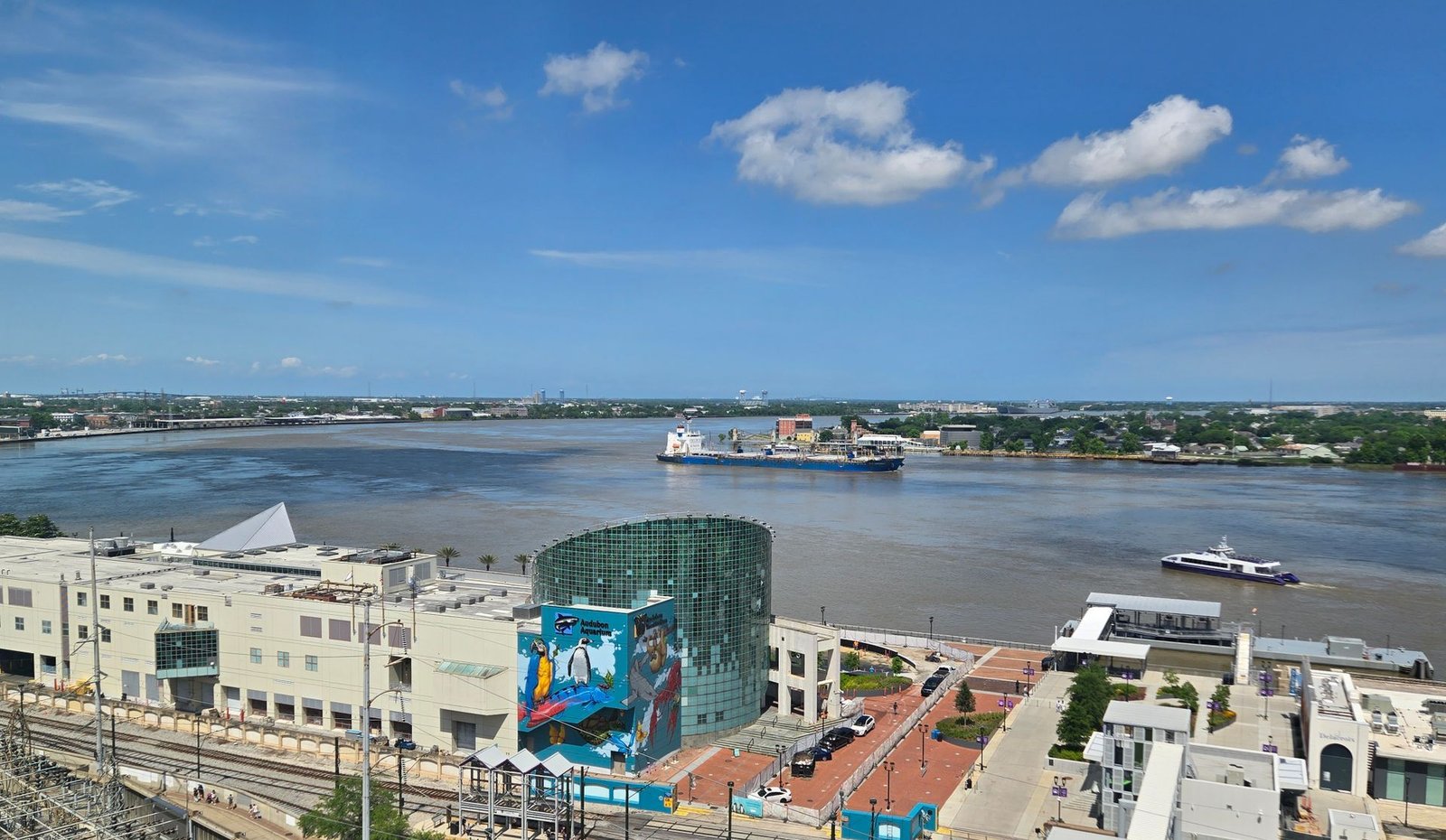
There is no city in America quite like New Orleans. Not even close. Draped along a great crescent bend of the Mississippi River in the southeastern corner of Louisiana, New Orleans exists as something genuinely singular in the American experience — a city so layered with history, so saturated with music, so extravagant in its food, so complex in its culture, and so unapologetically devoted to the pleasures of life that it operates by rules entirely its own. It is a city that has been shaped by French and Spanish colonizers, by African slaves and their descendants, by Haitian refugees, by Creole aristocrats, by Irish and Italian immigrants, by river pirates and riverboat gamblers, by jazz musicians and Mardi Gras Indians, and by a geography so precarious — much of the city sits below sea level, cradled between the river and Lake Pontchartrain — that simply existing here has always required a certain defiant audacity.
New Orleans has survived yellow fever epidemics, catastrophic floods, fires that leveled entire neighborhoods, and the almost unimaginable devastation of Hurricane Katrina in 2005, which killed more than 1,800 people and displaced hundreds of thousands more. It came back — not entirely, not without scars, not without ongoing struggles — but it came back with its identity intact, its music still pouring from every doorway, its food still among the greatest on the continent, and its spirit stubbornly, magnificently unbroken.
To visit New Orleans is to step into a city that demands full sensory engagement. The smells of chicory coffee and beignet powder and praline candy and crawfish étouffée drift through the streets. Brass bands materialize on corners and in second-line parades that sweep through neighborhoods with joyful, unstoppable momentum. The architecture — iron-lace balconies, crumbling plaster walls in shades of ochre and rose and faded turquoise, gas lamps flickering in the humid night air — looks like nowhere else in North America. New Orleans is not a museum piece, though it is achingly beautiful. It is a living, breathing, deeply human city, and it will get under your skin in ways you will spend years trying to articulate.
Getting There
Louis Armstrong New Orleans International Airport (MSY) serves the city with flights from major American hubs and a handful of international destinations. The airport is located about 15 miles west of downtown in Kenner and is connected to the city by the Airport-Union Passenger Terminal light rail line, which opened in 2023 and provides direct service to the Union Passenger Terminal in downtown New Orleans in approximately 30 minutes — a welcome improvement over the previously limited ground transportation options.
Taxis and ride-sharing services are available at the airport. Several hotel shuttles also operate from the ground transportation area.
Amtrak serves New Orleans with three long-distance routes that reflect the city’s historic position as a great American rail hub. The City of New Orleans runs north to Chicago through Memphis and Jackson. The Crescent connects New Orleans to New York City via Atlanta, Charlotte, and Washington D.C. The Sunset Limited runs west to Los Angeles through San Antonio and Tucson, and east to Orlando. All trains arrive and depart from the Union Passenger Terminal on Loyola Avenue near the Superdome.
Greyhound and Flixbus connect New Orleans to regional cities. For those driving, Interstate 10 is the primary east-west corridor, connecting New Orleans to Baton Rouge to the west and to the Mississippi Gulf Coast and Biloxi to the east. Interstate 55 runs north toward Jackson and Chicago.
Getting Around
New Orleans is a surprisingly compact city in its most-visited areas, and the French Quarter and adjacent neighborhoods are very walkable — though the subtropical heat and humidity of summer make air-conditioned breaks a necessity.
The Regional Transit Authority (RTA) operates bus and streetcar lines. The St. Charles Streetcar, running along the grand avenue of the same name through the Garden District and Uptown, is one of the oldest continuously operating streetcar lines in the world and a genuine civic treasure — an atmospheric, rattling, wood-paneled ride through some of the most beautiful urban scenery in America. The Canal Street streetcar runs from the French Quarter riverfront up Canal Street toward Mid-City and City Park. The Riverfront streetcar connects the French Quarter waterfront to the Warehouse District.
Ride-sharing services are widely available. Taxis are plentiful in tourist areas. Cycling is popular in the relatively flat city, and bike rental shops and the Blue Bikes bikeshare program offer easy access to two wheels. The Canal Street Ferry provides free pedestrian and bicycle crossing of the Mississippi River to the Algiers neighborhood on the West Bank.
Driving in New Orleans can be challenging for the uninitiated — the street grid, laid out along the curves of the river rather than on a compass-oriented grid, is famously confusing, and parking in the French Quarter and surrounding areas is scarce and expensive. Most visitors find that a combination of walking, streetcars, and ride-sharing serves them well.
Neighborhoods to Know
New Orleans is a city of intensely defined neighborhoods, each with its own history, architecture, demographics, and atmosphere.
The French Quarter — known locally simply as the Quarter, or the Vieux Carré (French for “old square”) — is the oldest and most visited neighborhood in New Orleans. Its 13-by-6-block grid of streets, laid out by French colonial engineer Adrien de Pauger in 1722, contains the most intact collection of early nineteenth-century Creole architecture in the United States. Despite the name, the architecture is predominantly Spanish in character, rebuilt after two great fires — in 1788 and 1794 — destroyed most of the original French structures. The iconic iron-lace balconies, colorful stucco facades, and hidden courtyards behind heavy carriage gates create an atmosphere that is simultaneously romantic and slightly dissolute.
Bourbon Street is the most famous — and most infamous — street in the Quarter, a seven-block corridor of bars, strip clubs, souvenir shops, and frozen daiquiri stands that operates at maximum volume around the clock. It is a genuine spectacle and worth at least one walk-through, but it represents a narrow and commercially oriented slice of what the Quarter offers. Royal Street, one block toward the river, is the Quarter’s elegant alter ego: lined with antique dealers, fine art galleries, and the grand facades of historic mansions. Chartres Street and Decatur Street offer a middle ground of excellent restaurants, local bars, and architectural beauty. Jackson Square, at the heart of the Quarter’s riverfront, is the city’s most photographed vista — the triple spires of St. Louis Cathedral rising behind the equestrian statue of Andrew Jackson, surrounded by artists, fortune tellers, street musicians, and the levee promenade overlooking the Mississippi.
Frenchmen Street in the Faubourg Marigny neighborhood, just downriver from the French Quarter, is where locals go for live music — and it is arguably the most authentic and exciting music street in America. On any given night, multiple clubs along a three-block stretch offer live jazz, funk, brass band music, blues, and Afro-Caribbean sounds, spilling out onto the sidewalk and mingling in the warm night air. The Spotted Cat Music Club, d.b.a., Café Negril, and the Jazz Playhouse are among the anchors. The street scene outside the clubs — musicians playing for tips, artists selling work from folding tables, people dancing on the sidewalk — is as much a part of the experience as anything inside.
The Marigny and Bywater neighborhoods stretch downriver from the French Quarter along the river. The Marigny, one of the oldest faubourgs (suburbs) of the original city, has a vibrant bohemian character and is home to much of the city’s LGBTQ+ community. Bywater, further downriver, has emerged as one of the city’s most creative and gentrifying neighborhoods, with a growing concentration of art studios, farm-to-table restaurants, and coffee shops in colorful, creatively decorated Creole cottages.
The Garden District is the grand residential neighborhood developed by wealthy American merchants and planters in the mid-nineteenth century — deliberately sited upriver from the French Quarter to separate the American newcomers from the established Creole society. Its streets are lined with magnificent Greek Revival and Italianate mansions set behind iron fences and shaded by enormous live oak trees draped with Spanish moss. Magazine Street, the Garden District’s commercial spine, runs for several miles through Uptown and is lined with antique shops, boutiques, restaurants, and bars. A walk through the Garden District — particularly along Prytania, Coliseum, and St. Charles — reveals some of the most beautiful domestic architecture in America.
Uptown extends beyond the Garden District toward Audubon Park and Tulane and Loyola universities. It is a residential neighborhood of great beauty and considerable social diversity, with Creole cottages and doubles alongside grand mansions, and a lively commercial life along Magazine Street and Oak Street.
Mid-City sits in the geographic interior of the city between the river and Lake Pontchartrain. It suffered severely during Katrina but has rebuilt with considerable energy. City Park, one of the largest urban parks in America, anchors the neighborhood. The Bayou St. John waterway, lined with elegant homes and popular with kayakers and joggers, runs through Mid-City toward the park. The stretch of Carrollton Avenue and Bienville Street in Mid-City has a growing concentration of excellent, locally loved restaurants.
Tremé (pronounced “treh-MAY”) is one of the most historically significant neighborhoods in America — the oldest African American neighborhood in the United States, the birthplace of jazz, and the heart of the city’s Mardi Gras Indian and brass band traditions. Its streets are lined with modest Creole cottages, and its cultural institutions — the Backstreet Cultural Museum, the St. Augustine Church, the cluster of second-line social aid and pleasure clubs — tell a story of African American cultural creativity and resilience that has shaped American music and culture worldwide.
Warehouse District and Arts District occupy the blocks between the French Quarter and the Garden District, once dominated by cotton warehouses and now transformed into a concentration of museums, contemporary art galleries, boutique hotels, and some of the city’s finest restaurants. The Contemporary Arts Center, the Ogden Museum of Southern Art, and the National WWII Museum are all here.
History & Culture
New Orleans carries more history per square foot than perhaps any other American city, and that history is not dusty or remote — it lives in the food, the music, the architecture, the language, and the daily rituals of the people who call this city home.
The site was settled by French colonists under Jean-Baptiste Le Moyne de Bienville in 1718, named for the Duke of Orléans, and served as the capital of French Louisiana. It passed to Spain in 1762, back to France briefly in 1800, and was purchased by the United States as part of the Louisiana Purchase in 1803. This succession of colonial powers, combined with the forced arrival of enormous numbers of enslaved Africans — many from Senegal, Congo, and the Bénin Coast — and the later influx of Haitian refugees following the Haitian Revolution of 1804, created a cultural synthesis unlike anything else in North America.
The result was Creole culture: a hybrid cuisine, a hybrid language (Louisiana Creole), a hybrid religion (Catholicism intertwined with African spiritual traditions that became Voodoo), and eventually a hybrid music that the world would come to know as jazz.
The National World War II Museum is one of the finest museums in the United States, full stop. Founded by historian Stephen Ambrose in 2000 on the basis of New Orleans’ role as the site where the Higgins boats used in the D-Day landings were manufactured, it has grown into a sprawling, multi-pavilion complex that tells the story of the entire American experience of the Second World War through extraordinary artifact collections, first-person oral histories, immersive film experiences produced by Tom Hanks, and meticulously reconstructed environments. Plan to spend a full day; it is that comprehensive and that good.
The Historic New Orleans Collection on Royal Street is a research center, archive, and museum complex that holds one of the most important collections of documents, maps, photographs, and artifacts relating to the history of Louisiana and the Gulf South. Its rotating exhibitions and permanent galleries offer deep and nuanced explorations of the city’s complex past.
The Cabildo and Presbytere on Jackson Square are twin buildings flanking St. Louis Cathedral that now serve as museums operated by the Louisiana State Museum. The Cabildo, where the Louisiana Purchase was formally transferred in 1803, contains exceptional collections relating to colonial Louisiana, the Civil War, and Reconstruction. The Presbytere houses an outstanding permanent exhibition on Mardi Gras.
The Backstreet Cultural Museum in Tremé is a small, independent museum devoted to the African American masking and parade traditions of New Orleans — the Mardi Gras Indians, the skull and bone gangs, the social aid and pleasure clubs, and the second-line parades. Founded by Sylvester Francis, a devoted collector and cultural preservationist, it is one of the most important cultural institutions in the city and one of the most overlooked by visitors who confine themselves to the Quarter.
The New Orleans Jazz Museum at the Old U.S. Mint on Esplanade Avenue traces the history and development of jazz through instruments, photographs, recordings, and interactive exhibits. The building itself — a striking Greek Revival structure built in 1835 — operated as a Confederate mint briefly during the Civil War before returning to federal control.
Voodoo has a complex and often misunderstood history in New Orleans rooted in the West African spiritual traditions brought by enslaved people and their Haitian descendants. Marie Laveau, the legendary nineteenth-century Voodoo queen, remains one of the most powerful figures in New Orleans cultural memory; her tomb in St. Louis Cemetery No. 1 is one of the most visited sites in the city. The New Orleans Historic Voodoo Museum in the French Quarter offers an introduction, though serious exploration of the tradition benefits from engagement with practitioners and scholars rather than tourist-oriented presentations.
Music
Music in New Orleans is not entertainment. It is oxygen. It rises from the streets, pours from bars and clubs, accompanies funerals and weddings and Sunday afternoons in the park, and carries within it the accumulated emotional history of a city that has always expressed its deepest feelings through sound.
Jazz was born in New Orleans in the late nineteenth and early twentieth centuries, emerging from the collision of African rhythmic traditions, European harmonic structures, blues, ragtime, and the unique social environment of a city where Black musicians of different backgrounds mixed in ways largely impossible elsewhere in the segregated South. The music that emerged from the dance halls and brothels of Storyville, from the street parades and the social clubs, from the riverboats and the churches of Tremé, became the most influential American musical form in history. Louis Armstrong, Jelly Roll Morton, Sidney Bechet, King Oliver, and Kid Ory all came of age in New Orleans; their descendants — in spirit if not always by birth — continue to fill the city’s clubs and streets with music every night of the year.
Brass band music is the living heart of New Orleans musical tradition. The brass band — drums, sousaphone bass, trombones, trumpets, saxophones — provides the soundtrack to second-line parades, jazz funerals, festival performances, and impromptu street concerts. Bands like the Rebirth Brass Band, the Hot 8 Brass Band, the Dirty Dozen Brass Band, and the young Pinettes Brass Band (an all-female ensemble) carry the tradition forward with enormous vitality and creative ambition. The Rebirth plays every Tuesday night at the Maple Leaf Bar in Uptown — a sweaty, joyful, transformative experience that is not to be missed.
The New Orleans Jazz & Heritage Festival, held over two weekends in late April and early May at the Fair Grounds Race Course, is one of the great music festivals in the world. Its multiple stages present jazz, blues, gospel, R&B, funk, Cajun, zydeco, rock, and international music across two weekends, alongside an extraordinary food fair showcasing Louisiana culinary traditions. It draws over 400,000 attendees annually and features lineups that typically include the biggest names in American music alongside local legends and emerging artists.
The French Quarter Festival, held the weekend before Jazz Fest in mid-April, is free to attend and presents dozens of stages throughout the French Quarter with programming heavily weighted toward local New Orleans artists. It is beloved by locals and devoted visitors as one of the city’s most genuinely joyful public events.
Frenchmen Street, already described above, remains the nightly center of the city’s live music ecosystem. But music spills out of venues throughout the city — at the Maple Leaf in Uptown, at Tipitina’s (the legendary concert hall founded in 1977 and named for a Professor Longhair song), at the Howlin’ Wolf in the Warehouse District, at Rock ‘n’ Bowl (a bowling alley and live music venue in Mid-City that should not work but absolutely does), and at dozens of neighborhood bars throughout the city.
Mardi Gras
Mardi Gras — Fat Tuesday — is the culmination of the Carnival season that begins on January 6th (Epiphany, or Twelfth Night) and ends at midnight on Mardi Gras day, when Lent begins. It is the most famous celebration in America and one of the most famous in the world, and while Bourbon Street’s bead-tossing revelry is the image most outsiders carry, the full reality of Mardi Gras in New Orleans is vastly richer and more complex.
The heart of Mardi Gras is the krewe system — private social organizations that organize and fund the elaborate parades that roll through the city’s streets over the two weeks preceding Fat Tuesday. The oldest and most prestigious krewes — Rex, Comus, Momus, Proteus — have histories stretching back to the nineteenth century and maintain elaborate traditions of royalty, tableaux, and formal balls. Newer super-krewes like Bacchus and Endymion stage enormous parades with celebrity monarchs and massive float processions. The parades roll on routes through Uptown, Mid-City, and the Marigny, and neutral grounds (the local term for median strips) fill with families and friends setting up ladders, coolers, and elaborate viewing camps days in advance.
The Mardi Gras Indians are perhaps the most extraordinary cultural phenomenon associated with the season — Black New Orleans men and women who spend the entire year hand-sewing elaborate, beaded, feathered suits of stunning beauty and complexity, inspired by a tradition of solidarity and mutual admiration between African American and Native American communities that dates to the nineteenth century. On Mardi Gras morning and St. Joseph’s Night, the tribes emerge in their suits and engage in ritualized encounters on the streets of their neighborhoods — Tremé, Central City, Uptown — that are simultaneously art performance, cultural assertion, and community celebration. Witnessing a Mardi Gras Indian in full suit is one of the most breathtaking visual experiences the city offers.
The Zulu Social Aid & Pleasure Club parade on Mardi Gras morning is the most beloved parade in the city — a predominantly Black krewe whose hand-painted coconuts are the most coveted throws in all of Carnival. The Rex parade follows, and together they constitute the main event of the day on St. Charles Avenue.
Visitors planning a trip around Mardi Gras should book accommodation six months to a year in advance, budget for significantly elevated prices, and understand that the experience extends far beyond Bourbon Street. Exploring the neighborhood parades, following a Mardi Gras Indian tribe, attending a krewe ball if possible, and simply walking the city’s streets on the days leading up to Fat Tuesday will reveal dimensions of the celebration that the Bourbon Street spectacle entirely misses.
Food & Drink
New Orleans has one of the great urban food cultures in the world. Not in the hemisphere. In the world. The city’s cuisine is the product of centuries of cultural collision and synthesis — French classical technique, Spanish flavors, West African ingredients and cooking methods, Native American botanical knowledge, and waves of immigrant influence from Ireland, Italy, Germany, and Southeast Asia — all filtered through the distinctive agricultural bounty of Louisiana: crawfish, shrimp, oysters, blue crabs, redfish, speckled trout, Creole tomatoes, mirlitons, andouille sausage, tasso ham, and the holy trinity of onion, celery, and bell pepper that underpins virtually every dish in the local canon.
Gumbo is the city’s foundational dish — a rich, dark stew thickened with a slow-cooked roux (flour and fat cooked together until it turns the color of dark chocolate) and served over white rice. It comes in many variations: chicken and andouille, seafood, duck and oyster. The roux is everything; getting it right requires patience, skill, and the willingness to stand at a stove stirring for 45 minutes to an hour without stopping. Dooky Chase’s Restaurant in Tremé, founded in 1941 by the legendary Leah Chase — who fed Civil Rights leaders and presidents from Lyndon Johnson to Barack Obama at her table — serves what many consider the definitive gumbo z’herbes, a special version made with greens traditionally eaten on Holy Thursday.
Jambalaya is the city’s other great rice dish — a one-pot preparation of rice cooked with meat (usually chicken, andouille, or shrimp, often in combination) in a seasoned tomato-based or brown stock. It is the Louisiana cousin of Spanish paella and West African jollof rice, and it is deeply satisfying, filling, and adaptable to whatever the kitchen has on hand.
Crawfish étouffée smothers the small freshwater crustaceans that are Louisiana’s most beloved seasonal ingredient in a buttery, golden sauce built on the holy trinity and served over rice. Crawfish season runs roughly from late January through June, and during its peak the city celebrates with crawfish boils — enormous social gatherings where pounds of boiled crawfish, seasoned with cayenne and crab boil, are piled on newspaper-covered tables and eaten by hand with corn and potatoes.
Red beans and rice, traditionally eaten on Mondays (laundry day, when the beans could cook unattended all day while women washed clothes), remains a cornerstone of the local diet and is available at restaurants throughout the city every day of the week. Camellia brand red beans simmered with andouille and smoked sausage, served over long-grain rice with hot sauce and French bread — this is the comfort food of New Orleans.
The po’boy is the city’s definitive sandwich — a French bread roll (the bread itself, baked by local bakeries like Leidenheimer’s, is as important as the filling) stuffed with fried shrimp, oysters, catfish, roast beef drowning in gravy, or combinations thereof. Ordering a po’boy “dressed” means lettuce, tomato, pickles, and mayonnaise. Domilise’s in Uptown, Parkway Bakery in Mid-City, and Parasol’s in the Irish Channel are among the most beloved institutions for po’boys.
The muffuletta is a New Orleans invention of Sicilian origin — a massive round Italian bread loaf filled with layers of Italian cured meats and cheese and, most importantly, a tangy olive salad of green and black olives, giardiniera, and pickled vegetables. Central Grocery on Decatur Street, which claims to have invented it around 1906, still serves what many consider the definitive version.
Beignets are square French doughnuts fried to order and buried under an avalanche of powdered sugar, served with café au lait — chicory-laced coffee blended with hot milk — at the Café Du Monde in Jackson Square, which has been open 24 hours a day (except during hurricanes and catastrophic floods) since 1862. The powdered sugar will get on your clothes. This is unavoidable and part of the experience.
Oysters from the waters of Louisiana are among the finest in the world — fat, briny, and cold on the half shell, or chargrilled at Drago’s Seafood Restaurant in the style pioneered by Tommy Cvitanovich: the oysters are grilled in their shells with garlic, butter, Romano cheese, and herbs until they bubble and char at the edges, creating something of almost overwhelming richness and deliciousness. Raw oysters at the Acme Oyster House on Iberville Street or the Casamento’s Restaurant in Uptown (open only during oyster season, closed in summer) are equally essential.
The cocktail culture of New Orleans is as historically significant as its food. The city claims to have invented the cocktail itself — a claim disputed by historians but fervently defended locally. What is indisputable is that several iconic American cocktails were born here. The Sazerac — rye whiskey (or cognac, in its original nineteenth-century form), Peychaud’s bitters, a sugar cube, and an absinthe rinse — is the official cocktail of New Orleans. The Ramos Gin Fizz, requiring twelve minutes of vigorous shaking (and historically requiring a relay team of shakers at busy bars), is a sublime if labor-intensive creation. The Hurricane, served in its eponymous glass at Pat O’Brien’s on St. Peter Street, is a rum-based tourist staple of a more dubious pedigree but genuine popularity. The cocktail bars of the city range from the storied Sazerac Bar at the Roosevelt Hotel to innovative craft cocktail spots like Cure in Uptown, Compère Lapin in the Warehouse District, and Bar Marilou in the Marigny.
Commander’s Palace in the Garden District is the greatest restaurant in New Orleans — a claim that many would dispute enthusiastically, which is itself a mark of how rich the city’s dining landscape is, but one that rests on a century of evidence. The turquoise Victorian mansion on Washington Avenue has been the training ground for more significant American chefs — Paul Prudhomme, Emeril Lagasse, Jamie Shannon, Tory McPhail — than any other kitchen in the country, and under the Brennan family’s stewardship has maintained a standard of Creole haute cuisine, theatrical hospitality, and serious wine service that remains unmatched. The Saturday jazz brunch is one of the great restaurant experiences in America.
Parks & Outdoor Spaces
City Park covers 1,300 acres in Mid-City — larger than Central Park in New York — and encompasses ancient live oak trees estimated to be 600 years old, a botanical garden, a train garden (a beloved outdoor model railroad displaying miniature New Orleans landmarks), the New Orleans Museum of Art, a sculpture garden, a golf course, tennis courts, picnic facilities, and a small amusement park. After suffering catastrophic damage from Katrina, the park was painstakingly restored and today is one of the most beautiful urban green spaces in the American South.
Audubon Park in Uptown, adjacent to Tulane and Loyola universities, is an elegant 350-acre expanse of live oaks, lagoons, a golf course, and jogging paths along the river. The Audubon Zoo, one of the finest small zoos in the country, occupies the riverside portion of the park. The walking and running path around the park’s perimeter under the live oaks is one of the most beautiful urban walks in New Orleans.
The Lafitte Greenway is a two-mile linear park and trail connecting the French Quarter to Mid-City along the former route of a historic canal, offering a traffic-free cycling and walking corridor through the city’s interior neighborhoods.
The Moonwalk is the levee promenade along the riverfront in the French Quarter, offering views of the Mississippi River — always impressive, always slightly ominous in its width and power and color. Watching a container ship the size of an apartment building float past at eye level, with the levee all that stands between the river and the below-sea-level city behind you, is a genuinely arresting experience.
Day Trips & Nearby Destinations
The Plantation River Road follows the Mississippi upriver from New Orleans through a landscape of antebellum sugar plantation estates, many of which offer tours. Oak Alley Plantation, with its famous quarter-mile canopy of 300-year-old live oaks leading to a Greek Revival mansion, is the most photographed. Whitney Plantation is the most morally serious and historically important — the only plantation museum in Louisiana whose primary focus is the experience of the enslaved people who lived and worked there, told through first-person testimonials gathered in the 1930s by Federal Writers Project interviewers.
Cajun Country — the Atchafalaya Basin and the bayou communities of Lafayette, Breaux Bridge, and Eunice — lies two hours west of New Orleans and offers a deeply different Louisiana experience. The food (boudin sausage, cracklins, crawfish bisque, Cajun smoked meats) is different from New Orleans Creole cooking, as is the music (zydeco and Cajun two-step rather than jazz). The Atchafalaya Basin, the largest river swamp in America, is one of the most extraordinary natural environments in North America.
Swamp tours are available from multiple operators departing from New Orleans and from staging areas in the surrounding wetlands. A flat-bottomed airboat or pontoon boat tour through the cypress-tupelo swamps of the Barataria Preserve or Lake Salvador offers encounters with alligators, roseate spoonbills, great blue herons, nutria, and the eerie, beautiful landscape of Louisiana’s disappearing coastal wetlands.
Baton Rouge, the state capital, is 80 miles upriver — about an hour and twenty minutes by car. The Old State Capitol, a Gothic Revival castle on the bluffs above the river, and the Louisiana State Capitol (the tallest state capitol building in the country, from the top of which Huey Long was shot in 1935) are the main attractions.
The Gulf Coast of Mississippi — Biloxi, Gulfport, Pass Christian — is about 90 minutes east and offers casino resorts, beaches, and the modest but appealing attractions of small Gulf Coast towns still rebuilding from Katrina’s devastation.
Practical Information
Best time to visit: New Orleans rewards visitors in every season but punishes the unprepared. Spring (March through May) is the most universally beloved time to visit — temperatures are warm but not brutal, the azaleas and camellias are in bloom, Jazz Fest and French Quarter Festival fill the calendar, and the city is at its most festive. Fall (October and November) is similarly pleasant, with cooler temperatures and the city beginning to gear up for Carnival season. Winter is mild by national standards — temperatures rarely drop below freezing — and the city has a cozy, locals-oriented atmosphere between the holidays and Mardi Gras. Summer (June through August) is genuinely brutal — temperatures in the low-to-mid 90s Fahrenheit with humidity levels that make the air feel like warm soup. That said, summer brings its own pleasures: the crowds thin somewhat (except around major events), prices drop, and the city’s culture continues undimmed. If you visit in summer, embrace air conditioning, plan outdoor activities for morning and evening, and hydrate aggressively.
Hurricane season runs from June through November, with the peak between August and October. While the probability of a hurricane hitting during any given visit is low, travelers should monitor forecasts and consider travel insurance.
Safety: New Orleans has a significant violent crime rate, concentrated in specific neighborhoods and largely involving people known to one another. The vast majority of visitors experience no crime beyond the petty variety common to any tourist-heavy urban area. The French Quarter, Frenchmen Street, the Garden District, and other tourist-oriented areas are generally safe, though normal urban precautions apply at all times. Walking alone late at night in unfamiliar neighborhoods is inadvisable. The local police presence in the Quarter is substantial.
Accommodation: Options range from grand historic hotels (the Roosevelt, the Monteleone — the legendary carousel bar hotel on Royal Street — the Windsor Court) to boutique guesthouses and B&Bs in the Garden District and Marigny, to a wide range of mid-range chain hotels clustered around the Convention Center and downtown. Book far in advance for Mardi Gras (six months to a year), Jazz Fest (four to six months), and major sporting events at the Superdome.
Tipping: Standard American customs apply. Given that many service industry workers in New Orleans depend heavily on tips and that the city’s hospitality workforce is part of its cultural fabric, tipping generously is both customary and appreciated.
A Final Word
New Orleans will not leave you unchanged. It is a city that operates at a frequency most American cities have forgotten — slower, louder, more sensuous, more melancholy, more joyful, more alive to the pleasures of the present moment. A city that throws enormous parties not despite its sorrows but because of them. A city that has looked catastrophe in the face repeatedly and responded by cooking a magnificent pot of gumbo, pouring a Sazerac, and letting the brass band lead the way.
It is also a city of genuine complexity and unresolved tensions — between its tourist economy and its residential communities, between its mythologized past and its challenging present, between the New Orleans of glossy travel magazines and the New Orleans of neighborhoods that Katrina damaged and recovery has not yet reached. Engaging honestly with that complexity — eating at locally owned restaurants rather than chains, tipping generously, venturing beyond the French Quarter into the neighborhoods where the real cultural life of the city unfolds — is how visitors contribute to the city rather than simply consuming it.
Come ready to eat more than you planned, to stay out later than you intended, to be stopped in your tracks by a trumpet note floating down a dark street on a warm night. Come ready to be surprised by how much beauty can coexist with how much difficulty. Come ready to fall in love with a city that has been falling in love with life, stubbornly and magnificently, for three hundred years.
Leave a Reply
You must be logged in to post a comment.