Category: Cities

  • Las Vegas, Nevada: Where Endless Hospitality Meets the Great Outdoors

    There is no city on Earth quite like Las Vegas. Rising improbably from the scorched floor of the Mojave Desert in southern Nevada, Las Vegas is one of the most audacious, extravagant, and genuinely thrilling human constructions ever assembled. It is a city that was built on a single, magnificent promise — that here, in this unlikely place, anything is possible. That the ordinary rules of life are temporarily suspended. That the night never has to end, the lights never have to dim, and the party never has to stop.

    Las Vegas welcomes approximately 40 million visitors every year, drawn by the world’s greatest concentration of resort hotels, the most spectacular live entertainment on the planet, a casino gaming industry of staggering scale, restaurants helmed by virtually every celebrated chef in America, nightclubs that define the global standard for excess and excitement, and a surrounding natural landscape of breathtaking, almost otherworldly beauty.

    It is a city of contradictions. It is simultaneously the most artificial place in America and one of the most authentically human — a place where fortunes are won and lost, where marriages begin on a whim and end the same way, where international superstars perform nightly residencies and where a retired schoolteacher from Ohio discovers, at 68 years old, that she loves playing craps. It is gaudy and gorgeous, excessive and exciting, exhausting and exhilarating, all at once.

    The Las Vegas Strip — a four-mile stretch of Las Vegas Boulevard South in the unincorporated communities of Paradise and Winchester — is the beating heart of it all, home to the greatest concentration of luxury resort hotels in the world. But Las Vegas extends far beyond the Strip. Downtown Las Vegas, the surrounding neighborhoods, and the extraordinary natural wonders within a few hours’ drive all add depth and dimension to a city that rewards exploration far beyond its famous neon surface.
    This guide covers everything you need to know to experience Las Vegas at its fullest and finest.

    GETTING THERE
    Harry Reid International Airport (LAS), located just a few miles south of the Strip, is one of the busiest airports in the United States and among the most conveniently positioned major airports in the country relative to its city’s main attractions. More than 50 million passengers pass through annually, served by virtually every major domestic carrier and an increasing number of international airlines connecting Las Vegas to the United Kingdom, Canada, Mexico, Germany, Japan, and beyond.

    The airport’s proximity to the Strip is one of its great assets — on a clear run, you can be checked into your hotel room within 30 minutes of landing. Taxis, rideshares through Uber and Lyft, hotel shuttles, and the Las Vegas Monorail all provide convenient connections. Many of the major Strip resorts operate their own shuttle services for guests. The recently expanded Terminal 3 handles international arrivals and the larger domestic carriers with modern efficiency.

    Driving to Las Vegas is a beloved tradition for visitors from Southern California, the Southwest, and beyond. Interstate 15 connects Las Vegas to Los Angeles — approximately 270 miles southwest — making it the most popular weekend road trip destination for Angelenos, who make the journey in roughly four hours under normal conditions. The drive through the Mojave Desert on I-15, particularly the descent into the Las Vegas Valley from the high desert near Jean, Nevada — when the lights of the city first appear spread across the valley floor — is one of the most cinematic arrival experiences in American travel.

    From the north, US Route 95 connects Las Vegas to Reno, Nevada, and the Pacific Northwest. From the east, US 93 links Las Vegas to Phoenix and Arizona. From the southeast, Interstate 11 now provides improved highway connectivity.

    Amtrak does not currently serve Las Vegas directly, though various motorcoach bus services connect the city to Los Angeles, Phoenix, Salt Lake City, and other regional hubs. Greyhound, FlixBus, and Megabus all operate routes to Las Vegas.

    GETTING AROUND
    The Las Vegas Strip is simultaneously very walkable and deceptively large. The hotels along the Strip are massive — among the largest buildings in the world by square footage — and walking from one end of the Strip to the other takes the better part of an hour at a brisk pace. Distances between resorts that appear close on a map are routinely much longer on foot due to the sheer scale of the properties.

    That said, walking the Strip is an experience in itself and highly recommended at least once, particularly at night when the lights, signage, and street performance scene are at their most spectacular. Most of the major resort properties are also connected by indoor air-conditioned walkways, moving sidewalks, and covered pedestrian bridges over the major intersections, making it possible to move between resorts while staying largely out of the desert heat.
    The Las Vegas Monorail runs along the eastern side of the Strip, connecting MGM Grand at the southern end to the Sahara Hotel at the northern end with seven stations. It is fast, air-conditioned, and an efficient way to cover the Strip’s length without dealing with road traffic. However, it does not serve the western side of the Strip or extend to the airport, limiting its utility somewhat.

    The Las Vegas Strip Trolley is a bus service that runs the length of Las Vegas Boulevard and extends downtown, offering a low-cost alternative for those without a car. The Regional Transportation Commission (RTC) operates a broader public bus network covering the entire Las Vegas Valley, including the Deuce on the Strip — a double-decker bus service that runs 24 hours a day along the Strip and downtown corridor.

    Taxis are plentiful at every major resort’s taxi stand, though ridesharing through Uber and Lyft has largely become the preferred option for most visitors, offering greater transparency on pricing and wait times. However, be aware that during peak times — particularly after major concerts, sporting events, or on weekend nights — surge pricing can make rideshares significantly more expensive.

    Renting a car is worthwhile primarily for visitors who plan to explore beyond the Strip — particularly for day trips to the Grand Canyon, Red Rock Canyon, Valley of Fire, or other natural attractions in the region.
    The new Las Vegas Loop, developed by Elon Musk’s The Boring Company, operates a network of underground tunnels beneath the Las Vegas Convention Center using Tesla vehicles, and has been expanding to connect additional venues in the resort corridor. It offers a novel, if polarizing, transportation experience.

    WHERE TO STAY
    Las Vegas has more hotel rooms than virtually any city on Earth — over 150,000 rooms in the greater metro area alone — and the resort hotels along the Strip represent some of the most spectacular accommodation experiences available anywhere in the world.

    The Strip’s Iconic Resorts
    The Bellagio, operated by MGM Resorts, remains the gold standard of Las Vegas luxury. Its famous dancing fountains — the most visited attraction in Nevada — choreograph jets of water up to 460 feet in the air to music ranging from classical to pop, performing every 30 minutes in the afternoon and every 15 minutes in the evening. The Bellagio’s interior is celebrated for the Dale Chihuly glass sculpture “Fiori di Como” adorning the lobby ceiling — 2,000 hand-blown glass flowers in an explosion of color that serves as one of the finest pieces of public art in Las Vegas. The hotel’s casino, spa, gallery of fine art, and collection of restaurants that include Le Cirque, Picasso, and Prime Steakhouse make it one of the most complete resort experiences in the city.

    The Venetian and The Palazzo, now operated together as a unified mega-resort by Las Vegas Sands, represent the apex of Las Vegas themed architecture. The Venetian’s recreation of Venice — with painted sky ceilings, replica canals navigated by singing gondoliers, St. Mark’s Square, the Rialto Bridge, and the Doge’s Palace — is executed with extraordinary attention to detail. The all-suite property offers some of the most spacious standard accommodations on the Strip, and the Canyon Ranch Spa within the complex is among the finest in the city.

    Caesars Palace, opened in 1966, is the most iconic resort in Las Vegas history. The Roman Empire theme — marble columns, toga-clad cocktail servers, statues of Julius Caesar, and the magnificent Forum Shops mall designed as an ancient Roman marketplace with a painted sky ceiling that transitions from dawn to dusk — has been endlessly imitated but never bettered. The hotel has hosted some of the most famous moments in Las Vegas history, from Evel Knievel’s fountain jump to Muhammad Ali’s fights to decades of headline residencies. Its Bacchanal Buffet is one of the most celebrated in the city.

    The ARIA Resort & Casino at CityCenter is Las Vegas’s most architecturally sophisticated modern resort — a sleek, curvilinear tower of glass and steel designed by Pelli Clarke & Partners that rises 61 stories and houses an extraordinary collection of contemporary art throughout its public spaces. ARIA represents a more refined, design-conscious vision of Las Vegas luxury, with its technology-forward rooms (automated lighting, temperature, and curtains controlled from the bedside), multiple celebrity chef restaurants, and a casino floor that is one of the most elegant in the city.

    The Wynn Las Vegas and its sister property Encore, developed by casino magnate Steve Wynn and now operated by Wynn Resorts, consistently rank among the finest luxury hotel experiences not just in Las Vegas but in the entire world. Steve Wynn’s obsessive attention to detail — the floral arrangements alone are legendary — pervades every element of both properties. The lakefront suites at Encore, the Wynn Golf Club (the only golf course on the Strip), the nightclub Encore Beach Club, and the restaurants including SW Steakhouse and Lakeside are all exceptional.

    MGM Grand, with over 6,800 rooms, is one of the largest hotels in the world and a city unto itself, with a massive casino floor, multiple entertainment venues including the MGM Grand Garden Arena (host to major boxing matches and concerts), and the Hakkasan nightclub and restaurant — one of the most celebrated in the city.

    Park MGM, formerly the Monte Carlo, has been reimagined as a more lifestyle-oriented resort with a partnership with NoMad Hotels at its upper floors. The NoMad Library Bar is one of the most beautiful drinking spaces in Las Vegas. Eataly — the celebrated Italian food market and restaurant complex — occupies a dramatic space within the resort.
    New York-New York Hotel and Casino recreates the Manhattan skyline in miniature along the Strip, complete with a Statue of Liberty, the Brooklyn Bridge, and a roller coaster that wraps around the exterior of the building. It is unabashedly kitschy and enormously fun.

    The Cosmopolitan of Las Vegas is one of the Strip’s most stylish and design-conscious resorts, with a young, fashionable energy and one of the city’s best collections of bars and restaurants, including the Secret Pizza Place on the third floor — an unlisted, deliberately hidden gem that has become one of the most beloved dining secrets in the city.
    The Resorts World Las Vegas, which opened in 2021, is the first entirely new resort to be built on the Strip in over a decade. Developed by the Malaysian Genting Group, the $4.3 billion property brings a fresh energy to the northern Strip with three hotel brands — Las Vegas Hilton, Conrad Las Vegas, and Crockfords Las Vegas — and an enormous entertainment venue that has hosted major residencies.

    Off-Strip Options
    The Palms Casino Resort, Red Rock Casino in Summerlin, Green Valley Ranch in Henderson, and the Station Casinos properties scattered throughout the Las Vegas Valley offer excellent value and a more local, neighborhood-oriented experience away from the tourist intensity of the Strip.

    Downtown Las Vegas
    The D Las Vegas, Golden Nugget, El Cortez, and the Plaza Hotel & Casino anchor the downtown Fremont Street Experience hotel scene. The Golden Nugget in particular is a genuinely lovely resort with a pool complex that features a three-story water slide passing through a 200,000-gallon shark tank — one of the most memorable pool experiences in the city.

    CASINOS AND GAMING
    Las Vegas was built on gambling, and despite the diversification of its entertainment economy, the casino remains the cultural and architectural core of every major resort on the Strip. Walking onto a Las Vegas casino floor for the first time is a sensory experience like few others — the constant chiming of slot machines, the quiet intensity around the table game pits, the smell of recycled air and possibility, the absence of clocks and natural light, and the carefully calibrated lighting designed to keep you comfortable and engaged at any hour of the day or night.

    The games themselves span an enormous range of complexity and house advantage. Slot machines — the most prevalent game on any casino floor — require no skill and offer the casino its highest percentage edge on average, though the variety of themes, bonus features, and jackpot sizes makes them the most popular attraction for casual players. Video poker, played correctly with optimal strategy, offers some of the best odds for solo players.

    Table games offer more social engagement and, in many cases, better odds for informed players. Blackjack, played with basic strategy, reduces the house edge to less than one percent at many Strip casinos. Craps, with its bets on the Pass Line backed with maximum odds, offers similarly favorable odds and generates the most communal energy of any table game — a hot craps table is one of the most exciting social experiences a casino has to offer. Baccarat has grown enormously in popularity, particularly among high-limit players, due to its simplicity and relatively low house edge. Roulette, while offering worse odds than blackjack or craps, remains beloved for its simplicity and the romantic image it carries.

    Poker has a unique place in Las Vegas gaming culture. Unlike other casino games where you play against the house, poker pits players against each other, with the casino taking a small percentage of each pot as its fee. The Bellagio Poker Room, ARIA Poker Room, and the Venetian Poker Room are among the finest facilities in the world and regularly attract professional players and enthusiasts of all levels. The World Series of Poker, held annually at Bally’s Las Vegas (formerly at the Rio), is the most prestigious poker tournament series in the world, drawing thousands of participants from across the globe each summer.

    High-roller culture in Las Vegas is extraordinary. The major resorts maintain private high-limit gaming salons where minimum bets that would be considered insane in any other context are simply the starting point. Comps — complimentary rooms, meals, entertainment tickets, and services — are extended to significant gamblers by casino hosts who cultivate relationships with their most valuable players. The mythology of the Las Vegas high roller — arriving by private jet, being whisked to a villa suite, playing baccarat for hundreds of thousands of dollars a hand — is not entirely fictional.

    Sports betting has exploded in Las Vegas since the arrival of major professional sports franchises in the city. The sportsbooks at the major resorts are magnificent facilities — stadium-seating theaters with enormous screens showing simultaneous games from every major sport, table service for food and drinks, and the ability to bet on virtually any game, match, or sporting event in the world. The William Hill Race & Sports Book at Caesars Palace and the BetMGM Sportsbook at the MGM Grand are among the most impressive facilities of their kind.

    ENTERTAINMENT
    Las Vegas entertainment is in a class of its own. The city’s capacity to attract and sustain the biggest names in music, comedy, magic, and performance — in long-term residencies rather than one-off concerts — has created a permanent entertainment ecosystem unmatched anywhere on Earth.
    Residencies

    The Las Vegas residency has evolved from its origins in the Rat Pack era and Elvis Presley’s legendary run at the International Hotel (now Westgate Las Vegas) into the dominant format for major artists seeking to perform on their own terms. In recent years, Adele, Celine Dion, Bruno Mars, Katy Perry, Jennifer Lopez, Usher, Maroon 5, Lady Gaga, and dozens of other global superstars have held residencies at various Strip venues. Buying tickets to a Las Vegas residency show is one of the most reliably excellent live entertainment experiences in the world — the production values are extraordinary, the venues are purpose-built for intimacy and acoustics, and the artists are performing night after night in a settled, polished format that differs markedly from the arena concert experience.

    Cirque du Soleil
    Las Vegas has been the global home of Cirque du Soleil since 1993, when Mystère opened at Treasure Island. The company currently operates multiple shows simultaneously across the Strip — O at the Bellagio, which takes place entirely in, on, and above a 1.5-million-gallon pool of water and is widely considered among the greatest theatrical productions ever staged; Mystère at Treasure Island, the company’s longest-running Las Vegas production; Mad Apple at New York-New York, a more adult-oriented show blending circus arts with comedy, dance, and New York City themes; and the Beatles LOVE at the Mirage, a joyful celebration of the Fab Four’s music using the original master recordings in a custom-built theater designed in collaboration with George Harrison and Yoko Ono. Cirque du Soleil shows require advance booking, particularly for O, which sells out regularly.

    Magic and Illusion
    Las Vegas has a long and celebrated relationship with the art of magic. Penn & Teller have held a residency at the Rio for decades, performing their brilliantly deconstructionist brand of magic and comedy that is unlike any other show in the city. David Copperfield performs at the MGM Grand, offering a grand theatrical magic show that is the product of a lifetime of refinement. Criss Angel’s MINDFREAK at the Luxor blends magic with rock aesthetics and spectacle. For comedy magic, Mat Franco at LINQ Hotel is a celebrated option.

    Comedy
    The Las Vegas comedy scene is excellent. Brad Garrett’s Comedy Club at the ARIA, the Laugh Factory at the Tropicana, and various headliner engagements at the major showrooms bring some of the best working comedians in America through the city on a regular basis. Stand-up comedy has always been a natural fit for Las Vegas, and the quality of the circuit performers who cycle through the comedy clubs is consistently high.

    Production Shows and Other Entertainment
    Blue Man Group at the Luxor has been a Las Vegas institution for years, offering its unique blend of percussion, visual comedy, and audience interaction. Thunder from Down Under at the Excalibur has been delighting bachelorette parties for decades. The Tournament of Kings dinner show, also at the Excalibur, offers medieval jousting and feasting in a surprisingly enjoyable theatrical format.

    The Las Vegas Philharmonic, Nevada Ballet Theatre, and the Smith Center for the Performing Arts in downtown Las Vegas bring classical music, ballet, opera, and Broadway touring productions to the city, rounding out the entertainment offerings for those seeking alternatives to the Strip’s commercial spectacles.

    NIGHTLIFE
    Las Vegas nightlife is legendary, and for good reason. The city’s nightclubs, day clubs, pool parties, bars, and lounges operate on a scale and at a level of investment that simply does not exist anywhere else.

    The major nightclubs — Hakkasan at MGM Grand, Omnia at Caesars Palace, XS at Encore, Drai’s at the Cromwell, and Marquee at the Cosmopolitan — are massive, multi-room facilities with production values that rival stadium concerts. International superstar DJs command residency fees in the millions of dollars at these venues, drawing enormous crowds of international visitors. The light shows, sound systems, and theatrical production elements deployed at the best Las Vegas nightclubs are genuinely astonishing.

    The day club and pool party scene is equally remarkable. Wet Republic at MGM Grand, Encore Beach Club, and Daylight at Mandalay Bay transform Las Vegas resort pool areas into outdoor festivals with DJ performances, private cabanas, bottle service, and thousands of guests — an entertainment format that Las Vegas essentially invented and continues to define.

    For those seeking a more relaxed drinking experience, the options are equally compelling. The Chandelier Bar at the Cosmopolitan — a three-story bar literally constructed inside a giant chandelier — is one of the most beautiful drinking spaces in the world. The Vesper Bar at the Cosmopolitan, the Parasol Up/Parasol Down bars at the Wynn, and the Skybar atop the Waldorf Astoria (the non-gaming hotel at the top of the CityCenter complex) offer more intimate and sophisticated cocktail experiences.

    Fremont Street downtown has its own nightlife character — rawer, louder, more unfiltered, and genuinely fun. The outdoor bars along the Fremont East Entertainment District and the live music stages under the Fremont Street Experience canopy create an open-air party atmosphere that feels distinctly different from the polished excess of the Strip.

    FOOD AND DINING
    Las Vegas has transformed itself into one of the great dining destinations in the world. The concentration of celebrity chef restaurants here is extraordinary — virtually every major American culinary figure has a presence on the Strip.

    Joel Robuchon at the MGM Grand, named for the French chef who held more Michelin stars simultaneously than any other chef in history, was long considered the finest restaurant in Las Vegas and one of the best in the United States. The restaurant continues to operate to the highest standards following Chef Robuchon’s passing in 2018. Guy Savoy at Caesars Palace offers a similarly elevated French fine dining experience.

    Gordon Ramsay operates multiple concepts across the Strip — Gordon Ramsay Hell’s Kitchen at Caesars Palace, Gordon Ramsay Fish & Chips at The LINQ, and Gordon Ramsay Pub & Grill at Caesars. Wolfgang Puck’s Spago at the Bellagio remains a Strip classic. José Andrés operates multiple concepts including é by José Andrés — a tiny, intimate tasting counter inside the Jaleo restaurant at the Cosmopolitan that is one of the most exclusive dining experiences in the city, with only eight seats and a nightly avant-garde tasting menu.
    Carbone at ARIA brought the celebrated New York Italian-American restaurant to Las Vegas to enormous acclaim. Nobu, the Japanese-Peruvian fusion concept, operates at Nobu Hotel at Caesars Palace. Joël Robuchon’s rival Pierre Gagnaire’s concepts, Bobby Flay’s Mesa Grill, Tom Colicchio’s Heritage Steak, and Daniel Boulud’s DB Brasserie all add to a dining landscape of almost incomprehensible star power.

    The Las Vegas steakhouse is a category unto itself. CUT by Wolfgang Puck at the Palazzo, STK at the Cosmopolitan, SW Steakhouse at Wynn, and the classic Las Vegas experience of the Golden Steer Steakhouse — a legendary off-Strip institution that opened in 1958 and retains the ambiance of old Las Vegas, where the booths are still pointed out as where Frank Sinatra, Dean Martin, and the Rat Pack used to hold court — all make their case for the finest beef in the city.

    For more casual and value-oriented eating, the Las Vegas buffet remains an institution, though the format has been refined significantly. Bacchanal Buffet at Caesars Palace is a genuine culinary destination, with over 500 dishes prepared daily using high-quality ingredients. The Wicked Spoon at the Cosmopolitan reinvented the buffet model with individual plated portions rather than traditional serving trays.

    The Cosmopolitan’s secret dining gem — the Secret Pizza Place, found by navigating unmarked elevator banks to the third floor — serves perfectly executed New York-style pizza in a tiny, retro space that requires dedication to find and rewards the effort handsomely.
    For those venturing off the Strip, Las Vegas has a growing independent restaurant scene. The Arts District downtown, the Summerlin neighborhood to the west, and the Henderson suburb to the southeast all have dining corridors with acclaimed independent restaurants. Lotus of Siam on East Sahara Avenue is universally considered one of the finest Thai restaurants in the United States and is a genuine destination for food lovers visiting Las Vegas.

    SHOPPING
    Las Vegas shopping has evolved from souvenir stands and gift shops into a genuinely world-class retail experience.
    The Forum Shops at Caesars Palace set the template for experiential retail in Las Vegas — its recreation of an ancient Roman street with a painted sky ceiling that cycles from dawn to dusk, animatronic statues, and a spiral escalator that was the first in the United States remains one of the most visited shopping malls in the world. Tenants include Versace, Gucci, Louis Vuitton, Prada, Harry Winston, and a vast array of luxury and contemporary brands.

    The Grand Canal Shoppes at The Venetian and Palazzo extends the Venetian Italian theme through a recreation of Venetian streets and canals, with gondoliers serenading shoppers in the canal below while they browse luxury boutiques. The Shops at Crystals at CityCenter is arguably the most architecturally striking mall in the city, designed by Daniel Libeskind with a crystalline geometric exterior and housing the highest concentration of luxury flagship stores in Las Vegas — Hermès, Prada, Tom Ford, Louis Vuitton, and others all occupy extraordinary purpose-built spaces.

    The LINQ Promenade is an open-air shopping and entertainment district anchored by the High Roller observation wheel, with a mix of restaurants, bars, boutiques, and entertainment venues designed to feel more like an outdoor urban neighborhood than a traditional mall. Fashion Show Mall on the Strip is a traditional large-format mall with Nordstrom, Macy’s, Dillard’s, and a wide range of mid-market retailers.

    For outlet shopping, Las Vegas Premium Outlets — with locations both north and south of the Strip — offer significant discounts on designer and brand-name merchandise and draw enormous numbers of international visitors seeking value on American goods.

    NATURAL WONDERS AND DAY TRIPS
    One of Las Vegas’s greatest and most underappreciated assets is its location — within striking distance of some of the most spectacular natural landscapes in North America.
    Red Rock Canyon National Conservation Area sits just 17 miles west of the Strip and offers a stunning introduction to the Mojave Desert landscape. The 13-mile scenic drive loops through formations of ancient Aztec sandstone in shades of red, orange, and cream, with numerous hiking trails ranging from easy walks to challenging technical climbs. The Calico Hills area is particularly photogenic. Sunrise and sunset light the canyon in extraordinary colors. It is entirely possible to hike in Red Rock Canyon in the morning and be back at a casino poker table by afternoon.

    Valley of Fire State Park, Nevada’s oldest state park, lies about an hour northeast of Las Vegas and contains the most spectacular concentration of red sandstone formations in the state. Ancient petroglyphs left by the Ancestral Puebloans, petrified wood 225 million years old, and formations with names like Elephant Rock and the Beehives make it one of the most remarkable geological landscapes in the American Southwest. The park appears in numerous films and television productions and looks almost impossibly beautiful.

    Hoover Dam, located about 30 miles southeast of Las Vegas on the Nevada-Arizona border, is one of the great engineering achievements of the 20th century. Completed in 1935 during the Great Depression, the 726-foot concrete arch-gravity dam on the Colorado River created Lake Mead — the largest reservoir in the United States by volume — and provides hydroelectric power to millions of people across the Southwest. Guided tours descend into the dam’s interior, and the visitor center tells the remarkable story of its construction.
    Lake Mead National Recreation Area encompasses the reservoir created by Hoover Dam and offers boating, fishing, swimming, kayaking, and camping in a striking desert lake landscape. The sight of a massive blue lake surrounded by ochre desert mountains is genuinely surreal and beautiful.

    The Grand Canyon South Rim is approximately four hours by car from Las Vegas and is accessible by a wide variety of organized tours — helicopter flights from Las Vegas landing on the canyon floor, small plane tours, and motorcoach excursions all operate regularly. A day trip to the Grand Canyon from Las Vegas is entirely feasible and constitutes one of the most dramatic single-day experiences available to any traveler anywhere in the world. The West Rim of the Grand Canyon, closer to Las Vegas at about two and a half hours, is home to the Skywalk — a horseshoe-shaped glass bridge extending 70 feet beyond the canyon rim 4,000 feet above the Colorado River.

    Zion National Park in southern Utah, approximately two and a half hours north of Las Vegas, is one of the most magnificent national parks in the United States. Its soaring sandstone cliffs in shades of cream, pink, and red, carved by the Virgin River, create a landscape of almost cathedral-like grandeur. The Angels Landing hike — a challenging ascent to a narrow ridgeline with sheer drop-offs on both sides — is one of the most thrilling hikes in America. The Narrows, where hikers wade through the Virgin River between 1,000-foot canyon walls that narrow to as little as 20 feet, is utterly unique. Zion is absolutely worth an overnight trip, though a long day from Las Vegas is possible.

    Bryce Canyon National Park, Death Valley National Park, and Joshua Tree National Park are all within a half-day’s drive and round out one of the most extraordinary concentrations of natural wonders accessible from any major American city.

    SPORTS
    Las Vegas transformed into a genuine major league sports city with astonishing speed in the late 2010s and early 2020s.
    The Vegas Golden Knights, the NHL expansion franchise that began play in the 2017-18 season, became one of the most remarkable stories in professional sports history — reaching the Stanley Cup Final in their very first season of existence and winning the Stanley Cup in 2023. The passion of Las Vegas hockey fans has surprised observers and thrilled the league, and games at T-Mobile Arena are among the most electric sporting events in the city.

    The Las Vegas Raiders relocated from Oakland in 2020 into Allegiant Stadium — a stunning, $1.9 billion, 65,000-seat domed stadium immediately adjacent to the southern end of the Strip. The stadium’s design, with its smoked glass exterior that glows at night like a black gem, is genuinely one of the most beautiful sports venues ever constructed. Seeing an NFL game at Allegiant Stadium, with the Las Vegas skyline visible through the transparent end zone panels, is an unforgettable experience.

    The Las Vegas Aces of the WNBA have emerged as one of the dominant franchises in women’s basketball, winning back-to-back championships in 2022 and 2023 and boasting a passionate, growing fan base. The Oakland A’s Major League Baseball franchise relocated to Las Vegas in 2025, currently playing at a temporary facility while a new ballpark is constructed near the Strip.
    Formula 1 returned to Las Vegas in dramatic fashion with the Las Vegas Grand Prix, which debuted in November 2023 on a purpose-built street circuit that runs along and around the Strip, turning the heart of the entertainment district into a Formula 1 race track. The event is now an annual fixture on the F1 calendar and one of the most talked-about sporting events in the world.

    Boxing has a long and storied relationship with Las Vegas. The MGM Grand Garden Arena, T-Mobile Arena, and Allegiant Stadium have hosted many of the most significant boxing matches of the modern era, and the city continues to attract major fights. UFC events at the T-Mobile Arena and the promotion’s headquarters — the UFC Performance Institute — in Las Vegas make the city the global capital of mixed martial arts as well.

    PRACTICAL TIPS FOR VISITORS
    Weather and When to Go
    Las Vegas sits in the Mojave Desert at an elevation of approximately 2,000 feet, and the weather reflects this geography in extreme terms. Summer (June through August) is brutally, genuinely dangerously hot — daytime temperatures regularly exceed 105 degrees Fahrenheit and can reach 115 or higher. The heat is dry rather than humid, which makes it more bearable than equivalent temperatures in a coastal climate, but it is not to be underestimated. Staying hydrated, wearing sunscreen, and avoiding prolonged outdoor exposure during peak afternoon hours (noon to 4 p.m.) in summer is essential.

    Spring (March through May) and fall (September through November) are the ideal seasons for visiting Las Vegas. Temperatures in these shoulder seasons range from a comfortable 70s and 80s Fahrenheit during the day to cool but pleasant evenings. The desert is stunning in spring, with wildflowers blooming in the surrounding mountains, and the fall light on the red rock landscapes is extraordinary.

    Winter in Las Vegas is mild and lovely by most standards — daytime temperatures typically range from the mid-50s to the low 60s, with cold but rarely freezing nights. Occasional rain and even light snow are possible in December and January. Winter is increasingly busy around the holiday period and New Year’s Eve, when the Strip’s fireworks celebration is one of the largest in the world.
    New Year’s Eve in Las Vegas is the single busiest and most expensive night of the year. Hotels charge premium rates, the Strip is closed to vehicle traffic and becomes a massive outdoor party, and fireworks are launched from multiple resort rooftops simultaneously. It is an extraordinary experience, but requires planning far in advance and a budget adjusted accordingly.

    Staying Safe
    Las Vegas is generally a safe city for tourists, but the combination of alcohol, sleep deprivation, cash, and the unique social atmosphere of the Strip requires common sense. Keep your casino winnings secured rather than carrying large amounts of cash openly. Be aware of your alcohol consumption — the famous free drinks offered to casino gamblers are designed to encourage longer play, not your well-being. Watch your belongings carefully in crowded areas, particularly on Fremont Street and in busy casino floors.
    The desert heat is the most serious safety consideration for outdoor activities. Always carry water, wear sunscreen, and respect the extreme temperatures, especially if you are hiking in Red Rock Canyon or Valley of Fire during summer months.

    Money and Tipping
    Tipping is expected at essentially every service interaction in Las Vegas. Cocktail servers on casino floors expect a dollar or two per drink (even for the “free” drinks offered to gamblers). Dealers at table games appreciate occasional tips, either as a bet placed for them or a direct gratuity. Hotel housekeeping, restaurant servers (18 to 20 percent), bellhops, and taxi or rideshare drivers all expect appropriate tips. Las Vegas has an enormous service industry workforce, and tipping is both a courtesy and an economic necessity for those workers.
    ATMs are plentiful on every casino floor, but carry significant surcharges — typically between $5 and $10 per transaction. Getting cash from your bank before arrival or using the ATM network at your hotel rather than the casino floor machines can reduce these fees.
    Sleep (Or the Lack Thereof)

    Las Vegas is explicitly designed to make you forget about sleep. Casinos have no clocks, the lights never dim, and the energy of the Strip is constant at any hour of the day or night. This is part of the appeal — the sense that the party can always continue — but visitors who fail to build in adequate rest often find their experience diminished. Giving yourself permission to sleep in, take an afternoon break from the casino floor, or simply sit quietly by a pool is not a defeat — it is how you sustain the energy to actually enjoy a multi-day Las Vegas visit.

    CONCLUSION
    Las Vegas is a city that asks a fundamental question of its visitors: what do you want? And then it proceeds to provide it, in quantities that border on the obscene, at a scale that borders on the impossible, with an enthusiasm that never quite sleeps.

    It is a place where a first-time visitor can walk onto a casino floor and win five hundred dollars on a lucky pull and feel, for one electric moment, that the world is full of infinite possibility. Where a couple celebrating a milestone anniversary can dine at a restaurant helmed by one of the world’s greatest chefs, see a Cirque du Soleil performance that leaves them genuinely speechless, and dance until 4 a.m. in a nightclub that seems to exist in an entirely different dimension from their ordinary lives. Where a solo traveler can find, in the beautiful strangeness of a city that belongs to no one and everyone simultaneously, a kind of freedom that is difficult to articulate but impossible to forget.

    And just beyond the neon — a 20-minute drive in any direction — the desert asserts itself with a grandeur and silence that puts all of human construction in humbling perspective. The red rocks glow in the morning light. The stars burn with extraordinary brilliance above the darkened desert sky. The Colorado River moves through its ancient canyons with complete indifference to the spectacle being assembled nearby.

    Las Vegas contains multitudes. It is the most human of cities — greedy and generous, desperate and delightful, false and, in its own particular way, absolutely real. Come with open eyes, a flexible itinerary, comfortable shoes, and a budget you are genuinely prepared to spend, and Las Vegas will give you stories you will be telling for the rest of your life.
    Welcome to Las Vegas. What happens here stays here — except for the memories, which tend to follow you home.
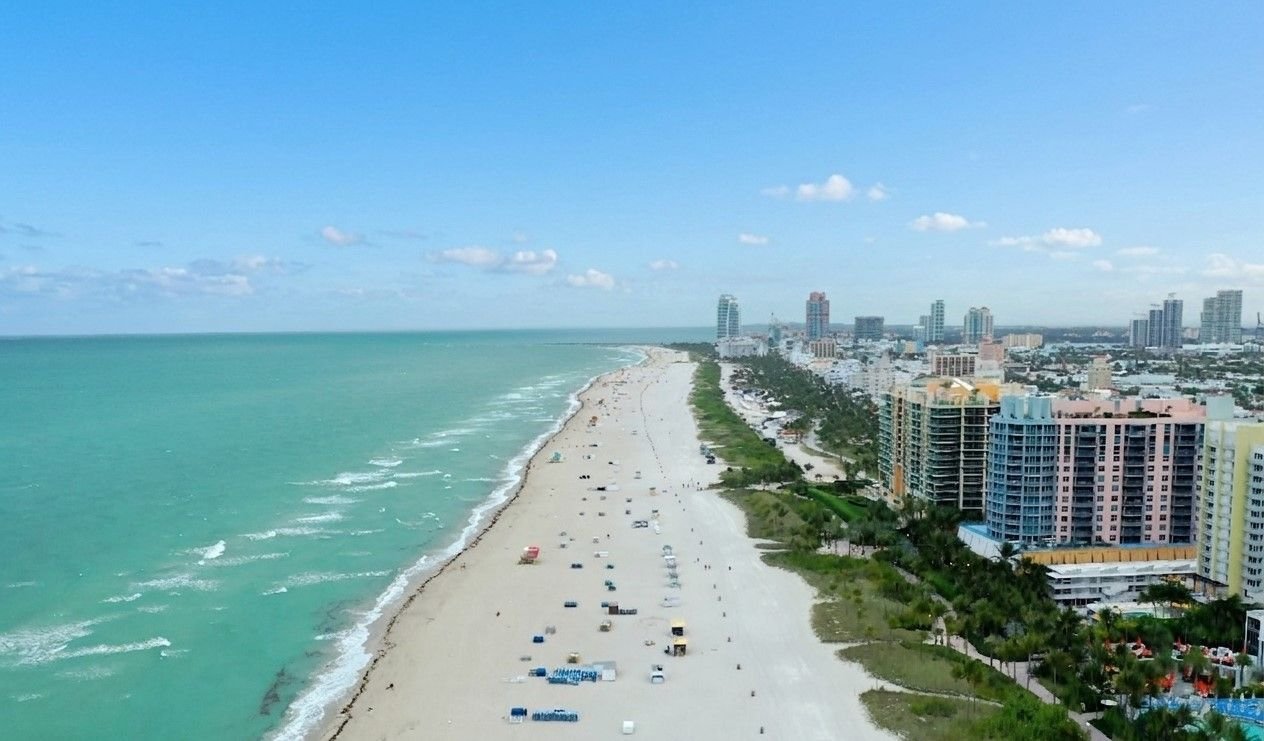
  • Miami, Florida: Vibrant streets, turquoise seas, and endless hospitality

    There is a moment that happens to almost every first-time visitor to Miami — usually somewhere along the causeway crossing Biscayne Bay toward South Beach, with the glittering Atlantic ahead and the downtown skyline rising behind, the air thick and warm and carrying the faint salt of the sea — when the city reveals itself as something genuinely extraordinary. Not just a beach destination. Not just a party town. Not just a collection of Art Deco facades and neon signs and rooftop bars. Something larger and stranger and more beautiful than any of those things alone.

    Miami is one of the most fascinating cities in the United States — a place that occupies a unique position at the intersection of North America, Latin America, and the Caribbean, shaped by wave after wave of immigrant communities who have arrived here over a century and built something that exists nowhere else on Earth. It is simultaneously an American city and a Latin city, a gateway to the Americas and a destination in its own right, a subtropical paradise and a global financial center, a capital of art and design and a capital of pleasure.

    The numbers alone suggest its scale and significance. Greater Miami is home to approximately 6.2 million people, making it the largest metropolitan area in Florida and the eighth largest in the United States. Miami International Airport is one of the busiest in the country for international travel, connecting the city directly to over 100 international destinations. The Port of Miami is the busiest cruise port in the world. The city’s art fair, Art Basel Miami Beach, is the most important contemporary art event in the Western Hemisphere. And Miami Beach’s ocean-facing strip of Art Deco architecture is the largest collection of Art Deco buildings in the world.

    But statistics capture nothing of what makes Miami genuinely special. What makes Miami special is the light — that extraordinary, saturated, tropical light that makes everything look slightly more vivid than it does anywhere else. The music — salsa and reggaeton and Miami bass and electronic music pouring simultaneously from cars and restaurants and open-air bars at every hour of the day. The food — Cuban sandwiches and Haitian griot and Peruvian ceviche and Jamaican jerk chicken and Israeli mezze and Japanese omakase, all within a few miles of each other. The warmth — of the climate, yes, but also of the people, who bring a Latin exuberance and generosity of spirit to daily life that transforms the experience of being here.
    Miami is a city that lives outdoors. It is a city that dresses up to go out. It is a city that takes its coffee standing at a ventanita window, its music loud and its sunsets seriously. It is, in the best possible sense, a city that is entirely, unapologetically itself.
    This guide will take you through everything you need to know to experience it fully.

    GETTING THERE
    Miami International Airport (MIA) is the primary gateway to the city and one of the most important airports in the Americas. Located approximately eight miles northwest of downtown Miami, it handles over 50 million passengers annually and serves as the largest hub for American Airlines, which operates an extraordinary number of routes connecting Miami to domestic destinations and to Latin America, the Caribbean, and Europe. Among major American airports, MIA consistently ranks first or second in the number of international passengers processed annually, reflecting Miami’s role as the de facto gateway between the United States and Latin America.

    The airport’s international terminal connects passengers from across the globe, with direct services from virtually every major Latin American city, the Caribbean islands, major European hubs including London, Madrid, Paris, Frankfurt, and Amsterdam, and a growing number of routes to Asia and the Middle East. For domestic travelers, Miami is connected to virtually every major American city with multiple daily departures.

    Ground transportation from MIA is convenient. The Miami International Airport Metrorail Station, connected to the terminal by the MIA Mover automated people mover, provides a direct rail connection to downtown Miami and the broader Metrorail network. The journey from the airport to downtown Brickell takes approximately 15 minutes by rail. Taxis and rideshares through Uber and Lyft are readily available outside the baggage claim areas. The SuperShuttle shared van service and hotel shuttle services provide additional options. Rental car facilities are located in the adjacent Miami Intermodal Center, connected to the terminal by the MIA Mover.

    Fort Lauderdale-Hollywood International Airport (FLL), located approximately 30 miles north of Miami in Broward County, is an important secondary airport for the Miami area. It is heavily used by low-cost carriers including Spirit, Frontier, and Southwest, and often offers significantly cheaper fares than MIA for the same destinations. The trade-off is the additional journey time to Miami proper — typically 35 to 45 minutes by car under normal traffic conditions, though the drive can be considerably longer during peak hours on I-95 or I-595.
    Palm Beach International Airport (PBI), about 70 miles north of Miami, is a third option used primarily by travelers headed to Palm Beach County rather than Miami, though it serves as an alternative for budget-conscious travelers willing to make the longer drive south.

    Amtrak serves Miami at the Miami Central Station, which opened in 2018 as the anchor of the massive MiamiCentral mixed-use transit hub in downtown. The Silver Star and Silver Meteor routes connect Miami to Orlando, Jacksonville, Savannah, Washington D.C., Philadelphia, New York, and Boston — a long but scenic journey up the Eastern Seaboard. Brightline, Florida’s private intercity passenger rail service, operates high-speed trains between Miami and Orlando, with stops in Fort Lauderdale, Boca Raton, West Palm Beach, and Aventura. The Brightline service has dramatically improved intercity rail travel in Florida and is the first new private passenger railroad in the United States in over a century.

    By car, Miami sits at the southern terminus of Interstate 95, which runs north along the eastern seaboard all the way to Maine. The Florida Turnpike connects Miami to Orlando and the rest of central and northern Florida. US Route 1 (the Overseas Highway) extends south from Miami through the Florida Keys to Key West, one of the most scenic drives in the United States. Interstate 75, known locally as Alligator Alley in its western segment, cuts across the Everglades to connect Miami with Naples and the Gulf Coast of Florida.

    GETTING AROUND
    Miami is, like most of South Florida, a city shaped substantially around the automobile, and renting a car provides maximum flexibility for visitors who want to explore beyond a single neighborhood. The city’s expressway system — I-95, I-395, I-195, the Dolphin Expressway (SR 836), and the Airport Expressway — moves traffic efficiently between the major zones, though rush hour congestion on I-95 in particular can be severe in both directions.
    That said, Miami has invested significantly in its public transportation infrastructure, and for visitors staying in or near the major tourist corridors, car-free travel is increasingly practical.

    The Miami Metrorail is an elevated heavy rail system with two lines serving the greater Miami area. The Orange Line runs from Palmetto in the northwest through the airport, downtown, and Brickell, with an extension to Dadeland South in the southern suburbs. It is particularly useful for connections between the airport and downtown. The Green Line branches from the system and serves additional neighborhoods. The system is clean, reliable, and air-conditioned — a significant virtue in the Miami heat.

    The Miami Metromover is a free automated people mover system that circulates through downtown Miami and the Brickell financial district, connecting the major office buildings, hotels, museums, and transit hubs. It is genuinely useful for navigating downtown without a car and provides elevated views of Biscayne Bay and the downtown skyline.
    The Miami Beach area is served by the South Beach Local bus (the SBL), an inexpensive circulator that runs through the Art Deco District and along Washington Avenue and Collins Avenue. The City of Miami Beach also operates the Beach Trolley service, which runs several routes connecting South Beach with Mid-Beach and North Beach. Dedicated bicycle lanes on several key streets and the Citi Bike Miami bike-share program make cycling a viable option in the relatively flat terrain of Miami Beach.

    The Venetian and MacArthur Causeways connecting mainland Miami to Miami Beach carry significant traffic. The Julia Tuttle Causeway connects to Mid-Beach. The 79th Street Causeway reaches North Beach. During peak periods — Friday and Saturday evenings, major events, holiday weekends — crossing the causeways by car can involve significant delays, making transit or rideshare a smarter choice for evening outings to South Beach.

    Ridesharing through Uber and Lyft is extremely popular throughout Miami and is particularly useful for evenings out when parking in South Beach or Wynwood is difficult and potentially expensive. Water taxis operated by various private operators offer scenic crossings of Biscayne Bay between downtown Miami and Miami Beach, combining transportation with sightseeing.
    Cycling is excellent within Miami Beach and along the extensive network of dedicated paths in Coconut Grove, Key Biscayne, and the broader waterfront areas. The terrain is uniformly flat, distances within neighborhoods are manageable, and the weather is conducive to outdoor cycling for most of the year.

    WHERE TO STAY
    Miami’s accommodation landscape is one of the most varied and glamorous in the United States, with extraordinary concentrations of design hotels in South Beach and luxury resort properties throughout the metro area.
    South Beach
    South Beach is the most popular area for first-time visitors and offers the highest concentration of hotels in the city, ranging from iconic luxury properties to boutique design hotels to budget-oriented options.

    The Fontainebleau Miami Beach is the most historically significant and architecturally celebrated hotel in Miami. Designed by Morris Lapidus and opened in 1954, it defined the Miami Modern (MiMo) architectural style with its sweeping curved facade, kidney-shaped pool, and exuberant interior spaces. The property has hosted presidents, celebrities, and cultural figures throughout its seven-decade history and has appeared in James Bond films, Scarface, and countless other productions. Its enormous pool complex, nightclub LIV — one of the most celebrated in the world — and roster of restaurants make it a self-contained resort experience.

    The Setai Miami Beach, occupying a pair of buildings that include a beautifully restored 1936 Art Deco tower, is widely regarded as the finest hotel in South Beach and one of the best in Florida — a place of extraordinary elegance, three temperature-distinct pools reflecting the tones of the ocean, and impeccable service. The Eden Roc Miami Beach, another Morris Lapidus masterpiece from 1955, was fully renovated in recent years and combines mid-century modern architecture with contemporary luxury.

    The 1 Hotel South Beach brings a nature-inspired, sustainability-focused luxury aesthetic to a South Beach landmark, with living walls of plants, reclaimed wood finishes, and spectacular ocean views. The Faena Hotel Miami Beach, opened in 2015 at the northern end of the Art Deco District, is perhaps the most theatrical hotel in the city — a collaboration between developer Alan Faena and director Baz Luhrmann that produced an environment of surreal, maximalist opulence anchored by a gilded woolly mammoth skeleton in the ballroom and a roster of extraordinary restaurants and performance spaces.

    For smaller boutique properties, the Art Deco District along Collins Avenue and Ocean Drive is lined with lovingly restored 1930s hotels that have been converted into stylish boutique properties. The Delano South Beach remains a design hotel icon — its all-white interiors and rippling curtains, designed by Philippe Starck in 1995, were enormously influential on hotel design globally. The National Hotel, the Raleigh, the Betsy, and the Catalina are among the other distinguished mid-scale Art Deco boutique options.

    Mid-Beach and North Beach
    Mid-Beach, roughly between 23rd and 63rd Streets on Miami Beach, has seen significant new hotel development in recent years. The Nobu Hotel Miami Beach, the W South Beach, and the Loews Miami Beach Hotel are all well-regarded options in this area, which offers slightly more space and slightly less intensity than the South Beach core.

    Brickell and Downtown Miami
    The Brickell neighborhood — Miami’s financial district on the mainland, connected to South Beach by the MacArthur Causeway — has developed rapidly into a sophisticated urban neighborhood with its own strong hotel offerings. The East Miami Hotel in the Brickell City Centre complex, the Kimpton EPIC Hotel with its rooftop pool overlooking Biscayne Bay, and the Four Seasons Hotel Miami all offer excellent Brickell-based options for visitors whose primary interest is the city’s business, arts, or restaurant scenes rather than the beach.

    Coral Gables
    The Biltmore Hotel Coral Gables, opened in 1926 in a historic Mediterranean Revival building that served as a military hospital during World War II, is one of the great historic hotels of Florida. Its enormous free-form pool — at one time the largest hotel pool in the world — its 18-hole golf course, and its ornate Spanish-Moorish architecture make it one of the most distinctive accommodation experiences in the Miami area.

    Coconut Grove
    The Mayfair Hotel & Spa and several smaller boutique properties in Coconut Grove offer a more intimate, village-like atmosphere in one of Miami’s most beautiful and historically significant neighborhoods.

    Key Biscayne
    The Ritz-Carlton Key Biscayne, located on this barrier island just south of Miami Beach, offers a genuine resort experience — beachfront, lush tropical landscaping, multiple pools, and a sense of remove from the urban intensity of South Beach — that appeals to families and travelers seeking relaxation over nightlife.

    THE ART DECO HISTORIC DISTRICT
    No visit to Miami is complete without a thorough exploration of the Art Deco Historic District, the most concentrated and celebrated collection of Art Deco architecture in the world. Located in the southern portion of Miami Beach, the district encompasses roughly one square mile of low-rise buildings constructed primarily between 1923 and 1943, constituting over 800 historic structures that together were added to the National Register of Historic Places in 1979 in one of the first such listings of 20th-century architecture in the United States.
    The Art Deco style as expressed in Miami Beach is a specific regional variant sometimes called Tropical Deco or Streamline Moderne — characterized by flat roofs with decorative parapets, horizontal racing stripes called “eyebrows” over windows that provide shade, porthole windows, nautical motifs, pastel color palettes applied to stucco exteriors, and a generally optimistic exuberance that reflects both the aesthetic spirit of the late 1930s and the particular character of a resort town on the edge of the tropics.

    Ocean Drive, running along the eastern edge of South Beach parallel to the beach, is the most famous street in the district and one of the most photographed streetscapes in the world. The buildings along its western side — the Leslie, the Carlyle, the Cardozo (owned for many years by Gloria Estefan), the Clevelander, the Park Central — present their decorative facades to the wide sidewalk cafés and then to the beach and ocean beyond, creating a theatrical outdoor living room where the boundary between public and private dissolves in the most Miami of ways. The street was memorably used as the backdrop for the television series Miami Vice, which along with the work of preservationist Barbara Capitman in the 1970s and 1980s is largely responsible for the district’s rescue from demolition and its subsequent transformation into the globally recognized landmark it is today.

    Collins Avenue, running parallel to and one block west of Ocean Drive, has a slightly less tourism-heavy concentration of Art Deco buildings along its length, with many hotels that were renovated more quietly and serve a more mixed clientele. Washington Avenue, another block west, was historically the commercial spine of South Beach and retains a grittier, more authentic character than the tourist-polished Ocean Drive, with Jewish delis, bodegas, and independent businesses mixed among the nightclubs and restaurants.

    The Art Deco Welcome Center on Ocean Drive, operated by the Miami Design Preservation League, offers self-guided audio tours and scheduled walking tours led by knowledgeable docents who illuminate the architectural history, the preservation story, and the fascinating social history of the district in compelling depth.

    The nightly illumination of Ocean Drive — the neon signs and façade lighting that comes alive after dark and turns the streetscape into a glowing, saturated spectacle — is one of the most purely pleasurable sights in Miami and should be experienced at least once by every visitor, ideally on foot with a drink in hand and nowhere particular to be.

    NEIGHBORHOODS TO EXPLORE
    Wynwood
    Wynwood, a former warehouse district north of downtown Miami, has undergone one of the most dramatic creative transformations of any urban neighborhood in the United States over the past 15 years. Beginning in the mid-2000s, when developer Tony Goldman began commissioning murals on the exterior walls of the neighborhood’s industrial buildings, Wynwood evolved from a neglected light-industrial area into the global capital of street art — and subsequently into one of the most visited art districts in the world.

    The Wynwood Walls, an outdoor museum of large-scale murals by internationally recognized street artists, is the centerpiece of the district and one of Miami’s most visited attractions. The walls have featured works by Shepard Fairey, Os Gemeos, Kenny Scharf, Futura, RETNA, and dozens of other major figures in contemporary street art, and are refreshed periodically to keep the collection evolving. The surrounding streets of Wynwood extend the gallery experience outward — virtually every available exterior wall in the neighborhood has been treated as a canvas, creating an immersive outdoor art experience that stretches for blocks in every direction.

    Beyond the art, Wynwood has developed a robust ecosystem of galleries, studios, restaurants, breweries, cocktail bars, boutique shops, and creative offices. The Wynwood Brewing Company, J. Wakefield Brewing, and Boxelder craft beer bar have helped establish the neighborhood as a destination for craft beer enthusiasts. The food scene spans everything from wood-fired pizza to Venezuelan arepas to Korean fusion. The neighborhood is most alive on the second Saturday of each month during Wynwood Art Walk, when galleries open simultaneously for evening events and the streets fill with an eclectic crowd of art lovers, tourists, and Miami creatives.

    Little Havana
    Little Havana, stretching along SW 8th Street (Calle Ocho) west of downtown Miami, is the cultural heart of Miami’s Cuban-American community and one of the most important Cuban communities outside of Cuba itself. The neighborhood’s identity was forged by the waves of Cuban exiles who arrived in Miami beginning in the 1960s following Fidel Castro’s revolution, and their cultural imprint remains profound and visible on every block.

    Domino Park — officially Máximo Gómez Park — at the corner of Calle Ocho and SW 15th Avenue is perhaps the most iconic gathering place in Little Havana. Elderly Cuban men sit at concrete tables playing dominoes with intense concentration, as they have for decades, while observers watch and the rhythms of the neighborhood swirl around them. It is a scene of genuine, unrehearsed cultural vitality.

    The restaurants and cafeterias of Calle Ocho serve some of the finest Cuban food in the world outside of Havana — ropa vieja (shredded braised beef), lechón asado (slow-roasted pork), picadillo, black beans and rice, maduros (sweet fried plantains), and the indispensable Cuban sandwich (ham, roasted pork, Swiss cheese, pickles, and mustard pressed in Cuban bread). Versailles Restaurant, a Little Havana institution since 1971, is the most famous Cuban restaurant in Miami and one of the most famous in the world — a gathering place for the Cuban exile community that has hosted presidents, celebrities, and every Miami politician of significance.

    The ventanita — the little window — is a uniquely Miami institution found throughout Little Havana and Cuban neighborhoods across the city. Small counter windows dispensing café cubano (strong, sweetened espresso served in a tiny cup), cortadito (espresso cut with steamed milk), and café con leche are on virtually every other block. The ritual of standing at a ventanita with a small plastic cup of coffee and striking up a conversation with a stranger is one of the most authentically Miamian experiences available.
    The Calle Ocho Festival, held each March, is one of the largest street festivals in the United States — a mile-long outdoor party celebrating Latin music, food, and culture that transforms the neighborhood and draws hundreds of thousands of visitors.

    Coral Gables
    Coral Gables is one of the most beautiful planned communities in the United States — a city unto itself within the Miami metro area, developed in the 1920s by George Merrick according to a Mediterranean Revival vision that produced wide boulevards, entrance gates of coral rock and keystone, decorative plazas, and hundreds of homes built to strict architectural standards. The result is a neighborhood of extraordinary coherence and beauty — orange trees lining the streets, bougainvillea cascading over coral rock walls, and a sense of unhurried elegance that feels like a world apart from the frenetic energy of South Beach.

    The Venetian Pool, carved from a coral rock quarry in 1923, is one of the most extraordinary public swimming pools in the world — a freshwater pool of 820,000 gallons fed by artesian wells and landscaped with caves, waterfalls, a bridge, and a loggia of remarkable architectural beauty. Swimming in the Venetian Pool on a hot Miami afternoon is an experience of almost surreal loveliness.

    Miracle Mile, the retail spine of Coral Gables, is lined with boutiques, restaurants, and bridal shops along a beautifully maintained pedestrian-friendly corridor. The Actors’ Playhouse at the Miracle Theatre, housed in a wonderfully preserved 1948 Art Deco movie palace, is one of the finest regional theaters in Florida.
    The University of Miami anchors the southern edge of Coral Gables, bringing intellectual energy and a substantial student population to the neighborhood. The Lowe Art Museum on the UM campus holds an impressive collection of art including a notable Pre-Columbian collection and works by Picasso, Gauguin, and Monet.

    Coconut Grove
    Coconut Grove — “The Grove” to Miamians — is Miami’s oldest neighborhood, a bohemian village of banyan tree-lined streets, waterfront parks, galleries, bookshops, and outdoor cafés that predate the city of Miami itself. The neighborhood was settled in the late 19th century by Bahamian immigrants, New England intellectuals, and adventurers drawn to the subtropical wilderness of Biscayne Bay, and it retains something of that independent, free-spirited character even as it has gentrified significantly in recent decades.

    Peacock Park along the bayfront, the walking trails through the hammock forests of the neighborhood, and the pleasure of cycling or walking through streets canopied by enormous fig trees make the Grove one of the most physically beautiful neighborhoods in Miami. Cococwalk, a recently renovated open-air shopping and dining complex, anchors the commercial core. The Barnacle Historic State Park preserves the 1891 home of Ralph Munroe, one of Coconut Grove’s founding figures, in a setting of extraordinary natural beauty on the bay.
    The marinas and yacht clubs of Coconut Grove reflect the neighborhood’s deep connection to Biscayne Bay and the sailing culture that has thrived here for over a century. Dinner Key Marina is one of the largest in Florida.

    Brickell
    Brickell, Miami’s financial district along Brickell Avenue south of downtown, has transformed in the past decade from a daytime-only office corridor into one of the city’s most vibrant urban neighborhoods. The Brickell City Centre, a massive mixed-use development featuring luxury retail, restaurants, offices, hotels, and residences connected to the Metrorail and Metromover, has become a genuine urban hub. Mary Brickell Village and the streets surrounding it are packed with restaurants, bars, and nightlife options that serve the dense residential population living in the gleaming high-rise towers that have risen throughout the neighborhood.

    Design District
    The Miami Design District, located north of downtown and east of Wynwood, is a neighborhood that has been developed over the past two decades into one of the world’s premier luxury retail and design destinations. Every major European luxury fashion house has a presence here — Louis Vuitton, Hermès, Chanel, Dior, Prada, Gucci, Celine, Bottega Veneta, and dozens of others occupy architecturally significant flagship stores designed by internationally recognized architects. The Palm Court at the center of the district is anchored by a spectacular Buckminster Fuller-inspired geodesic dome installation and surrounded by cultural programming, art installations, and outdoor dining.

    The Design District also houses the Institute of Contemporary Art Miami (ICA Miami), a nonprofit museum offering free admission that presents ambitious exhibitions of contemporary art in a beautiful purpose-built building designed by Aranguren + Gallegos Arquitectos.

    BEACHES
    Miami’s beaches are among the finest urban beaches in the world — wide, sandy, well-maintained, and backed by one of the most dramatic beachfront architectural environments anywhere.
    South Beach, stretching from South Pointe Park at the southern tip of Miami Beach north to approximately 23rd Street, is the most famous beach in Miami and one of the most photographed stretches of sand in the world. The beach itself is genuinely excellent — the sand is white and fine, the water a stunning shade of turquoise green in the shallows transitioning to deep blue further out, the waves generally mild enough for swimming.

    The beach is wide enough to accommodate the substantial crowds that descend on weekends and holidays without feeling impossibly crowded. The backdrop — the Art Deco buildings along Ocean Drive, the palms, the lifeguard stands painted in tropical colors — is one of the most cinematic beachscapes on Earth.
    Lummus Park, the strip of parkland between Ocean Drive and the beach, is the social heart of South Beach’s outdoor life — a perpetual gathering place for sunbathers, volleyball players, rollerbladers, dog walkers, and people-watchers of every description. The beach is serviced by numerous concession stands, restrooms, and outdoor showers.

    Mid-Beach (roughly 23rd to 63rd Streets) and North Beach (63rd Street north to the Surfside neighborhood line) offer slightly less crowded and more residential alternatives to South Beach. The beaches here are equally beautiful, the infrastructure equally good, and the atmosphere considerably more relaxed. North Beach in particular has been undergoing a quiet renaissance, with interesting independent restaurants and a community of artists and young families who have been priced out of South Beach.

    South Pointe Park, at the very southern tip of Miami Beach, is a beautifully designed waterfront park with a pier from which you can watch cruise ships departing Government Cut — the main shipping channel between the Port of Miami and the Atlantic. The park’s lawn areas, playground, and waterfront views make it a popular gathering spot for local families and a pleasant alternative to the more crowded main beach sections.

    Key Biscayne, reached by the Rickenbacker Causeway from the mainland southeast of downtown, contains two exceptional parks. Crandon Park on the northern portion of the island offers a wide, beautiful beach backed by tropical forest, picnic areas, and a restored vintage amusement park carousel. Bill Baggs Cape Florida State Park at the southern tip of the island preserves a natural barrier island landscape of sea grape, mangrove, and pine hammock, with a historic lighthouse (the oldest standing structure in Miami-Dade County, built in 1825) and a quieter, wilder beach experience than the managed shores of Miami Beach proper.

    Haulover Beach, north of Bal Harbour and connected to Miami Beach via Collins Avenue, has a section that is clothing-optional — the largest legal nude beach in Florida — and attracts a diverse, body-positive crowd. The non-clothing-optional sections of Haulover are also excellent and frequently less crowded than South Beach.

    ART BASEL AND THE ARTS SCENE
    Miami has established itself as one of the most important cities in the world for contemporary art, and the annual Art Basel Miami Beach fair is the central event in that story.
    Art Basel Miami Beach, held each December in the Miami Beach Convention Center, is the American edition of the prestigious Swiss art fair and is widely regarded as the most important contemporary art event in the Western Hemisphere. Over 250 of the world’s leading galleries participate, presenting works spanning painting, sculpture, installation, photography, film, and digital art from thousands of artists. The fair draws collectors, curators, critics, artists, and art enthusiasts from every corner of the globe, transforming Miami Beach for one week each December into a global art capital.

    Art Basel week is also one of the great social events of the Miami calendar — a week in which the city’s already considerable capacity for parties, openings, performances, and cultural programming is amplified to an extraordinary degree by the influx of art world figures, collectors, and celebrities. Satellite fairs — including Art Miami, NADA Miami, Untitled Art Fair, Scope Miami Beach, and dozens of others — spread throughout the city and its surroundings, turning the entire metro area into a sprawling art destination.

    Beyond Art Basel week, Miami’s permanent art scene is substantial and growing. The Pérez Art Museum Miami (PAMM), designed by Herzog & de Meuron and located on Biscayne Bay in Museum Park downtown, is the city’s premier museum of modern and contemporary art, with a collection and exhibition program of international significance. The building itself — elevated on concrete pillars above the bayfront, with hanging gardens of tropical plants and terraces overlooking the water — is one of the finest pieces of contemporary architecture in Florida. The adjacent Phillip and Patricia Frost Museum of Science, also in Museum Park, houses a world-class natural history and science museum with a spectacular three-level aquarium at its center.

    The Bass Museum of Art in South Beach, housed in a 1930 Art Deco building with a contemporary expansion, presents a strong collection of European and international art alongside ambitious temporary exhibitions. The Margulies Collection at the Warehouse, a private collection of extraordinary depth and breadth open to the public in Wynwood, is one of the finest private contemporary art collections in the United States.

    The performing arts in Miami are anchored by the Adrienne Arsht Center for the Performing Arts of Miami-Dade County — a stunning complex designed by Cesar Pelli that opened in 2006 and is one of the largest performing arts centers in the United States. The Arsht Center is home to the Florida Grand Opera, Miami City Ballet, and the New World Symphony, and presents Broadway touring productions, major concert performances, and international arts programming throughout the year.

    The New World Symphony, an orchestral academy founded by conductor Michael Tilson Thomas and housed in a spectacular Frank Gehry-designed building in South Beach, presents free outdoor concert broadcasts projected onto the exterior wall of its building on selected evenings — one of the most beloved free cultural events in Miami.

    FOOD AND DINING
    Miami’s food scene is one of the most exciting and diverse in the United States, reflecting the extraordinary cultural richness of a city that is simultaneously American, Cuban, Latin American, Caribbean, and international.

    Cuban food is the foundation of Miami’s culinary identity, and understanding it is essential to understanding the city. The Cuban sandwich — pressed Cuban bread filled with roasted pork, ham, Swiss cheese, pickles, and mustard — is Miami’s iconic food, found everywhere from gas station counters to high-end restaurants, and the debate over who makes the best version is conducted with genuine passion. Versailles on Calle Ocho is the most famous Cuban restaurant in the world, and for good reason — the food is excellent, the portions enormous, and the experience of eating among the Cuban exile community in a dining room that has witnessed decades of Miami history is genuinely moving. El Cristo, La Carreta, and Islas Canarias are other celebrated Cuban dining institutions.

    The Haitian community in Miami has contributed a rich culinary tradition that remains relatively undiscovered by mainstream food tourism despite being extraordinary. Haitian griot — fried pork marinated in citrus and spices — with rice and beans, pikliz (spicy pickled vegetables), and plantains at restaurants in Little Haiti and the areas north of downtown is some of the most flavorful food in the city.

    Peruvian cuisine has made an enormous impact on the Miami dining scene, reflecting a large and dynamic Peruvian community. Ceviche — raw fish marinated in lime juice and seasoned with ají amarillo, red onion, and cilantro — is perhaps Peru’s greatest culinary contribution, and Miami’s Peruvian restaurants serve versions of exceptional quality. Ceviche 105 in Little Havana is one of the most beloved Peruvian restaurants in the city, serving an extraordinary variety of ceviches and tiraditos alongside classic Peruvian dishes.

    Seafood is magnificent throughout Miami, reflecting access to the waters of the Atlantic, Biscayne Bay, and the Gulf. Stone crab claws — available from mid-October through May from the stone crab fishery in the Florida Keys and Gulf of Mexico — are a Miami seasonal obsession. Joe’s Stone Crab in South Beach, which has been serving stone crab claws since 1913, is one of the most famous restaurants in Florida and essentially invented the stone crab dining tradition. The wait for a table without a reservation can be substantial, but the experience is worth it. Garcia’s Seafood Grille and Fish Market on the Miami River is a beloved, unpretentious local institution for fresh local seafood in a waterfront setting.

    The high-end dining scene in Miami is genuinely world-class. Zuma Miami at the EPIC Hotel in Brickell, the Miami outpost of the internationally celebrated Japanese izakaya concept, is consistently regarded as one of the finest restaurants in the city. Quinto La Huella at the Faena Hotel brings the beloved Uruguayan parrilla tradition to Miami with extraordinary beef and wood-fire cooking. The Surf Club Restaurant at the Four Seasons Surfside, from Thomas Keller — one of the greatest chefs in America — brings the legendary Keller sensibility to a historic oceanfront club setting. Mandolin Aegean Bistro in the Design District is a beloved garden restaurant serving Greek and Turkish meze that has become one of the most popular dining experiences in Miami for its food, atmosphere, and beautiful outdoor space.

    The breakfast and brunch culture in Miami is enthusiastic and well-developed. Eating House in Coral Gables, Michael’s Genuine Food & Drink in the Design District, and Greenstreet Cafe in Coconut Grove are among the city’s most beloved morning and midday destinations. The smoothie and açaí bowl culture of South Beach reflects the city’s health-conscious beach culture, with numerous juice bars and healthy café concepts throughout the beach communities.

    The food hall format has taken root in Miami with considerable success. Time Out Market Miami at Bayside in downtown presents a curated selection of Miami’s best restaurant concepts in a lively, communal setting. The Citadel in the Little River neighborhood brings together local food vendors, live music, and community programming in a beautifully converted Art Deco building.

    NIGHTLIFE
    Miami’s nightlife is legendary throughout the world, and with good reason. The city has one of the most vibrant, diverse, and sheer-volume-of-options nightlife scenes in the United States — a function of its warm climate, its Latin cultural energy, its tourist economy, and its position as a gathering point for creative and wealthy people from across the Americas and Europe.
    South Beach’s nightclub scene centers on a handful of mega-clubs that operate at a scale and level of investment that rivals anything in Las Vegas or Ibiza. LIV at the Fontainebleau is consistently ranked among the best nightclubs in the world — a cavernous, theatrically designed space with a resident roster of international DJ talent, regular celebrity appearances, and an energy that must be experienced to be understood. Admission is selective and often expensive, with table service required for premium positioning. Story on Washington Avenue is another major player in the South Beach club scene, with an enormous main room and a booking policy that brings major DJs and performers regularly.

    The rooftop bar scene in Miami is exceptional. The Broken Shaker at the Freehand Miami hotel is one of the most celebrated craft cocktail bars in the city — a beautiful, lush outdoor space of mismatched furniture, tropical plants, and creative cocktails that has won national awards and attracted a devoted following. The Sugar bar at the EAST Miami hotel in Brickell offers spectacular rooftop views of the downtown skyline over treetop-level plantings. The Watr at the 1 Hotel South Beach and the Goodtime Hotel’s rooftop pool bar are among the most fashionable outdoor drinking destinations on the beach.

    The Wynwood and Brickell neighborhoods have developed distinct nightlife cultures that contrast productively with the South Beach mega-club experience. Wynwood’s bars and music venues — Wood Tavern, Gramps, Shots Miami, and others — tend toward a more art-focused, indie-music-oriented crowd that reflects the neighborhood’s creative identity. Brickell’s nightlife is more polished and corporate-adjacent, with upscale cocktail bars and lounges catering to the financial district crowd.

    Live music in Miami reflects the city’s extraordinary musical heritage. The Latin music tradition — rooted in Cuban son and bolero, subsequently diversified through Colombian cumbia, Puerto Rican salsa, Dominican merengue, and the Miami-specific sounds of freestyle and Miami bass — permeates the city’s musical landscape. Ball & Chain on Calle Ocho in Little Havana, a beautiful restored bar that was a jazz club in the 1930s and 1940s, presents live salsa, jazz, and Latin music nightly in one of the most atmospheric rooms in Miami. Hoy Como Ayer, also in Little Havana, is a beloved intimate venue for traditional Cuban music and dancing.

    The LGBTQ+ nightlife scene in South Beach, centered on the blocks around Espanola Way and the bars of Washington Avenue, is one of the most vibrant in Florida and draws visitors from across the southeastern United States.

    NATURAL WONDERS AND OUTDOOR ACTIVITIES
    Miami’s natural setting is one of its most extraordinary and underappreciated assets.
    The Florida Everglades, the largest subtropical wilderness in the United States, begin at the western edge of Miami-Dade County. Everglades National Park — a UNESCO World Heritage Site, International Biosphere Reserve, and Wetland of International Importance — encompasses 1.5 million acres of sawgrass prairie, mangrove forest, cypress swamp, and coastal estuary that constitute the only subtropical preserve in North America. The park’s Royal Palm area, Anhinga Trail, and Gumbo Limbo Trail are accessible to day visitors from Miami in approximately 45 minutes and offer extraordinary wildlife encounters — anhingas drying their wings on cypress branches, alligators sunning on the trail margins, roseate spoonbills wading in the shallows, and the rare Florida panther moving through the shadows of the pine flatwoods.

    Airboat tours through the Everglades — operating from several facilities along the Tamiami Trail (US 41) at the northern edge of the park — are one of the most thrilling and distinctively Floridian experiences available to Miami visitors. The flat-bottomed boats powered by giant aircraft propellers can skim across the sawgrass prairie at considerable speed, covering ground that is inaccessible by any other means and bringing visitors into contact with the alligators, wading birds, and extraordinary plant life of the Glades.

    The Florida Keys, accessible via US Route 1 (the Overseas Highway) south of Miami, constitute one of the most unique and beautiful island chains in the world. The 113-mile drive from Florida City through 42 bridges over open water to Key West — including the famous Seven Mile Bridge — is one of the great road trips in America, passing through a landscape of improbable beauty where the highway seems to float on the surface of the sea. Key Largo, the nearest Key to Miami, is the gateway to the Florida Reef — the third largest barrier reef system in the world and the only living coral barrier reef in the continental United States — offering world-class snorkeling and scuba diving in waters of extraordinary clarity and marine life diversity. John Pennekamp Coral Reef State Park in Key Largo is the premier destination for reef exploration.

    Biscayne National Park, immediately south of Miami and largely underwater, protects the northern portion of the Florida Reef along with mangrove coastline, sea grass beds, and the northernmost Florida Keys. The park is 95 percent water and is best explored by snorkeling, scuba diving, glass-bottom boat tours, or kayaking through the mangrove tunnels of its coastal fringe.
    Water sports are central to Miami life. Paddleboarding on the calm waters of Biscayne Bay, kayaking through the mangroves of Oleta River State Park in North Miami, sailing out of the marinas of Coconut Grove or Miami Beach, kitesurfing in the consistent winds at Hobie Beach on the Rickenbacker Causeway, and deep-sea fishing in the Gulf Stream waters just offshore are all excellent options for the water-oriented visitor.

    Virginia Key, the small island adjacent to Key Biscayne on the Rickenbacker Causeway, is home to the Deering Estate — a beautifully preserved historic estate with natural hammock and coastal prairie environments — and the Virginia Key Beach Park, a historic stretch of shoreline that was designated as Miami’s “colored beach” during the era of racial segregation and is now a park of both natural beauty and historical significance.

    SPORTS
    Miami is a genuine major-league sports city with passionate fan bases and strong franchises across multiple sports.
    The Miami Marlins play Major League Baseball at loanDepot Park in the Little Havana neighborhood — a beautiful retractable-roof stadium that replaced the old Sun Life Stadium in 2012 and is notable for its striking exterior design, its extraordinary aquarium tanks installed behind home plate, and its capacity to host games in the Miami heat and rain with the roof closed.
    The Miami Heat are one of the most celebrated franchises in the NBA, with a history that includes six Finals appearances and three championships — and the legacy of LeBron James’s four seasons in Miami alongside Dwyane Wade and Chris Bosh. The Heat play at Kaseya Center (formerly FTX Arena, formerly AmericanAirlines Arena) on the downtown waterfront, with Biscayne Bay visible beyond the arena floor. Miami Heat games carry an energy and fashion consciousness that reflects the broader Miami cultural ethos.

    The Miami Dolphins, the oldest professional sports franchise in Florida, play at Hard Rock Stadium in Miami Gardens — the same facility that hosts the Formula 1 Miami Grand Prix each May, the annual Orange Bowl college football game, and major concerts. The Dolphins were the only NFL team to complete a perfect season, going 17-0 in 1972 under coach Don Shula, a record that has never been equaled.

    Inter Miami CF, co-owned by David Beckham, brought major league soccer to Miami and generated enormous global attention when Argentine superstar Lionel Messi joined the club in 2023. The arrival of Messi transformed Inter Miami from a struggling expansion franchise into one of the most followed clubs in the world and sparked an unprecedented surge of interest in soccer throughout South Florida.
    The Miami Open, held each March at the Hard Rock Stadium tennis complex in Miami Gardens, is one of the most prestigious tennis tournaments in the world — a Masters 1000 event for men and a Premier Mandatory event for women that draws the world’s top players for two weeks of competition and attracts enormous crowds.

    PRACTICAL TIPS FOR VISITORS
    Weather and When to Go
    Miami’s climate is tropical — warm and humid year-round, with a distinct wet season from May through October and a dry season from November through April. The dry season, corresponding roughly to the winter months in the Northern Hemisphere, is generally considered the ideal time to visit. Temperatures from December through March are magnificent — warm, sunny days in the mid-70s to low 80s Fahrenheit with low humidity and clear blue skies. This is peak season, and hotel rates, flight prices, and crowds all reflect its popularity.

    Summer in Miami is hot, humid, and wet. Temperatures regularly reach the upper 80s to low 90s Fahrenheit with humidity that makes it feel significantly warmer. Afternoon thunderstorms — often violent, with lightning and heavy rain — are a near-daily occurrence from May through September. The storms typically pass quickly, and mornings are often beautiful. The heat is real but manageable with appropriate hydration, sunscreen, and strategic timing of outdoor activities.

    Hurricane season runs from June 1 through November 30, with peak activity in August and September. Miami has been directly struck by major hurricanes — most recently Hurricane Irma in 2017 — and the possibility of tropical weather disrupting a visit must be factored into summer and fall travel plans. Travel insurance is strongly recommended for Miami visits during hurricane season.
    Art Basel week in December and the winter holiday period through New Year’s are the most expensive and crowded times to visit. Hotel rates during Art Basel can be extraordinary — planning and booking far in advance is essential.

    Language
    Miami is effectively a bilingual city. Spanish is spoken natively by a substantial portion of the population, and in many neighborhoods — particularly Little Havana, Hialeah, and significant portions of the city — Spanish is the primary language of daily life. English is universally understood in tourist areas, hotels, and restaurants, but having even a basic familiarity with Spanish is genuinely useful and appreciated by locals. Portuguese is also widely spoken in the Brazilian community, and Haitian Creole is common in Little Haiti and other Haitian-American communities.

    Sun and Heat Safety
    The Miami sun is extremely powerful year-round, and visitors consistently underestimate it. High-SPF sunscreen applied generously and frequently, quality sunglasses, and a hat are essential for any outdoor time. The combination of sun, heat, and humidity can lead to dehydration quickly — drinking water consistently throughout the day, well beyond when you feel thirsty, is important. The hottest and most dangerous hours are typically between noon and 4 p.m.

    Getting Into Nightclubs
    South Beach’s major nightclubs are selective about admission, particularly for men. Arriving with a group of women, or as a mixed group, significantly improves the likelihood of admission. Booking a table in advance through the club’s reservation system guarantees entry but involves a minimum spend commitment that can be substantial. Dressing well — the Miami standard for nightclub attire is fashionable and stylish — is important at the major venues. Lines can be long on Friday and Saturday nights, and arriving earlier (11 p.m. rather than 1 a.m.) often results in easier entry.

    Tipping
    Standard American tipping culture applies throughout Miami. Restaurant servers expect 18 to 20 percent, and many restaurants in tourist areas automatically add a service charge to bills — check before adding an additional tip. Bartenders expect a dollar or two per drink. Valet parking, hotel services, and rideshare drivers all appreciate appropriate gratuities.

    Safety
    Miami is generally a safe city for tourists in the main visitor areas of South Beach, Brickell, Coconut Grove, Wynwood, Coral Gables, and the beach communities. Standard urban awareness applies — keep valuables secured on the beach (theft from unattended bags is the most common crime affecting tourists), be aware of your surroundings in less familiar neighborhoods, and exercise appropriate caution late at night in areas you are unfamiliar with.

    CONCLUSION
    Miami is a city that does not ask for your approval. It does not moderate itself for comfort or domesticate its energy for easy consumption. It is hot and loud and beautiful and excessive and complicated and alive in a way that few cities anywhere in the world manage to be. It smells of salt water and gardenias and frying plantains and the specific perfume of tropical rain on warm asphalt. It sounds like reggaeton from a passing car and the crack of dominoes on a park table and the roar of a crowd at a Heat game and the laughter rising from an outdoor bar at midnight.

    It is a city built by people who came from somewhere else — from Cuba and Haiti and Colombia and Venezuela and Brazil and Nicaragua and Jamaica and Argentina and Israel and all the other places whose cultures have layered here into something new and singular. It carries the weight of that history and the energy of those arrivals — the hunger and hope that have characterized every wave of immigration — in its music and its food and its architecture and its street life.

    And beneath and beyond all the human construction, the natural world presses in. The bay glitters. The reef breathes in its slow, ancient rhythm. The Everglades, vast and indifferent and irreplaceable, extend westward toward the horizon. The Atlantic rolls in from the east with the same patient power it has always had, washing the famous shore clean again each morning.
    Miami rewards everyone who comes to it with curiosity and openness. It will feed you extraordinarily well. It will show you art that changes how you see the world. It will give you a night that you will remember for decades. And if you are lucky — if you come at the right moment, in the right light, in the right company — it will reveal itself as something genuinely rare: a city that is fully, irrepressibly, magnificently itself.
    Welcome to Miami. The Magic City is ready for you.

  • New York City: Experience the Wild Side of the Big Apple

    Few cities on Earth carry the weight of myth, ambition, and sheer human energy that New York City does. Perched on the northeastern coast of the United States, New York is simultaneously the financial capital of the world, one of its greatest cultural incubators, a gastronomic paradise, and a place where the full spectrum of human experience plays out on the streets every single day. Whether you arrive by plane, train, or car, the moment you catch your first glimpse of that iconic skyline, something shifts inside you. New York is not just a destination — it is an experience unlike any other.

    Spread across five distinct boroughs — Manhattan, Brooklyn, Queens, The Bronx, and Staten Island — New York City covers 302 square miles and is home to over 8.3 million residents who speak more than 800 languages. Every neighborhood tells a different story. Every block holds a surprise. This guide will help you navigate it all.

    GETTING THERE
    New York City is served by three major airports. John F. Kennedy International Airport (JFK), located in Queens, is the largest and handles the majority of international flights. Newark Liberty International Airport (EWR), technically in New Jersey, is a convenient and often less congested alternative. LaGuardia Airport (LGA), also in Queens, primarily serves domestic routes and has undergone a major modernization in recent years.

    From JFK, travelers can take the AirTrain to the subway system for an affordable and reliable ride into Manhattan. Taxis, rideshares, and express buses are also readily available. From Newark, the NJ Transit train connects to Penn Station in Midtown Manhattan. Shuttle services and car transfers are a comfortable, if more expensive, option from all three airports.
    Amtrak serves Penn Station and Moynihan Train Hall with routes connecting New York to Boston, Washington D.C., Philadelphia, and beyond. Long-distance bus companies such as Greyhound and BoltBus also operate frequent routes in and out of the city.

    GETTING AROUND THE CITY
    The New York City Subway is the backbone of urban transportation here. Running 24 hours a day, 7 days a week, it is one of the few metro systems in the world that never shuts down. With 472 stations spread across the five boroughs, it is both the most efficient and most economical way to travel around the city. A single-ride MetroCard costs $2.90, and unlimited weekly passes are available for frequent riders. The subway can be intimidating at first, but a little time with a map and the MTA’s official app makes navigation straightforward.

    Buses complement the subway beautifully, especially in areas with limited train access. Yellow taxis and rideshare services like Uber and Lyft are ubiquitous. Ferries operated by NYC Ferry connect waterfront neighborhoods across all five boroughs and offer some of the most scenic commutes imaginable. Citi Bike, the city’s bike-share program, has thousands of docking stations throughout Manhattan, Brooklyn, and Queens, making cycling an increasingly popular option for short trips.
    For those who want to see the city up close, walking is often the best choice — especially in Midtown and Lower Manhattan, where attractions are dense and the streets themselves are part of the experience.

    WHERE TO STAY
    New York offers accommodation for every budget and taste, though it is worth noting that hotel prices here run significantly higher than in most American cities.
    Midtown Manhattan is the most popular base for tourists, placing you within walking distance of Times Square, Central Park, and the Theater District. Luxury options abound: the Plaza Hotel on Fifth Avenue is one of the most storied addresses in the city, while The Peninsula, The St. Regis, and the Four Seasons offer world-class service and elegance. Mid-range travelers will find solid options in the many Marriott, Hilton, and Hyatt properties scattered throughout Midtown.

    The Upper West Side offers a quieter, more residential feel while still being close to Central Park and the Museum of Natural History. Downtown neighborhoods like the Financial District and Tribeca have seen a boom in boutique hotel openings in recent years, and staying there gives you easy access to the 9/11 Memorial and the Brooklyn Bridge.
    For a hipper, more neighborhood-oriented experience, Brooklyn has become a destination in its own right. Williamsburg, DUMBO, and Park Slope all offer boutique hotels, bed-and-breakfasts, and short-term apartment rentals through platforms like Airbnb. The commute to Manhattan is easy via subway.
    Budget travelers should look into hostels — options like HI NYC Hostel on the Upper West Side offer clean, safe, and social environments at a fraction of hotel prices.

    TOP ATTRACTIONS
    New York City’s list of iconic landmarks is almost overwhelming, but here are the must-see experiences that define a visit.
    Central Park sits at the heart of Manhattan, stretching 843 acres from 59th Street to 110th Street. Designed by Frederick Law Olmsted and Calvert Vaux in the 1850s and 1860s, the park is a masterpiece of landscape architecture. Visitors can rent rowboats on the Lake, visit the Bethesda Fountain, catch a free Shakespeare in the Park performance in summer, picnic on Sheep Meadow, stroll the Literary Walk, or visit Strawberry Fields, the memorial to John Lennon. The park is equally magical in all four seasons — blanketed in snow in winter, ablaze with cherry blossoms in spring, lush and green in summer, and painted in gold and crimson in autumn.

    The Statue of Liberty and Ellis Island are among the most emotionally resonant sites in the country. Lady Liberty, a gift from France dedicated in 1886, stands on Liberty Island in New York Harbor. Ferries depart from Battery Park in Lower Manhattan. Tickets to climb to the crown must be reserved months in advance, but even the free view from the grounds is extraordinary. Adjacent Ellis Island, where over 12 million immigrants were processed between 1892 and 1954, is now home to a profoundly moving museum of American immigration history.
    The Empire State Building, completed in 1931, remains one of the great Art Deco masterworks of architecture. The 102-story skyscraper dominated the skyline for decades and continues to be one of the most visited buildings in the world. The observation deck on the 86th floor offers a 360-degree panorama of the city that is especially spectacular at dusk and after dark.

    One World Trade Center and the 9/11 Memorial & Museum stand as a testament to resilience in Lower Manhattan. The memorial’s twin reflecting pools, set in the footprints of the original Twin Towers, are ringed by bronze panels inscribed with the names of every victim of the September 11, 2001 attacks and the 1993 World Trade Center bombing. The museum below ground is one of the most powerful and thoughtfully designed museums in the United States. One World Trade Center itself, rising 1,776 feet — a deliberate reference to the year of American independence — houses an observation deck with sweeping views.

    Times Square is loud, chaotic, neon-bright, and utterly unlike anywhere else on earth. The commercial crossroads of the world draws over 50 million visitors a year, and while many New Yorkers famously avoid it, first-time visitors find the energy intoxicating. The area is best experienced at night, when the giant digital billboards turn the streets into a canyon of light. The famous New Year’s Eve ball drop here is watched by over a billion people worldwide each year.

    The Brooklyn Bridge, opened in 1883, is one of the great engineering achievements of the 19th century. Walking across the pedestrian promenade offers breathtaking views of the Manhattan skyline, the East River, and the bridge’s own magnificent Gothic towers. Allow about 30 minutes for the crossing each way.
    The Metropolitan Museum of Art, known simply as “the Met,” is one of the largest and finest art museums in the world. Its collection spans 5,000 years of human creativity, from Egyptian antiquities and Greek sculpture to European masters, American paintings, African art, Asian ceramics, and a rooftop garden with contemporary installations and stunning views of Central Park. Plan to spend at least half a day here.

    The Museum of Modern Art (MoMA) in Midtown houses the world’s most important collection of modern and contemporary art, including Van Gogh’s “The Starry Night,” Picasso’s “Les Demoiselles d’Avignon,” Monet’s “Water Lilies,” and works by Warhol, Pollock, Kahlo, and countless others.
    The High Line is a 1.45-mile elevated park built on a former freight rail line on Manhattan’s West Side. Opened in 2009, it has become one of the city’s great urban design success stories, threading through the Meatpacking District, Chelsea, and Hell’s Kitchen with gardens, art installations, food vendors, and spectacular views of the Hudson River. It is beloved by locals and visitors alike.

    The Brooklyn Museum, the American Museum of Natural History, the Guggenheim Museum (housed in Frank Lloyd Wright’s spiral masterpiece on Fifth Avenue), the Whitney Museum of American Art in the Meatpacking District, and the Intrepid Sea, Air & Space Museum on the Hudson River round out a world-class museum landscape.
    Rockefeller Center is a complex of 19 commercial buildings in Midtown that has been a hub of New York life since the 1930s. The Top of the Rock observation deck on the 70th floor offers one of the best panoramic views in the city — uniquely, you can see the Empire State Building from here, which you cannot from the Empire State Building itself. The ice skating rink in the sunken plaza below is one of New York’s most beloved winter traditions.

    NEIGHBORHOODS TO EXPLORE
    Beyond the landmarks, New York’s true character lives in its neighborhoods.
    Greenwich Village in Lower Manhattan has been the bohemian heart of the city since the early 20th century, home to jazz clubs, off-Broadway theaters, and the LGBTQ+ rights movement, which was born at the Stonewall Inn on Christopher Street in 1969. Today it is a neighborhood of charming tree-lined streets, brownstones, and excellent restaurants.
    SoHo (South of Houston Street) mixes cast-iron architecture with high-end boutiques, art galleries, and bustling café culture. Chinatown and Little Italy, adjacent to each other in Lower Manhattan, offer rich immigrant history and excellent food. The Lower East Side has roots as a historic Jewish immigrant neighborhood and has evolved into one of the city’s hippest dining and nightlife destinations.

    Harlem, stretching across upper Manhattan, is the cultural capital of Black America — the birthplace of the Harlem Renaissance, home to the Apollo Theater on 125th Street, and a neighborhood of extraordinary brownstone architecture, gospel brunches, and soul food restaurants.
    Williamsburg in Brooklyn is the epicenter of the city’s creative and foodie scenes, packed with independent restaurants, breweries, vintage shops, and music venues. DUMBO (Down Under the Manhattan Bridge Overpass) offers stunning views of the Manhattan skyline from between the bridge’s towers and has become a tech and arts hub. Park Slope and Cobble Hill offer quintessential Brooklyn brownstone living, artisan coffee, and a relaxed neighborhood pace.

    Astoria in Queens is the city’s Greek community hub and home to some of the best Middle Eastern and Mediterranean food in the city. Flushing, also in Queens, is one of the largest Chinatowns in North America, with extraordinary dumpling shops, hot pot restaurants, and bubble tea cafés.
    The Bronx is home to the New York Botanical Garden, the Bronx Zoo — one of the largest metropolitan zoos in the world — and the birthplace of hip-hop culture in the South Bronx. Arthur Avenue is the Bronx’s authentic Little Italy, beloved by those in the know for its old-school Italian delis, bakeries, and trattorias.

    FOOD AND DRINK
    Eating in New York City is one of life’s great pleasures. The city has more restaurants per square mile than almost anywhere on earth, and the diversity of cuisines reflects its extraordinary immigrant history.
    No visit is complete without a proper New York slice — thin-crusted, foldable, and best eaten standing at a counter. Di Fara in Brooklyn, Joe’s Pizza in Greenwich Village, and Prince Street Pizza in SoHo are among the most revered. The New York bagel, boiled before baking for that distinctive chewy crust, is another non-negotiable — Ess-a-Bagel and Russ & Daughters on the Lower East Side are institutions.

    The city’s fine dining scene is world-class. Eleven Madison Park, Le Bernardin, Per Se, and Daniel regularly rank among the best restaurants in the world. Michelin stars are awarded generously here, and prix fixe tasting menus at these establishments are unforgettable special-occasion experiences.
    The street food scene is equally thrilling. Halal carts serve chicken and rice with white sauce on street corners across the city. Knishes, pretzels, hot dogs from sidewalk carts, and roasted nuts in winter are part of the urban texture. The Smorgasburg open-air food market in Williamsburg on Saturdays is a showcase of the city’s most creative small food vendors and a great weekend activity.

    For drinks, New York’s cocktail bar culture is sophisticated and experimental. The Dead Rabbit in the Financial District has won awards as one of the best bars in the world. Employees Only in the West Village is a speakeasy-style institution. Brooklyn’s craft beer scene is anchored by breweries like Brooklyn Brewery and Other Half.

    ARTS, CULTURE, AND ENTERTAINMENT
    New York’s cultural calendar is inexhaustible. Broadway — the stretch of theaters in and around Times Square — is the pinnacle of American theater. Shows like “Hamilton,” “The Lion King,” “Chicago,” and dozens of others run year-round. Tickets range from expensive to surprisingly affordable through TKTS booths in Times Square and online lotteries. Off-Broadway and Off-Off-Broadway theaters offer adventurous work at lower price points.

    Jazz is woven into the city’s DNA. The Village Vanguard in Greenwich Village has hosted nearly every major jazz artist of the past century and continues to present world-class performances nightly. Smalls Jazz Club, Blue Note, and Jazz at Lincoln Center are essential for fans of the genre. Lincoln Center itself — a complex of concert halls on the Upper West Side — is home to the New York Philharmonic, the Metropolitan Opera, and the American Ballet Theatre, among others.

    Carnegie Hall, opened in 1891, remains one of the world’s most prestigious concert venues. Madison Square Garden hosts major concerts and sporting events. The Barclays Center in Brooklyn and Forest Hills Stadium in Queens offer concert experiences in different settings.
    The New York Film Festival, the Tribeca Film Festival, and New York Fashion Week are among the major cultural events that draw global attention. The U.S. Open tennis tournament is held at the USTA Billie Jean King National Tennis Center in Flushing Meadows every August and September.

    SPORTS
    New York is a city of passionate sports fans with teams across all major leagues. The New York Yankees and the New York Mets represent the city in Major League Baseball, playing at Yankee Stadium in the Bronx and Citi Field in Queens respectively. The New York Giants and New York Jets share MetLife Stadium in New Jersey for NFL games. The New York Knicks play NBA basketball at Madison Square Garden, while the Brooklyn Nets call the Barclays Center home. The New York Rangers skate at MSG, while the New York Islanders are based on Long Island. Soccer fans can watch New York City FC at Yankee Stadium or the New York Red Bulls in New Jersey.
    Attending a live game in New York is a uniquely atmospheric experience, especially a Yankees game on a summer evening or a Rangers playoff match when the Garden is electric.

    SHOPPING
    New York is a shopper’s paradise at every price point. Fifth Avenue between 49th and 59th Streets is the world’s most famous luxury shopping corridor, home to Tiffany & Co., Bergdorf Goodman, Saks Fifth Avenue, and the flagship stores of virtually every major luxury brand. Madison Avenue on the Upper East Side continues the luxury theme.
    SoHo is ideal for designer boutiques and emerging fashion brands. The Meatpacking District mixes designer flagships with lifestyle brands. For independent and vintage shopping, Williamsburg and the East Village are the places to explore. The Chelsea Markets on the West Side offer a curated mix of food vendors and specialty shops inside a beautiful converted factory building.

    Century 21, when open, has historically been the go-to destination for discounted designer goods. Macy’s flagship in Herald Square is the world’s largest department store.
    Flea markets add texture to the shopping scene — the Brooklyn Flea in DUMBO and Williamsburg offers antiques, vintage clothing, handmade goods, and artisan food vendors on weekends.

    PRACTICAL TIPS FOR VISITORS
    New York can feel overwhelming, but a little preparation makes all the difference.
    The best times to visit are spring (April through June) and fall (September through November), when temperatures are mild, the city is beautiful, and the cultural calendar is full. Summer is hot, humid, and crowded but comes with free outdoor concerts, festivals, and long evenings. Winter can be brutally cold but brings the magic of the holiday season — the department store windows along Fifth Avenue, the Christmas tree at Rockefeller Center, and ice skating at Bryant Park.

    Tipping is a firm expectation in New York. Restaurants expect 18 to 20 percent on meals. Bartenders expect at least a dollar per drink. Hotel housekeeping, taxi drivers, and delivery workers all appreciate tips.

    Cell service is generally excellent throughout the city. Free Wi-Fi is available at most coffee shops, many parks, and through LinkNYC kiosks on street corners.
    Safety has improved dramatically in New York over the past three decades, and the city is generally quite safe for tourists in most areas. Standard urban common sense applies — be aware of your surroundings, keep valuables secured, and avoid poorly lit isolated areas late at night.
    The New York CityPASS bundles admission to several top attractions at a discount and is worth considering for first-time visitors who plan to visit multiple major sites.

    CONCLUSION
    New York City defies summary. It is too large, too layered, too alive to be fully captured in any single guide. The best way to experience it is to walk, explore, eat, get lost, stumble into a jazz bar on a Tuesday night, find a diner at 3 a.m., watch the sun rise over the East River, or sit on a bench in Central Park as the city wakes around you. New York rewards curiosity and punishes passivity. It will exhaust you and electrify you in equal measure.

    Whatever brings you here — the skyline, the food, the culture, the history, the sheer spectacle of millions of lives intersecting — you will leave changed. And you will almost certainly want to come back.
    Welcome to New York. There is no place like it on earth.

  • Philadelphia, Pennsylvania: Where History Begins and the Vibe Never Ends

    Philadelphia is one of the great American cities – not merely in size or stature, but in meaning. It is the city where the Declaration of Independence was signed, where the United States Constitution was drafted, and where the foundations of American democracy were laid by a remarkable collection of thinkers, writers, and statesmen. But to think of Philadelphia only through the lens of history is to miss the full picture entirely. Modern Philadelphia is a city of extraordinary neighborhoods, a food scene that has earned national recognition, world-class museums, passionate sports culture, and a gritty, warm, self-deprecating character that is entirely its own. It is a city that wears its past proudly while charging forward with unmistakable energy.

    Known affectionately as Philly, the City of Brotherly Love sits on the eastern edge of Pennsylvania along the Delaware River, just two hours from New York City and less than three hours from Washington, D.C. It is the sixth-largest city in the United States and the most populous city in Pennsylvania, home to approximately 1.6 million people within the city limits and nearly six million in the greater metropolitan area. For visitors, it offers a depth of experience that rewards multiple trips and extended stays.

    A Brief History
    The history of Philadelphia is inseparable from the history of the United States itself. The city was founded in 1682 by William Penn, a Quaker who envisioned it as a place of religious tolerance and brotherly love — hence the name, derived from the Greek words for love and brother. Penn designed the city on a grid plan that was revolutionary for its time and influenced the layout of cities across the country.

    Philadelphia grew rapidly in the 18th century to become the largest and most prosperous city in colonial America. Its location at the confluence of the Delaware and Schuylkill rivers made it a natural center of trade, and its population of educated, intellectually curious citizens made it a center of ideas. By the time of the American Revolution, Philadelphia was the hub of the colonial world.

    It was here, in the Pennsylvania State House — now known as Independence Hall — that the Second Continental Congress met in 1775 and 1776, ultimately producing the Declaration of Independence. It was here that George Washington was appointed commander of the Continental Army. And it was here, in 1787, that the Constitutional Convention drafted the document that has governed the United States ever since. For eleven years, from 1790 to 1800, Philadelphia served as the nation’s capital while Washington, D.C., was under construction.

    The 19th century brought industrialization, immigration, and growth. Philadelphia became a major center of manufacturing, banking, and commerce. Waves of immigrants — Irish, Italian, Eastern European Jewish, and later African American migrants from the South — shaped the city’s neighborhoods, culture, and cuisine. The 20th century brought the challenges familiar to many Northeastern industrial cities: deindustrialization, population loss, urban blight, and economic hardship. But Philadelphia has proven resilient. A sustained period of revitalization beginning in the 1990s and accelerating through the 21st century has transformed vast swaths of the city while preserving its historic bones.

    Getting There and Getting Around
    Philadelphia is exceptionally well connected. Philadelphia International Airport (PHL) offers direct flights to destinations across the United States and around the world. It is also one of the few major American airports served directly by Amtrak, making rail travel to and from the city seamless. The train from New York Penn Station to Philadelphia 30th Street Station takes as little as 67 minutes on the Acela Express, and the route from Washington, D.C., takes approximately two hours.

    Within the city, the Southeastern Pennsylvania Transportation Authority (SEPTA) operates an extensive network of subway lines, trolleys, regional rail trains, and buses. The Market-Frankford Line, commonly called the El or the Blue Line, runs east-west through the heart of the city and connects major neighborhoods quickly. The Broad Street Line runs north-south and provides access to South Philadelphia, including the sports stadiums.

    For visitors staying in Center City and exploring the historic district, walking is often the most pleasant and practical option. Philadelphia is a remarkably compact and walkable city at its core, and many of its most famous attractions are within comfortable walking distance of one another. Rideshare services operate throughout the city, and the Indego bike-share program provides an affordable option for getting around.

    When to Visit
    Philadelphia is a four-season city, and each season has its own particular appeal.
    Spring (April through June) is widely considered the best time to visit. The weather is mild and comfortable, cherry blossoms and tulips bloom in parks and gardens, and the city’s outdoor life comes alive after winter. The Philadelphia Flower Show, held in early spring, is the largest indoor flower show in the world and a beloved annual tradition.

    Summer (June through August) brings heat and humidity but also an enormous calendar of outdoor events, festivals, and free concerts. The Fourth of July celebration in Philadelphia, held at the birthplace of American independence, is one of the most emotionally resonant in the country. Be aware that the most popular tourist sites can be crowded during peak summer months.
    Fall (September through November) is spectacular. The heat softens, the leaves turn, and Philadelphia’s food and arts scene hits a particularly vibrant stride. Eagles football season brings a particular electricity to the city that is palpable everywhere.

    Winter (December through February) is cold, occasionally snowy, and quieter at the tourist sites, which means shorter lines at Independence Hall and the Liberty Bell. The Christmas Village in LOVE Park, modeled on traditional German holiday markets, is a warm and festive attraction during the holiday season.

    Independence National Historical Park: The Cradle of Liberty
    No visit to Philadelphia is complete without spending significant time in and around Independence National Historical Park, a 55-acre expanse of historic buildings, open spaces, and monuments in the heart of the Old City neighborhood. This is where American history was made, and the park manages to convey the weight and wonder of that history without sacrificing accessibility or engagement.

    Independence Hall is the crown jewel of the park and one of the most important buildings in the world. This elegant red-brick Georgian structure is where both the Declaration of Independence and the United States Constitution were debated and adopted. Standing in the Assembly Room where these events took place — seeing the chairs, the desks, the inkwells — is a genuinely moving experience. Timed tickets are required and should be booked well in advance, particularly during summer. Rangers lead free guided tours that bring the history alive with storytelling and context.

    The Liberty Bell Center, just across the street, houses the most iconic symbol of American freedom. The bell, cast in London in 1752 and famous for its distinctive crack, draws millions of visitors each year. The museum surrounding it provides rich context about the bell’s history and its adoption by abolitionists and other social justice movements as a symbol of the struggle for freedom. Entry is free.

    The Declaration House, also known as Graff House, is a reconstruction of the building where Thomas Jefferson rented rooms and drafted the Declaration of Independence in June 1776. Congress Hall, where the U.S. Congress met from 1790 to 1800, and Old City Hall, where the U.S. Supreme Court first convened, round out the remarkable concentration of historic structures in this compact area.

    Across the street from the park, the National Constitution Center is a world-class museum dedicated to the story of the United States Constitution and its ongoing relevance. The Signers’ Hall, which features life-size bronze statues of the 39 men who signed the Constitution, is a highlight, and the rotating special exhibitions consistently offer fresh perspectives on American history and democracy.

    Old City and Society Hill
    Surrounding Independence National Historical Park, the Old City and Society Hill neighborhoods contain some of the finest 18th-century architecture surviving anywhere in the United States.
    Elfreth’s Alley, tucked between Front and Second Streets, is the oldest continuously inhabited residential street in America. Its 32 rowhouses, dating from the early 1700s, have been preserved in remarkable condition and give visitors an unscripted glimpse of colonial urban life. Walking its cobblestone length is like stepping into another century.

    Christ Church, where George Washington, Benjamin Franklin, and other founding figures worshipped, is a breathtaking example of colonial Georgian architecture. The church welcomes visitors and offers guided tours that illuminate both its religious history and its role in the founding of the nation.

    The Betsy Ross House, where legend holds that the first American flag was sewn, is a popular stop on the historic circuit. While historians debate the precise details of the flag’s origins, the house itself is a beautifully preserved example of an 18th-century Philadelphia home, and the tours are engaging and informative.
    Society Hill, just south of Old City, is one of the most beautifully preserved historic neighborhoods in the country. Its tree-lined streets are lined with Federal and Georgian rowhouses, quiet courtyards, and small parks. It is a genuine residential neighborhood, not a tourist attraction, which gives it an authenticity that many historic districts lack.

    The Philadelphia Museum of Art and the Benjamin Franklin Parkway
    The Benjamin Franklin Parkway is Philadelphia’s grand ceremonial boulevard, modeled on the Champs-Élysées in Paris and lined with cultural institutions, monuments, and gardens. It stretches from City Hall at its eastern end to the steps of the Philadelphia Museum of Art at its western terminus, and a walk along its length is one of the city’s great pleasures.
    The Philadelphia Museum of Art is one of the largest and finest art museums in the United States, housing a collection of more than 240,000 works spanning 2,000 years and virtually every medium. The European paintings collection is exceptional, with masterworks by Rubens, Poussin, Cézanne, and Picasso. The museum’s collection of American art is among the strongest in the country, and its holdings of Asian art, arms and armor, decorative arts, and medieval European art are equally distinguished.

    The museum is also famous for something entirely outside its walls: the 72 stone steps leading to its entrance that were made iconic by the 1976 film Rocky. Thousands of visitors run up the steps every day and raise their fists in triumph at the top. A bronze statue of Rocky Balboa stands at the base of the steps and is one of the most photographed landmarks in the city.
    The Rodin Museum, a short walk along the Parkway, houses the largest collection of Auguste Rodin’s sculptures outside of Paris, including a cast of The Thinker and a version of The Gates of Hell. Admission is by suggested donation and the collection is extraordinarily accessible.

    The Barnes Foundation, also on the Parkway, houses one of the most remarkable private art collections ever assembled. Dr. Albert C. Barnes amassed an astonishing collection of Post-Impressionist and early Modern paintings — including 181 works by Pierre-Auguste Renoir and 69 by Paul Cézanne — along with African sculpture, Native American jewelry, and decorative ironwork. The galleries are hung in a unique and deliberately unconventional manner that Barnes himself designed, and the experience is unlike any other museum in the world.
    The Franklin Institute, Philadelphia’s premier science museum, is an endlessly engaging destination for visitors of all ages. The museum’s giant walk-through heart, a landmark of American science education since 1954, remains a highlight alongside exhibitions on space exploration, artificial intelligence, and the natural world.

    Reading Terminal Market
    If a single destination captures the soul of Philadelphia’s food culture, it is Reading Terminal Market. Operating continuously since 1892 beneath the train shed of the old Reading Railroad terminal, this extraordinary public market is home to more than 80 merchants selling fresh produce, meats, cheeses, baked goods, prepared foods, and specialty products from across the region and the world.

    The Pennsylvania Dutch vendors — Amish and Mennonite farmers and bakers who travel from Lancaster County — are a fixture of the market and offer extraordinary scrapple, shoofly pie, sticky buns, and fresh-baked breads. DiNic’s Roast Pork, a Reading Terminal institution, serves what many food critics consider the greatest sandwich in Philadelphia — slow-roasted pork with sharp provolone and broccoli rabe on a long roll — a formidable rival to the cheesesteak for the title of the city’s signature sandwich.

    The market is best experienced on a weekday morning when the vendors are all present and the energy is at its peak. Weekend afternoons can be extremely crowded. Come hungry and plan to graze.

    The Philadelphia Cheesesteak
    No article about Philadelphia would be complete without serious attention to the cheesesteak. This sandwich — thinly sliced ribeye beef cooked on a flat griddle, topped with melted cheese, and served on a long Amoroso roll — is one of the iconic foods of American popular culture, and eating one in Philadelphia is a near-sacred experience.

    Pat’s King of Steaks and Geno’s Steaks face each other across an intersection in South Philadelphia and together represent the theatrical center of cheesesteak culture. Both are open 24 hours a day, and the mild rivalry between their devoted fans is one of the city’s enduring traditions. The protocol for ordering at Pat’s — “Whiz wit” for Cheez Whiz with onions, or “Provolone wit” for provolone with onions — is a beloved piece of Philadelphia lore.

    But many Philadelphia residents and food experts will direct you elsewhere for the finest cheesesteak experience. Jim’s Steaks on South Street, John’s Roast Pork in South Philadelphia (which also makes a legendary roast pork sandwich), and Dalessandro’s in Roxborough all have ardent devotees. Part of the joy of visiting Philadelphia is conducting your own cheesesteak research.

    South Philadelphia and the Italian Market
    South Philadelphia is one of the most culturally layered and deeply authentic neighborhoods in the city. It has been home to successive waves of immigrants — Italian, Irish, Jewish, and more recently Vietnamese and Mexican communities — and retains an old-neighborhood character that feels increasingly rare in American cities.

    The Italian Market on Ninth Street is the oldest and largest open-air market in the United States, dating to the late 19th century when Italian immigrants established a corridor of food merchants that stretched for blocks. Today the market is more diverse than its name suggests, with Vietnamese, Mexican, and Middle Eastern vendors interspersed among the Italian butchers, cheese shops, and pasta makers. Di Bruno Bros., a legendary Italian specialty food store, is a destination in its own right.

    South Philly is also home to the city’s sports stadiums — Lincoln Financial Field (Eagles NFL), Citizens Bank Park (Phillies MLB), and the Wells Fargo Center (76ers NBA and Flyers NHL) — clustered together in a complex known as the Sports Complex. Philadelphia’s sports culture is legendary in its intensity and passion, and attending a game, if possible, is one of the most distinctly Philadelphia experiences available.

    Eastern State Penitentiary
    One of Philadelphia’s most unusual and compelling attractions is Eastern State Penitentiary, a former prison that operated from 1829 to 1971 and once held notorious criminals including Al Capone and bank robber Willie Sutton. The penitentiary was built on the revolutionary “Pennsylvania System” philosophy, which held that solitary confinement and enforced labor would lead prisoners to penitence — hence the word penitentiary.

    The building itself is an extraordinary Gothic fortress, and its crumbling cellblocks and vaulted corridors are hauntingly beautiful. Self-guided audio tours narrate the prison’s history with intelligence and nuance, addressing both its architectural significance and the profound moral questions raised by its philosophy of punishment. In October, Eastern State transforms into one of the most acclaimed haunted house attractions in the country, Terror Behind the Walls.

    Fairmount Park and Outdoor Life
    Fairmount Park is one of the great urban parks of America, stretching across 2,000 acres along both banks of the Schuylkill River and encompassing miles of trails, historic mansions, meadows, athletic fields, and natural woodlands. It is larger than Central Park in New York and offers an extraordinary variety of outdoor experiences within easy reach of the city center.
    The Schuylkill River Trail follows the river for miles in both directions and is beloved by runners, cyclists, and walkers. Rowing on the Schuylkill — from Boathouse Row, a collection of historic Victorian boathouses that are spectacularly illuminated at night — is a Philadelphia tradition dating back to the 19th century.
    The Philadelphia Zoo, the first zoo in the United States, opened in 1874 and occupies a beautiful Victorian landscape within Fairmount Park. Its collection of animals is extensive, and the zoo has been a leader in animal welfare and conservation programs.

    Wissahickon Valley Park, within the larger Fairmount Park system, offers some of the most surprisingly wild terrain of any urban park in the country. Deep gorges, rushing creeks, and dense forest provide miles of hiking and mountain biking trails that feel genuinely remote.

    Neighborhoods Worth Exploring
    Fishtown and Northern Liberties, just north of Old City, have emerged as the epicenter of Philadelphia’s contemporary food, arts, and nightlife scene. Once working-class industrial neighborhoods, they are now dense with craft breweries, independent restaurants, galleries, music venues, and design-forward coffee shops. The transformation has been rapid and dramatic, and the area hums with creative energy.

    Rittenhouse Square, in the heart of Center City, is one of the finest urban squares in America. The park itself — one of the original five squares that William Penn designated in his city plan — is a gathering place for residents and visitors alike, ringed by elegant apartment buildings, boutique hotels, and some of the city’s finest restaurants and shops. Brunch at any of the restaurants surrounding the square on a Sunday morning is a quintessentially Philadelphia experience.

    Germantown and Chestnut Hill, in the northwest of the city, offer a very different urban experience. Germantown contains important Revolutionary War history — the Battle of Germantown was fought here in 1777 — along with striking early American architecture. Chestnut Hill is an affluent, walkable neighborhood of independent boutiques, restaurants, and coffee shops along Germantown Avenue, with easy access to Wissahickon Valley Park.

    Manayunk, along the Schuylkill River in the northwest, is a former mill town turned lively neighborhood of restaurants, bars, and shops along Main Street. It is a popular destination for young Philadelphians and offers a distinct character from the city center.

    Arts and Culture
    Philadelphia’s arts scene is vast and underappreciated on a national level. In addition to the institutions along the Parkway, the city has a rich ecosystem of performing arts organizations, theaters, and galleries.

    The Kimmel Cultural Campus is the center of Philadelphia’s performing arts world, housing the Academy of Music — the oldest grand opera house in the United States still used for its original purpose — along with the Kimmel Center, home to the Philadelphia Orchestra. The Philadelphia Orchestra is one of the great orchestras of the world, with a history of extraordinary musical leadership and a sound renowned for its richness and precision.

    The Arden Theatre Company, the Wilma Theater, and Philadelphia Theatre Company are among the distinguished theater companies that make Philadelphia an important city for American theater. The Walnut Street Theatre, founded in 1809, is the oldest continuously operating theater in the United States.
    The Mural Arts Philadelphia program has transformed the city’s visual landscape with more than 4,000 murals painted on buildings across every neighborhood. These murals range from intimate community tributes to sweeping epic works, and guided mural tours offer a unique way to explore the city’s neighborhoods while engaging with public art.

    Practical Tips for Visitors
    Book tours of Independence Hall in advance. Timed entry tickets are required and slots fill up quickly, especially in summer. They are available free of charge through the National Park Service website.
    Comfortable walking shoes are essential. Philadelphia’s historic neighborhoods are best explored on foot, and the cobblestone streets of Old City and Society Hill are charming but hard on unprepared footwear.

    The Philadelphia CityPASS and the Philadelphia PHLASH downtown loop bus can offer significant savings and convenience for visitors planning to visit multiple major attractions.
    Try a soft pretzel from a street cart. Philadelphia’s soft pretzels — larger, denser, and more satisfying than most — are a street food tradition with deep roots in the city’s German immigrant heritage. They are sold warm from vendors throughout the city.

    Explore beyond the historic district. Philadelphia’s greatest strength as a travel destination is the depth and authenticity of its neighborhoods. Spending time in Fishtown, South Philly, Germantown, or Manayunk will reveal dimensions of the city that no museum can.
    Attend a sporting event if at all possible. Whether it is Eagles football, Phillies baseball, Sixers basketball, or Flyers hockey, experiencing Philadelphia’s sports culture from inside the stadium is an unforgettable immersion in the city’s passionate, devoted, intensely loyal character.

    Practical Information
    Philadelphia has a wide range of accommodation options, from grand historic hotels like the Loews Philadelphia Hotel and the Kimpton Hotel Palomar to boutique properties in Fishtown and Graduate Philadelphia near the University of Pennsylvania campus. Airbnb and short-term rental options are plentiful throughout the city’s neighborhoods.
    Philadelphia’s restaurant scene operates at every price point, from legendary cheesesteak shops and food truck staples to celebrated fine dining at restaurants like Zahav, Marc Vetri’s eponymous flagship, and Vernick Food and Drink. The city has produced a remarkable generation of chefs who have drawn national and international recognition.

    Conclusion
    Philadelphia rewards visitors who come with curiosity and an openness to discovery. It is a city of extraordinary depth — historically, culturally, architecturally, and gastronomically — that has never fully received the international recognition it deserves, perhaps because it sits in the long shadows cast by New York City to the north and Washington, D.C., to the south. But those who take the time to explore Philadelphia on its own terms almost inevitably fall in love with it. They fall for the warmth of its people, the pride embedded in its streets, the improbable combination of revolutionary history and cutting-edge creativity, the cheesesteaks eaten standing at the counter, the murals glowing in the afternoon light, the sound of the orchestra in the Academy of Music, and the feeling — available nowhere else in the country — of standing in the room where America was born.

  • Chicago, Illinois: Where City Pulse Meets Lakefront Peace

    Chicago is the great American city. Not the most famous, not the oldest, not the wealthiest, but in the particular combination of architectural grandeur, cultural depth, culinary excellence, lakefront beauty, neighborhood diversity, and sheer urban vitality, it makes a compelling case for being the most completely and authentically American metropolis on the continent. Situated on the southwestern shore of Lake Michigan in northeastern Illinois, Chicago is the third largest city in the United States with a population of approximately 2.7 million, anchoring a metropolitan area of nearly ten million people that stretches across the flatlands of the upper Midwest with the confidence of a city that has always known its own importance.

    Chicago’s story is one of almost incomprehensible ambition and resilience. Founded as a trading post at the mouth of the Chicago River in the early nineteenth century, it grew with staggering speed into a commercial and industrial powerhouse, the great hub connecting the agricultural interior of the continent to the markets of the East and the world beyond. It burned almost entirely to the ground in the Great Fire of 1871 and rebuilt itself within a generation into a city more magnificent than the one the flames had consumed, pioneering in the process an entirely new approach to architecture that would define the skylines of cities around the world for the next century and beyond. It absorbed wave after wave of immigrants from Europe, the American South, Latin America, and Asia, each community leaving indelible marks on the city’s neighborhoods, its food, its music, its politics, and its cultural life. It gave the world the skyscraper, the blues, gospel music, deep dish pizza, the improv comedy tradition, the greatest architectural school in American history, and a model of urban public space centered on the magnificent lakefront that remains the envy of cities everywhere.

    For visitors, Chicago is one of the most rewarding destinations in the United States, a city that combines world-class museums, an extraordinary architectural heritage, a dining scene of genuine national distinction, a music and arts culture of remarkable depth, beautiful parks and lakefront access, and a quality of urban street life and neighborhood character that feels lived-in and authentic in ways that more tourist-saturated cities sometimes do not. It is also a city of genuine complexity and difficulty, grappling honestly with histories of racial segregation, political corruption, and economic inequality that are inseparable from understanding what it is and how it came to be. Engaging with that complexity honestly makes the experience of Chicago richer, not poorer.

    The weather, famously, is an obstacle. Chicago winters are genuine northern winters, cold, windy, and often snowy, and the city’s nickname of the Windy City, while actually derived from the boastful hot air of nineteenth century politicians rather than meteorological conditions, has nevertheless attached itself to a city where the wind off Lake Michigan can cut through the most determined tourist in February. But Chicago’s summers are glorious, its springs and falls are beautiful, and the city’s culture of endurance and good humor in the face of meteorological adversity is part of what makes its people so characteristically warm, direct, and lacking in pretension. Come in summer if you can. Come in winter if you must. Come either way, because Chicago is always worth it.

    Getting There
    Chicago is served by two major airports, each with its own character and geographic relationship to the city.
    O’Hare International Airport is one of the busiest airports in the world and the primary international gateway to Chicago, located approximately seventeen miles northwest of downtown in a suburban setting that makes it feel considerably more distant than it actually is. O’Hare is a hub for both United Airlines and American Airlines and offers direct flights to cities throughout North America, Europe, Asia, Latin America, and beyond. The international terminal handles an enormous volume of transatlantic and transpacific traffic, and the airport’s connectivity makes it one of the most important aviation hubs in the United States. The CTA Blue Line train connects O’Hare directly to downtown Chicago, with trains running twenty-four hours a day and reaching the city center in approximately forty-five minutes. This is almost always the fastest and most economical way to reach downtown from O’Hare, as road traffic on the Kennedy Expressway connecting the airport to the city can be severely congested, particularly during rush hours.

    Midway International Airport is smaller, older, and located about ten miles southwest of downtown on the city’s South Side, in a neighborhood context that gives it a more urban and less suburban character than O’Hare. Midway is a hub for Southwest Airlines and also serves Spirit, Delta, and several other carriers, with strong domestic connectivity and a more limited but growing international route network. The CTA Orange Line connects Midway to the Loop in approximately thirty minutes, and the airport’s proximity to the city makes ground transportation generally faster and easier than from O’Hare.

    Chicago’s Union Station is one of the great railroad stations of America, a magnificent Beaux-Arts terminal completed in 1925 and still serving as a major hub for Amtrak’s national network. The Capitol Limited connects Chicago to Washington DC and Baltimore. The Lake Shore Limited runs to New York and Boston. The Empire Builder heads northwest to Seattle and Portland. The California Zephyr departs for San Francisco via Denver and Salt Lake City. The Southwest Chief travels to Los Angeles via Kansas City, Albuquerque, and Flagstaff. Several regional routes connect Chicago to cities throughout the Midwest. For visitors from cities within the Midwest, Amtrak service to Chicago is often competitive with flying once airport hassle is factored in. The City of New Orleans route connecting Chicago to Memphis and New Orleans is one of the most historically resonant train journeys in America.
    Driving to Chicago from Midwest cities is common and practical, with excellent interstate highway connections in all directions. The parking situation in downtown Chicago is expensive and congested, and visitors arriving by car are generally better served by parking at a hotel or a longer-term garage and using public transit or walking for their time in the city.

    Getting Around
    Chicago’s public transit system, operated by the Chicago Transit Authority and universally known as the CTA, is one of the best in the United States and the primary mode of transportation for most visitors exploring the city.

    The elevated rail system, known as the L, is the most distinctive and visually iconic element of Chicago’s transit infrastructure. Eight color-coded rail lines radiate from the downtown Loop, the central elevated track structure that circles the heart of downtown Chicago and gives the central business district its name. Riding the L, particularly on the elevated sections that pass above city streets and between the upper floors of downtown buildings, is one of the quintessential Chicago experiences and a remarkable way to understand the city’s geography. The lines connect the downtown core to neighborhoods throughout the North Side, West Side, South Side, and northwest suburbs, and the system operates twenty-four hours a day on most lines.

    The Red Line is the most useful for many visitors, running north-south through the heart of the city from Howard Street on the far North Side through downtown and south to 95th Street. It connects neighborhoods including Rogers Park, Andersonville, Wrigleyville, Boystown, Lincoln Park, and the Near North Side to the Loop and the South Side. The Blue Line connects O’Hare and Midway through downtown. The Brown Line serves the Lincoln Square, Ravenswood, and Wicker Park areas. The Green Line serves the West Side and the South Side including the historic Bronzeville neighborhood.

    The CTA bus network is extensive and serves the many neighborhoods not reached by the rail lines. The Ventra card, available at L stations, provides tap-to-pay access across the entire CTA system. Unlimited ride passes are available for one, three, and seven day periods and are excellent value for visitors planning to use the system extensively.

    Rideshare services are widely available and convenient for trips between neighborhoods not well-connected by the L, for late-night travel, and for reaching destinations with awkward transit connections. Taxis operate throughout the city. The Divvy bike share system has become a significant part of the city’s transportation infrastructure, with hundreds of docking stations throughout the city and an expanding network of protected bike lanes. The lakefront trail, running along the shore of Lake Michigan, is one of the finest urban cycling and running paths in the United States.

    Walking is excellent in many Chicago neighborhoods, particularly in the Loop, the Near North Side, Lincoln Park, Wicker Park, Bucktown, and the neighborhoods along the lakefront. The city’s grid street system, with numbered addresses increasing predictably from the center, makes navigation straightforward once the basic logic is understood.

    Neighborhoods Worth Exploring
    The Loop and Grant Park
    The Loop is Chicago’s central business district and its architectural heart, a dense concentration of skyscrapers, cultural institutions, theaters, and public spaces that contains some of the most important buildings in the history of American architecture. The elevated L tracks that circle the district give it its name and its distinctive soundtrack. Walking the streets of the Loop is an architectural education in itself, with landmark buildings from virtually every era of the city’s development visible from every block.

    The Chicago Riverwalk, running along the south bank of the Chicago River through the Loop, has been transformed in recent years into one of the finest urban waterfront promenades in the country, lined with restaurants, bars, kayak rentals, and public art installations. The river itself, famously dyed green each St. Patrick’s Day, is the site of excellent architecture boat tours that provide the best perspective on the city’s skyline and building history. Chicago Architecture Center river tours are widely considered the finest introduction to Chicago’s architectural heritage available to visitors.

    Grant Park is the vast green space east of the Loop between Michigan Avenue and the lakefront, often called Chicago’s front yard and containing some of the city’s most beloved public spaces and institutions. Millennium Park, at the northern end of Grant Park, opened in 2004 and immediately became one of the most successful urban public spaces created anywhere in the world in recent memory. Cloud Gate, the massive reflective stainless steel bean-shaped sculpture by Anish Kapoor known universally as The Bean, has become one of the most photographed public artworks in the United States and a beloved symbol of the city.

    The Crown Fountain, two fifty-foot glass towers displaying faces of Chicago residents and periodically shooting jets of water, is another beloved public art installation. The Jay Pritzker Pavilion, a spectacular outdoor performance venue designed by Frank Gehry with a stainless steel bandshell and an overhead trellis of speakers extending into the lawn, hosts the Grant Park Music Festival and dozens of free concerts throughout the summer. The Lurie Garden, a beautifully planted public garden occupying five acres at the southern end of Millennium Park, is a triumph of landscape design that draws visitors year-round.

    Buckingham Fountain at the center of Grant Park is one of the most beautiful public fountains in the world, a massive Beaux-Arts structure modeled on the Latona Fountain at Versailles and operating with hourly light and water shows from May through October.

    The Magnificent Mile and the Near North Side
    Michigan Avenue north of the Chicago River, known as the Magnificent Mile, is Chicago’s premier shopping and hotel corridor, lined with flagship stores from major American and international retailers, luxury hotels, and some of the city’s most important architectural landmarks. The Tribune Tower, completed in 1925 in Gothic Revival style, contains embedded fragments of famous buildings and monuments from around the world pressed into its base. The Wrigley Building, its gleaming white terra-cotta twin towers flanking the river at the south end of the Mag Mile, is one of the most beautiful commercial buildings in Chicago. The John Hancock Center, now formally known as 875 North Michigan Avenue, rises dramatically at the northern end of the Mag Mile and offers panoramic views from its observation deck and its top-floor bar.

    The Water Tower and Pumping Station, survivors of the Great Chicago Fire of 1871 and beloved landmarks of the Near North Side, stand amid the retail density of Michigan Avenue as reminders of the city’s pre-fire history.
    The Newberry Library, a short walk west of Michigan Avenue, is one of the great independent research libraries in the United States, with extraordinary collections in the humanities and a public program of exhibitions, lectures, and events. The Moody Church and the Fourth Presbyterian Church, both near the Mag Mile, are architecturally significant religious buildings worth a detour.

    River North
    River North, the neighborhood immediately north of the Chicago River and west of Michigan Avenue, is one of the most densely concentrated gallery districts in the United States, with dozens of commercial art galleries occupying the loft spaces of former warehouses along Superior, Huron, and Erie Streets. The neighborhood is also home to some of Chicago’s best restaurants and a vibrant nightlife scene, and the conversion of its industrial buildings into restaurants, clubs, and creative spaces has made it one of the most economically dynamic neighborhoods in the city.

    Gold Coast and Streeterville
    The Gold Coast, along the lakefront north of the Magnificent Mile, is one of the wealthiest urban residential neighborhoods in the United States, lined with magnificent mansion architecture from the late nineteenth and early twentieth centuries alongside luxury high-rise apartment buildings. The neighborhood’s retail along Rush Street and Oak Street includes some of the finest boutique shopping in the city. Oak Street Beach, at the foot of the neighborhood’s lakefront, is one of the most urban and dramatic beach settings in the country, with the skyline rising immediately behind the sand.
    Streeterville, east of Michigan Avenue near the lake, contains Northwestern University’s Chicago campus, several of the city’s major hospitals, and the Museum of Contemporary Art Chicago, one of the finest contemporary art museums in the United States.

    Lincoln Park
    Lincoln Park is one of Chicago’s most beloved and livable neighborhoods, a long stretch of residential streets, restaurants, bars, boutiques, and parks running along the lakefront north of the Near North Side. The neighborhood takes its name from the enormous park that borders it to the east, one of the finest urban parks in the country. Lincoln Park Zoo, within the park, is one of the last free admission zoos in the United States and one of the finest of its size anywhere, with excellent habitats for gorillas, polar bears, big cats, and hundreds of other species. The Lincoln Park Conservatory, an ornate Victorian greenhouse adjacent to the zoo, houses palm trees, ferns, and exotic plants year-round and is a welcome refuge in the winter months.
    Armitage Avenue and Halsted Street within the neighborhood offer excellent independent shopping, dining, and cafe culture. The neighborhood’s farmers market, theater companies, and active community life make it one of the most complete urban neighborhoods in Chicago.

    Wicker Park and Bucktown
    Wicker Park and Bucktown, just northwest of downtown, are neighboring areas that have evolved from working-class immigrant communities through an arts-and-music counterculture phase in the 1980s and 1990s into one of the most fashionable and expensive residential neighborhoods in Chicago, while retaining more of their original character and independent spirit than many similarly gentrified urban neighborhoods. Milwaukee Avenue, the diagonal street cutting through the neighborhood, is lined with independent restaurants, bars, coffee shops, vintage clothing stores, and music venues that reflect the area’s creative heritage.
    The Flat Iron Arts Building and the nearby Wicker Park neighborhood house is a concentration of artists’ studios and gallery spaces. The Double Door, Empty Bottle, and Subterranean are among the most important independent music venues in Chicago, hosting a mix of local and national acts across virtually every genre. The Green Mill cocktail lounge in the Uptown neighborhood nearby, a legendary jazz club that dates to the Prohibition era and was a frequent haunt of Al Capone, offers live jazz seven nights a week in one of the most atmospheric bar environments in the city.

    Pilsen and the Lower West Side
    Pilsen is one of Chicago’s most culturally vibrant and visually striking neighborhoods, a historically Mexican-American community on the Lower West Side whose streets are covered in extraordinary murals and whose restaurants, bakeries, and tortillerias offer some of the finest and most authentic Mexican food in a city with remarkable Mexican culinary depth. The neighborhood has attracted artists, galleries, and creative businesses alongside its established community institutions, and the tension and energy produced by that coexistence gives Pilsen a particular dynamism.

    The National Museum of Mexican Art in Pilsen is the largest Latino cultural institution in the United States and one of the finest art museums in Chicago, with a permanent collection of over ten thousand works spanning pre-Columbian to contemporary Mexican and Mexican-American art and a dynamic program of changing exhibitions and community events. Admission is free.
    The 18th Street business corridor is the heart of Pilsen’s commercial life, lined with taquerias, panaderias, restaurants, bars, and shops. The Damen Avenue strip of galleries and independent businesses reflects the neighborhood’s artistic dimension. The Pilsen Murals Project has produced dozens of large-scale works covering building walls throughout the neighborhood that constitute one of the finest open-air public art collections in the city.

    Bronzeville and the South Side
    Bronzeville, on Chicago’s South Side, is one of the most historically significant African-American neighborhoods in the United States, the destination for hundreds of thousands of Black migrants from the American South during the Great Migration of the early to mid-twentieth century and the birthplace of a cultural flowering in music, literature, journalism, and civic life that produced figures including Ida B. Wells, Gwendolyn Brooks, Richard Wright, and Louis Armstrong. The neighborhood’s architectural heritage includes magnificent churches, greystone apartment buildings, and the elegant homes of the Black professional class that established itself here during the decades of segregation.
    The DuSable Black History Museum and Education Center, named for Jean Baptiste Point DuSable, the Haitian-born fur trader who established the first permanent settlement at the site of what would become Chicago, is one of the most important African-American history museums in the United States, with a collection of over 15,000 objects documenting the history, culture, and achievements of Black Americans.

    Hyde Park, further south along the lakefront, is the home of the University of Chicago, one of the great research universities in the world, and its campus of Gothic Revival stone buildings and beautifully maintained green spaces is one of the finest academic environments in the country. The Barack Obama Presidential Center, currently under construction in Jackson Park adjacent to Hyde Park, will be one of the most significant new cultural institutions in Chicago when it opens.
    Andersonville and Rogers Park

    Andersonville, on the far North Side, is a neighborhood of Swedish heritage that has evolved into one of Chicago’s most welcoming and LGBTQ-friendly communities, with an excellent concentration of independent restaurants, coffee shops, bookstores, and bars along Clark Street. Women and Children First, a feminist bookstore operating since 1979, is one of the most important independent bookstores in Chicago. The neighborhood’s Swedish-American heritage is celebrated at the Swedish-American Museum, a small and charming institution documenting the community’s history and cultural contributions.

    Rogers Park, at the northernmost tip of the city on the Lake Michigan shore, is one of the most racially and economically diverse neighborhoods in Chicago, with a large immigrant population from Ethiopia, Ghana, West Africa, Mexico, and many other origins coexisting with students from Loyola University, long-time residents, and a growing creative community. Its lakefront, accessible at several points, has a more intimate and less developed character than the lakefront further south.

    Major Attractions and Museums

    The Art Institute of Chicago
    The Art Institute of Chicago is one of the greatest art museums in the world and the crown jewel of Chicago’s extraordinary cultural infrastructure. Founded in 1879 and housed in a magnificent Beaux-Arts building on Michigan Avenue at the edge of Grant Park, with a major Modern Wing addition designed by Renzo Piano opened in 2009, the museum contains a collection of over 300,000 works spanning five thousand years of human artistic production across every medium and culture.
    The Impressionist and Post-Impressionist collection is one of the finest outside of Paris, with iconic works including Georges Seurat’s A Sunday on La Grande Jatte, Grant Wood’s American Gothic, Edward Hopper’s Nighthawks, and Pablo Picasso’s The Old Guitarist among its most celebrated holdings. The American art collection, the Asian art galleries, the medieval European collection, the textiles department, the photography collection, and the architecture and design holdings are all of exceptional quality and depth. The museum’s restaurant, Terzo Piano, in the Modern Wing is one of the finest museum dining experiences in any American institution. Visiting the Art Institute is an essential Chicago experience and one of the finest museum days available anywhere in the United States.

    The Field Museum
    The Field Museum of Natural History on the Museum Campus south of Grant Park is one of the great natural history museums in the world, with a collection of over 24 million specimens and objects spanning geological, biological, anthropological, and cultural history across the full breadth of life on Earth. The museum’s centerpiece is Sue, the largest, most complete, and best-preserved Tyrannosaurus rex skeleton ever discovered, displayed in the main Stanley Field Hall in a pose of breathtaking scale and presence. The museum’s permanent exhibitions cover Ancient Egypt, Native American cultures of the Pacific Northwest and the Great Plains, the geological history of the Earth, the ecosystems of Africa, and dozens of other subjects with depth and scholarly rigor that rewards repeated visits.

    The Shedd Aquarium
    The John G. Shedd Aquarium, also on the Museum Campus, is one of the finest indoor aquariums in the world and one of the most beloved institutions in Chicago. Its collection of over 32,000 animals includes beluga whales, Pacific white-sided dolphins, sharks, sea otters, penguins, and an extraordinary diversity of fish, invertebrates, amphibians, and reptiles. The Caribbean Reef exhibit, where divers interact with the inhabitants of a 90,000-gallon reef tank during feeding demonstrations, is one of the most popular attractions in the city. The Wild Reef exhibit recreates a Philippine coral reef environment with exceptional naturalism.

    The Adler Planetarium
    The Adler Planetarium, the third institution of the Museum Campus, is the oldest planetarium in the Western Hemisphere and one of the finest in the world. Its sky shows, astronomy exhibitions, and genuine research mission combine to make it one of the most substantive and engaging science institutions in Chicago. The planetarium’s position at the tip of a peninsula jutting into Lake Michigan also provides one of the finest panoramic views of the Chicago skyline available anywhere, and the lakefront walk around the Museum Campus offers spectacular vistas in all directions.

    The Museum of Science and Industry
    The Museum of Science and Industry, located in Hyde Park in a magnificent building originally constructed as the Palace of Fine Arts for the 1893 World’s Columbian Exposition, is one of the largest science museums in the Western Hemisphere and one of the most engaging and interactive science institutions in the country. Its collection includes a genuine German U-boat submarine captured during World War Two, a full-scale reproduction of a working coal mine, a Boeing 727 suspended from the ceiling, a simulated space mission, and hundreds of interactive exhibits covering every domain of science and technology. It is one of the finest family destinations in Chicago and genuinely absorbing for adult visitors as well.

    The Chicago History Museum
    The Chicago History Museum, in a handsome building at the south end of Lincoln Park, is the definitive institution for understanding the history of Chicago and Illinois. Its collections span the full range of the city’s extraordinary history, from the Fort Dearborn era through the Great Fire, the World’s Columbian Exposition, the Jazz Age, the civil rights movement, and the political upheavals of the late twentieth century. The museum holds Abraham Lincoln’s deathbed, an original copy of the Emancipation Proclamation, and the first locomotive to operate in Chicago, alongside thousands of photographs, documents, and objects illuminating the lives of ordinary Chicagoans across the city’s history.

    Architecture
    Chicago’s relationship with architecture is unlike that of any other city in the world. The destruction of the Great Fire created a blank slate on which the architects of the Chicago School, working in the last two decades of the nineteenth century, invented the modern skyscraper and established principles of structural logic, ornamental restraint, and functional expression that transformed the built environment of cities globally.

    The subsequent century of building in Chicago produced a skyline that is simultaneously one of the most beautiful and one of the most architecturally significant in the world, a living museum of the history of modern architecture in which buildings by Louis Sullivan, Daniel Burnham, Mies van der Rohe, Skidmore Owings and Merrill, Helmut Jahn, Renzo Piano, Jeanne Gang, and dozens of other pivotal figures stand in conversation with one another across a remarkably compact geography.

    The Chicago Architecture Center on the Chicago Riverwalk is the essential starting point for architectural exploration. Its exhibition space presents the history and significance of Chicago’s built environment with exceptional clarity and depth, and it operates the finest selection of architecture tours available in the city, including the celebrated river tours aboard glass-topped boats that provide views of the skyline from the water and expert commentary from knowledgeable docents. Walking tours of the Loop, the lakefront, and specific neighborhoods are also available and are among the finest educational experiences available to visitors in Chicago.

    Among the most significant individual buildings, the Rookery Building of 1888, with its extraordinary light court redesigned by Frank Lloyd Wright in 1905, is one of the most beautiful interior spaces in Chicago. The Auditorium Building by Adler and Sullivan is a masterpiece of acoustic and structural engineering. The Monadnock Building is the tallest load-bearing masonry structure ever built. The Carson Pirie Scott building, now Sullivan Center, displays Louis Sullivan’s ornamental genius in its cast-iron entrance surround. The Reliance Building, now the Burnham Hotel, anticipated the glass-curtain-wall skyscraper by sixty years. Mies van der Rohe’s Illinois Institute of Technology campus on the South Side and his 860-880 Lake Shore Drive apartment towers are monuments of International Style modernism. The John Hancock Center, the Willis Tower formerly Sears Tower, and the Aqua Tower by Jeanne Gang represent successive generations of Chicago’s continued architectural ambition.

    Frank Lloyd Wright’s influence is also profound in the Chicago region. His studio and home in the suburb of Oak Park, a short L ride from downtown, is a pilgrimage site for architecture enthusiasts, and the surrounding neighborhood contains the largest concentration of Wright-designed buildings in the world. The Robie House in Hyde Park near the University of Chicago is his masterpiece of the Prairie Style and one of the most important domestic buildings in American architectural history.

    Food and Dining
    Chicago’s food culture is one of the richest and most diverse in the United States, a reflection of the city’s extraordinary immigrant history, its agricultural heartland context, its blue-collar culinary traditions, and its increasingly sophisticated and nationally recognized fine dining scene.

    The deep dish pizza is Chicago’s most famous culinary export and a subject of genuine civic pride and occasional defensiveness. Deep dish is a casserole-style pizza baked in a high-sided pan, with a thick buttery crust, layers of cheese and toppings beneath a thick layer of chunky tomato sauce, requiring forty-five minutes or more of baking time. Lou Malnati’s, Giordano’s, Gino’s East, and Pequod’s are the most beloved deep dish institutions, each with devoted partisans and genuine differences in crust style, sauce character, and ingredient quality. Pequod’s caramelized cheese crust is a particular cult favorite. It is worth noting that Chicagoans themselves frequently eat thin-crust tavern-style pizza, cut into squares rather than wedges, with equal enthusiasm, and the thin-crust offerings at places like Vito and Nick’s and Marie’s Pizza are as authentically Chicago as the deep dish variety.

    The Chicago-style hot dog is another canonical local food, a beef frankfurter in a poppy seed bun topped with yellow mustard, chopped white onions, sweet pickle relish, a dill pickle spear, tomato slices, sport peppers, and celery salt. The absolute prohibition against ketchup on a Chicago hot dog is one of the city’s most earnestly held culinary convictions. Vienna Beef is the historic producer of the authentic Chicago hot dog, and dozens of venerable hot dog stands throughout the city, including Gene and Jude’s in River Grove and the Wieners Circle in Lincoln Park, serve them with the institutional confidence of places that have been doing one thing perfectly for decades.

    The Italian beef sandwich, another Chicago original, is thinly sliced seasoned roast beef piled onto a long Italian roll and dipped into the savory cooking jus, with the option of sweet or hot giardiniera peppers. Al’s Beef, Portillo’s, and Mr. Beef on Orleans are among the most celebrated purveyors. Eating an Italian beef sandwich correctly involves getting it dunked, accepting the inevitable dripping, and consuming it with the unselfconscious pleasure of someone who is not thinking about their clothes.

    Beyond these iconic local specialties, Chicago’s dining landscape is extraordinarily diverse and increasingly celebrated at the national and international level. The city has produced some of the most influential chefs and restaurants in American culinary history. Alinea, Grant Achatz’s three-Michelin-starred temple of avant-garde gastronomy in Lincoln Park, is consistently ranked among the finest restaurants in the world, presenting multicourse tasting menus that challenge the fundamental assumptions of what eating in a restaurant can be. The Publican in Fulton Market is one of the most celebrated gastropubs in the country, with an emphasis on whole animal butchery, house-cured charcuterie, exceptional oysters, and a beer list of extraordinary depth. Girl and the Goat by Stephanie Izard is another Fulton Market landmark, consistently one of the most vibrant and delicious restaurants in the city. Smyth and the Loyalist in the West Loop offer exceptional fine dining and casual dining respectively from chef John Shields and Karen Urie Shields.

    The restaurant landscape of Chicago’s immigrant communities is perhaps the most underappreciated aspect of the city’s food culture by outside visitors. Chinatown on the South Side, centered around Cermak Road and Wentworth Avenue, is one of the most vibrant and authentic Chinatown districts in the United States, with excellent Cantonese, Sichuan, Hong Kong-style, and dim sum restaurants. Devon Avenue on the far North Side is one of the most remarkable ethnic restaurant corridors in the country, where Indian, Pakistani, Afghan, and Middle Eastern restaurants succeed one another for blocks. Pilsen and Little Village on the Southwest Side offer the finest Mexican food in a city with extraordinary Mexican culinary depth. Argyle Street in Uptown is the center of the Vietnamese community with excellent pho and other Southeast Asian restaurants. The Ethiopian restaurants of Rogers Park and Edgewater are outstanding.

    The craft beer scene in Chicago is rich and well-developed, with dozens of breweries operating across the city and suburbs. Goose Island Beer Company, founded in Chicago in 1988 and now nationally distributed, pioneered craft brewing in the city. Revolution Brewing, Half Acre Beer Company, Dovetail Brewery, and Maplewood Brewery are among the most respected independent craft breweries currently operating in the city. The craft cocktail scene is equally sophisticated, with excellent bars in virtually every neighborhood.

    Music
    Chicago’s contribution to American music is almost impossible to overstate. The city is the birthplace of the electric blues, the genre that directly shaped rock and roll and therefore the entire landscape of popular music in the second half of the twentieth century. Muddy Waters, Howlin Wolf, Little Walter, Buddy Guy, Otis Rush, and dozens of other artists who migrated from the Mississippi Delta and the American South brought the blues to Chicago and transformed it in the city’s noisy, electric environment into something harder, louder, and more urgent. That music traveled to England in the early 1960s, where it ignited the Rolling Stones, the Yardbirds, and Led Zeppelin, and from there it changed the world.

    Buddy Guy’s Legends on South Wabash Avenue is the most important blues club in Chicago, operated by the legendary guitarist himself, and features live blues performances seven nights a week. SPACE in Evanston and the Hideout in Bucktown are among the finest small music venues in the city for a broader range of Americana, folk, country, and alternative music.
    Chicago is also the birthplace of house music, the electronic dance music genre that emerged from the city’s Black and Latino gay club culture in the early 1980s, particularly from the legendary Warehouse club whose DJ Frankie Knuckles became one of the founding figures of the genre. House music spread from Chicago to the world and remains one of the most globally influential American musical exports of the late twentieth century.

    The Chicago Symphony Orchestra, one of the five great American orchestras and among the finest in the world, performs at Orchestra Hall, a magnificent 1904 building on Michigan Avenue that is one of the finest concert venues in the United States. The Lyric Opera of Chicago is one of the three major opera companies in the country. The Chicago Jazz Festival, held free of charge in Millennium Park and the Cultural Center each Labor Day weekend, is one of the premier outdoor jazz events in the United States.
    The city’s live music venue ecosystem, from the enormous United Center and Wrigley Field for the largest touring acts to intimate clubs in Wicker Park, Logan Square, and Pilsen, is one of the richest and most diverse of any American city.

    Comedy
    Chicago is the capital of American improv comedy, the city where the form was pioneered in the 1950s and where the institutions that have trained the majority of the country’s working comedians continue to operate with extraordinary vitality. The Second City comedy club on North Wells Street in Old Town has been the most important institution in American comedy for over sixty years, the training ground for generations of performers including John Belushi, Bill Murray, Gilda Radner, Harold Ramis, Tina Fey, Stephen Colbert, Steve Carell, Amy Poehler, and hundreds of others whose work has defined American comedy. Second City presents multiple shows nightly on its main stage and e.t.c. stage, mixing scripted sketch comedy with improvised scenes in the tradition the company has refined over six decades. Visiting Second City is one of the finest and most distinctly Chicago entertainment experiences available.
    iO Theater, also in Lincoln Park, is the other pillar of the Chicago improv scene, founded by Del Close and Charna Halpern and the originator of the long-form improv format known as the Harold. The Annoyance Theatre and ComedySports round out a comedy ecosystem of remarkable depth and quality.

    Sports
    Chicago is one of the great sports cities in the United States, with passionate and knowledgeable fan bases for all of its major professional franchises and two of the most historic and beloved ballparks in the country.
    Wrigley Field, the home of the Chicago Cubs, opened in 1914 and is the second-oldest ballpark in Major League Baseball, a beloved ivy-covered brick structure on the North Side of the city that has become one of the most iconic sports venues in America. Attending a game at Wrigley, with its rooftop bleachers on the buildings beyond the outfield walls, its hand-operated scoreboard, and its intensely loyal fan community, is one of the finest sports experiences in Chicago regardless of one’s baseball allegiance. The Cubs ended their 108-year World Series championship drought in 2016, winning the championship in a Game 7 for the ages.

    Guaranteed Rate Field, formerly Comiskey Park, is the home of the Chicago White Sox on the South Side, a more modern facility with a different but equally devoted fan base. The White Sox won the World Series in 2005.
    The Chicago Bulls, winners of six NBA championships in the 1990s in the era of Michael Jordan, Scottie Pippen, and Phil Jackson, play at the United Center on the West Side, which they share with the Chicago Blackhawks of the NHL. The Blackhawks won three Stanley Cup championships between 2010 and 2015 in one of the most dominant runs in recent hockey history. The United Center is also one of the premier concert venues in the Midwest.

    The Chicago Bears of the NFL are one of the oldest and most storied franchises in professional football, and while they have been rebuilding for several seasons they retain a massive and passionate fan base. They play at Soldier Field on the lakefront adjacent to the Museum Campus, a peculiar but historically significant building with a classical colonnade wrapped around a modernized interior.

    Festivals and Events
    Chicago’s calendar of festivals and public events is one of the richest of any American city, reflecting both the city’s cultural diversity and its commitment to free and accessible public programming.
    The Chicago Blues Festival, held each June in Millennium Park and the surrounding Grant Park area, is the largest free blues festival in the world, drawing hundreds of thousands of attendees over three days for performances across multiple stages by the greatest living blues artists alongside emerging talent.

    The Chicago Jazz Festival at Labor Day weekend, also free in Grant Park, is one of the premier outdoor jazz events in the country. The Grant Park Music Festival presents free classical concerts throughout the summer at the Jay Pritzker Pavilion, one of the finest outdoor classical music settings in America. The Chicago Folk and Roots Festival in Wicker Park’s Holstein Park in July is a beloved community festival with an excellent lineup.

    Lollapalooza, the massive multi-day music festival held each August in Grant Park, transforms the lakefront park into one of the largest music events in the country, drawing over 100,000 people per day for a lineup that spans virtually every genre of popular music.

    The Chicago Air and Water Show, held each August along the North Side lakefront between North Avenue Beach and Oak Street Beach, is the largest free air show in the United States, drawing enormous crowds to watch military and civilian aerobatics above the lake. The Chicago Marathon in October is one of the six World Marathon Majors, attracting elite runners from around the world and tens of thousands of recreational participants through a course that passes through dozens of Chicago neighborhoods.
    The Taste of Chicago, a massive food festival in Grant Park in July, showcases dozens of Chicago restaurants across multiple days of eating, entertainment, and lakefront celebration.

    Parks and the Lakefront
    Chicago’s lakefront is its greatest civic achievement, and the fact that the entire twenty-six miles of Lake Michigan shoreline within the city limits is publicly accessible parkland, with no private development blocking the view or the access, is the result of deliberate policy choices stretching back to the nineteenth century and the vision of landscape architect Daniel Burnham’s 1909 Plan of Chicago.

    The lakefront trail connects the entire length of Chicago’s lakefront and is one of the finest urban recreational paths in the United States, used year-round by runners, cyclists, rollerbladers, and walkers. The beaches along the lakefront, including Oak Street Beach, North Avenue Beach, Montrose Beach, and dozens of others, are beautiful, well-maintained, and free. Lake Michigan, despite its inland location, behaves like a sea, with waves, currents, and weather systems that make it genuinely dramatic and occasionally dangerous. Swimming is excellent in summer when the water warms sufficiently, and the beaches are packed with Chicago residents taking full advantage of their extraordinary lakefront.

    Lincoln Park, Grant Park, Millennium Park, Humboldt Park, Washington Park, Jackson Park, and dozens of neighborhood parks throughout the city provide green space, recreation, and community gathering places for residents across the city. The 606, a elevated trail converted from a former rail line through Wicker Park, Bucktown, Logan Square, and Humboldt Park, is one of the finest examples of the rail trail conversion model that has transformed post-industrial infrastructure into beloved public amenities in cities around the world.

    Day Trips from Chicago
    Chicago’s central location and excellent transportation connections make it an ideal base for day trips to a remarkable range of destinations.
    Evanston, immediately north of Chicago and accessible by CTA Purple Line or Metra, is a beautiful lakefront university town, home to Northwestern University, with excellent independent restaurants, bookstores, and lakefront access.

    Oak Park, accessible by CTA Green Line, is the birthplace of Ernest Hemingway and the location of Frank Lloyd Wright’s home and studio alongside the world’s largest concentration of Wright-designed buildings. The combination of literary and architectural significance makes it one of the finest day trips from Chicago.

    The Indiana Dunes National Park, about an hour east of Chicago on the southern shore of Lake Michigan, is a stunning natural landscape of massive sand dunes, beaches, and diverse ecosystems that represents one of the most ecologically varied national parks in the country. Swimming, hiking, and dune climbing are the primary activities.

    Galena, in the far northwestern corner of Illinois about three hours by road from Chicago, is a beautifully preserved nineteenth century town with excellent architecture, independent shops, and the former home of Ulysses S. Grant. The rolling hills of Jo Daviess County surrounding it offer beautiful scenery distinct from the flat prairie that characterizes most of Illinois.

    Milwaukee, Wisconsin, about ninety minutes north by road or Amtrak Hiawatha service, is a city with excellent museums including the magnificent Milwaukee Art Museum, a strong craft beer culture rooted in its German-American heritage, and a lively and affordable dining and nightlife scene.

    Practical Information
    Climate: Chicago has a continental climate of genuine extremes that should not be underestimated. Winters are cold, with temperatures frequently dropping below zero Fahrenheit with wind chill, and snowfall that can be substantial. Lake-effect snow from Lake Michigan can produce significant accumulations with little warning. Summers are warm to hot, with temperatures in the mid-eighties to low nineties Fahrenheit and humidity that can make the heat feel more intense than the thermometer indicates. The finest weather occurs in May, June, September, and October, when temperatures are mild, the lakefront is beautiful, and the city’s outdoor life is in full expression. July and August are the peak tourist months, bringing the largest crowds and the most active festival calendar alongside the warmest weather.

    Safety: Chicago is a large and complex city with significant variation in safety between neighborhoods. The areas most visited by tourists, including the Loop, the Magnificent Mile, River North, Lincoln Park, Wicker Park, and the lakefront, are generally very safe. Visitors should exercise the standard urban common sense of any major American city, be aware of their surroundings, and consult local knowledge or current resources about specific areas they plan to visit.

    Getting the Most from the City: Chicago rewards the visitor who ventures beyond the major museum campus and the Magnificent Mile into the neighborhoods. The city’s neighborhood life, its restaurants, its music venues, its community institutions, and its street character are where the most authentic and memorable experiences are often found. Using the L to explore is both practical and revealing, offering an elevated perspective on the city’s geography and character that no other mode of transit can provide.

    Costs: Chicago is significantly more affordable than comparable coastal cities, particularly for accommodation, dining, and entertainment. Excellent meals are available at every price point, and the city’s extraordinary collection of free cultural institutions, including the Art Institute on certain evenings, the Museum of Science and Industry on select days, the Field Museum, and many smaller museums with free admission policies, makes a rich cultural experience accessible at relatively modest cost.

    Conclusion
    Chicago earns its greatness the hard way, not through scenery or climate or geography that nature handed it as a gift, but through the accumulated effort, ambition, creativity, and resilience of the people who built it and continue to build it. The lakefront is magnificent but it was made magnificent by deliberate choice. The architecture is extraordinary but it was created by human vision applied to the specific challenges and opportunities of this place. The music, the food, the comedy, the literature that Chicago has given the world all emerged from the specific conditions of a specific city, its immigrant communities, its industrial economy, its racial history, its weather, its pride.

    That is what makes Chicago, finally, so moving to visit. It is a city that made itself, that decided it was going to be great and then went about the serious business of being great with a thoroughness and a lack of pretension that are entirely characteristic. It does not perform its greatness for visitors. It is simply great, and it invites you to discover that for yourself, neighborhood by neighborhood, meal by meal, musical note by architectural detail, along the magnificent shore of its incomparable lake.