Tag: Visit USA

  • Oregon: Where Wild Meets Wonder

    Oregon is a state of staggering contrasts and breathtaking scale. On its western edge, a rugged, storm-sculpted Pacific coastline stretches for nearly 400 miles, every inch of it open to the public by law. Inland, ancient temperate rainforests give way to the snow-capped peaks of the Cascade Range, which in turn yield to high desert plateaus, painted hills, and canyon lands that feel as remote and otherworldly as any place on earth. Oregon is home to the deepest lake in the United States, some of the tallest trees in the world, and a craft culture — in food, beer, wine, and coffee — that has influenced the entire nation. It is a state that rewards curiosity, welcomes the adventurous, and offers something genuinely extraordinary around every bend in the road.

    Portland: The City That Does Things Differently
    Nearly every Oregon journey begins or passes through Portland, the state’s largest city, sitting at the confluence of the Willamette and Columbia Rivers in the northwestern corner of the state. Portland has built a global reputation as a city that marches to its own beat, and while the clichés about food carts, bicycles, and independent bookstores are all true, the city is far more layered and interesting than any single stereotype can capture.

    Powell’s City of Books, occupying an entire city block in the Pearl District, is the largest independent bookstore in the world and a genuine Portland institution. Locals and visitors alike can spend hours wandering its color-coded rooms, discovering used and new books side by side, and simply absorbing the atmosphere of a place where reading is treated as a serious, joyful pursuit. It is one of those rare places that feels irreplaceable.

    The Portland Saturday Market, held every weekend from March through Christmas under the Burnside Bridge, is the largest continuously operating outdoor arts and crafts market in the United States. Handmade jewelry, ceramics, textiles, woodwork, and original art fill the stalls, and the food vendors surrounding the market serve an extraordinary range of cuisines. The market captures something essential about Portland’s character — creative, communal, and deeply local.

    The Pearl District and the adjacent Northwest District offer some of the finest urban strolling in the Pacific Northwest, with beautiful converted warehouse buildings, boutique shops, gallery spaces, and a density of excellent restaurants. The city’s food cart culture is genuinely worth exploring, with dozens of pods — clusters of food carts in parking lots — scattered throughout the city serving everything from Vietnamese banh mi to Ethiopian injera to wood-fired Neapolitan pizza.

    Washington Park, on the forested hills above the city’s west side, holds several of Portland’s finest attractions. The International Rose Test Garden has been growing roses since 1917, and its terraced beds overlooking the city skyline with Mount Hood in the distance on a clear day is one of the most beautiful urban views in America. The nearby Japanese Garden, consistently ranked among the finest outside Japan, is a place of extraordinary serenity and horticultural artistry. The Oregon Zoo, also in Washington Park, is respected nationally for its conservation work and naturalistic animal habitats.

    For those interested in the city’s art and culture, the Portland Art Museum is the oldest art museum on the West Coast and holds a strong collection of Pacific Northwest Native American art alongside European masters and contemporary works. The Arlene Schnitzer Concert Hall, a restored 1920s theater, hosts the Oregon Symphony and a broad range of performing arts throughout the year.
    Portland’s bridge culture is also part of its identity. The city has twelve bridges spanning the Willamette River within the city limits, each with its own character, and walking or cycling across several of them in an afternoon is a lovely way to take in the city from the water level up.

    The Oregon Coast
    One of Oregon’s most celebrated and distinctive features is its coastline — wild, dramatic, publicly accessible, and breathtakingly beautiful. The Oregon Beach Bill of 1967 ensured that every inch of the state’s shoreline belongs to the public, which means no private beach clubs, no blocked access, no stretch of sand that is off-limits. This singular fact shapes the entire coastal experience and gives Oregon’s beaches a democratic, unhurried quality that is increasingly rare.

    Highway 101, which runs the length of the coast from Astoria in the north to Brookings near the California border, is one of the great American road trips. The drive passes through fishing towns, state parks, dramatic headlands, sea stack formations, and stretches of beach so wide and empty that they feel like the edge of the world.
    Astoria, at the mouth of the Columbia River, is the oldest American settlement west of the Rockies, founded in 1811. Its Victorian-era hillside neighborhoods, the remarkable Columbia River Maritime Museum, and the Astoria Column — a painted pillar atop Coxcomb Hill offering panoramic views — make it a rewarding stop. The film Goonies was shot here in 1985, and the town embraces that legacy with cheerful enthusiasm.

    Cannon Beach, about an hour south of Astoria, is perhaps the most iconic stretch of the Oregon Coast. Haystack Rock, a 235-foot sea stack rising dramatically from the surf just offshore, is one of the most photographed natural landmarks in the Pacific Northwest. At low tide, the rock’s base is accessible on foot and rich with tide pool life — starfish, anemones, hermit crabs, and nesting tufted puffins. The town of Cannon Beach itself is charming and walkable, with excellent galleries, restaurants, and a famously laid-back atmosphere.
    The Three Capes Scenic Route near Tillamook takes visitors off Highway 101 and along a series of dramatic headlands — Cape Meares, Cape Lookout, and Cape Kiwanda — that offer some of the finest coastal scenery in the state. Tillamook itself is dairy country, and the Tillamook Creamery visitor center allows guests to watch cheese production, sample products, and eat what many claim is the best ice cream on the coast.

    Further south, the Oregon Dunes National Recreation Area between Florence and Coos Bay is an extraordinary landscape of shifting sand dunes that rise as high as 500 feet and stretch for 40 miles along the coast. This is the largest expanse of coastal sand dunes in North America, and the experience of climbing to the top of a dune and looking out over the Pacific is genuinely humbling. The dunes are popular for off-road vehicle use in some sections, while other areas are reserved for hiking, camping, and wildlife observation.
    Bandon, near the southern end of the coast, is known for its face rocks — an offshore collection of sea stacks with evocative shapes — and for the world-class golf at Bandon Dunes Resort, which routinely tops lists of the finest golf destinations in the United States. The coastal scenery around Bandon is among the most rugged and spectacular on the entire Oregon shore.

    Crater Lake National Park
    In the southern Cascades, roughly six hours south of Portland, sits one of the most extraordinary natural sights in North America. Crater Lake was formed roughly 7,700 years ago when Mount Mazama, a volcano standing perhaps 12,000 feet tall, erupted catastrophically and then collapsed into itself, leaving a caldera that gradually filled with snowmelt and rain over centuries. The result is a lake of almost unreal blue — the deepest, clearest blue imaginable — sitting 1,943 feet deep, the deepest lake in the United States.

    The rim drive, a 33-mile loop around the caldera’s edge, offers a succession of viewpoints each more dramatic than the last. Wizard Island, a cinder cone volcano rising 763 feet above the lake’s surface, is accessible by boat tour during summer months, and hiking to its summit provides a perspective on the lake available nowhere else. The Cleetwood Cove Trail is the only trail in the park that descends to the water’s edge — a steep but rewarding hike that ends at a small dock where boat tours depart.

    Crater Lake receives enormous amounts of snowfall — an average of over 40 feet per year — and the park is open year-round, though many facilities and the rim drive itself are only accessible from late June through October. Winter visits, when the rim is deep in snow and the lake sits in austere silence, can be even more magical for those equipped to handle the conditions, with snowshoeing and cross-country skiing available.
    The historic Crater Lake Lodge, perched on the rim with its Great Hall overlooking the water, is one of the finest park lodges in the National Park System. Watching the sunset from the rim with a drink in hand while the lake turns from blue to purple to black is an experience that stays with a person for life.

    The Columbia River Gorge
    East of Portland, the Columbia River has carved one of the most spectacular gorges in North America, a 80-mile canyon up to 4,000 feet deep where the river forms the border between Oregon and Washington. The Columbia River Gorge National Scenic Area protects this landscape and the dozens of waterfalls that pour off its basalt cliffs.
    The Historic Columbia River Highway, built between 1913 and 1922 and considered one of the finest pieces of highway engineering in American history, winds through the western gorge past a succession of stunning waterfalls. Multnomah Falls, dropping 620 feet in two tiers, is the most visited natural site in Oregon and the second-tallest year-round waterfall in the United States. A short but steep trail climbs to a bridge between the two tiers and continues to the top, where the entire gorge spreads out below.

    The gorge is also one of the premier windsurfing and kiteboarding destinations in the world, thanks to the powerful winds that funnel through the canyon in summer. The town of Hood River, nestled between the river and the slopes of Mount Hood, has grown into a vibrant outdoor sports hub with an excellent food and craft beer scene, outstanding fruit orchards producing Hood River pears and cherries, and a young, athletic energy that makes it one of the most appealing small cities in the Pacific Northwest.

    Mount Hood and the Cascades
    Rising 11,249 feet above sea level, Mount Hood is Oregon’s highest peak and one of the most recognizable silhouettes in the American West. The mountain dominates the horizon east of Portland and is visible from much of the Willamette Valley on clear days. It is a year-round destination, offering skiing and snowboarding at Timberline Lodge and several other resorts through much of the year — Timberline’s Palmer Snowfield offers lift-accessed skiing well into August, making it one of the few places in the country where summer skiing is genuinely possible.

    Timberline Lodge itself, built by the Works Progress Administration during the Depression and opened in 1937, is a masterpiece of American craft and architecture. Every detail — from the hand-carved newel posts to the wrought iron fixtures to the massive stone fireplaces — was made by artisans employed by the federal program. The lodge served as the exterior of the Overlook Hotel in Stanley Kubrick’s film The Shining, and its atmospheric character fully justifies that choice. Staying overnight at Timberline is a deeply satisfying experience in any season.

    The Mount Hood National Forest surrounding the mountain offers hundreds of miles of hiking trails, dozens of alpine lakes, and access to the Pacific Crest Trail, which passes directly through the region. Lost Lake, on the mountain’s north side, offers one of the most photographed reflections of Mount Hood in perfectly still water, particularly beautiful at dawn before any wind disturbs the surface.

    Further south in the Cascades, the McKenzie River Valley east of Eugene is a sublime corridor of old-growth forest, volcanic lava fields, and the impossibly blue McKenzie River itself, which springs from a lava bed in a phenomenon called the Blue Pool. The McKenzie River Trail, running 26 miles through the canyon, is considered one of the finest mountain bike trails in the world and an equally rewarding multi-day hiking route.

    The Willamette Valley
    Between the Coast Range and the Cascades, the Willamette Valley runs roughly 150 miles from Portland south to Eugene, forming the agricultural and cultural heart of Oregon. The valley’s fertile soil and mild, maritime climate produce extraordinary wine grapes — particularly Pinot Noir, which thrives here as nowhere else in the New World — as well as hazelnuts, cherries, strawberries, and a dizzying variety of other crops.

    The Willamette Valley wine country rivals Napa and Sonoma in the quality of its wines but retains a more intimate, approachable character. Small family wineries, many with tasting rooms open to visitors, are scattered across the rolling hills of the Dundee, Chehalem Mountains, Eola-Amity Hills, and McMinnville wine appellations. The town of McMinnville is the valley’s wine capital, with an excellent collection of restaurants, wine bars, and the extraordinary Evergreen Aviation and Space Museum, which houses Howard Hughes’s Spruce Goose — the largest wooden airplane ever built — in its main hall.

    Eugene, Oregon’s second-largest city and home of the University of Oregon, has a strong identity built around running, cycling, environmental consciousness, and the arts. The city’s Saturday Market, the oldest continuously operating outdoor craft market in the country, has been running since 1970. The Jordan Schnitzer Museum of Art on the University of Oregon campus holds a respected collection of Asian and Pacific Northwest art.

    Central and Eastern Oregon
    Cross the Cascades to Oregon’s eastern side and the landscape transforms completely. The wet, green, forested west gives way to high desert plateau, juniper scrubland, canyon lands, and a sense of wide-open space that feels like a different world entirely.
    The Painted Hills, one of three units of the John Day Fossil Beds National Monument in north-central Oregon, are among the most visually stunning geological formations in the United States. Layers of red, gold, black, and tan claystone, formed from ancient volcanic ash, have been sculpted by erosion into rounded hills that glow with an almost luminous warmth in the late afternoon light. The area around the town of Mitchell is remote but absolutely worth the drive.

    Bend, in the geographic center of the state, has emerged as one of the most dynamic outdoor recreation cities in the country. Surrounded by volcanic landscape, high desert, and the eastern slopes of the Cascades, Bend offers world-class rock climbing at Smith Rock State Park, outstanding mountain biking on the Deschutes River Trail and surrounding networks, kayaking and whitewater rafting on the Deschutes River, and skiing and snowboarding at nearby Mount Bachelor. The city itself has reinvented itself as a craft beer destination — with more breweries per capita than almost any city in America — and a surprisingly sophisticated food scene for a city of its size.

    Smith Rock State Park, about 25 miles north of Bend, is one of the birthplaces of American sport climbing and remains a world-class destination for climbers of all abilities. Non-climbers will be just as captivated by the park’s dramatic tuff and basalt columns rising 400 feet above the Crooked River, accessible via a network of hiking trails that wind through the canyon and up to the rim for sweeping views.
    The Steens Mountain region in southeastern Oregon — one of the most remote and least-visited parts of the state — is a fault block mountain rising abruptly 9,700 feet from the desert floor, with U-shaped glacial gorges on its eastern face dropping thousands of feet to the Alvord Desert below. The Alvord, a dry lake bed, is one of Oregon’s strangest and most mesmerizing landscapes — a perfectly flat, blindingly white expanse of cracked mud surrounded by mountain ridges, accessible only by dirt road and completely devoid of development. Soaking in the Alvord Hot Springs on the edge of the playa, looking up at a sky thick with stars, is an experience of almost mythic solitude.

    Oregon’s Food, Beer, and Wine Culture
    Oregon’s relationship with food and drink is deeply intentional. The farm-to-table movement is not a trend here but a foundational value, supported by the extraordinary diversity of products grown in the Willamette Valley and the coast. Portland in particular has a restaurant scene that punches well above its weight, with chefs who have chosen the city for its quality of life and access to exceptional ingredients.

    Dungeness crab, pulled fresh from the Pacific, is eaten in enormous quantities along the coast each winter and is a genuine regional delicacy. Salmon — both wild Chinook and Coho — is another cornerstone of the Oregon table, whether smoked, cedar-planked, or simply pan-roasted. Marionberries, a variety of blackberry developed at Oregon State University and named for Marion County, are used in pies, jams, and sauces throughout the state and are rarely found elsewhere.

    Oregon’s craft beer scene is one of the oldest and most celebrated in the country. Portland alone has more craft breweries than any other city in the world. The range of styles produced by Oregon’s brewers is remarkable, from the bold hop-forward IPAs that have come to define the Pacific Northwest style to wild fermented sour ales, barrel-aged stouts, and delicate farmhouse ales. McMenamins, a local chain of pubs, hotels, and event venues set in restored historic buildings — old schools, movie theaters, a former poor farm — has become a beloved Oregon institution with its eclectic atmosphere and house-brewed beers.

    The Oregon wine story is, above all, the story of Pinot Noir. When early pioneers planted Burgundian clones in the Willamette Valley in the 1960s and 1970s, the wine establishment largely dismissed the project. Today, Oregon Pinot Noir is recognized among the finest in the world, and the valley’s wines command attention and respect from critics and collectors internationally. Whites from the valley — particularly Pinot Gris and Chardonnay — are also outstanding, and the warmer Rogue and Applegate Valleys in southern Oregon produce excellent Syrah, Tempranillo, and Cabernet Sauvignon.

    Oregon’s Outdoor Recreation Culture
    More than perhaps any other state, Oregon has built its identity around outdoor recreation and environmental stewardship. The state has no sales tax and has invested heavily in public lands, trail systems, and coastal access. The result is a population that hikes, bikes, climbs, surfs, skis, and kayaks as a matter of routine, and a visitor infrastructure that supports all of these activities at a high level.

    The Oregon Coast Trail, currently being developed to run the full 382 miles of coastline, already has long completed sections offering spectacular beach and headland walking. The Pacific Crest Trail enters Oregon from California near Ashland, traverses the full length of the Cascades, and exits into Washington near the Columbia River — a 400-mile section of extraordinary volcanic and alpine scenery. The Oregon Timber Trail, a 670-mile mountain bike route from the California border to the Columbia River, has quickly become one of the premier long-distance cycling routes in the country.

    Winter sports are available at more than a dozen ski areas scattered along the Cascades, with Mount Bachelor near Bend, Mount Hood Meadows, and Timberline Lodge being the largest and most developed. The long ski season at Timberline, combined with the nearby hiking and mountain biking available through summer, makes the Mount Hood area a genuine year-round outdoor destination.

    Practical Travel Information
    Portland International Airport is the main gateway to Oregon, consistently rated one of the best airports in the country for its local food vendors, public art, and efficient layout. Eugene Airport serves southern Willamette Valley visitors, and Redmond Airport near Bend provides access to central Oregon without the Cascade crossing.

    The best time to visit Oregon depends entirely on what you are seeking. Summer — July through September — brings dry, warm weather to most of the state, ideal for coast visits, mountain hiking, and wine country exploration. Spring brings dramatic waterfalls at peak flow and wildflowers in the gorge and coast. Fall is harvest season in wine country and offers spectacular foliage in the Cascades and Wallowas. Winter delivers snowfall to the mountains, dramatic storm-watching on the coast, and a quieter, more contemplative version of Portland.

    A car is essential for exploring Oregon beyond Portland, and many of the state’s finest destinations require driving considerable distances on two-lane roads. The distances are real but the drives are almost uniformly beautiful. Cell service is limited in many parts of eastern and coastal Oregon, and the state encourages this as a feature rather than a deficiency.
    Oregon is an environmentally conscious state, and visitors are expected to practice Leave No Trace principles in natural areas. The Oregon Coast, in particular, requires visitors to respect the nesting areas of snowy plovers and other protected species on certain beaches. Many natural areas now require parking permits through the state’s Recreation Pass system, worth purchasing in advance.

    Conclusion
    Oregon resists reduction. It is too large, too varied, and too genuinely surprising to be summarized in any satisfying way. The person who spends a week on the coast and the person who spends a week skiing Mount Hood and the person who drives through the Painted Hills at golden hour have all had an Oregon experience, and none of those experiences fully overlaps with the others. What they share is the sense that they have encountered a place of real wildness and real beauty, a state that has not sacrificed its essential character to accommodate the crowds, and a people who chose to live here for reasons that become obvious the moment you arrive. Oregon does not try to impress you. It simply is what it is, and what it is turns out to be extraordinary.
  • Kentucky: Where the River Meets the Ridge

    Kentucky: Where the River Meets the Ridge

    Nestled in the heart of the American South and Midwest, Kentucky is a state that rewards every kind of traveler. Whether you are drawn by the thunder of hooves at Churchill Downs, the amber glow of a bourbon distillery, the mist rolling over ancient caves, or the haunting beauty of Appalachian hollows, Kentucky offers a richness that few states can match. It is a place where history is not kept behind museum glass but lived and breathed in small towns, on rolling farmland, and along winding rivers. Come for the whiskey, stay for the people, and leave with stories that last a lifetime.

    Louisville: The Gateway City
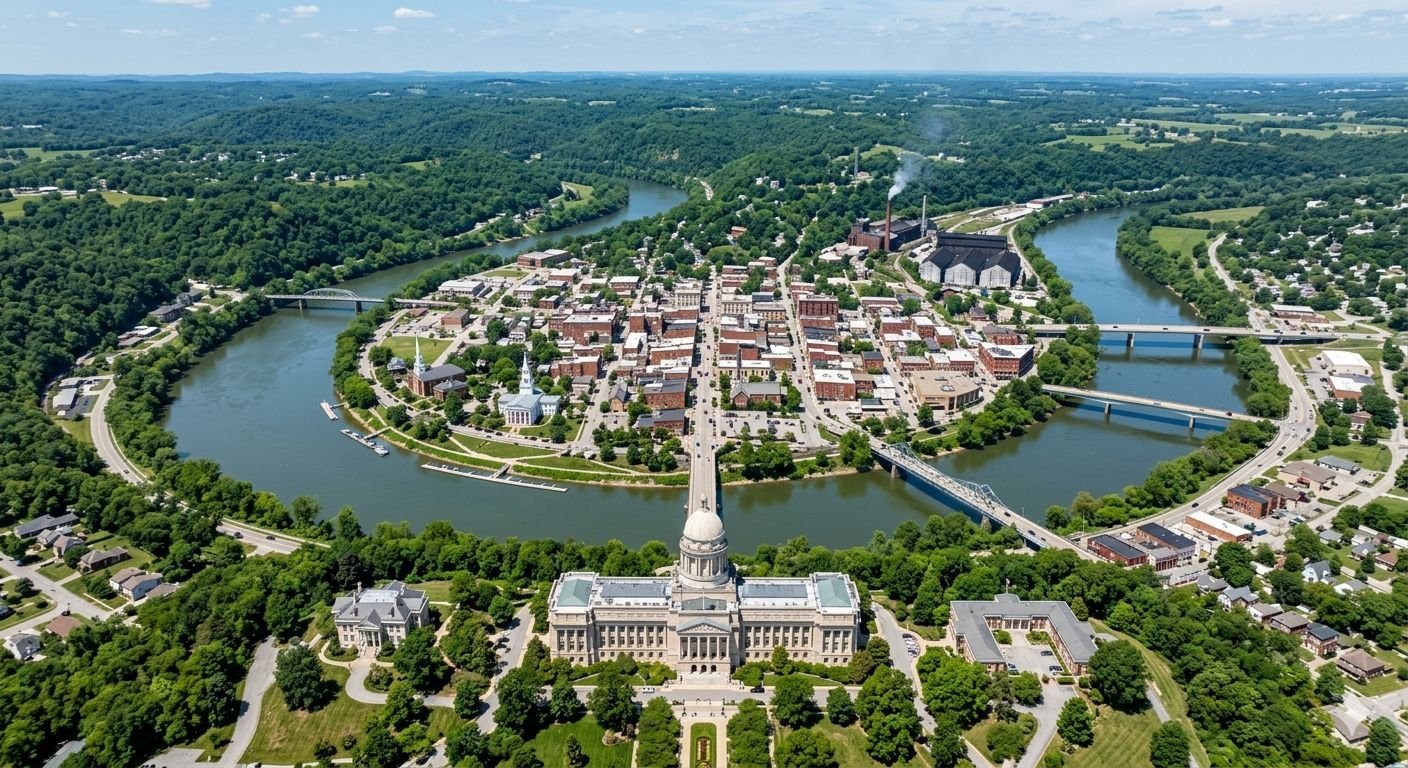
    Most journeys into Kentucky begin in Louisville, the state’s largest city, sitting on the southern bank of the Ohio River. Louisville is a city with enormous energy and character, blending Southern hospitality with a surprisingly cosmopolitan arts and food scene.

    The city’s crown jewel is Churchill Downs, the legendary horse racing venue that has hosted the Kentucky Derby every May since 1875. Even outside of Derby season, a visit to Churchill Downs is worthwhile. The Kentucky Derby Museum on the grounds offers an immersive look at the history of “the most exciting two minutes in sports,” complete with films, exhibits, and a 360-degree panoramic theater that puts you right in the middle of the action. On race days from spring through fall, you can watch live thoroughbred racing from the grandstands.

    Downtown Louisville’s NuLu neighborhood — short for New Louisville — is a vibrant stretch of East Market Street packed with galleries, farm-to-table restaurants, boutique shops, and craft cocktail bars. The Louisville Slugger Museum and Factory is another must-see, where you can walk through the process of making the famous baseball bats and hold a mini replica to take home. The Muhammad Ali Center, a stunning museum and cultural complex dedicated to the life and legacy of the Louisville-born boxing legend, is both inspiring and deeply moving.
    The Louisville Waterfront Park, stretching for miles along the Ohio River, is perfect for a morning run, a picnic, or simply watching a sunset over the water. The Big Four Bridge, a converted railroad bridge now open only to pedestrians and cyclists, offers one of the finest views of both Louisville and the Indiana shoreline.

    The Bourbon Trail
    No trip to Kentucky would be complete without exploring its bourbon heritage. Kentucky produces roughly 95 percent of the world’s bourbon supply, and the state takes tremendous pride in that fact. The Kentucky Bourbon Trail is a self-guided tour that winds through some of the most scenic countryside in America, connecting dozens of working distilleries where visitors can learn the craft, nose and taste expressions at every age and mash bill, and soak in the atmosphere of rickhouses stacked floor to ceiling with aging barrels.

    In Bardstown, often called the Bourbon Capital of the World, you will find Heaven Hill’s Bourbon Heritage Center, Willett Distillery, and the remarkable Oscar Getz Museum of Whiskey History. Bardstown itself is a charming small town with antebellum architecture, a lively downtown square, and an annual Kentucky Bourbon Festival each September that draws visitors from around the world.

    Further afield, the town of Loretto is home to Maker’s Mark, one of the most picturesque distilleries anywhere. Set on a National Historic Landmark property, its red shutters and black-trimmed buildings feel like stepping into a Victorian painting. Visitors can dip their own bottle of Maker’s in the signature red wax, a hands-on experience that makes for an unforgettable souvenir.

    Buffalo Trace Distillery in Frankfort, the state capital, is one of the oldest continuously operating distilleries in the United States and produces some of the most sought-after bourbons in the world, including Pappy Van Winkle. Tours here are informative and atmospheric, and the grounds have a genuine sense of history that is hard to replicate.
    Wild Turkey in Lawrenceburg, Four Roses in Lawrenceburg and Cox’s Creek, Jim Beam in Clermont, and Woodford Reserve in the scenic Bluegrass near Versailles all round out a trail that could keep a bourbon lover busy for a full week.

    The Bluegrass Region
    Central Kentucky’s Bluegrass region is one of the most visually striking agricultural landscapes in the world. Gently rolling hills, white plank fences, black four-board fences, and vast horse farms stretch in every direction under wide open skies. The region gets its name from the bluegrass that grows in abundance here, which turns a faint blue-purple when it flowers in spring.

    Lexington is the region’s hub, a college town anchored by the University of Kentucky but with a sophisticated food scene, a strong arts community, and an unmistakable equine identity. The Kentucky Horse Park, just north of the city, is a working horse farm and living museum dedicated to the horse’s relationship with humanity. You can see breeds from around the world, watch daily shows, visit the International Museum of the Horse, and even take trail rides. The graves of Man o’ War and other legendary racehorses are on the grounds, and the atmosphere is one of quiet reverence for these magnificent animals.

    Keeneland Race Course, just west of Lexington, is widely considered the most beautiful thoroughbred racing facility in the world. Racing takes place only in April and October, but the track is open for morning workouts year-round. Watching horses gallop in the early morning mist with a cup of coffee in hand is one of those simple, perfect experiences that Kentucky offers freely.

    The Kentucky Horse Park, Keeneland, and the dozens of stud farms that open for tours — including the famous Three Chimneys and WinStar Farm — make the Bluegrass region essential for any horse enthusiast. But even those with no particular interest in equestrian life will be charmed by the beauty of the countryside.

    Mammoth Cave National Park
    In south-central Kentucky, the earth opens up into one of the natural wonders of the world. Mammoth Cave is the longest known cave system on the planet, with more than 400 mapped miles of passageways stretching beneath the surface — and explorers are still finding more. The cave has been used by humans for at least 4,000 years, first by Native Americans who mined its minerals, and later by settlers who used it for saltpeter production during the War of 1812.

    Today, Mammoth Cave National Park offers a wide range of tours for all fitness levels and interests. The Historic Tour takes visitors through enormous chambers with nineteenth-century signatures scratched into the cave walls. The Frozen Niagara Tour showcases the cave’s most dramatic flowstone formations. For the adventurous, the Wild Cave Tour is a full-day crawl through tight passages and muddy corridors that gives you a genuine sense of what cave exploration feels like.

    Above ground, the park’s 53,000 acres of forests, rivers, and ridges offer excellent hiking, cycling, canoeing on the Green River, and wildlife watching. White-tailed deer, wild turkey, and river otters are commonly seen. The park is a dark-sky-friendly area, and stargazing on a clear night is spectacular.

    The Red River Gorge and Eastern Kentucky
    Eastern Kentucky is a land of dramatic geology and deep cultural roots. The Red River Gorge Geological Area, part of the Daniel Boone National Forest, is a hiker’s paradise of sandstone arches, towering cliffs, narrow gorges, and waterfalls. Natural Bridge State Resort Park sits at the heart of the gorge and features a massive sandstone arch accessible by trail or sky lift. Rock climbers from across the country flock here for some of the best sport climbing in the eastern United States.

    The small town of Slade serves as a base for gorge exploration, and the Miguel’s Pizza restaurant near the park entrance has become something of a legendary gathering spot for climbers. Camping throughout the gorge ranges from developed sites to backcountry dispersed camping for those willing to hike in.

    Further east, the Cumberland Gap National Historical Park straddles the meeting point of Kentucky, Virginia, and Tennessee, marking the passage through the Appalachian Mountains that Daniel Boone helped to blaze and through which hundreds of thousands of pioneers passed on their way west. The views from the Pinnacle Overlook on a clear day are breathtaking, and the park’s trails wind through both natural beauty and layers of American history.

    The small towns of Harlan, Pikeville, and Whitesburg carry the culture of Appalachia — music traditions, quilting, storytelling, and a cuisine all their own. The Appalshop arts and education center in Whitesburg has spent decades documenting and celebrating the culture of the region through film, radio, and theater.

    Western Kentucky and the Land Between the Lakes
    Western Kentucky is quieter and less visited than the central and eastern parts of the state, but it holds its own remarkable attractions. The Land Between the Lakes National Recreation Area occupies a narrow peninsula between Kentucky Lake and Lake Barkley, two enormous reservoirs formed by dams on the Tennessee and Cumberland Rivers. This 170,000-acre area of forests and wetlands is one of the largest inland peninsulas in the United States and offers outstanding fishing, boating, camping, hiking, and wildlife viewing.
    The Elk and Bison Prairie at Land Between the Lakes is a 700-acre enclosed range where visitors can drive through and observe free-roaming elk and American bison up close — an experience that feels genuinely wild and unexpected in this part of the country.

    Nearby, the town of Paducah at the confluence of the Tennessee and Ohio Rivers is a small city with an outsized reputation in the quilting world. Paducah hosts the American Quilters Society Quilt Show each April, drawing thousands of visitors and displaying some of the finest textile art anywhere. The National Quilt Museum in downtown Paducah is a stunning gallery dedicated to this traditional American craft. Paducah’s Lowertown Arts District is a charming neighborhood of restored Victorian homes that have been converted into artist studios and galleries.

    Kentucky’s Food Culture
    Kentucky’s culinary identity is as distinctive as its bourbon. The Hot Brown, invented at the Brown Hotel in Louisville in the 1920s, is an open-faced turkey sandwich smothered in Mornay sauce and topped with crispy bacon, then broiled until bubbling. It is rich, indulgent, and completely satisfying. The Brown Hotel still serves the original, and it is essential eating.
    Burgoo is a thick, slow-cooked stew of meats and vegetables that dates back to frontier days and remains a staple at Derby parties and community gatherings across the state. Benedictine spread — a cool, pale green mixture of cream cheese, cucumber, and dill — is a Louisville specialty that appears on sandwiches and canapés throughout the city. Country ham, cured and aged in the old tradition, is a salt-forward delicacy that divides outsiders but is beloved by Kentuckians.

    Modjeska candies, named after a nineteenth-century Polish actress who visited Louisville, are soft caramels wrapped around a center of marshmallow and remain a local confection worth seeking out. Derby Pie, a chocolate and walnut tart baked in a pastry shell and trademarked by Louisville’s Kern’s Kitchen, is the definitive Derby season dessert.

    Music and Arts
    Kentucky has a deep musical heritage rooted in old-time Appalachian music, bluegrass, gospel, and country. Bill Monroe, the father of bluegrass music, was born in Rosine, in western Kentucky, and his hometown holds a small festival in his honor each year. The International Bluegrass Music Museum in Owensboro celebrates the genre with instruments, recordings, photographs, and interactive exhibits. The ROMP Bluegrass Festival, also in Owensboro, is one of the finest outdoor music events in the region each June.
    Louisville has a thriving independent music and arts scene. The Louisville Orchestra is nationally respected, the Kentucky Center for the Performing Arts hosts touring Broadway productions and major concerts, and the Speed Art Museum — the state’s largest and oldest art museum — recently underwent a major renovation and is a genuine cultural gem.

    Practical Travel Information
    The best times to visit Kentucky are spring and fall, when the weather is mild and the landscape is at its most dramatic. Spring brings the Kentucky Derby, blooming wildflowers in the gorge, and peak bourbon festival season. Fall colors in the eastern mountains and the Red River Gorge are spectacular, typically peaking in mid-October.

    Summers can be hot and humid, but the caves offer natural cool air relief, and the lakes and rivers are ideal for water recreation. Winters are generally mild by northern standards, with occasional snow that can make the horse farm countryside look particularly magical.

    Louisville’s Muhammad Ali International Airport is the main gateway, with Lexington’s Blue Grass Airport serving as a convenient alternative for those focused on the Bluegrass and bourbon regions. Car rental is essential for most of the state, as public transportation outside Louisville is limited.

    Kentucky is generally an affordable destination. Distillery tours range from free to around forty dollars for premium experiences. State parks offer excellent value lodging in resort-style lodges and cabins. The people are famously warm and welcoming to visitors, and the pace of life invites slowing down and savoring the moment.

    Conclusion
    Kentucky is a state that surprises people. Visitors expecting only horse races and bourbon often find themselves drawn in by the landscape, the history, the music, and the food in ways they did not anticipate. It is a state with enormous range — from the urban sophistication of Louisville to the wilderness silence of the Red River Gorge, from the polished elegance of a top distillery to the rough beauty of a Cumberland Mountain trail. Whatever kind of journey you are looking for, Kentucky has a version of it, and it will almost certainly send you home already planning your return.

  • Louisville, Kentucky: Where Heritage Meets the Avant-Garde

    Sitting on the southern bank of the Ohio River, Louisville is Kentucky’s largest city and one of the American South’s most compelling travel destinations. It is a city that defies simple categorization: part Southern charm, part Midwestern grit, part cosmopolitan culture hub, and entirely its own thing. Locals pronounce it “LOO-ee-vil” — and they will gently correct you if you say it wrong.

    Louisville is perhaps best known as the home of the Kentucky Derby, the world’s most famous horse race, and as the undisputed capital of American bourbon whiskey. But beyond those two celebrated claims to fame lies a city rich in African American history, Victorian architecture, independent arts, a nationally recognized food scene, and a warmth of hospitality that keeps visitors coming back year after year.

    Whether you are a first-time visitor or a returning fan, this guide covers everything you need to know to make the most of your time in one of America’s most distinctive cities.

    A BRIEF HISTORY

    Louisville was founded in 1778 by General George Rogers Clark, who used the site at the Falls of the Ohio — the only natural obstruction on the entire length of the Ohio River — as a strategic military base during the American Revolutionary War. The city grew rapidly as a river trading post, and by the mid-1800s it had become one of the most important commercial centers in the American interior.

    The city’s relationship with bourbon began early. As far back as 1783, before Kentucky had even achieved statehood, distiller Evan Williams established a distillery on the banks of the Ohio River, setting a tradition that would define the region for centuries. The river was essential to the whiskey trade, carrying barrels downriver to ports across the South and beyond.

    Louisville sits at a fascinating geographic and cultural crossroads — technically a Southern city, shaped by both plantation-era history and the legacy of the Civil War, yet deeply connected to Northern commerce and culture through its river trade. It was a Union-held city during the Civil War, and it later became a crucible of the American Civil Rights Movement, famously producing Muhammad Ali, one of the most consequential figures of the twentieth century.

    Today, Louisville is a city firmly rooted in its past but eagerly looking forward, with a booming culinary scene, a thriving arts culture, and a visitor economy that draws millions of people every year.

    WHEN TO VISIT

    Louisville enjoys four distinct seasons, each offering a different kind of travel experience.

    Spring (March through May) is arguably the most exciting time to visit. The city bursts into bloom, the weather is mild and pleasant, and the social calendar is packed. The Kentucky Derby Festival, which culminates in the first Saturday of May race at Churchill Downs, transforms Louisville into a citywide celebration for nearly two weeks. The festival includes Thunder Over Louisville — widely regarded as the largest annual fireworks display in the entire United States — along with parades, galas, steamboat races, and countless other events. If you plan to attend Derby Week, book accommodations and tickets many months in advance, as the city fills to capacity.

    Summer (June through August) brings heat and humidity, but also outdoor concerts, festivals, rooftop bars, and long evenings on the river. Waterfront Park comes alive, and the city’s many patios and beer gardens are in full swing.

    Fall (September through November) is beautiful and often underrated. The foliage is stunning, the weather is comfortable, and bourbon tourism reaches its peak, as many whiskey enthusiasts consider autumn the ideal season for distillery tours. The Louder Than Life music festival, one of the country’s largest rock festivals, takes place each September.

    Winter (December through February) is quiet by comparison, but offers an intimate look at the city without the crowds. The holiday season brings festive lights and events, and bourbon bars are wonderfully cozy when the temperature drops.

    GETTING THERE AND GETTING AROUND

    Louisville Muhammad Ali International Airport (SDF) serves the city with direct flights to dozens of major U.S. cities. The airport is compact and easy to navigate, located just a few miles south of downtown.

    By car, Louisville sits at the intersection of Interstates 64, 65, and 71, making it easily accessible from Cincinnati (about 100 miles northeast), Nashville (about 175 miles south), Lexington (about 80 miles east), and Indianapolis (about 115 miles north).

    Within the city, a car is helpful but not strictly necessary if you plan to focus on downtown and nearby neighborhoods. Louisville has a city bus system (TARC), rideshare services, and a growing network of bike lanes and rental options. The Big Four Bridge, a former railroad bridge converted into a pedestrian and cycling path, connects downtown Louisville to Jeffersonville, Indiana across the Ohio River — and it is one of the most scenic and pleasant walks in the city.

    Downtown Louisville is quite walkable. Most of the major attractions along Museum Row, Whiskey Row, and the waterfront are within comfortable walking distance of one another.

    THE KENTUCKY DERBY AND CHURCHILL DOWNS

    No visit to Louisville is complete without engaging with horse racing culture, and Churchill Downs is the beating heart of it. Located about three miles south of downtown on Central Avenue, Churchill Downs has hosted the Kentucky Derby every year since 1875 — a 150-year-plus tradition that makes it one of the longest-running sporting events in American history.

    The Kentucky Derby itself takes place on the first Saturday of May and lasts roughly two minutes, but it is surrounded by weeks of pageantry, fashion, and celebration. Infield tickets are raucous and festive; grandstand seats and box seats offer a more refined experience. The race’s official drink is the Mint Julep — a simple, refreshing blend of bourbon, fresh mint, simple syrup, and crushed ice — and it is consumed in enormous quantities on Derby Day.

    Even outside of Derby season, Churchill Downs is worth visiting. The track hosts live racing in the spring and fall, and the Kentucky Derby Museum, located on the grounds, is an engaging and well-curated attraction that tells the full story of the race, its horses, its jockeys, and its cultural significance. The museum’s centerpiece is a 360-degree film that puts visitors right in the middle of Derby Day — complete with the roar of 150,000 people singing “My Old Kentucky Home.” The Barn and Backside Tour gives visitors a rare behind-the-scenes look at how racehorses and their teams prepare day to day.

    BOURBON: THE SOUL OF THE CITY

    Kentucky produces approximately 95 percent of the world’s bourbon supply, and Louisville is the unofficial capital of that industry. The city is home to more than two dozen bourbon experiences — distilleries, tasting rooms, and dedicated bourbon bars — making it possible to spend several days exploring nothing but whiskey and still feel like you have barely scratched the surface.

    The Kentucky Bourbon Trail is a formal tourism program that connects distilleries across the state, and Louisville serves as its gateway. The Frazier History Museum on Museum Row houses the Kentucky Bourbon Trail Welcome Center, which is the official starting point for the trail and a wonderful place to begin your bourbon education. The museum’s permanent exhibit, The Spirit of Kentucky, tells the full story of America’s native spirit.

    On Whiskey Row — a stretch of Main Street in downtown Louisville — distilleries and bourbon businesses have reclaimed a historic district that was once the commercial center of the American whiskey industry in the nineteenth century. Today, visitors can tour the Evan Williams Bourbon Experience, one of the city’s most popular distillery attractions and an official stop on the Kentucky Bourbon Trail. Old Forester Distilling Co., the brand that introduced bourbon in sealed bottles to ensure quality, also anchors Whiskey Row with a beautiful, modern distillery experience.

    The Michter’s Fort Nelson Distillery, housed in a landmark building on Main Street, offers impressive tours and a cocktail bar that showcases the craft and history of one of America’s oldest whiskey brands. Stitzel-Weller Distillery, located just outside downtown in the Shively neighborhood, offers a deep historical dive into bourbon heritage.

    For those who prefer to sip rather than tour, the Urban Bourbon Trail is a curated collection of bars and restaurants across the city, each offering at least 60 different bourbons on their menu. Standout stops include the Old Seelbach Bar, one of the most elegant and historically significant cocktail rooms in the country, located inside the legendary Seelbach Hotel. Bourbons Bistro on Frankfort Avenue helped spark the modern bourbon renaissance and remains one of the city’s top destinations for serious whiskey enthusiasts. Neat Bourbon Bar & Bottle Shop on Bardstown Road specializes in rare “dusties” — vintage, hard-to-find bottles — and lets enthusiasts taste bourbon history by the pour.

    If you are new to bourbon, a few basic things to know: all bourbon is whiskey, but not all whiskey is bourbon. To be labeled bourbon, the spirit must be made in the United States, from a grain mixture that is at least 51 percent corn, aged in new charred oak barrels, and distilled to no more than 160 proof. Kentucky’s unique limestone-filtered water, combined with the state’s dramatic temperature swings between summer and winter, creates ideal conditions for aging bourbon, which expands into the barrel wood in summer and contracts in winter, developing its color, flavor, and complexity over years or decades.

    MUSEUM ROW AND DOWNTOWN ATTRACTIONS

    Louisville’s Museum Row on West Main Street is one of the finest concentrations of museums and cultural attractions in any American city of Louisville’s size. It deserves at least a full day of exploration.

    The Louisville Slugger Museum & Factory is one of the most beloved and photogenic attractions in the city. Visitors cannot miss it — a 120-foot-tall steel baseball bat leans against the side of the building, making it one of the most distinctive landmarks in downtown Louisville. Inside, the museum tells the story of the Louisville Slugger wooden bat, which has been the choice of professional baseball players since the 1880s. Factory tours show visitors the full manufacturing process, from raw billets of ash or maple wood to finished bats ready for the Major Leagues, and every tour includes a free miniature bat to take home.

    The Muhammad Ali Center is one of the most moving and thoughtfully designed museums in the American South. Located near the Ohio River, the center is dedicated to the life, legacy, and humanitarian work of Louisville’s most famous son. Cassius Clay, who would become Muhammad Ali, was born in Louisville in 1942 and grew up in the city before becoming heavyweight champion of the world, a conscientious objector during the Vietnam War, and one of the most globally recognized human beings of the twentieth century. The museum does not shy away from the complexity of his life — his faith, his politics, his relationships, and his courage — and it inspires visitors of all backgrounds.

    The Frazier History Museum covers a broad sweep of American and world history, with a particular focus on the American West and Kentucky’s role in it. It is also home, as noted above, to the Kentucky Bourbon Trail Welcome Center.

    The Kentucky Science Center is a wonderful choice for families with children, offering hands-on exhibits covering science, technology, and natural history. The 21c Museum Hotel, an innovative boutique hotel concept that doubles as a contemporary art museum, keeps its gallery spaces open to the public 24 hours a day, seven days a week, free of charge — making it one of the most accessible art experiences in the city.

    The Roots 101 African-American Museum, also on Museum Row, tells the story of African American history from the Middle Passage through the Civil Rights era to the present day with depth, honesty, and power. It is one of the most important cultural institutions in Louisville and should not be missed.

    Flame Run Glass Studio and Gallery is a unique and mesmerizing experience, where visitors can watch master glassblowers create works of art in real time. The studio also offers hands-on glassblowing classes for those who want to try their own hand at the craft.

    OLD LOUISVILLE: A VICTORIAN TREASURE

    Just south of downtown lies one of the most architecturally stunning residential neighborhoods in the entire United States. Old Louisville is home to the largest collection of restored Victorian homes in the country and stands as the third-largest Historic Preservation District in America.

    Built primarily in the 1870s and 1880s as an upscale suburb connected to downtown by streetcar, Old Louisville encompasses more than 40 city blocks of elaborate, mansion-esque Victorian and Richardsonian Romanesque architecture. The homes are enormous, ornate, and beautifully preserved — many have since been converted into bed-and-breakfasts and inns, making it one of the most atmospheric places to stay in the city.

    Walking through Old Louisville is like stepping into a different century. The neighborhood’s tree-canopied streets, lined with mature magnolias and oaks, are particularly lovely in spring when the magnolias are in bloom. St. James Court, a private street at the heart of the neighborhood, is especially beautiful and hosts the nationally renowned St. James Court Art Show each October.

    The Conrad-Caldwell House Museum, a Romanesque Revival mansion built in 1895, opens its doors to visitors and offers a remarkable window into the lifestyle of Louisville’s wealthy elite during the Gilded Age.

    Old Louisville is also home to an unusually high concentration of stained-glass windows in its residential buildings — a feature that makes the neighborhood glow with color in afternoon light.

    NULU: NEW LOUISVILLE’S CREATIVE HUB

    The East Market District, universally known as NuLu (short for New Louisville), has emerged over the past fifteen years as one of the most vibrant and creative urban neighborhoods in the American South. Thrillist has named it one of the best food neighborhoods in America, and the accolade is well deserved.

    NuLu is centered on East Market Street east of downtown and is characterized by converted warehouses, independent galleries, specialty boutiques, and an exceptionally strong dining scene. The neighborhood is walkable, colorful, and filled with murals — it has become the center of Louisville’s visual arts community.

    For food, NuLu is a destination in its own right. The neighborhood is home to a rotating cast of inventive, locally owned restaurants that have put Louisville on the national culinary map. Visitors should plan at least one meal here. The area is particularly strong for brunch, with several restaurants competing for the title of best morning meal in the city.

    Beyond restaurants, NuLu offers excellent independent shopping, from vintage clothing to handmade crafts to locally produced goods. The Saturday NuLu Farmers Market is a neighborhood institution that draws both locals and visitors for fresh produce, artisan foods, and live music on weekend mornings.

    THE HIGHLANDS: MUSIC, NIGHTLIFE, AND BOHEMIAN SPIRIT

    South of downtown along Bardstown Road lies The Highlands, Louisville’s most eclectic and energetic neighborhood. Often compared to Brooklyn’s more bohemian districts, the Highlands is home to Louisville’s original “Restaurant Row” and offers an unmatched density of bars, coffee shops, music venues, bookstores, and locally owned boutiques.

    The Highlands is where Louisville lets its hair down. Live music spills out of venues on weekend nights, sidewalk cafes are packed with regulars, and the street-level energy is palpable at almost any hour. The neighborhood attracts a diverse, creative crowd and has a well-earned reputation for being one of the most socially progressive and welcoming communities in the city.

    For nightlife specifically, the Highlands is the city’s premier destination. Dozens of bars line Bardstown Road, ranging from quiet craft beer pubs to lively dance floors to intimate cocktail lounges. The neighborhood is also home to several of Louisville’s best live music venues, keeping the city’s robust music scene alive and thriving.

    WEST LOUISVILLE: HISTORY AND HERITAGE

    West Louisville encompasses nearly a dozen neighborhoods along the western side of the city, bordering the Ohio River. The area carries a deep and significant African American heritage and is an essential part of understanding Louisville’s full story.

    Muhammad Ali’s boyhood home is located in the West End neighborhood of Louisville, in the area where Cassius Clay grew up before becoming one of the world’s most iconic figures. The Kentucky Center for African American Heritage celebrates and preserves the cultural contributions of African Americans to Kentucky and the nation. Simmons College of Kentucky, a historically Black institution with roots going back to 1879, remains an anchor of the community.

    West Louisville’s culinary scene is centered on soul food traditions. Big Momma’s Soul Kitchen in the Parkland neighborhood has earned rave reviews for its fried chicken, pork chops, and hearty sides. Blak Koffee, with locations in the Russell and Parkland neighborhoods, serves a full breakfast and lunch menu and is a beloved neighborhood gathering place.

    BUTCHERTOWN AND THE WATERFRONT

    Butchertown, nestled just east of downtown near the Ohio River, is one of Louisville’s oldest neighborhoods and takes its name from the meatpacking industry that once dominated the area. Today, it is a fashionable district of converted industrial buildings, inventive restaurants, and an exclusive nightlife scene.

    Among Butchertown’s most fascinating landmarks is the Thomas Edison House, where the famous inventor lived briefly as a young telegraph operator in 1866 — a reminder of Louisville’s long history as a city that attracted ambitious young Americans seeking their fortune.

    Copper & Kings American Brandy Company operates one of the most distinctively styled distilleries in Louisville from a Butchertown warehouse. The rooftop bar offers sweeping views of the city skyline and the Ohio River, and the distillery produces American brandy aged to music — literally, speakers mounted throughout the aging warehouse are said to create vibrations that accelerate the maturation process.

    Louisville’s Waterfront Park is an 85-acre municipal park hugging the Ohio River just west of Butchertown and adjacent to downtown. The park offers wide green lawns, playgrounds, an extensive trail network, spectacular river views, and the Big Four Bridge pedestrian walkway. On summer evenings, the waterfront fills with families, joggers, cyclists, and people simply enjoying the river breeze. Free outdoor concerts and festivals are held here throughout the warm months.

    FOOD AND DINING

    Louisville has developed one of the most celebrated food scenes of any mid-sized American city. The culinary renaissance that began in the early 2000s has produced a dining culture that blends Southern traditions with global influences and serious culinary ambition.

    Every visitor to Louisville should try the Hot Brown — a Louisville original invented at the Brown Hotel in 1926. The Hot Brown is an open-faced turkey sandwich smothered in Mornay sauce (a creamy cheese sauce), topped with crispy bacon, and broiled until golden and bubbling. It is rich, indulgent, and deeply satisfying. The Brown Hotel still serves the definitive version, and the dining room under its hand-painted ceilings is an experience in itself. Many other Louisville restaurants have created their own interpretations of this beloved dish.

    Beyond the Hot Brown, Louisville’s food scene spans a remarkable range. Chef Edward Lee, who owns multiple restaurants in Louisville, has made a national name for himself blending Korean and Southern culinary traditions into something entirely new. His restaurants represent the innovative, boundary-pushing spirit that defines the best of Louisville dining.

    Feast BBQ in NuLu is a local favorite for barbecue, with pork cakes (a signature dish) and creative takes on smoked meats that draw both locals and visitors. Merle’s Whiskey Kitchen in the Highlands is beloved for its hot chicken and bourbon cocktails — a combination that captures the city’s dual culinary identity perfectly.

    For a sweet experience with deep local roots, Schimpff’s Confectionery in Jeffersonville, Indiana (just across the river from downtown Louisville) has been making handcrafted candy using nineteenth-century methods since 1891. It is one of the oldest candy stores in the United States and a charming piece of living history.

    The Louisville food scene also has a strong brunch culture, particularly in NuLu and the Highlands, where weekend mornings bring long lines outside the most popular spots. Plan accordingly and arrive early, or make a reservation when possible.

    Bourbon is not just for drinking in Louisville — it is a cooking ingredient woven throughout the city’s menus. From bourbon-glazed salmon to bourbon-spiked desserts to bourbon-infused chocolate truffles at Art Eatables (a bourbon chocolatier and must-stop on the Urban Bourbon Trail), the city’s chefs have embraced the local spirit as a pantry staple.

    OUTDOOR ACTIVITIES AND PARKS

    Louisville offers more outdoor recreation than many visitors expect. Beyond Waterfront Park, the city’s park system — largely designed in the late nineteenth century by Frederick Law Olmsted, the legendary landscape architect who also designed New York’s Central Park — is one of the finest urban park networks in America.

    Cherokee Park, Iroquois Park, and Seneca Park are the three largest of Olmsted’s Louisville parks, each offering trails, open meadows, scenic overlooks, and places for picnicking. Cherokee Park in the Highlands neighborhood is particularly popular for hiking and trail running.

    The Louisville Mega Cavern, located just south of downtown, is one of the city’s most unusual attractions. Created from a limestone quarry beneath Louisville, the cavern spans 100 acres underground and offers a range of activities including bicycle ziplines, tram tours, and even a subterranean holiday lights display in winter. It consistently ranks among Louisville’s top attractions for families and adventure seekers.

    The Big Four Bridge, already mentioned for its connection to Indiana, deserves special note as a recreational destination in its own right. The converted railroad bridge is now a smooth, wide pedestrian and cycling path that arches gracefully over the Ohio River, offering some of the best views of the Louisville skyline available anywhere. Watching the sunset from the midpoint of the bridge is a memorable Louisville experience.

    For families with children, Kentucky Kingdom Theme and Water Park is a major draw. The park spans 67 acres and combines thrill rides, classic carnival attractions, and a full water park, making it an easy full-day outing.

    The Louisville Zoo, set in a wooded park west of the Highlands, is home to more than 1,700 animals representing around 130 species. The zoo is particularly well regarded for its gorilla exhibit and its landscaped habitats.

    ARTS AND CULTURE

    Louisville has a robust and diverse arts ecosystem that extends well beyond its museums. The Kentucky Center for the Performing Arts is the city’s premier venue for Broadway touring productions, orchestra performances, and major theatrical events. The Louisville Orchestra, founded in 1937, is one of the country’s oldest and most respected regional orchestras.

    Actors Theatre of Louisville is nationally significant in American theater. Founded in 1964, it produces the Humana Festival of New American Plays each spring — a festival that has launched many of the most important plays in contemporary American theater, including works that have gone on to Broadway and international productions.

    The Louisville Ballet, Louisville Visual Art, and a constellation of independent galleries and studio spaces round out a creative scene that is vibrant relative to the city’s size.

    The 21c Museum Hotel model — combining a boutique hotel with a serious contemporary art museum — has become a Louisville success story that has been replicated in cities across the country. The original Louisville location remains a landmark and features rotating exhibitions of international contemporary art, all free and always open.

    PRACTICAL TIPS FOR VISITORS

    Currency and Costs: Louisville is generally affordable by American standards, particularly compared to coastal cities. Budget-minded visitors will find comfortable accommodations, good meals, and many free attractions. Derby Week and major festival periods are the exception, when hotel prices can spike dramatically.

    Tipping: Standard American tipping customs apply. Tip 18-20 percent at restaurants, $1-2 per drink at bars, and a few dollars per night for hotel housekeeping.

    Safety: Louisville, like all American cities, has neighborhoods that are safer and less safe. Downtown, NuLu, the Highlands, Old Louisville, and Butchertown are all popular visitor areas and generally safe, particularly during daytime and early evening hours. Exercise standard urban awareness after dark.

    Getting Around: As mentioned, a car gives you the most flexibility, but downtown Louisville is genuinely walkable. The rideshare economy is active in Louisville, and taxis are available as well.

    Bourbon Etiquette: When visiting distilleries or bourbon bars, it is perfectly acceptable to ask questions — bartenders and distillery guides in Louisville are passionate and knowledgeable, and they love talking about bourbon. Do not feel pressured to drink more than you are comfortable with; tasting pours are small, and pacing yourself is both accepted and encouraged.

    Reservations: For popular restaurants, particularly in NuLu and the Highlands, reservations are strongly recommended on weekends. During Derby Week and major festivals, book everything — hotels, restaurants, tours — as far in advance as possible.

    Language and Accent: Louisville’s accent is a distinctive blend of Southern and Midwestern American English. You may encounter the expression “y’all” (second-person plural, universally used), and the local enthusiasm for bourbon, horse racing, and University of Louisville or University of Kentucky basketball (a passionate rivalry) will quickly become apparent.

    WHERE TO STAY

    Louisville offers accommodations across every category.

    For historic grandeur, the Seelbach Hilton is a Louisville institution. The hotel opened in 1905 and its Rathskeller bar is one of the most ornate and historically significant rooms in the American South. F. Scott Fitzgerald mentioned the Seelbach in “The Great Gatsby,” and the hotel embraces its literary history with pride.

    The Brown Hotel, opened in 1923 and located in the heart of downtown, is elegant, beautifully restored, and the birthplace of the Hot Brown. Staying here puts you in the center of Louisville’s cultural and culinary heritage.

    The 21c Museum Hotel, for those who want contemporary design and immersive art, is the boutique option of choice — with rooms that feel more like gallery spaces than standard hotel rooms.

    Old Louisville’s bed-and-breakfasts offer an intimate and atmospheric alternative to downtown hotels. Several historic mansions have been converted into thoughtfully managed inns, and staying in one puts you inside the Victorian architecture rather than simply admiring it from the street.

    For those seeking bourbon-themed accommodations, several properties across the city have embraced the theme with barrel-inspired décor, in-room bourbon selections, and partnerships with local distilleries.

    DAY TRIPS FROM LOUISVILLE

    Louisville’s central location makes it an excellent base for exploring broader Kentucky.

    Bardstown, about 40 miles south of Louisville, is often called “the Bourbon Capital of the World” and is home to some of the state’s most historic distilleries, including Maker’s Mark and Heaven Hill. The town itself is charming and compact, with a historic district full of antebellum architecture.

    Mammoth Cave National Park, about 90 miles south of Louisville, is one of the world’s great natural wonders — a cave system so vast that explorers have mapped more than 400 miles of passages and still have not reached the end. Guided tours range from leisurely walks to challenging spelunking adventures.

    Lexington, Kentucky’s second city, is about 80 miles east and offers the famous Keeneland Race Course, the Kentucky Horse Park, bourbon distilleries, and the rolling green pastures of the Bluegrass Region. A day trip combining Lexington’s horse farms and a distillery or two makes for an excellent excursion.

    The Ark Encounter, a full-scale timber replica of Noah’s Ark based on the biblical account, is located in Williamstown, about 45 miles northeast of Louisville. It is one of the most visited attractions in Kentucky.

    CONCLUSION: WHY LOUISVILLE DESERVES YOUR TIME

    Louisville is the kind of city that tends to exceed expectations. Visitors who arrive thinking they will spend a day or two at Churchill Downs and a distillery or two often find themselves extending their stay, drawn into the city’s neighborhoods, its food, its music, and its people.

    It is a city with a complicated history — of slavery, of segregation, of the Civil Rights struggle — that it does not hide or prettify. The Roots 101 museum, the Muhammad Ali Center, and the Kentucky Center for African American Heritage all confront that history with honesty and respect. This willingness to engage honestly with the past, alongside a genuine civic pride in what Louisville has become, gives the city a moral seriousness that elevates it beyond a simple tourist destination.

    Louisville is also, fundamentally, a city that knows how to have a good time. The bourbon flows freely, the food is deeply satisfying, the live music is real and rooted, the horse races are genuinely thrilling, and the people are, by and large, exactly as friendly as their reputation suggests.

    Come for the Kentucky Derby, stay for the bourbon, leave utterly charmed by everything in between.

    QUICK REFERENCE: TOP THINGS TO DO IN LOUISVILLE

    1. Visit Churchill Downs and the Kentucky Derby Museum
    2. Tour the distilleries on Whiskey Row (Evan Williams, Old Forester, Michter’s Fort Nelson)
    3. Walk Museum Row: Louisville Slugger Museum, Muhammad Ali Center, Frazier History Museum
    4. Explore Old Louisville’s Victorian neighborhoods on foot
    5. Eat and drink your way through NuLu (East Market District)
    6. Experience the Urban Bourbon Trail at the Old Seelbach Bar, Bourbons Bistro, and Neat Bourbon Bar
    7. Try a Hot Brown at the Brown Hotel
    8. Walk or cycle across the Big Four Bridge at sunset
    9. Visit the Roots 101 African-American Museum
    10. Stroll Waterfront Park along the Ohio River
    11. Explore the Highlands neighborhood’s bars, music venues, and bookstores
    12. Descend into the Louisville Mega Cavern for underground adventure
    13. Visit West Louisville and Muhammad Ali’s boyhood home
    14. Catch a live performance at Actors Theatre of Louisville
    15. Plan a day trip to Bardstown or Mammoth Cave National Park
  • Iowa: Wander the Golden Horizons

    Iowa: Wander the Golden Horizons

    Iowa is one of America’s most underestimated travel destinations. Mention it to someone who has never visited, and they will likely picture an endless flat expanse of corn, nothing more. The reality is far richer and more surprising. Nestled between the Mississippi River to the east and the Missouri River to the west, Iowa is a state of rolling hills, ancient bluffs, glacier-carved lakes, vibrant cities, covered bridges, limestone caves, world-class cycling trails, and a cultural tapestry woven from dozens of immigrant traditions. It rewards who slows down, wanders off the interstate, and pays attention.

    Tourism in Iowa generated $7.3 billion in expenditures in 2023, supporting over $1.1 billion in state and local government revenue while employing nearly 71,000 people statewide — figures that tell you this is a state people genuinely come to visit, not just pass through.
    Whether you are planning a weekend road trip or a week-long cross-state adventure, this guide will walk you through everything Iowa has to offer.

    THE LAY OF THE LAND
    Iowa covers roughly 56,000 square miles and sits at the geographic heart of the continental United States. The state is broadly divided into several distinct natural regions. The northeastern corner, known as the Driftless Area, was bypassed by the last glaciers and features dramatic limestone bluffs, deep river valleys, and some of the most rugged scenery in the Midwest. The northwest has the Iowa Great Lakes region, a cluster of glacier-carved lakes popular for summer recreation. Central Iowa is dominated by gently rolling prairie and the capital city of Des Moines. The western edge along the Missouri River features the Loess Hills, a rare geological formation found only in Iowa and along the Yellow River in China. The eastern border along the Mississippi is lined with historic river towns and some of the state’s oldest architecture.

    DES MOINES: THE CAPITAL AND CULTURAL HUB
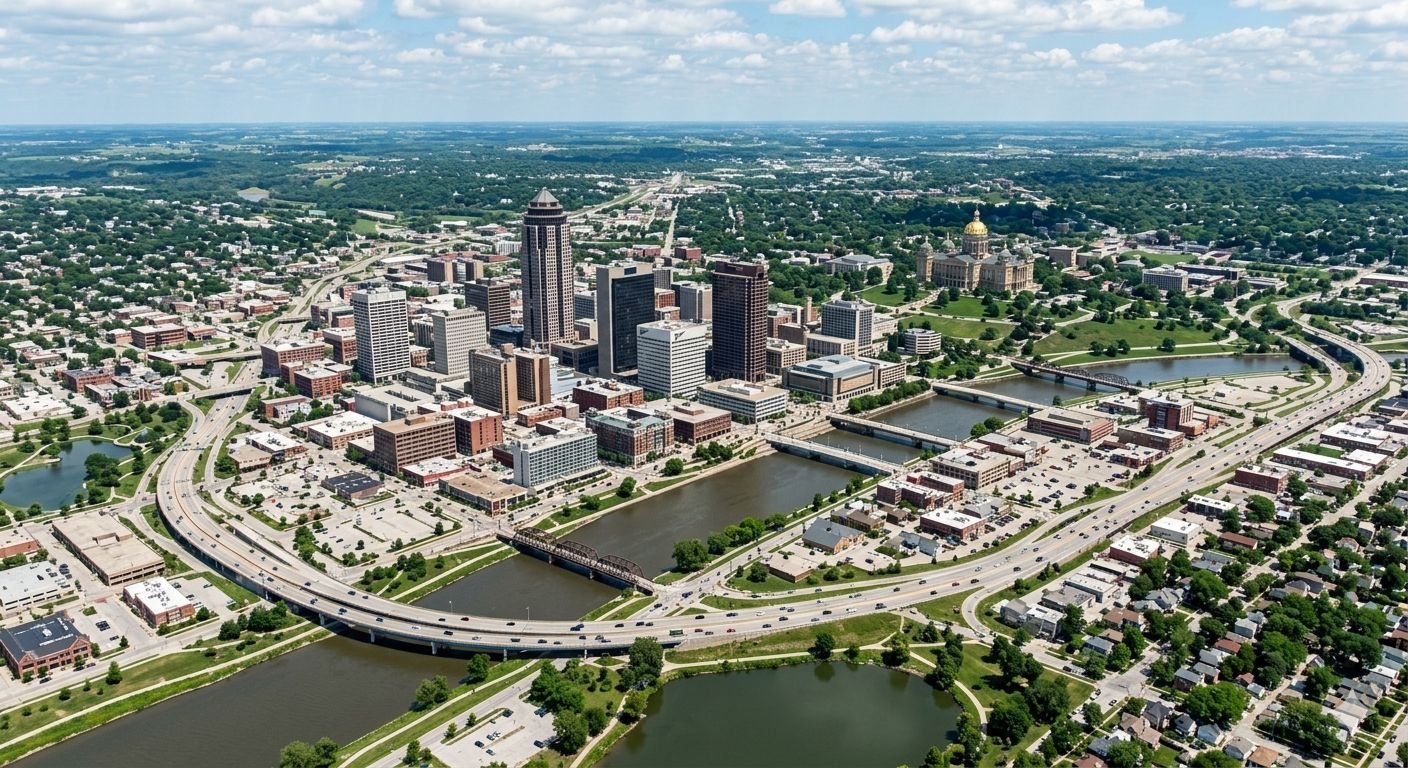
    Des Moines is the obvious starting point for most visitors. It is a city that has quietly transformed itself into one of the Midwest’s most livable and dynamic urban centers, with a food scene, arts culture, and trail system that punch well above the city’s weight class.

    The Greater Des Moines Botanical Garden, Blank Park Zoo, and the Des Moines Art Center are all well worth a half day each. The art center is particularly impressive, housing works by Georgia O’Keeffe, Francis Bacon, and Grant Wood in a building designed by three different architectural legends — Eliel Saarinen, I.M. Pei, and Richard Meier.

    The city’s trail system is extraordinary. Des Moines has developed one of the most extensive urban trail networks in the country, and it connects to longer regional trails reaching far beyond the city limits.
    The Downtown Farmers Market, held on Saturday mornings from May through October, is a beloved institution. Stretching across several blocks of Court Avenue, it draws tens of thousands of visitors each week for fresh produce, artisan foods, live music, and community energy. It is a must-visit for fresh produce and local goods.
    The Iowa State Capitol building is also worth a visit. Its gold-leafed dome is one of the most distinctive in the country, and free guided tours walk visitors through its stunning interior of marble, mosaics, and murals.

    THE HIGH TRESTLE TRAIL AND IOWA’S CYCLING PARADISE
    Iowa is genuinely one of the best states in the nation for cycling, and the High Trestle Trail is the crown jewel of its trail network. The trail runs 25 miles between Ankeny and Woodbury and crosses the Des Moines River on a breathtaking 13-story-tall bridge adorned with illuminated steel frames that glow blue at night. It is one of the most photographed bridges in the Midwest and absolutely spectacular at sunset.

    Nine miles of new trail completed in Fall 2024 connected the Raccoon River Valley Trail and the High Trestle Trail, creating a 120-mile continuous loop that ranks among the longest trail loops in the country. For cycling enthusiasts, this is a destination-worthy experience in itself.

    Iowa is also home to RAGBRAI, the Register’s Annual Great Bicycle Ride Across Iowa, which is the oldest and largest bicycle touring event in the world. Held every July, it draws thousands of riders who spend a week pedaling across the entire width of the state, camping in small towns along the way. The event is a joyful, communal celebration of Iowa’s landscapes and small-town hospitality.

    DUBUQUE AND THE MISSISSIPPI RIVER BLUFFS
    Dubuque, tucked into the bluffs along the Mississippi in Iowa’s northeastern corner, is one of the state’s most beautiful and historic cities. Founded in the 1780s, it is Iowa’s oldest city, and its Victorian-era architecture, riverfront museums, and dramatic hillside setting make it unlike anywhere else in the state.

    The National Mississippi River Museum and Aquarium is a standout attraction. Recent expansions have enlarged the river otter habitat from 600 square feet to a 1,600-square-foot space with outdoor areas and stream features, and new indoor aquariums and a trout stream are among the latest additions. The museum tells the story of the Mississippi River and all the life it sustains, from paddlefish to bald eagles to the river cultures that grew along its banks.

    The Fenelon Place Elevator, a funicular railway built in 1882, carries visitors from the lower city to the top of the bluffs for sweeping views of three states — Iowa, Wisconsin, and Illinois — spread across a bend in the river. It is a beloved and quirky piece of local history.

    Pikes Peak State Park, located just south of McGregor along the Mississippi, offers some of the most dramatic overlooks in the state. Set where the Mississippi and Wisconsin rivers meet, Pikes Peak State Park is in the northeast of the state on the border with Wisconsin and delights nature lovers with stunning scenery and outstanding natural beauty.
    Nearby Effigy Mounds National Monument preserves over 200 prehistoric earthen mounds sacred to Native American tribes, many of them shaped like birds and bears. It is a profoundly moving place, and the forested blufftop trails offer some of the finest walking in the state.

    DECORAH AND THE DRIFTLESS REGION
    Decorah is a small city in the far northeastern corner of Iowa that has built a remarkable reputation as a destination for outdoor adventure, craft beer, and Scandinavian heritage. Iowa is home to quaint rural towns and villages, some of which exhibit rich Dutch, German, and Scandinavian culture and heritage. Decorah exemplifies the Scandinavian side of that heritage, as it was settled largely by Norwegian immigrants in the mid-1800s.

    The Vesterheim Norwegian-American Museum is the largest museum in the United States dedicated to a single immigrant group, and it houses an extraordinary collection of folk art, decorative arts, and historical artifacts. The surrounding downtown is full of independent shops, galleries, and excellent restaurants.
    The Upper Iowa River, which winds through the hills around Decorah, is one of the state’s finest canoeing and kayaking rivers, with clear water, limestone bluffs, and minimal crowds. Decorah is also a birdwatching hotspot, particularly during spring migration, when raptors and warblers concentrate along the river valleys.

    Every July, Nordic Fest celebrates Scandinavian traditions, especially Norwegian ones, with historic flair — music, crafts, folk costuming, and storytelling set in Iowa’s rolling hills of the northeast, making it part culture celebration and part scenic getaway.

    THE AMANA COLONIES
    The Amana Colonies are unlike anywhere else in Iowa — or in the United States, for that matter. Founded by German immigrants in 1855, the Amana Colonies have provided decades of education, entertainment, and dining to travelers. The seven villages were established as a communal religious community by a German pietist sect known as the Community of True Inspiration. For nearly a century, residents lived and worked communally, sharing kitchens, property, and labor. The communal system ended in 1932, but the villages retained their distinctive character and craft traditions.

    Today, visitors can explore working woolen mills, furniture workshops, bakeries, and wineries. The Amana Heritage Museum tells the story of the colony’s remarkable social experiment. And the restaurants serve hearty German food — schnitzel, bratwurst, sauerkraut, strudel — in portions that reflect a tradition of communal cooking for hard-working people.
    The colonies are a short drive west of Cedar Rapids and make an ideal half-day or full-day stop for anyone interested in history, craft, and very good food.

    PELLA AND THE TULIP FESTIVAL
    Pella is a small city in central Iowa that wears its Dutch heritage with quiet pride year-round and exuberant pride every May. The Historical Village has over 20 traditional buildings to wander around, with a church and blacksmiths lying beside the fully functional Vermeer Windmill, one of its main sights, while attractive Dutch pastry shops offer cheeses, clogs, and costumes.

    The Tulip Time Festival is Pella’s signature event. Pella’s annual Tulip Time offers a variety of Dutch cultural experiences with two parades each day of the festival, along with traditional Dutch dancing and singing performances, six museums, and a Craft Market. The tulip gardens are extraordinary in bloom, and the streets fill with costumed performers and the smell of Dutch pastries.

    THE FIELD OF DREAMS
    Few American films have embedded a particular place so deeply in the cultural imagination as Field of Dreams did with a farm outside Dyersville, Iowa. Visitors can play catch on the original Field of Dreams diamond, carved from cornfields near Dyersville. The baseball diamond and the white farmhouse are exactly as they appeared in the 1989 film, and something about standing in that outfield, surrounded by corn stretching to the horizon, is genuinely moving, even if you are not a baseball fan.

    In 2021, Major League Baseball built a temporary stadium adjacent to the site and hosted a regular-season game there, which drew national attention. The site remains one of Iowa’s most popular tourist attractions.

    MADISON COUNTY AND THE COVERED BRIDGES
    Set about 30 miles to the southwest of Des Moines is the charming countryside of Madison County, which shot to fame following the 1995 film The Bridges of Madison County. Now visitors flock to its fertile fields and farmland and cruise along quaint country lanes before stopping off at picture-perfect towns such as Winterset. The highlight is its delightful covered bridges, of which six remain.

    Winterset is also the birthplace of John Wayne, and the John Wayne Birthplace Museum preserves the Western film star’s home and artifacts from his life. The surrounding county is also excellent wine country, with several vineyards and small breweries tucked into its gentle hills.

    THE LOESS HILLS
    Along Iowa’s western edge runs one of the state’s most unusual and overlooked natural wonders. The Loess Hills are steep, sharply ridged hills made of wind-deposited silt called loess, laid down during the last ice age. The towering Loess Hills offer picturesque scenic drives and hiking on trails that wind through native prairie, oak savanna, and habitat found nowhere else on earth. The views from the ridgelines across the Missouri River valley are expansive and beautiful, especially in the golden light of late afternoon.
    The Loess Hills Scenic Byway runs 220 miles along the ridge from Akron in the north to Hamburg in the south and is one of Iowa’s finest road trips.

    THE IOWA GREAT LAKES
    In the northwest corner of the state, a cluster of clear, glacier-carved lakes forms Iowa’s most popular summer resort area. Lake Okoboji and Spirit Lake are the largest and most visited, and the entire region buzzes with activity from Memorial Day through Labor Day. Okoboji offers lake activities like boating, fishing, and paddleboarding, built around summer staples like a historic amusement park, waterside bars and restaurants, and kid-friendly activities.
    Arnolds Park Amusement Park, which has operated on the shores of Lake Okoboji since 1889, is one of the oldest amusement parks in the country and still draws families for its vintage wooden roller coaster, lakeside atmosphere, and summer concerts.

    MAQUOKETA CAVES STATE PARK
    One of Iowa’s best-kept secrets is Maquoketa Caves State Park in the eastern part of the state. The park contains the largest collection of accessible caves in Iowa, along with unusual rock formations, a natural bridge, and densely forested hiking trails. It is an ideal destination for families with children and for anyone who enjoys exploring underground.

    CEDAR RAPIDS
    Iowa’s second-largest city is the home of the National Czech and Slovak Museum and Library, a world-class institution dedicated to the Central European immigrants who shaped so much of eastern Iowa’s character. The city also has a strong arts scene centered on the Cedar Rapids Museum of Art, which holds one of the largest collections of Grant Wood paintings in the world. Wood, who was born and spent most of his life in Iowa, painted the iconic American Gothic here, and the museum explores his career and legacy in depth.

    IOWA’S FOOD AND DRINK CULTURE
    Iowa’s food culture is rooted in agriculture, and that is entirely a good thing. The state produces an extraordinary abundance of corn, soybeans, pork, beef, eggs, and dairy, and its farm-to-table dining scene has grown significantly in recent years. Look for pork tenderloin sandwiches, sweet corn in season, pies at church suppers or cafes, ethnic specialties at heritage festivals, and classic fair foods at county and state fairs.

    The breaded pork tenderloin sandwich is Iowa’s most iconic food. Served on a bun that is comically smaller than the enormous, pan-fried cutlet it supports, it is a state institution available at diners, bars, and casual restaurants across Iowa.
    Iowa’s craft beer scene has also matured considerably. Iowa City, Des Moines, Cedar Rapids, and Dubuque all have lively brewpub cultures, and the Millstream Brewing Company in the Amana Colonies has been producing award-winning German-style beers since 1985.

    Le Mars, a small city in northwest Iowa, holds the quirky distinction of being the Ice Cream Capital of the World. Le Mars is the Ice Cream Capital of the World, and visitors can experience all its sweetness at the Wells Visitor Center and Ice Cream Parlor. Wells Enterprises, which makes Blue Bunny ice cream, is based there and offers visitors a fun and delicious stop. Oh My! Omaha

    FESTIVALS AND EVENTS
    Iowa’s festival calendar is extraordinarily rich, reflecting the state’s diverse immigrant heritage and strong sense of community. The Iowa State Fair in Des Moines, held every August, is widely regarded as one of the premier state fairs in the country. No cultural guide to Iowa is complete without the Iowa State Fair, held each August in Des Moines and widely regarded as one of the country’s premier state fairs. It draws hundreds of thousands of visitors for livestock competitions, carnival rides, live music, and famously indulgent food on sticks.
    The Des Moines Arts Festival draws over 200,000 visitors over three days each summer for visual arts, live performances, food trucks, and local beer and wine in the heart of downtown.

    Hinterland, held in a field near Des Moines each summer, has grown into one of the Midwest’s largest multi-day music festivals, attracting major national and international acts.
    The Meskwaki Nation, based near Tama, gathers in August for its annual powwow, a four-day event featuring dancing, singing, handcrafts, food, games, and a time of reaffirmation and kinship. Visitors are welcome and encouraged to attend respectfully.

    Clear Lake in winter hosts the Color the Wind Festival, the largest winter kite festival in the Midwest, an annual favorite that brings visitors and kite flyers from across the country to see huge inflatable kites take to the sky alongside ice harvesting demonstrations by local Amish families. Oh My! Omaha

    PRACTICAL TRAVEL TIPS
    The best time to visit Iowa depends on what you are after. Spring, from late April through early June, brings wildflowers, mild temperatures, and the opening of farmers markets. Summer is festival season and the time for lake recreation, though July and August can be hot and humid. Fall is perhaps Iowa’s most beautiful season, with golden light, harvest activity, and spectacular foliage particularly in the Driftless Area and Loess Hills. Winter is quiet but has its charms, especially for those who enjoy the peace of snowy landscapes and cozy small-town hospitality.

    Getting around Iowa requires a car. Public transportation between cities is limited, and the state’s greatest pleasures are often found on rural highways and gravel roads between small towns. A road trip is really the ideal format for exploring Iowa, and the state’s scenic byways are well-marked and rewarding.

    For travelers, the key to appreciating Iowa lies in slowing down, paying attention, and participating where invited. Attending festivals, fairs, and neighborhood gatherings transforms a drive across the state into a series of memorable encounters. In return for that attention and respect, Iowa offers what many visitors remember most: genuine hospitality and a sense of belonging.

    Accommodation options range from major chain hotels in Des Moines and Cedar Rapids to charming bed-and-breakfasts in small towns, historic inns in river cities like Dubuque and Davenport, and farm stays that let visitors experience agricultural life firsthand. Camping is excellent throughout the state park system.

    CONCLUSION: Iowa Rewards the Curious
    Iowa is not a destination that announces itself loudly. It does not have mountain ranges or ocean coastlines or famous theme parks. What it has is something rarer and, for the right kind of traveler, more satisfying: authenticity. Its landscapes are genuinely beautiful, its history is layered and fascinating, its people are famously warm, and its cultural life, from the Amana Colonies to the Meskwaki powwow to the blazing lights of the High Trestle Trail at night, is richer than most visitors ever expect. Come curious, come unhurried, and Iowa will more than meet you halfway.

  • Puerto Rico: Where the Caribbean Beats

    Puerto Rico wears its nickname, La Isla del Encanto – the Island of Enchantment – honestly. It is a place of extraordinary contrasts: a 16th-century walled city rising from the Atlantic coast, a tropical rainforest tumbling down volcanic mountains, beaches of both white and black sand, glowing waters that light up at night, a food scene that pulls from three continents, and a people whose warmth and cultural pride are felt in every encounter. All of this, just a short flight from the eastern United States, with no passport required for American citizens.


    Puerto Rico recently saw record-breaking tourism numbers, with over 6.1 million travelers passing through its main airport and generating $9.8 billion in revenue. That momentum has only grown. In 2025, Puerto Rico stood at the center of global cultural conversation, with landmark moments bringing unprecedented international attention to the island, including the highly anticipated opening of Four Seasons Resort Puerto Rico, marking a major milestone for the island’s luxury tourism sector. Whether you are a first-time visitor or a returning devotee, this guide will walk you through everything the island has to offer.

    THE BASICS: GEOGRAPHY AND ORIENTATION
    Puerto Rico is a Caribbean island roughly 100 miles long and 35 miles wide, located about 1,000 miles southeast of Miami. It is an unincorporated territory of the United States, which means American citizens can travel there without a passport, use their existing phone plans, and spend US dollars. The island sits at the northeastern edge of the Caribbean Sea and is surrounded by smaller islands, the most notable being Vieques and Culebra to the east.
    Puerto Rico is a place where every corner tells a story. You can begin your day beneath the lush canopy of a tropical rainforest and end it watching the sunset from a centuries-old fortress. The island is a vibrant tapestry of color — historic facades, turquoise coastlines, and landscapes built for discovery.


    The capital, San Juan, sits on the northern coast and is the main entry point for most visitors. From there, the island fans out in every direction: the rainforest to the east, the surf town of Rincón to the west, the colonial city of Ponce to the south, and the island-hopping paradise of Fajardo to the northeast. The island is small enough that virtually every destination is reachable as a day trip from San Juan, but rewarding enough to warrant longer stays in each region.

    OLD SAN JUAN: WHERE HISTORY LIVES
    Old San Juan is one of the finest preserved colonial cities in the Western Hemisphere, and it is the natural starting point for any trip to Puerto Rico. The picturesque Old San Juan is a 16th-century walled city with pastel-hued buildings and cobblestone streets. Walking its narrow lanes is a pleasure in itself — the buildings painted in every shade of yellow, blue, terracotta, and pink, the cobblestones worn smooth and gleaming with a blue-gray tint from the iron oxide used to make them centuries ago.


    The two great forts define the city’s skyline and its history. Castillo San Felipe del Morro is a six-level Spanish fortress begun in 1539, perched on a headland at the northwestern tip of Old San Juan with a straight drop to the Atlantic below. Walking its ramps, dungeons, and firing batteries is the single clearest way to understand why San Juan exists where it does. The views from the upper battlements, sweeping across the Atlantic and back over the city’s rooftops, are among the most dramatic in the Caribbean. Castillo San Cristóbal, on the eastern edge of the old city, is even larger and equally compelling, with a complex system of outworks, tunnels, and artillery positions designed to defend the city from land attack.


    Between the two forts lies a neighborhood of extraordinary vitality. The streets of Old San Juan are lined with art galleries, boutiques, cafes, rum bars, and restaurants that range from humble local lunch spots to some of the island’s finest dining. The Paseo de la Princesa, a tree-lined promenade along the old city walls facing the bay, is lovely for an evening stroll. The Plaza de Armas, the historic main square, buzzes with locals and visitors at all hours.


    A short walk brings you to La Perla, the famously photogenic barrio clinging to the Atlantic-facing cliffs outside the city walls, known for its vivid murals and its appearance in music videos that brought global attention to Puerto Rican culture.

    EL YUNQUE: AMERICA’S ONLY TROPICAL RAINFOREST
    About 45 minutes east of San Juan, rising into the Sierra de Luquillo mountains, El Yunque National Forest is one of Puerto Rico’s crown jewels and one of the most extraordinary natural areas in the entire United States. El Yunque is the only tropical rainforest within the national forest system. At nearly 29,000 acres, it is one of the smallest in the U.S. national forest system, yet one of the most biologically diverse.


    In the forest, the sound of waterfalls and coquí frogs follows you from trail to trail. The air smells like fresh, damp leaves, and humidity wraps around you like a hug, with a calm, peaceful feeling that settles in once you are deep in the forest. The coquí — the tiny tree frog whose two-note call is synonymous with Puerto Rico — is heard throughout the island at night, but El Yunque is where visitors are most likely to encounter these beloved creatures, along with the endangered Puerto Rican parrot and dozens of other species found nowhere else on earth.


    The forest offers multiple hiking trails of varying difficulty. The La Mina Trail leads to a stunning waterfall with a swimming pool at its base, though visitors should check current conditions before going as portions of the trail have been subject to periodic closures for maintenance. The Mount Britton Tower trail, a moderate uphill hike to a 1930s stone lookout, rewards climbers with expansive views across the rainforest and, on clear days, all the way to the coast. The Yokahú Observation Tower provides sweeping views with considerably less effort.


    Arriving before 9 AM is strongly recommended to avoid getting turned away, as the forest fills up fast and by midday, parking and trails get crowded. Those who arrive early often have the shorter trails almost entirely to themselves, with nothing but birdsong, frog calls, and the sound of moving water for company. Medium
    On the way back from El Yunque, a stop at Luquillo Beach is almost obligatory. This long, palm-fringed crescent of golden sand is widely considered one of the most beautiful and family-friendly beaches in Puerto Rico, and the famous Luquillo kiosks — a row of open-air food stalls along the road — serve everything from fresh fish to alcapurrias (fried fritters) to cold beer.

    THE BIOLUMINESCENT BAYS: PUERTO RICO’S MOST MAGICAL EXPERIENCE
    No natural experience in Puerto Rico is quite as magical as the bioluminescent bays, and no other destination on earth can match the island for this phenomenon. Puerto Rico is home to three of the world’s brightest permanent bioluminescent bays, more than any other destination on Earth.


    The glow comes from microscopic single-celled organisms called dinoflagellates. When the organisms are disturbed by subtle movements in the water — a wave, a boat, or a kayak paddle — a protein and an enzyme combine and create energy, igniting magical fluorescent-blue sparkles below the surface. The effect is otherworldly: every stroke of a paddle, every splash of a hand in the water, leaves a trailing shimmer of blue-green light. Platea
    Mosquito Bay on the island of Vieques is the most celebrated of the three.

    Per the Guinness Book of World Records, Mosquito Bay had more than 700,000 glowing phytoplankton per gallon of water, a concentration that has since risen to an average of 1 million to 2.1 million per gallon. Local agencies have declared the area surrounding Mosquito Bay a natural reserve, keeping the night skies free of light pollution. Getting there requires a ferry or short flight from the mainland, but the experience is worth every bit of effort.


    Laguna Grande in Fajardo is the most convenient option for visitors based in San Juan. It is located on the eastern tip of Puerto Rico’s mainland in the town of Fajardo, just about one hour and fifteen minutes from San Juan along PR-3. A long, narrow canal leads through mangrove forest to the dazzling glowing water.
    La Parguera, on the southwestern coast, is the third bay and the most accessible by car for those exploring the island’s south and west regions. It is the only one of the three bays where swimming may be permitted depending on the tour operator, which makes it a unique draw for those who want to be fully immersed in the glow.
    The optimal time to visit the bioluminescent bays is between December and April, the dry season, when rainfall is less likely to cloud the water. The new moon is the best lunar phase, as darker skies intensify the visible glow. All three bays are accessible only through guided tours.

    VIEQUES AND CULEBRA: THE OUTER ISLANDS
    If the main island of Puerto Rico is rich with experience, its smaller companion islands are paradise distilled to its essence.
    Vieques, six miles off the southeast coast of the main island, is a place apart. Vieques Island abounds with white- and black-sand beaches, immaculate coral reefs, and wild horses. For decades the island served as a U.S. Navy bombing range, which inadvertently preserved much of its natural environment from development. When the Navy departed in 2003, much of the land became the Vieques National Wildlife Refuge, and the beaches that were revealed — Sun Bay, Media Luna, Navio, Red Beach — rank among the most pristine in the entire Caribbean. Wild horses, descendants of those left by the Spanish, roam freely across the island and appear on roadsides and beaches with complete nonchalance.


    Culebra, to the north of Vieques, is best known for Flamenco Beach, a sweeping horseshoe bay of impossibly white sand and calm turquoise water that consistently ranks among the most beautiful beaches in the world. The island is tiny and quiet, with little in the way of development, and its surrounding waters offer world-class snorkeling and diving on healthy coral reefs. Both Vieques and Culebra can be reached by ferry from Ceiba on the east coast of the main island, or by short commuter flights from San Juan.

    PONCE: THE PEARL OF THE SOUTH
    Ponce is Puerto Rico’s second city and one of its most historically significant. Built on wealth generated by sugar and coffee during the colonial era, it developed an architectural grandeur that sets it apart from anywhere else on the island.
    Ponce is best known for its stately architecture. On the charming main square you will find the Parque de Bombas, the Fuente de Los Leones, and the Cathedral of Our Lady of Guadalupe. The Castillo Serrallés Museum, the Don Q rum estate, offers mixology workshops and tours of its mansion with 1930s design, Japanese garden, and butterfly house. U.S. News & World Report
    The Parque de Bombas itself is one of Puerto Rico’s most iconic images: a fire station from 1882 painted in bold red and black stripes, sitting incongruously in the middle of the main plaza. The Museo de Arte de Ponce houses one of the finest art collections in Latin America and the Caribbean, with works spanning five centuries of European and Puerto Rican art.
    Ponce sits on Puerto Rico’s drier southern coast, which means it enjoys a different climate from the rainforest-influenced north and east, and its nearby beaches — including the calm Caribbean waters of La Guancha — have a character all their own.

    RINCÓN: THE SURF CAPITAL OF THE CARIBBEAN
    On the island’s western tip, where the Atlantic Ocean meets the Caribbean Sea, sits Rincón, Puerto Rico’s most beloved beach town. The town of Rincón beckons with its laid-back vibe and world-class surfing beaches. Catch some waves at Playa Domes or Maria’s, known for their consistent swells and relaxed atmosphere. After a day of surfing, unwind with a sunset cocktail at one of the beachfront bars.


    Rincón has been hosting surfers since the 1968 World Surfing Championship was held there, and it remains the premier surf destination in the Caribbean. But even non-surfers find it irresistible. The sunsets on the western coast are extraordinary — long, golden, and painted over the open ocean — and the town’s dining and nightlife scene is relaxed, friendly, and excellent. Humpback whales pass through the waters off Rincón during winter months, making whale-watching a popular seasonal activity.
    The surrounding region, including Aguadilla and Isabela to the north, offers additional surf spots, limestone cave systems, and some of the island’s most dramatic coastal scenery.

    CABO ROJO AND THE SOUTHWEST
    The southwestern corner of Puerto Rico is the island’s driest and most dramatically beautiful region, often overlooked by visitors who stick to San Juan and the northeast. Cabo Rojo is a landscape of salt flats, sea cliffs, and cacti that looks nothing like the tropical Puerto Rico of the imagination.
    The Cabo Rojo Lighthouse stands at the island’s southwestern tip on coral limestone cliffs above turquoise water, with views that extend across the Mona Passage toward the Dominican Republic on a clear day. The salt flats surrounding the lighthouse attract flocks of flamingos and wading birds and turn brilliant shades of pink and orange at certain times of year. Playa Sucia, a beach near the lighthouse accessible by a short walk, is consistently rated among the most beautiful beaches in Puerto Rico.
    La Parguera, the coastal village that is also home to one of the three bioluminescent bays, has a lively waterfront boardwalk lined with seafood restaurants, bars, and boat rentals. It is a favorite weekend destination for Puerto Ricans themselves, which is always a good sign.

    THE CENTRAL MOUNTAINS: COFFEE COUNTRY
    The Cordillera Central, the mountain spine running through the heart of Puerto Rico, is a world apart from the beaches and cities. These green hills, which reach elevations of nearly 4,400 feet at Cerro de Punta — the island’s highest point — are the heartland of Puerto Rico’s coffee culture, and some of the finest arabica coffee in the world is grown here.
    The Ruta Panorámica, a scenic drive running east to west along the mountain ridge, offers breathtaking views across the island in both directions and passes through small mountain towns where life moves at the pace of an earlier era. Maricao, Jayuya, and Adjuntas are among the most rewarding stops, with local coffee estates, roadside eateries serving mountain-style Puerto Rican food, and a quietness that stands in vivid contrast to the energy of San Juan.
    The Toro Negro Forest Reserve, high in the central mountains, has trails through cloud forest and to the summit of Cerro de Punta, where the views on a clear day are simply extraordinary.

    FAJARDO AND THE NORTHEAST COAST
    Fajardo, at the island’s northeastern tip, is both a practical hub and a destination in its own right. It is the jumping-off point for ferries to Vieques and Culebra, home to Laguna Grande bio bay, and the gateway to some of the best sailing and snorkeling waters in the Caribbean.
    Inside the Reserva Natural Cabezas de San Juan, a natural reserve boasting multiple trails, a lighthouse, mangrove forest, rocky beaches, coral reefs, and diverse wildlife including iguanas, mongoose, and whales, Playa Seven Seas is one of the most pristine beaches in Puerto Rico with white sand and calm turquoise waters.
    Day charters from Fajardo to Cayo Icacos — a small uninhabited island surrounded by brilliant blue water and healthy reef — are enormously popular and justifiably so. The snorkeling around Icacos is some of the best accessible reef diving in the area.

    PUERTO RICAN FOOD: A CUISINE OF DEEP ROOTS
    Puerto Rican food is one of the great underappreciated cuisines of the Americas. It draws from three distinct culinary traditions — the indigenous Taíno people, Spanish colonizers, and West African slaves — creating a cuisine of remarkable depth and flavor.
    The iconic dish is mofongo: green plantains fried and then mashed with garlic, olive oil, and pork crackling, then typically served filled or crowned with seafood, stewed chicken, or pork. It is hearty, rich, and deeply satisfying. Lechón asado — whole roasted suckling pig cooked over wood coals — is the island’s great festive food, and the lechoneras (roadside roasting houses) of the mountain town of Guavate draw crowds every weekend from across the island and beyond.

    The road through Guavate is sometimes called La Ruta del Lechón — the Pork Highway — and it is one of Puerto Rico’s great culinary pilgrimages.
    Arroz con gandules — rice cooked with pigeon peas and seasoned with sofrito — is the definitive side dish and appears on virtually every Puerto Rican table. Sofrito, a fragrant paste of onions, peppers, garlic, cilantro, and recao, is the aromatic foundation of much of the island’s cooking. Alcapurrias (fried fritters of green banana and taro filled with meat or seafood), pasteles (plantain-dough parcels similar to tamales), and tostones (twice-fried green plantain slices) round out the essential repertoire.


    The piña colada is said to have been invented at Barrachina in Old San Juan, Puerto Rico. Whether or not you believe the competing claims from other establishments, the piña colada is very much the island’s drink, and Puerto Rican rum — dominated by brands like Bacardí, Don Q, and Ron del Barrilito — is world-class.


    San Juan’s contemporary dining scene has developed rapidly in recent years. The Santurce neighborhood, just east of Old San Juan, has become the island’s most dynamic food and arts district, with murals covering entire building facades and restaurants ranging from soulful local kitchens to sophisticated modern Puerto Rican cuisine.

    CULTURE, MUSIC, AND FESTIVALS
    Puerto Rican culture is one of the most vibrant in the Caribbean, shaped by a complex history and expressed through music, art, literature, and celebration with extraordinary energy.
    Music is central to island life. Salsa was born in part from Puerto Rican musicians in New York, and it remains the soundtrack of the island’s nightlife. Reggaeton, the genre that conquered global pop culture, was developed primarily in Puerto Rico, and local artists continue to shape the sound of Latin music worldwide. Bomba and plena, the island’s most deeply rooted musical traditions with African origins, are still performed at festivals and cultural events and carry a power and authenticity that is deeply moving.


    Puerto Rico’s festival calendar is dense and diverse. Las Fiestas de la Calle San Sebastián, held in Old San Juan every January, is one of the largest street festivals in the Caribbean, drawing hundreds of thousands of people for four days of music, art, and celebration that fills the streets of the historic city. The Festival Casals, a classical music festival held in honor of cellist Pablo Casals, who spent his later years in Puerto Rico, brings world-class performances to San Juan every year. Carnaval Ponceño, Ponce’s pre-Lenten carnival, is among the most colorful and theatrical in Latin America, famous for its elaborate vejigante masks made from papier-mâché in striking geometric patterns.

    BEACHES: A GUIDE TO THE ISLAND’S FINEST
    Puerto Rico has over 270 miles of coastline and beaches to suit every taste and temperament. The north and east coasts, facing the Atlantic, tend to have more wave action and dramatic scenery. The south and west coasts, fronting the calmer Caribbean, offer clearer water and gentler conditions.
    Flamenco Beach on Culebra is widely considered the finest in Puerto Rico and one of the best in the world — a nearly circular bay of white powder sand with water in shades of turquoise and aquamarine. On the main island, Luquillo Beach is beloved for its calm water, palm trees, and proximity to El Yunque. Playa Sucia in Cabo Rojo is dramatic and wild.

    Crash Boat Beach in Aguadilla has brilliant turquoise water perfect for snorkeling. Playa Escondida, accessible only by a 25-minute hike in the Cabezas de San Juan reserve near Fajardo, rewards the effort with true seclusion.
    Condado and Isla Verde, the beach districts just east of Old San Juan proper, offer the most convenient beach access for those staying in the capital, with a string of hotels, restaurants, and bars lining the waterfront.

    ADVENTURE AND OUTDOOR ACTIVITIES
    Beyond beaches and forests, Puerto Rico offers an impressive range of adventure activities. From flying across some of the world’s longest ziplines to trekking limestone caves or surfing world-class breaks before noon, adventure is woven into the terrain.
    The Río Camuy Cave Park, near Arecibo in the northwest, protects one of the largest cave systems in the Western Hemisphere. Guided tours take visitors through vast subterranean chambers and sinkholes carved by one of the longest underground rivers in North America.

    The Arecibo area is also home to the Observatorio de Arecibo, the site of the legendary radio telescope made famous by films and scientific breakthroughs alike.
    Snorkeling and diving are exceptional throughout the island, with particularly good conditions around Vieques, Culebra, La Parguera’s coral gardens, and the northeastern coast near Fajardo. Whale watching off Rincón runs from December through March. Kayaking through mangrove lagoons, horseback riding along beaches, hiking in the central mountains, and ziplining over the rainforest canopy all round out an impressive outdoor adventure menu.

    PRACTICAL TRAVEL TIPS
    Getting There: Luis Muñoz Marín International Airport in San Juan is the main gateway, with dozens of direct flights from cities across the eastern United States and connections from Europe and Latin America. The flight from New York is about three and a half hours; from Miami, about two and a half.
    Getting Around: Renting a car is necessary for ultimate freedom and convenience when exploring Puerto Rico.

    Public transportation is limited outside of San Juan, and the island’s greatest rewards — mountain roads, southwestern beaches, smaller towns — are best explored independently. Rideshare apps work well within the San Juan metro area.


    When to Go: Puerto Rico’s temperatures are pleasantly warm year-round, and travelers of all kinds can easily find their ideal activities throughout the seasons. The dry season runs roughly from December through April, which is also peak tourism season with the most comfortable weather. Hurricane season runs from June through November, so travelers visiting during that time should keep an eye on forecasts. That said, Puerto Rico sees tourists year-round, and even the summer months offer good value and authentic experiences as the crowds thin.


    Budget: The average cost of travel to Puerto Rico is $100 to $200 per day per person, depending on travel style, including accommodation, meals, and transportation. Budget travelers can do very well eating at local restaurants, staying in smaller guesthouses, and avoiding the major resort areas. The Planet D
    Language: Spanish is the primary language of daily life, and English is widely spoken in tourist areas, hotels, and restaurants. Learning a few words of Spanish is always appreciated and goes a long way in smaller towns.
    The Coquí: No trip to Puerto Rico is complete without properly appreciating the coquí frog. These tiny frogs serenade the island at night with their two-note chirps — they are a beloved part of Puerto Rican life. The sound, which fills every garden and hillside after dark, is simultaneously the island’s alarm clock and its lullaby.


    CONCLUSION: La Isla del Encanto Lives Up to Its Name
    Puerto Rico is a place of genuine enchantment — in the truest, deepest sense of the word. It combines the practical ease of a US territory with the culture, cuisine, music, and natural beauty of the Caribbean at its most spectacular. From the blue cobblestones of Old San Juan to the glowing waters of Mosquito Bay, from the canopy of El Yunque to the wild horses of Vieques, from the lechoneras of the mountains to the rum bars of Condado, the island delivers experiences that linger long after the flight home.
    Come for the beaches. Stay for everything else.