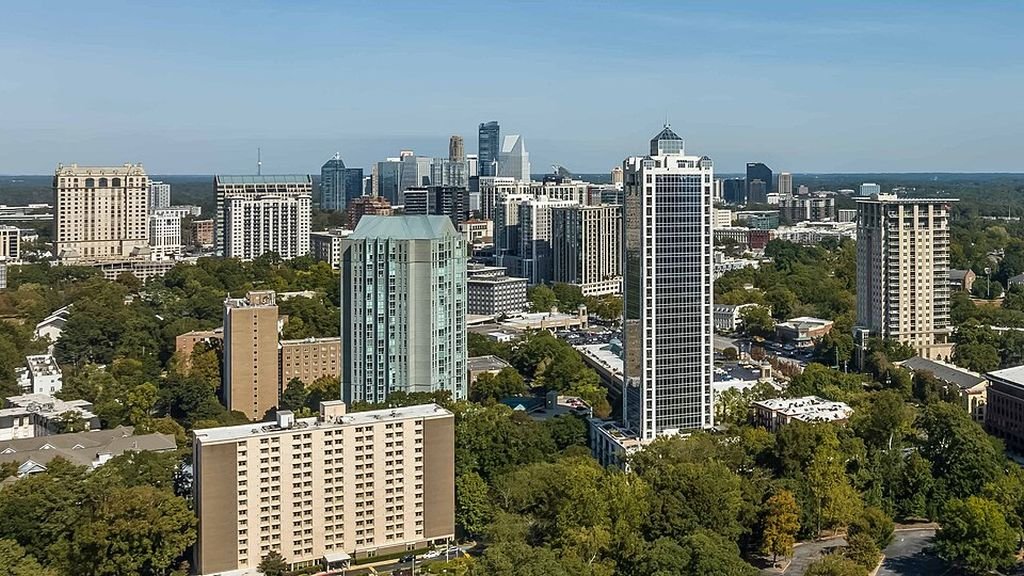
Atlanta is a city that defies easy summary. It is the capital of Georgia and the undisputed capital of the American South – a region-defining metropolis of extraordinary energy, complexity, and ambition that has spent the better part of two centuries reinventing itself without ever entirely shedding the layers of what it has been before. It is a city of contradictions held in productive tension: deeply rooted in Southern tradition yet perpetually forward-looking, profoundly shaped by the tragedy and triumph of the civil rights movement yet still wrestling with the unfinished work of racial equity, home to some of the greatest concentrations of Black wealth and Black cultural achievement in America yet scarred by persistent inequality, aggressively modern in its skyline and economy yet draped in the sweetness of dogwood blossoms and the shade of an urban forest so dense that Atlanta is sometimes called the city in a forest.
This is the city that burned in 1864 when William Tecumseh Sherman’s Union army turned it to ash on the way to the sea, and rebuilt itself so quickly and so completely that by the turn of the twentieth century it had adopted the phoenix as its symbol and “Resurgens” – rising again – as its motto. This is the city that gave birth to Martin Luther King Jr. and nurtured the movement that changed America. This is the city that gave the world Coca-Cola, CNN, Delta Air Lines, the Centers for Disease Control and Prevention, Tyler Perry Studios, and the Atlanta Braves. This is the city that hosted the 1996 Summer Olympic Games, that became the third-largest film production hub in the world, that has drawn hundreds of thousands of people from every corner of the country and the globe with the promise of opportunity, warmth, and a quality of life that combines urban sophistication with Southern hospitality in proportions that no other American city quite replicates.
Atlanta is also, it must be acknowledged from the outset, a city of notorious traffic – a sprawling, car-dependent metropolitan area of more than six million people spread across a vast piedmont landscape of red clay hills and pine forests, connected by a highway system that is perpetually overwhelmed. This is a real challenge for visitors, but it is one that careful planning, strategic use of the MARTA rail system, and a willingness to stay in walkable neighborhoods can substantially mitigate.
Come to Atlanta with curiosity, with an appetite for extraordinary food and music and history, with an awareness that the story of this city is inseparable from the story of race in America, and with perhaps a little extra time built into every itinerary. The traffic will find you regardless.
Getting There
Hartsfield-Jackson Atlanta International Airport (ATL) is the busiest airport in the world by passenger count – a distinction it has held for most of the past two decades – and a hub of almost incomprehensible scale and activity. Located about ten miles south of downtown, it serves as the primary hub for Delta Air Lines and offers nonstop service to virtually every major city in the United States as well as dozens of international destinations across Europe, Asia, Latin America, the Caribbean, and Africa. The airport’s domestic terminal and seven concourses are connected by an underground automated train that runs continuously, and the facility handles more than 100 million passengers per year.
The MARTA Gold Line connects the airport directly to downtown Atlanta and the broader rail network in approximately 20 minutes – one of the most convenient airport-to-city rail connections in the South. Trains run from the airport from approximately 5 AM to 1 AM daily. Taxis and ride-sharing services are available at the ground transportation level. Several hotel shuttles serve properties throughout the metropolitan area.
Amtrak serves Atlanta’s Peachtree Station with the Crescent, which runs between New York City and New Orleans via Charlotte, Washington D.C., and Birmingham. The service is not frequent = one train per day in each direction – but the journey is scenic and comfortable.
Greyhound and Flixbus connect Atlanta to regional cities including Birmingham, Charlotte, Nashville, Jacksonville, and Savannah. For those driving, Atlanta sits at the convergence of multiple interstate highways. Interstate 75 and Interstate 85 merge into the downtown connector — one of the most congested stretches of highway in the American South — before splitting north and south of the city. Interstate 20 runs east-west through the metropolitan area. Interstate 285, the perimeter highway encircling the city, is the primary bypass route and the boundary referenced in the Atlanta shorthand of “ITP” (inside the perimeter) and “OTP” (outside the perimeter) that defines local identity as sharply as any civic boundary.
Getting Around
Atlanta is a car-centric city and the majority of its metropolitan area is genuinely difficult to navigate without one. However, for visitors who concentrate their time in the central neighborhoods, a combination of MARTA, ride-sharing, and walking is increasingly viable and is strongly recommended given the city’s legendary traffic congestion.
The MARTA (Metropolitan Atlanta Rapid Transit Authority) rail system operates four lines — the Red, Gold, Blue, and Green lines — forming a cross-shaped network with a downtown hub at Five Points station. The system connects the airport to downtown, Buckhead, Midtown, and several suburban destinations. It is clean, safe, and reliable, though its coverage is limited compared to transit systems in older, denser cities. For visitors staying in Midtown or downtown, MARTA provides practical access to the airport and to the major attractions along the rail corridor.
The Atlanta Streetcar operates a 2.7-mile loop through downtown and Sweet Auburn, connecting several historic and tourist sites, though its limited route makes it most useful for specific downtown trips.
Ride-sharing services are extensively used throughout Atlanta and are the most practical option for trips between neighborhoods not well served by MARTA. The Beltline — an ambitious project converting a 22-mile loop of former rail corridors around the city into a network of trails, parks, and transit — has created a remarkable pedestrian and cycling infrastructure connecting many of the city’s most desirable neighborhoods, and it has fundamentally changed the walkability of the city’s inner core.
Cyclists will find the Beltline Eastside and Westside Trails genuinely useful and pleasurable, linking neighborhoods like Inman Park, Poncey-Highland, Virginia-Highland, Old Fourth Ward, and West End in a car-free environment of considerable charm.
Neighborhoods to Know
Atlanta’s neighborhoods are among its greatest assets — a mosaic of distinct communities, each with its own history, architecture, and character, that together compose a city of remarkable variety.
Downtown is the traditional commercial and civic heart of Atlanta, anchored by the striking skyline of glass and steel towers, Centennial Olympic Park, the Georgia World Congress Center, State Farm Arena, and the hotel cluster around Peachtree Center. The downtown core has struggled with the challenges of vacancy and disinvestment that have affected many American downtowns, but it contains several of Atlanta’s most important tourist attractions and is undergoing ongoing revitalization efforts. Underground Atlanta, the historic district of Victorian-era streets buried beneath the city’s raised street level after the railroad era, has had a checkered history of commercial development but remains a fascinating piece of urban archaeology.
Midtown is Atlanta’s cultural heart — a dense, walkable district of high-rise residential towers, excellent restaurants, arts institutions, and the green expanse of Piedmont Park. Peachtree Street, running the length of Midtown from downtown to Buckhead, is the city’s main artery, and the stretch through Midtown is lined with restaurants, bars, galleries, and shops that give it a genuine urban vitality. The Fox Theatre, the High Museum of Art, the Woodruff Arts Center, and the campuses of Georgia Tech and several other institutions anchor the neighborhood’s cultural life.
Buckhead is Atlanta’s affluent, glamorous, and sometimes excessive northern district — the city’s premier address for luxury retail, upscale restaurants, and high-end hotels. Lenox Square and Phipps Plaza are the anchor shopping destinations. Buckhead’s restaurant scene is outstanding, and its residential streets — lined with enormous homes set behind stone walls and mature trees — represent the apex of Atlanta’s considerable real estate ambitions. It also has a reputation for a loud, bottle-service nightlife culture along the so-called Buckhead Village entertainment district that is one of the most energetic and occasionally chaotic nightlife scenes in the South.
Old Fourth Ward is one of Atlanta’s most historically significant and currently most dynamic neighborhoods. This is the birthplace of Martin Luther King Jr. — his childhood home and the Ebenezer Baptist Church where he preached are both here — and the heart of the Auburn Avenue corridor that was the center of Black Atlanta’s cultural, commercial, and civic life throughout the segregation era. In recent years the neighborhood has been transformed by the Beltline Eastside Trail, the Ponce City Market development, and a wave of restaurants, bars, and creative businesses that have made it one of the most exciting areas in the city while simultaneously raising concerns about displacement of the longtime Black community.
Inman Park was Atlanta’s first planned suburb, developed in the 1880s as a streetcar suburb of Victorian homes set along curved, tree-shaded streets. It fell into decline through most of the twentieth century, was saved by a pioneering neighborhood preservation movement in the 1970s, and has since become one of the most desirable addresses in the city — its beautifully restored Queen Anne and Folk Victorian houses, its access to the Beltline, and its concentration of excellent restaurants and shops making it a neighborhood of exceptional livability and charm. The Inman Park Festival in late April is one of the city’s most beloved neighborhood events.
Virginia-Highland is a residential neighborhood of craftsman bungalows and small Victorian cottages centered on the intersection of Virginia and North Highland Avenues, where a small commercial district of independent restaurants, bars, boutiques, and coffee shops has thrived for decades. It has a relaxed, neighborhood-y atmosphere that is among the most genuinely pleasant in Atlanta — less touristic than some areas, more residential than others, with a consistent quality of local life that makes it a favorite among Atlantans of all backgrounds.
Poncey-Highland sits between Virginia-Highland and Old Fourth Ward and is most notable as home to the Little Five Points district — Atlanta’s long-standing alternative and bohemian commercial area, with vintage clothing shops, record stores, tattoo parlors, vegetarian restaurants, and a general atmosphere of cheerful nonconformity. It feels somewhat like a time capsule of 1990s alternative culture, which is either a criticism or a recommendation depending on your perspective.
Sweet Auburn is the historic corridor along Auburn Avenue east of downtown that was the center of Black Atlanta’s cultural and economic life during the era of segregation — a stretch sometimes called the richest Negro street in the world during its peak in the 1920s and 1930s. Here were the insurance companies, banks, newspapers, nightclubs, and churches that sustained an entire community under the crushing conditions of Jim Crow. The Martin Luther King Jr. National Historical Park, the Ebenezer Baptist Church, the birth home of Dr. King, the historic Herndon Home, the APEX Museum, and the remaining storefronts of historic Black businesses tell a story of extraordinary cultural achievement and community resilience that is central to understanding both Atlanta and America.
West End and Cascade are historically Black Southwest Atlanta neighborhoods with deep roots in African American Atlanta’s intellectual and cultural life — Spelman College, Morehouse College, Clark Atlanta University, and the Morehouse School of Medicine are here, forming the Atlanta University Center Consortium, the largest consortium of historically Black colleges and universities in the world. The West End’s commercial district along Ralph David Abernathy Boulevard has been seeing new investment and creative energy in recent years while maintaining its identity as a Black community anchor.
East Atlanta Village has a gritty, independent character with a strong DIY music scene, dive bars, eclectic restaurants, and vintage shops that attract a young, creative crowd. It is somewhat less polished than Virginia-Highland or Inman Park, which is precisely its appeal.
Grant Park is a residential neighborhood surrounding one of Atlanta’s oldest and largest parks, home to Zoo Atlanta and the Cyclorama. Its housing stock of Victorian and craftsman bungalows and its neighborhood farmers market give it a pleasant, community-oriented atmosphere.
Decatur is a small city entirely surrounded by Atlanta that functions as one of the most livable and intellectually active communities in the metropolitan area. Its walkable downtown square, surrounded by excellent independent restaurants, bookstores, breweries, and coffee shops, is the social center of a community that values local business, progressive politics, and the particular quality of life that comes from a human-scaled downtown. The annual Decatur Book Festival is the largest independent book festival in the United States.
History & Culture
Atlanta’s history is inseparable from the history of race in America, and engaging honestly with that history is both a moral responsibility and a path to understanding the city at its most profound depth.
The land that became Atlanta was part of the territory of the Creek and Cherokee nations for centuries before European contact. The forced removal of the Cherokee people along the Trail of Tears in 1838 opened the land to American settlement, and the town of Marthasville — later renamed Atlanta in 1845 — developed as a railroad junction at the terminus of the Western and Atlantic Railroad. It grew rapidly as a railroad hub and commercial center, and by the beginning of the Civil War had become one of the most important cities in the Confederate South.
The Civil War shaped Atlanta’s identity more profoundly than any other single event. The Atlanta Campaign of 1864 — a four-month series of battles as General William T. Sherman’s Union forces drove the Confederate Army of Tennessee southward toward the city — culminated in the fall of Atlanta in September 1864, followed by Sherman’s infamous March to the Sea. Before departing, Sherman ordered the burning of Atlanta’s industrial and military infrastructure; the fire spread and destroyed much of the city. The destruction was so complete and the subsequent rebuilding so rapid that Atlanta adopted the phoenix as its civic symbol.
The cyclorama — a massive circular painting depicting the Battle of Atlanta, created in 1886 and recently restored and reinstalled in a purpose-built museum at Zoo Atlanta — is one of the most remarkable and ambitious historical artworks in America, measuring 358 feet in circumference and 42 feet tall.
The Civil Rights Movement is the defining chapter of Atlanta’s twentieth-century history, and the city preserves its most sacred sites with appropriate reverence. The Martin Luther King Jr. National Historical Park in the Sweet Auburn neighborhood encompasses the birth home where King was born on January 15, 1929, the Ebenezer Baptist Church where both he and his father served as pastor, and the King Center — the memorial and research institution established by Coretta Scott King that contains Dr. King’s tomb, a flame burning above a reflecting pool, and exhibition spaces telling the story of his life and the movement he led. The site is one of the most visited national parks in the United States, and standing before King’s tomb — inscribed with his words “Free at last, free at last, thank God Almighty, I am free at last” — is a genuinely moving experience.
The National Center for Civil and Human Rights in Centennial Olympic Park is one of the most powerful museums in America — a privately operated institution that connects the American civil rights movement to the broader global struggle for human rights through immersive, emotionally sophisticated exhibitions. The lunch counter simulation — in which visitors sit at a replica Woolworth’s counter wearing headphones playing the sounds and taunts that civil rights demonstrators endured during sit-ins — is one of the most viscerally affecting museum experiences in the country. The connections drawn between the American civil rights struggle and ongoing human rights challenges worldwide give the museum a relevance and urgency that extends well beyond historical commemoration.
The Carter Center, adjacent to the Jimmy Carter Presidential Library and Museum in the Ponce de Leon corridor east of downtown, honors the legacy of the 39th President of the United States and the work of the Carter Center in global health, democracy promotion, and conflict resolution. The presidential library offers an intimate and thoughtful portrait of Carter’s presidency and post-presidential life; the surrounding gardens are beautifully maintained.
The Auburn Avenue Research Library on African American Culture and History is a specialized branch of the Atlanta-Fulton Public Library System with extraordinary holdings of African American historical materials — books, periodicals, photographs, manuscripts, and audiovisual materials — that make it one of the most important research resources on African American history in the country.
The Atlanta History Center in Buckhead is the city’s premier history museum and institution, with extensive permanent exhibitions on the Civil War, the civil rights movement, Atlanta’s development from railroad junction to global city, and the history of Southern folk art and material culture. The complex also includes the Swan House — a magnificent 1928 neo-Palladian mansion whose formal gardens and architectural grandeur represent the apex of Atlanta’s gilded-age aspirations — and the Tullie Smith Farm, a restored antebellum farmstead with living history demonstrations.
The High Museum of Art in Midtown is the premier art museum in the southeastern United States, housed in a striking white building designed by Richard Meier and expanded by Renzo Piano. Its permanent collection of more than 18,000 works spans ancient to contemporary, with particular strengths in nineteenth-century American art, decorative arts and design, folk and self-taught art, and a growing collection of African and African American art and photography. The museum’s special exhibitions have brought major traveling shows — from the Louvre’s collections to landmark retrospectives of American modernism — to Atlanta with considerable ambition and success.
The Michael C. Carlos Museum on the Emory University campus in Druid Hills holds one of the finest collections of ancient art in the American South — Egyptian mummies and artifacts, Greek and Roman antiquities, pre-Columbian objects, and African and Near Eastern materials — displayed in a beautifully renovated building with the intimacy and scholarly seriousness of a great university museum.
Music & Entertainment
Atlanta’s musical identity is complex, layered, and enormously influential on the broader American popular music landscape.
Hip-hop is Atlanta’s defining contemporary musical contribution to the world, and its influence on the global culture of the past three decades is difficult to overstate. The Atlanta rap scene that emerged in the early 1990s — with artists like Outkast, Goodie Mob, TLC, and the LaFace Records roster — developed a distinct sonic and lyrical identity rooted in the specific experience of Black Atlanta: the heat, the highways, the particular combination of Southern tradition and urban hustle. That foundation generated successive waves of innovation: the trap music that T.I., Young Jeezy, and Gucci Mane pioneered in the mid-2000s, the melodic trap of Future and Young Thug, the Post Malone and Lil Baby era, the global dominance of artists like 21 Savage and Gunna. Atlanta rap has been the most commercially and culturally influential regional music scene in America for more than thirty years, and its impact is still accelerating.
The Fox Theatre on Peachtree Street in Midtown is one of the great atmospheric theater palaces of the 1920s — a magnificent Moorish-Egyptian fantasy of minarets, onion domes, starlit ceiling, and sumptuous decoration that opened in 1929 and has hosted everything from Gone with the Wind premieres to Broadway touring productions to rock concerts to the annual holiday engagement of The Nutcracker by the Atlanta Ballet. Attending a performance at the Fox is a theatrical experience before the show even begins.
The Tabernacle, a converted Baptist church in downtown Atlanta, is one of the finest mid-sized concert venues in the country — its original architectural character preserved and adapted into a performance space of excellent acoustics and atmospheric power. The city also supports a thriving live music ecosystem that includes music halls, jazz clubs, intimate singer-songwriter venues, and outdoor amphitheaters throughout the metropolitan area.
Tyler Perry Studios, occupying the former Fort McPherson military base in Southwest Atlanta, is the largest film production studio campus in the country and a monument to the extraordinary entrepreneurial achievement of Tyler Perry — a filmmaker, playwright, and businessman who built an entertainment empire from nothing and created the largest studio campus in America in a predominantly Black neighborhood of Atlanta, employing thousands of local workers and establishing Atlanta as a powerhouse of Black creative enterprise.
Atlanta’s film production industry — driven by Georgia’s generous film tax incentives and the city’s diverse locations, experienced crew base, and production infrastructure — has made the metropolitan area one of the three largest film production hubs in the world, regularly hosting major Marvel films, network television productions, and independent features that have given the local economy billions of dollars and Atlantans the frequent experience of encountering film crews in their neighborhoods.
Food & Drink
Atlanta’s food scene has undergone a transformation over the past fifteen years that has established it as one of the most exciting and varied culinary cities in the American South — a place where the traditions of Southern cooking are honored alongside the culinary traditions of a genuinely global immigrant population, and where a generation of ambitious, technically sophisticated chefs has elevated the city’s dining landscape to national and international recognition.
Southern cooking in its most fundamental and beloved forms remains the foundation. Fried chicken is the dish most associated with Atlanta’s culinary identity, and it is prepared here with a devotion and variety that rewards exploration. The Colonnade Restaurant on Cheshire Bridge Road has been serving classic Southern comfort food — fried chicken, country fried steak, deviled eggs, creamed corn — since 1927 in a dining room of timeless, faded grandeur. Mary Mac’s Tea Room on Ponce de Leon Avenue has been a landmark of Atlanta’s restaurant landscape since 1945, serving the kind of Sunday dinner Southern cooking — fried chicken, sweet tea, cornbread, collard greens, fried okra — that generations of Atlantans have grown up with. Busy Bee Cafe in the West End, founded in 1947, is the oldest Black-owned restaurant in Atlanta and serves soul food of genuine excellence in a setting of community warmth.
Hot chicken has found an Atlanta expression distinct from Nashville’s version — several Atlanta establishments have developed their own approaches to the spiced and fried poultry that has become one of the defining dishes of contemporary Southern casual dining.
Georgia’s agricultural bounty shapes Atlanta’s restaurant menus in ways that visitors from colder climates find revelatory. Georgia peaches — in season from May through August — are among the finest fruits grown anywhere in America, and their brief season is celebrated with appropriate intensity. Georgia shrimp, peanuts, pecans, sweet onions from Vidalia, and the extraordinary produce of the state’s farms and gardens give Atlanta’s chefs raw materials of outstanding quality.
The broader restaurant landscape encompasses extraordinary range. Bacchanalia in West Midtown has been the gold standard of Atlanta fine dining for decades — a restaurant of national reputation for its commitment to local and seasonal ingredients, its precise technique, and its consistently superb wine program. Staplehouse in Old Fourth Ward, operated by a nonprofit that supports the food service industry’s most vulnerable workers, is one of the most compelling restaurants in the American South — technically ambitious, emotionally honest, rooted in local ingredients. Kimball House in Decatur is celebrated for its spectacular raw bar and its serious cocktail program. Staplehouse, the Optimist, Bacchanalia, and the Miller Union all offer versions of the farm-to-table Southern fine dining that has become Atlanta’s restaurant calling card.
The international food scene reflects Atlanta’s remarkable demographic diversity. Buford Highway — a commercial corridor stretching northeast from Buckhead through Chamblee and Doraville — is one of the most extraordinary immigrant food landscapes in the American South, lined for miles with authentic Chinese, Vietnamese, Korean, Mexican, Ethiopian, Burmese, Bangladeshi, and dozens of other cuisines served in unpretentious strip-mall restaurants that draw food pilgrims from across the region. Eating along Buford Highway is one of the great culinary adventures available in any American city. The sheer variety — hand-pulled noodles, Korean barbecue, Sichuan hot pot, Vietnamese pho, Oaxacan mole, injera platters — within a single corridor is genuinely astonishing.
The Ethiopian and Eritrean food scene in Atlanta — concentrated along Buford Highway and in several Midtown and Decatur locations — is among the finest in the United States outside of Washington D.C. The spongy, fermented injera flatbread served with fragrant stews of lentils, chickpeas, lamb, and beef, eaten communally by hand, is one of the world’s great eating experiences.
The craft beer and cocktail scene has matured considerably. Monday Night Brewing in West Midtown and its companion Monday Night Garage are among the most beloved craft breweries in the Southeast. SweetWater Brewing Company, though now corporate-owned, pioneered the Atlanta craft beer scene and its 420 Extra Pale Ale remains an Atlanta institution. The cocktail bar scene has produced outstanding establishments — the Expat in Decatur, Watchman’s in Midtown, and the highly regarded bars of the Ponce City Market food hall — that rival the best in any American city.
Ponce City Market deserves special mention as Atlanta’s most successful adaptive reuse project and one of its most vibrant food destinations. The massive 1926 Sears, Roebuck and Company distribution center on the Beltline Eastside Trail has been converted into a mixed-use development housing a food hall of exceptional quality, retail shops, offices, and residential units. The food hall level alone contains a concentration of excellent restaurants, specialty food vendors, and bars that make it a destination in its own right.
Parks & Outdoor Spaces
Piedmont Park is Atlanta’s most beloved urban green space — a 189-acre park in Midtown that serves as the city’s primary outdoor living room. The park’s great meadow, its lake, its tennis courts and athletic fields, its farmers market on Saturdays, and its position as the venue for major festivals including Atlanta Pride, Music Midtown, and the Atlanta Film Festival make it central to the city’s public life. The views from the park’s northern end across the Atlanta skyline — the glass towers of Midtown rising above the treetops in a display of urban ambition — are among the finest urban panoramas in the South.
The Atlanta BeltLine is the most transformative infrastructure project in the city’s recent history and one of the most ambitious urban development projects in the United States. The 22-mile loop of former rail corridors is being converted into a network of multi-use trails, parks, and eventually light rail transit connecting 45 neighborhoods around the city’s core. The Eastside Trail from Ponce City Market through Inman Park and the Westside Trail through West End and Adair Park are the most developed and most visited sections, lined with public art installations, food trucks, and the living fabric of Atlanta neighborhood life. Walking or cycling the Beltline on a weekend morning is one of the finest ways to experience the city’s energy and diversity.
Centennial Olympic Park was built as the centerpiece of the 1996 Summer Olympics and remains a significant downtown green space, anchored by the five-ring fountain that serves as Atlanta’s most photographed water feature and surrounded by the cluster of major tourist attractions — the Georgia Aquarium, the National Center for Civil and Human Rights, World of Coca-Cola, and the College Football Hall of Fame — that have grown up around it.
The Georgia Aquarium adjacent to Centennial Olympic Park is the largest aquarium in the Western Hemisphere and one of the finest in the world. Its whale shark exhibit — the only facility outside Asia to house these magnificent creatures, the largest fish on earth — is extraordinary. The aquarium’s Ocean Voyager gallery, a massive tank viewable through an acrylic tunnel, contains whale sharks, manta rays, thousands of fish, and a visual spectacle of underwater life that is genuinely breathtaking. The beluga whale habitat, the African penguin colony, and the dolphin presentation program round out a facility of world-class ambition and execution.
Chattahoochee River National Recreation Area protects 48 miles of the Chattahoochee River corridor as it passes through the northern suburbs of Atlanta. The river and its forested banks offer hiking, fishing, tubing, kayaking, and whitewater rafting within the metropolitan area — a remarkable natural resource for a city of Atlanta’s size. The tubing run from the Powers Island put-in to the Paces Mill take-out is a beloved summer Atlanta tradition.
Stone Mountain Park, about 16 miles east of downtown, centers on the largest exposed granite outcrop in the world — a massive dome of gray stone rising 825 feet above the surrounding piedmont landscape, with a colossal carving of Confederate leaders Jefferson Davis, Robert E. Lee, and Stonewall Jackson on its north face. The carving is the largest bas-relief sculpture in the world and a deeply controversial monument whose future has been the subject of ongoing civic debate. The park surrounding the mountain offers hiking trails, a gondola to the summit, a lake with recreational facilities, and a laser show in summer. The natural landscape is genuinely impressive regardless of one’s feelings about the carving.
Sports
Atlanta is a passionate major league sports city with franchises across all four major American sports, though its relationship with its teams has been marked by periods of heartbreak and near-misses that have tested fans’ loyalty repeatedly and productively deepened their devotion.
The Atlanta Braves of MLB play at Truist Park in Cumberland, just inside the I-285 perimeter in Cobb County — a move from their longtime downtown stadium that generated considerable controversy but produced one of the finest ballpark complexes in baseball. The Battery Atlanta development surrounding the park has created a genuine mixed-use entertainment district of restaurants, bars, and retail that makes Truist Park a destination on non-game days as well. The Braves’ 2021 World Series championship — their first in twenty-six years — was the most celebrated sports moment in Atlanta in a generation.
The Atlanta Falcons of the NFL and the Atlanta United FC of MLS both play at Mercedes-Benz Stadium in downtown Atlanta — one of the most architecturally ambitious and technologically advanced sports venues in the world, designed by HOK Architects with a retractable roof that opens like the iris of a camera. Atlanta United’s 2018 MLS Cup championship, won in front of a record crowd at their home stadium, announced the franchise as one of the most successful expansion teams in American soccer history and built a fan base of extraordinary passion and diversity.
The Atlanta Hawks of the NBA play at State Farm Arena in downtown Atlanta, sharing the building with major concerts and events. The Hawks have experienced a genuine renaissance in recent years, and their young core of talented players has reestablished the franchise as a competitive force in the Eastern Conference.
College football may ultimately matter more than any professional sport in Georgia, and the University of Georgia Bulldogs — whose home games in Athens, 70 miles northeast of Atlanta, draw 93,000 fans to Sanford Stadium — command a devotion that verges on religious conviction throughout the state. Georgia Tech in Midtown Atlanta also maintains a passionate college football following. The SEC Championship Game, played annually in December at Mercedes-Benz Stadium, brings the conference’s two division champions to Atlanta for one of college football’s most prestigious matchups.
Day Trips & Nearby Destinations
Savannah, four hours southeast via Interstate 16, is one of the most beautiful and historically intact cities in the American South — a planned colonial city of elegant squares, antebellum mansions, Spanish moss-draped live oaks, and a vibrant riverfront that has become a major tourist destination in its own right. The Historic District, with its 22 original city squares, is a National Historic Landmark District and one of the finest examples of urban planning and preservation in the United States. The food scene is outstanding, the ghost tours are entertaining, and the general atmosphere of languid, slightly gothic beauty is irresistible.
Athens, 70 miles northeast via Highway 78 or the scenic Highway 441, is the home of the University of Georgia and one of the finest college towns in the South — a city with a rich music history (the B-52s and R.E.M. both emerged from the Athens scene in the late 1970s and early 1980s), excellent restaurants and bars, a thriving arts community, and the energy of a major research university embedded in a walkable, friendly downtown.
Chattanooga, Tennessee, two hours north via Interstate 75, offers the Tennessee Aquarium, outstanding rock climbing in the surrounding mountains, the historic Walnut Street pedestrian bridge, and a revitalized downtown that has become a model for mid-sized Southern city renewal.
The Blue Ridge Mountains of northern Georgia and the adjacent corners of North Carolina and Tennessee offer hiking, waterfalls, white-water rivers, farm-to-table restaurants, and the spectacular autumn foliage of the Southern Appalachians within two to three hours of Atlanta. Amicalola Falls — at 729 feet the tallest cascading waterfall in the eastern United States and the approach to the southern terminus of the Appalachian Trail at Springer Mountain — is a particularly magnificent destination.
Warm Springs and Pine Mountain, about 70 miles southwest, combine the historic significance of the Little White House — where Franklin D. Roosevelt spent time during his presidency and where he died in April 1945 — with the natural beauty of Callaway Gardens, a horticultural resort of considerable splendor with extraordinary butterfly gardens, woodland trails, and beach facilities.
Practical Information
Best time to visit: Atlanta is a four-season city, and each season has genuine appeal. Spring (March through May) is arguably the finest time to visit — the dogwood and cherry blossoms that give the city its floral beauty are at peak bloom in late March and early April, temperatures are warm but not brutal, and the city’s festival calendar begins in earnest. Fall (September through November) offers similarly pleasant temperatures, football season, and the beautiful colors of the urban forest. Summer (June through August) is hot and humid — temperatures regularly reach the low 90s Fahrenheit with significant humidity — but the city’s entertainment and cultural life continues without interruption, and the long summer evenings are spent on restaurant patios and in parks throughout the city. Winter is mild by northern standards, though Atlanta receives occasional ice storms that paralyze the city’s road system — the notorious 2014 Snowjam, in which a small amount of ice brought the entire metropolitan area to a standstill for two days, remains a vivid collective memory.
The Masters Tournament in Augusta, 150 miles east of Atlanta, is held each April and draws golf enthusiasts from around the world. Hotel rooms throughout the metropolitan area fill up well in advance. The Atlanta Film Festival, Music Midtown, Atlanta Pride, and the National Black Arts Festival are among the major annual events that shape the city’s cultural calendar.
Accommodation: Atlanta offers accommodation across all price ranges, concentrated in downtown, Midtown, Buckhead, and around the airport. The St. Regis, the Four Seasons, and the InterContinental are the premier luxury options. The Hotel Clermont in Poncey-Highland — a legendary Atlanta roadhouse hotel now beautifully restored — and the Bellyard Hotel in West Midtown represent the boutique end. Vacation rentals are plentiful in Inman Park, Virginia-Highland, and East Atlanta. Book well in advance for major events and particularly for the Masters weekend.
Safety: Atlanta’s crime statistics reflect the challenges of a large American city with significant inequality. Visitors should exercise normal urban awareness throughout the city and particular caution in certain areas after dark. The tourist-oriented neighborhoods — Midtown, Buckhead, Inman Park, Virginia-Highland, Ponce City Market, Centennial Olympic Park — are generally safe and well-policed. As throughout the American South, situational awareness and basic urban precautions are advisable.
Tipping: Standard American conventions apply throughout the city.
A Final Word
Atlanta is a city that asks you to hold multiple truths simultaneously. It is a city of extraordinary Black cultural achievement and persistent racial inequality. A city of soaring ambition and chronic traffic. A city of genuine Southern warmth and the impersonal scale of a global metropolis. A city that has risen from the ashes more than once and carries the phoenix on its seal with justified pride and full knowledge of what it cost.
It is a city where you can stand in the room where Martin Luther King Jr. was born and feel the full weight of American history, then walk two miles to a restaurant where a young chef is cooking collard greens in a way that would make his grandmother proud and his food-critic peers take notice. Where the music that comes from these streets and these studios and these church choirs and these housing projects has shaped what the world listens to for thirty years and counting. Where the dogwood blossoms in April and the summer thunder rolls in at five in the afternoon and the Beltline fills on a Saturday morning with every possible version of what Atlanta is becoming.
It is a city in the middle of becoming itself, which is the most interesting state any city can occupy. Come with patience for the traffic, appetite for the food, curiosity about the history, and openness to the particular complicated beauty of a place that has never stopped rising.
Leave a Reply
You must be logged in to post a comment.