Georgia is a state of magnificent contradictions. It is the American South distilled to its most essential and most complex form, a place where antebellum history and civil rights legacy exist in permanent, necessary tension, where a world-class cosmopolitan city rises above red clay hills, where barrier islands draped in Spanish moss float in the Atlantic like something from a dream, and where the southern end of the Appalachian Mountains delivers waterfalls, gorges, and hiking trails of breathtaking quality. The Peach State, as it is affectionately known, though it actually produces fewer peaches these days than California or South Carolina, is a destination of extraordinary range and depth that rewards travelers willing to move beyond the obvious and engage with its full complexity.
Georgia is the largest state east of the Mississippi River by land area, a fact that surprises many visitors who have not looked closely at a map. That size means genuine geographic diversity, from the mountain valleys of the north to the coastal plains of the south, from the Piedmont plateau of the center to the barrier island chain of the Atlantic coast. Each region has its own character, its own cuisine, its own history, and its own particular claim on the traveler’s attention.
ATLANTA: THE CITY TOO BUSY TO HATE
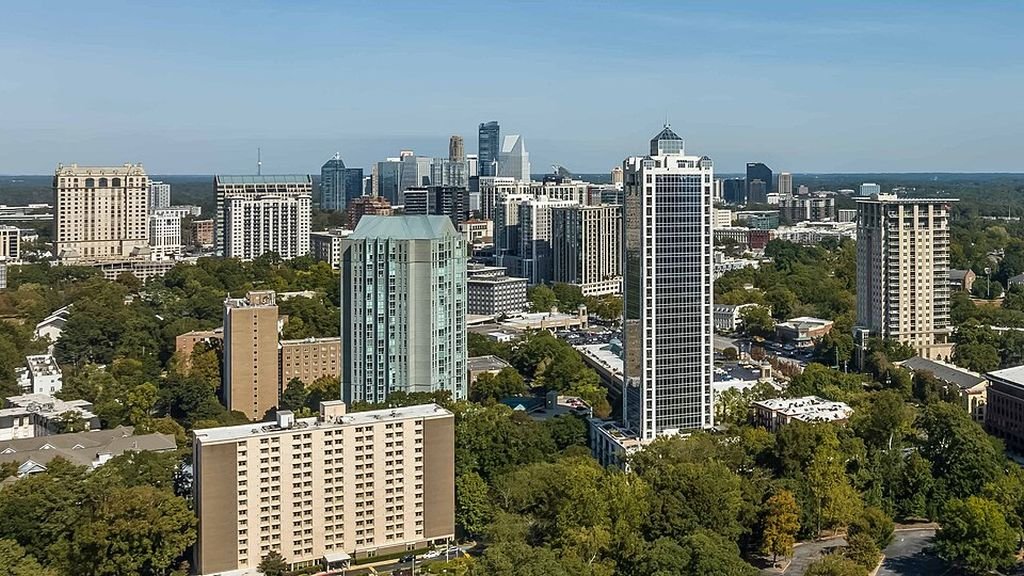
Atlanta adopted the slogan “the city too busy to hate” in the 1960s, a civic aspiration born during the civil rights era that reflected both the city’s pragmatic business culture and its determination to forge a different path from the more overtly resistant Southern cities of that period. Today Atlanta is the unquestioned capital of the American South, a metropolitan area of more than six million people, the headquarters of dozens of Fortune 500 companies, the home of Hartsfield-Jackson Atlanta International Airport which by passenger volume is consistently the busiest airport in the world, and a cultural center of genuine international significance.
The single most important destination in Atlanta for understanding American history is the Martin Luther King Jr. National Historical Park in the Sweet Auburn neighborhood. The park encompasses the block where King was born in 1929, the Ebenezer Baptist Church where he and his father preached, the International Civil Rights Walk of Fame, and the King Center, where King and his wife Coretta Scott King are interred in a tomb surrounded by a reflecting pool fed by an eternal flame. Standing before that tomb and contemplating what King accomplished and what it cost him is one of the most emotionally powerful experiences available to any American traveler. The National Park Service visitor center does an outstanding job of presenting King’s life, philosophy, and legacy in context, and the surrounding Sweet Auburn Historic District preserves the streets and buildings of the community that shaped him.
The Jimmy Carter Presidential Library and Museum, set in beautiful gardens east of downtown, chronicles the life and presidency of Georgia’s most prominent modern political figure. Carter’s presidency from 1977 to 1981 is presented with admirable candor, acknowledging both the genuine accomplishments, including the Camp David Accords that produced a peace treaty between Israel and Egypt, and the considerable difficulties of those years. The museum also addresses Carter’s extraordinary post-presidential career in humanitarian work through the Carter Center, which has played a significant role in disease eradication and democratic election monitoring around the world. The gardens surrounding the library, designed around a Japanese-inspired landscape with a lake and waterfall, are among the most peaceful public spaces in Atlanta.
The Georgia Aquarium, opened in 2005, was at the time of its opening the largest aquarium in the world and remains among the largest in the United States. Its most spectacular exhibit is the Ocean Voyager gallery, a massive tank holding whale sharks, manta rays, and thousands of other fish that visitors observe through an underwater tunnel and an enormous viewing window. The whale sharks alone, the largest fish in the ocean, are worth the admission price. The aquarium also maintains excellent exhibits on beluga whales, African penguins, sea otters, and diverse reef ecosystems.
The National Center for Civil and Human Rights, adjacent to the Georgia Aquarium in Centennial Olympic Park, opened in 2014 and has rapidly established itself as one of the most important and emotionally affecting museums in the United States. The museum connects the American civil rights movement to broader global human rights struggles, and its immersive exhibits use sound, image, and physical experience to convey the courage required to confront institutionalized oppression. The lunch counter simulation, where visitors sit at a replica of a 1960s lunch counter and experience through sound and vibration what it felt like to be a sit-in protester subjected to harassment and physical intimidation, is one of the most effective pieces of museum theater in the country.
The High Museum of Art is the premier art museum of the American South. Its building, a striking white structure designed by Richard Meier and expanded by Renzo Piano, is itself a significant work of architecture. The permanent collection includes strong holdings of American art, European paintings and decorative arts, folk and self-taught art, and photography. The museum has an active exhibition program that brings major traveling shows from the great museums of the world to Atlanta on a regular basis.
Piedmont Park, the great green lung of midtown Atlanta, stretches across nearly two hundred acres of rolling terrain north of the city’s cultural corridor. The park hosts the Atlanta Dogwood Festival each spring and the Atlanta Jazz Festival each Memorial Day weekend, the latter a free outdoor event that draws enormous crowds to hear both established and emerging jazz artists. The park offers excellent running paths, sports fields, a lake, a dog park, and a farmers market on Saturday mornings that is one of the finest in the city.
The Beltline is perhaps Atlanta’s most ambitious and successful recent urban project. An old railroad corridor encircling the city’s core has been gradually transformed into a twenty-two-mile loop of multi-use trails, parks, public art installations, and transit infrastructure that is reshaping how Atlantans move through and relate to their city. The Eastside Trail section, running from Piedmont Park through the Inman Park and Reynoldstown neighborhoods, is the most developed and most visited stretch, lined with restaurants, breweries, and retail businesses that have converted old industrial buildings into thriving commercial spaces. Walking or cycling the Beltline on a weekend morning, with its mix of joggers, families, dog walkers, and cyclists all sharing a car-free corridor through the city, gives a sense of Atlanta at its most optimistic and most livable.
Atlanta’s neighborhoods are each worth exploring in their own right. Virginia-Highland is a bungalow neighborhood of tree-lined streets, independent restaurants, and a village-scale commercial district that has maintained its character through decades of surrounding development pressure. Little Five Points is Atlanta’s bohemian heart, with vintage clothing stores, record shops, tattoo parlors, and music venues clustered in a few blocks of quirky commercial architecture. Ponce City Market, a magnificently restored Sears Roebuck distribution warehouse, houses a food hall, retail shops, offices, and residential units in a conversion that has become a model for adaptive reuse projects around the country. Buckhead is Atlanta’s upscale address, with luxury hotels, high-end retail, and restaurants serving some of the finest food in the city.
Atlanta’s food scene is one of the best in the South and increasingly competitive with the finest culinary cities in the country. The city has produced a generation of chefs working with Southern ingredients and traditions in ways that are simultaneously respectful and inventive. The West Egg Cafe, Staplehouse, Bacchanalia, and Optimist are among the establishments that have earned national recognition. But Atlanta’s most distinctive culinary contribution may be its chicken. The city has a passionate, almost theological relationship with fried chicken, and establishments ranging from family-owned takeout windows to full-service restaurants compete for the title of finest bird in a city of serious and opinionated eaters.
SAVANNAH: THE JEWEL OF THE SOUTH
If Atlanta is the South’s future, Savannah is its past preserved in amber, and the preservation is so complete and so beautiful that Savannah has become one of the most visited and most photographed cities in the United States. Founded in 1733 as the first settlement in the Georgia colony, Savannah was laid out according to a remarkable urban plan devised by its founder James Oglethorpe that organized the city around a series of squares, small public parks arranged in a grid that provided gathering places, green space, and social anchors for each neighborhood.
Twenty-two of those original squares survive today, each shaded by enormous live oak trees draped with Spanish moss, each surrounded by historic townhouses, churches, and commercial buildings ranging in age from the late eighteenth to the early twentieth century. Walking from square to square through Savannah’s historic district on a mild day, the light filtering through the canopy of moss-draped oaks, the azaleas blazing in spring, the scent of jasmine on warm evenings, is one of the most seductive urban experiences available anywhere in America.
Forsyth Park, at the southern end of the historic district, is Savannah’s grandest public space. The park’s central fountain, a cast iron confection of nymphs and swans built in the mid-nineteenth century, is one of the most photographed landmarks in Georgia. The park is enormous by the standards of the historic district squares, covering thirty acres, and is used daily by residents for running, picnicking, playing sports, and walking dogs. On Saturday mornings, a farmers market rings the fountain with vendors selling local produce, prepared foods, flowers, and crafts.
The Savannah College of Art and Design, known universally as SCAD, has transformed the historic district over the past four decades by purchasing and restoring dozens of historic buildings that might otherwise have deteriorated beyond saving. SCAD students now constitute a significant portion of Savannah’s population and contribute enormously to the city’s creative energy. The SCAD Museum of Art, housed in a magnificently restored antebellum railroad depot, hosts an impressive program of exhibitions featuring both student work and major contemporary artists.
The Mercer-Williams House on Monterey Square is one of the most famous private residences in America, not because of its considerable architectural distinction as an Italianate mansion built during the Civil War era, but because it was the setting for the events described in John Berendt’s 1994 true-crime narrative Midnight in the Garden of Good and Evil. That book, which spent an extraordinary 216 weeks on the New York Times bestseller list, introduced millions of readers to Savannah’s gothic social world, its eccentric characters, and its particular brand of decadent Southern beauty. The book remains deeply embedded in Savannah’s cultural identity, and the Mercer-Williams House is now operated as a museum.
Bonaventure Cemetery, east of the historic district on a bluff above the Wilmington River, is one of the most beautiful and most visited cemeteries in the United States. The grounds, originally a plantation and later a private cemetery before becoming a municipal one, are shaded by immense live oaks whose canopy of Spanish moss creates an atmosphere of profound and melancholy beauty. The elaborate Victorian monuments, family mausoleums, and statuary of Bonaventure have been attracting artists and photographers for well over a century, and a slow walk through the grounds on a quiet morning is an experience of rare beauty and tranquility.
The Savannah waterfront along Factor’s Walk and River Street has been developed into a tourist-friendly zone of restaurants, bars, galleries, and shops occupying old cotton warehouses built into the bluff above the river. It can be crowded and commercial, but the setting is genuinely dramatic, with massive container ships passing just yards from the restaurant terraces, and the view across the river to the low marshes of South Carolina is lovely in the late afternoon light.
Savannah is one of the few cities in the United States where open container laws permit the consumption of alcohol on public streets, a policy that contributes to the festive atmosphere of the historic district on weekend evenings. The bar culture of Savannah is accordingly lively, and the concentration of excellent cocktail bars, live music venues, and evening restaurants in the historic district makes Savannah a particularly enjoyable city for adults traveling without children.
THE GOLDEN ISLES: GEORGIA’S ATLANTIC PARADISE
Georgia’s barrier island coast, known as the Golden Isles, is one of the most ecologically rich and visually stunning stretches of Atlantic shoreline in the eastern United States. The islands are separated from the mainland by a vast system of salt marshes that are among the most productive ecosystems on earth, nurseries for fish, shrimp, crabs, and countless species of birds. The marshes, which turn from vivid green in summer to gold in autumn and winter, give the Golden Isles their name and create a landscape of ethereal horizontal beauty.
Jekyll Island is the most accessible and most fully developed of the Golden Isles, connected to the mainland by a causeway. Its history is extraordinary. From 1888 to 1942, Jekyll Island was the private winter retreat of an exclusive club whose members at various times included the Rockefellers, Vanderbilts, Goulds, Morgans, and Pulitzers, families representing a significant fraction of the nation’s total wealth. The Jekyll Island Club Historic District preserves the Victorian and Edwardian cottages, the clubhouse, and the outbuildings of this remarkable enclave, and today operates as a resort where visitors can stay in rooms that once housed America’s wealthiest families.
Beyond its Gilded Age history, Jekyll Island offers beautiful beaches, an excellent bike path system that winds through maritime forest and along the oceanfront, a sea turtle conservation center that is one of the finest of its kind in the country, and a relaxed, uncommercialized atmosphere that distinguishes it from more heavily developed beach destinations.
St. Simons Island is the largest and most populated of the Golden Isles, with a permanent residential community, a charming village commercial district, historic Fort Frederica National Monument preserving the site of James Oglethorpe’s military garrison, and long stretches of beach backed by live oak maritime forest. The lighthouse at the southern end of the island, built in 1872 and still operating, is open to the public and offers panoramic views over the island, the sound, and the surrounding marshes from its gallery.
Cumberland Island, the southernmost and largest of Georgia’s barrier islands, is accessible only by ferry from the mainland town of St. Marys and has no paved roads, no hotels, no restaurants, and no commercial development of any kind. It is managed by the National Park Service as a National Seashore and accommodates only a small number of visitors per day, all of whom must make reservations well in advance. Those who make the effort to reach Cumberland find themselves in one of the most wild and beautiful places on the Atlantic coast.
The island’s interior is a dense maritime forest of ancient live oaks festooned with Spanish moss, beneath which wild horses roam with the casual indifference of animals that have never learned to fear humans. The horses, descendants of domestic horses brought to the island centuries ago, are the island’s most famous residents and can often be seen grazing among the ruins of Dungeness, the magnificent Carnegie family mansion that burned in 1959 and now stands as a roofless shell slowly being reclaimed by the surrounding vegetation. The beach on Cumberland’s Atlantic side stretches for eighteen miles without a single structure visible in any direction, an almost incomprehensible expanse of pristine shoreline in the twenty-first century eastern United States.
Sea Island, adjacent to St. Simons, is home to The Cloister, one of the most celebrated resort hotels in the American South. The Cloister has hosted presidents, royalty, and celebrities since its opening in 1928 and continues to offer a level of luxury and service that places it among the finest resort properties in the country. Its golf courses, spa, beach club, and dining facilities are exceptional, and the island’s exclusivity, accessible only to guests and property owners, ensures a tranquility that is itself a luxury.
THE NORTH GEORGIA MOUNTAINS
The southern end of the Blue Ridge Mountains sweeps through the northern corner of Georgia, creating a landscape of forested ridges, waterfalls, whitewater rivers, and small mountain towns that offers a completely different Georgia from the coastal plains and the Piedmont cities. The north Georgia mountains are within a two-hour drive of Atlanta, which makes them an enormously popular weekend destination for the metro area’s residents and a worthwhile extension of any visit to the state.
Amicalola Falls State Park is the southern terminus of the Appalachian Trail approach trail and the jumping-off point for many of the thousands of hikers who attempt the full Appalachian Trail each year. The falls themselves, dropping 729 feet in a series of cascades down a steep mountainside, are the tallest cascading waterfalls in the eastern United States. The park’s lodge sits at the top of the falls and offers comfortable accommodation with mountain views that make it an excellent base for exploring the surrounding highlands.
Tallulah Gorge State Park, in the mountains east of Gainesville, contains one of the most spectacular gorges in the eastern United States. The Tallulah River has cut a canyon nearly two miles long and one thousand feet deep through the quartzite rock of the Tallulah Basin, and the views from the rim overlooks are genuinely vertiginous. A limited number of permits are issued each day for hikers to descend into the gorge floor, where they must negotiate suspension bridges and a waterfall-sprayed boulder field to complete the circuit. The gorge descent is physically demanding and moderately technical but rewards those who attempt it with an experience of geological drama that is extraordinary even by the standards of a region rich in natural spectacles.
The town of Helen in White County is one of Georgia’s strangest and most entertaining tourist phenomena. In the 1960s, a declining mountain hamlet facing economic collapse reinvented itself as a Bavarian Alpine village, replacing its storefronts’ facades with half-timbered, gabled, and stucco-finished architecture that makes it look, at first glance, like a transplanted fragment of Bavaria. The effect is undeniably artificial but has proven enormously popular. Helen draws millions of visitors per year, particularly during its annual Oktoberfest celebration, which runs from mid-September through early November and features German food, beer, and music in a mountain setting that is genuinely pleasant if you approach it with appropriate good humor.
Dahlonega, in the heart of Georgia’s wine country, is a more historically authentic mountain town, its brick commercial district centered on a courthouse square that has been the center of Lumpkin County life since the 1830s. Dahlonega was the site of the first major American gold rush, which began in 1828, more than two decades before the more famous California rush of 1849. The Dahlonega Gold Museum, housed in the original courthouse, tells the story of that rush and the profound effect it had on Georgia, including its role in the forced removal of the Cherokee Nation from their traditional homeland in what became known as the Trail of Tears. The area’s gold mining heritage is still celebrated, and visitors can pan for gold at several establishments in and around town.
The Dahlonega Plateau wine region has developed over the past two decades into one of the most interesting wine-producing areas in the southeastern United States. The relatively high elevation, cool nights, and well-drained soils support the cultivation of varieties including Cabernet Franc, Merlot, Viognier, and various Italian and Spanish varieties that thrive in similar climatic conditions elsewhere in the world. Wineries including Wolf Mountain Vineyards, Montaluce Winery, and Kaya Vineyard and Winery offer tastings and tours in settings of considerable scenic beauty, with mountain views that make a wine trail afternoon a particularly civilized Georgia experience.
The Chattooga River, forming part of the Georgia-South Carolina border in the far northeastern corner of the state, is one of the finest and most celebrated whitewater rivers in the eastern United States. Designated a Wild and Scenic River, the Chattooga was made famous by James Dickey’s novel Deliverance and the subsequent 1972 film, and its combination of pristine wilderness setting, powerful rapids, and dramatic scenery continues to draw whitewater enthusiasts from across the country. Section IV of the river, running from the Earl’s Ford access to Lake Tugalo, contains the most challenging and most spectacular whitewater, including the famous Five Falls sequence that requires careful navigation and solid paddling skills.
PLAINS AND THE SOUTHWEST GEORGIA COUNTRYSIDE
An hour and a half south of Atlanta, the landscape flattens into the red clay countryside of southwestern Georgia, a region of small towns, pecan orchards, and peanut farms that is best known as the birthplace of the thirty-ninth president of the United States. Plains, Georgia, population approximately five hundred, is a tiny town that punches enormously above its weight in American historical significance as the hometown and current residence of Jimmy Carter.
The Jimmy Carter National Historical Park in Plains encompasses the high school where Carter was educated and which serves as the main visitors’ center, the Carter family farm at Archery where Carter grew up, the old Plains railroad depot that served as Carter’s campaign headquarters in 1976, and the Plains United Methodist Church where Carter taught Sunday school for decades. The church remains an active congregation, and Carter himself continued to teach Sunday school there well into his nineties, drawing visitors from around the world to attend his classes. The town itself is engagingly genuine, with a grain of self-awareness about its improbable place on the tourist map.
Andersonville National Historic Site, thirty miles north of Plains, is one of the most sobering and historically important places in Georgia. The site preserves the remains of Camp Sumter, the Confederate military prison that operated during the Civil War from 1864 to 1865. In fourteen months of operation, nearly thirteen thousand of the forty-five thousand Union prisoners held there died of disease, malnutrition, and exposure in conditions of appalling squalor. The National Prisoner of War Museum on the site addresses not only Andersonville but the history of American prisoners of war in all conflicts, and the experience of visiting the site, walking the ground where so many men suffered and died, is appropriately solemn and deeply affecting.
Callaway Gardens in Pine Mountain, northwest of Plains, is a private resort and horticultural attraction covering nearly thirteen thousand acres of pine and hardwood forest, lakes, gardens, and recreational facilities. The azalea gardens bloom in extraordinary profusion each spring, drawing visitors from across the Southeast to witness one of the finest wildflower spectacles in the region. The Day Butterfly Center, a large glass-enclosed tropical conservatory housing thousands of free-flying butterflies, is a particular delight for children and adults alike. The resort’s facilities include golf courses, a beach on Robin Lake, cycling trails, and comfortable lodge accommodation.
ATHENS: THE CLASSIC CITY
Home to the University of Georgia, the oldest state-chartered university in the United States, Athens occupies a special place in Georgia’s cultural landscape. The city has an intellectual vitality, a creative restlessness, and a musical legacy that are completely disproportionate to its modest size. Athens is, above all, one of the most important cities in the history of American popular music. The bands that emerged from Athens in the late 1970s and 1980s, including R.E.M. and the B-52s, helped define the sound of alternative American rock and continue to cast a long shadow over the city’s cultural identity.
The music scene that produced those bands continues to thrive in Athens, which supports an extraordinary number of live music venues for a city of its size. The 40 Watt Club, one of the legendary small venues of American indie rock, has been presenting live music since 1979 and continues to book artists of national significance alongside emerging local acts. Georgia Theatre, a beautifully restored old movie theater with a rooftop terrace, is the city’s premiere mid-sized venue. On any given weekend evening, Athens offers more live music options per capita than almost any other American city.
The Georgia Museum of Art on the university campus houses an excellent collection with particular strength in American painting, and the State Botanical Garden of Georgia, also on campus, is a beautiful and extensively planted garden that is free to the public and particularly lovely in spring and autumn. The historic downtown commercial district, centered on College Avenue, is thick with independent restaurants, bars, record stores, bookshops, and clothing boutiques that give Athens the walkable, human-scaled character of a town where people spend time outdoors and in conversation.
MACON: SOUL OF GEORGIA MUSIC
Macon, midway between Atlanta and Savannah along the fall line where the Piedmont meets the coastal plain, is the most underappreciated music city in Georgia and one of the most underappreciated in the country. It was in Macon that Otis Redding and Little Richard were discovered, and it was in Macon that Phil Walden founded Capricorn Records in the late 1960s, the label that signed the Allman Brothers Band and helped create the Southern rock genre.
The Allman Brothers Band Museum at the Big House is the former communal residence of the band, a large Tudor Revival home where the musicians and their extended family lived together during the years of the band’s greatest fame and creativity. The museum is an affectionate and thoroughly researched tribute to the band’s music and history, housing instruments, photographs, original artwork, and memorabilia in the rooms where the music was made.
The Otis Redding Foundation and the Georgia Music Hall of Fame museum celebrate Macon’s extraordinary musical legacy in a city that also claims Little Richard, who was born there, and James Brown, who was born in nearby Barnwell, South Carolina but is deeply associated with the Augusta area just to the east. Macon’s Douglass Theatre, a beautifully restored 1921 African American theater where Little Richard and other artists performed during the era of segregation, continues to present live entertainment and serves as a museum of the city’s African American cultural history.
Macon is also notable for its remarkable collection of antebellum architecture. The Hay House, a palatial Italianate mansion completed in 1859, is one of the finest examples of antebellum domestic architecture in the South. Its interior, with elaborate plaster cornices, marble fireplaces, and an indoor plumbing system decades ahead of its time, reflects the extraordinary wealth of the cotton economy in the years immediately preceding the Civil War.
Each spring Macon hosts the International Cherry Blossom Festival, celebrating the more than three hundred thousand Yoshino cherry trees planted throughout the city. When the trees bloom, typically in mid-to-late March, the entire city is briefly transformed into a confection of pink and white that draws hundreds of thousands of visitors and makes Macon one of the most beautiful cities in the South for a few glorious weeks.
PRACTICAL TRAVEL INFORMATION
Georgia is served primarily by Hartsfield-Jackson Atlanta International Airport, the world’s busiest passenger airport and a hub for Delta Air Lines with connections to virtually every major city in the world. Savannah-Hilton Head International Airport serves the coastal region with flights to major eastern hubs. Brunswick Golden Isles Airport provides limited regional service to the Golden Isles.
Amtrak’s Crescent line passes through Atlanta on its route between New York and New Orleans, stopping also at Gainesville in the north Georgia mountains and Toccoa near the South Carolina border. The Palmetto and Silver services connect Savannah to the Northeast corridor. Within Atlanta, the MARTA rail system connects the airport to downtown, midtown, and several outlying neighborhoods, making car-free travel feasible within the city itself. Beyond Atlanta, a car is essentially necessary for exploring Georgia’s diverse regions.
Georgia’s climate ranges from subtropical in the south and along the coast to temperate mountain conditions in the north. Summers throughout most of the state are hot and humid, with temperatures regularly exceeding ninety degrees Fahrenheit from June through September. Spring and autumn are the preferred seasons for most visitors, offering mild temperatures, lower humidity, and spectacular natural displays of flowering trees and fall foliage. Winters in Georgia are mild by national standards, with snow rare in most of the state below the mountain counties, making Georgia a viable winter destination for those seeking relief from harsher northern climates.
The state’s cuisine is one of its great pleasures and one of its most distinctive regional features. Georgia cooking at its finest is a celebration of local ingredients prepared with skill and tradition. Vidalia onions, grown in the sandy soil of southeastern Georgia, are the sweetest in the world and appear in everything from onion rings to jam. Georgia peaches, though no longer the dominant crop they once were, remain extraordinary when purchased directly from roadside stands during the June and July harvest. Boiled peanuts, sold from roadside kettles throughout rural Georgia, are an acquired taste that rewards patience and open-mindedness. Sea island shrimp, stone crab claws from the coastal waters, and the freshwater catfish of the inland rivers and lakes are seafood and fish of exceptional quality.
CLOSING THOUGHTS
Georgia is a state that demands engagement on multiple levels simultaneously. It is impossible to travel through Georgia honestly without confronting the full complexity of Southern history, including the beauty and the horror, the grace and the cruelty, the music born from suffering and the architecture built by enslaved hands. The civil rights memorials of Atlanta and the plantation houses of the Piedmont are not separate Georgias but the same Georgia seen from different angles, and the traveler who engages with both comes away with something more valuable than a pleasant vacation.
But Georgia also delivers, in abundance, the simpler pleasures that draw travelers to any destination: the remarkable beauty of a sunrise over Cumberland Island’s unmarked beach, the pleasure of a perfect peach eaten in an orchard in July, the satisfaction of reaching a mountain waterfall after a morning’s hike through hardwood forest, and the warmth of welcome that genuine Southern hospitality, at its best and most authentic, extends to the traveler who arrives with curiosity and respect.
Georgia is the American South in its fullest expression, neither sentimentalized nor demonized, but real, complex, beautiful, troubled, and endlessly fascinating. It is a place worth knowing deeply, and the depth of knowing is available to anyone willing to spend the time.