Author: TN

  • Arkansas: America’s Best-Kept Secret

    Arkansas: America’s Best-Kept Secret

    Arkansas does not always make the short list when Americans plan their vacations, and that is its great advantage. While crowds descend on more famous destinations, Arkansas quietly goes about the business of being extraordinary. It is a state of soaring limestone bluffs, wild rivers, ancient thermal springs, world-class art museums, haunting blues music, a place where you can dig for real diamonds and pocket what you find, and a mountain biking scene that has drawn riders from every continent. Arkansas is a unique tapestry of mountains, plains, and fertile delta — its history and heritage part Western frontier, part Ozark pioneer, and part Old South.

    The nickname The Natural State is not mere marketing. It is an honest description of a place where nature is the dominant fact of life, where 52 state parks, two national forests, a national park, and the country’s first national river together make up one of the most richly endowed outdoor destinations in the American South. Come for the scenery, stay for the warmth of its people and the unexpected depth of its culture.

    THE LAY OF THE LAND
    Arkansas covers roughly 53,000 square miles and sits at the geographic crossroads of several distinct American landscapes. The northwestern and north-central parts of the state are dominated by the Ozark Mountains, a plateau of ancient limestone ridges, river valleys, caves, and hardwood forests that extends into Missouri and Oklahoma. The west-central region holds the Ouachita Mountains, older and geologically different from the Ozarks, running in long parallel east-west ridges covered in pine and hardwood.

    Between and south of these ranges, the Arkansas River Valley cuts a broad swath across the middle of the state. To the south and southwest lies the Gulf Coastal Plain, transitioning toward Louisiana and Texas. And to the east, the state drops into the Mississippi Delta — flat, fertile, historically significant, and musically legendary.
    This diversity of landscape means that within a single state, a traveler can move from mountain wilderness to river delta farmland, from thermal springs to crystal mines, from cutting-edge contemporary art to century-old folk traditions, all within a few hours’ drive.

    NORTHWEST ARKANSAS: ART, TRAILS, AND THE OZARK SPIRIT
    Northwest Arkansas — the region anchored by the cities of Bentonville, Fayetteville, Rogers, and Springdale — has undergone one of the most remarkable cultural transformations of any region in the American South over the past two decades. Long known primarily as the headquarters of Walmart, the world’s largest retailer, it has been remade by the Walton family’s extraordinary investment in arts and outdoor infrastructure into something genuinely surprising: a world-class destination for culture, cuisine, and cycling.

    Crystal Bridges Museum of American Art in Bentonville is the centerpiece of this transformation and one of the finest art museums in the United States. Founded by Walmart heiress Alice Walton and opened in 2011, the museum houses a vast collection of American masterworks — paintings, sculpture, and mixed media, from colonial portraits to contemporary installations.

    Works by Norman Rockwell, Georgia O’Keeffe, and Andy Warhol share space in this gorgeously designed, light-filled complex. Designed by architect Moshe Safdie, the museum sits in a wooded ravine and incorporates two spring-fed ponds into its architecture, with curved copper roofs and bridge-like galleries making the building itself part of the experience. Remarkably, general admission to Crystal Bridges is free. The museum also maintains miles of trails connecting its 120-acre park and gardens to downtown Bentonville, weaving sculpture installations into the natural landscape.

    Crystal Bridges reflects a larger cultural shift in northwest Arkansas, where Bentonville is fast becoming a hub for design, innovation, and tourism, attracting artists, chefs, and entrepreneurs to what was once a quiet retail headquarters town. The 21c Museum Hotel in Bentonville extends the art experience into the realm of hospitality, with rotating contemporary art installations throughout its public spaces and guest rooms.

    Bentonville has also established itself as one of the premier mountain biking destinations anywhere in the world. The town has a vibrant mountain-biking scene that has inspired the nickname Mountain Biking Capital of the World. The Slaughter Pen trail system alone offers dozens of miles of expertly built singletrack threading through the Ozark hillsides, ranging from gentle beginner loops to demanding technical challenges. Riders come from across the country and internationally to ride the northwest Arkansas trail network, which spans multiple cities and connects to greenway corridors throughout the region.

    Fayetteville, home of the University of Arkansas, adds a youthful energy to the region. The Dickson Street corridor is the hub of nightlife, dining, and music, and the Walton Arts Center brings major performing arts productions to the region. The Botanical Garden of the Ozarks features themed gardens and the region’s only butterfly house on 86 picturesque acres in the city’s northeast.

    Eureka Springs, tucked into the Boston Mountains a short drive east of Bentonville, is one of the most singular small towns in America. Named one of America’s Dozen Distinctive Destinations by the National Trust for Historic Preservation, Eureka Springs first drew visitors because of its natural springs with purported healing powers. During the late 1800s and early 1900s, the city became a popular spa resort, and today its entire downtown district is on the National Register of Historic Places.

    The town is built on hillsides so steep that some streets exist on three levels, and no two intersections are at the same elevation. Victorian mansions cling to the bluffs, boutique hotels occupy historic buildings, and galleries, studios, and eclectic shops fill every available corner. Eureka Springs has long been a welcoming, openly inclusive community, and it draws artists, free thinkers, and visitors who appreciate its irreducible quirkiness.

    Thorncrown Chapel, located in the woods near Eureka Springs, is one of the great works of American architecture — a soaring glass and wood structure designed by Arkansas architect E. Fay Jones that rises 48 feet into the Ozark forest. Named one of the finest buildings of the 20th century by the American Institute of Architects, it receives visitors year-round and is a profound experience regardless of one’s religious background.

    The Christ of the Ozarks, a 70-foot white concrete statue of Christ standing on Magnetic Mountain outside Eureka Springs, is equally striking in its own way — a landmark visible from much of the surrounding landscape and one of only two such statues in America.

    THE BUFFALO NATIONAL RIVER: AMERICA’S FIRST NATIONAL RIVER
    If there is a single experience that defines the wild soul of Arkansas, it is the Buffalo National River. The country’s first national river, designated in 1972, the Buffalo River flows roughly 135 miles and includes nearly 95,000 acres of public land along its corridor. It has been the topic of a full-length book, the subject of a feature article, and the cornerstone for the state’s environmental movement. The stream descends nearly 2,000 feet through layers of sandstone, limestone, and chert, and its many bluffs are the highest in all the Ozark Mountains.

    Running wild for 135 miles through the Ozark Mountains, the Buffalo National River is one of the last undammed rivers in the lower 48 states. It is a paradise for canoeists, hikers, and campers who want a taste of raw, unspoiled Arkansas.
    Floating the Buffalo in a canoe or kayak is the quintessential Arkansas outdoor experience. Spring brings high water and exhilarating rapids on the upper stretches; by summer, the lower river mellows into long, glassy pools beneath towering bluffs.

    The region is rich in wildlife, from deer and otters to bald eagles, with 200 species of birds making it a hotspot for birdwatchers. In spring, wildflowers blanket the forest floor; in fall, the hardwoods explode with color. Hemmed-In Hollow Falls, accessible by trail from the river corridor, is the tallest waterfall between the Rockies and the Appalachians and one of the most spectacular natural features in the entire South.

    Numerous outfitters along the river rent canoes and kayaks and provide shuttle services. The river corridor has campgrounds, rustic cabins, and the small town of Jasper nearby, which serves as the gateway community and is home to some beloved local restaurants and a modest but welcoming overnight infrastructure.
    The Boxley Valley, at the western end of the national river, is one of the most beautiful spots in Arkansas — a pastoral cove of farms, old barns, and elk grazing in meadows at dawn and dusk. The elk herd was reintroduced in the 1980s and has thrived spectacularly. Seeing a bull elk in velvet against a backdrop of limestone bluffs as morning mist lifts off the river is a scene that belongs in a nature documentary.

    THE OZARK FOLK CENTER AND MOUNTAIN VIEW
    Mountain View, a small town in the heart of the Ozarks, calls itself the Folk Music Capital of the World, and on weekends the courthouse square fills with pickers and fiddlers playing traditional Ozark music in an informal, joyous jam that has been going on for generations. It is one of the most authentic musical experiences in America — not a performance for tourists, but a living tradition that happens to welcome all comers.

    The Ozark Folk Center State Park preserves and celebrates the traditional arts, crafts, and music of the Ozark Mountains. Demonstrations of blacksmithing, weaving, quilting, chair caning, and dozens of other traditional crafts run alongside live music performances in an outdoor amphitheater. The Folk Center is a rare and genuinely moving institution — a place dedicated not to nostalgia but to the living continuation of a cultural tradition that might otherwise fade.

    Blanchard Springs Caverns, located in the Ozark National Forest near Mountain View, is another unmissable attraction. This living cave dates back to over 300 million years ago and has one of the largest deposits of flowstone in the country. Seasonal tours are offered where visitors explore the living cave, witnessing stalactites, stalagmites, flowstones, and more. The caverns are operated by the US Forest Service and are among the most impressive show caves in the eastern United States.

    The Ozark Highlands Trail, a 178-mile backpacking route, winds along mountaintops and bluffs, past waterfalls and over streams, through some of the most remote and scenic country in the Ozark National Forest and the Buffalo National River corridor. It is one of the great long-distance trails of the American South.

    HOT SPRINGS: THE SPA CITY
    Hot Springs is one of America’s most historically rich and genuinely fascinating small cities. People have used the hot springs here for more than two hundred years to treat illnesses and to relax. Both rich and poor came for the baths, and a town built up around the Hot Springs Reservation. Hot Springs National Park — the first unit ever set aside in what would become the national park system, established in 1832 — surrounds the city itself, a remarkable arrangement in which a working downtown exists inside a national park.

    Bathhouse Row is the visual and spiritual center of Hot Springs: a line of eight magnificent Beaux-Arts bathhouses built between 1912 and 1923 along the base of Hot Springs Mountain. At their peak these establishments welcomed hundreds of thousands of visitors annually, from presidents and celebrities to ordinary Americans seeking healing waters.

    Today several have been restored and reimagined. Buckstaff remains a traditional bathhouse where visitors can still soak in the thermal waters and receive a massage exactly as visitors did a century ago. Fordyce Bathhouse serves as the national park visitor center, its restored interiors offering a window into the extravagant world of the early-20th-century spa. And the Superior Bathhouse has been reimagined as something entirely novel — the Superior Bathhouse Brewery, the first brewery to be located inside a national park, uses the natural thermal water in its brewing process.
    Hot Springs was also the boyhood home of President Bill Clinton, and his childhood home is preserved nearby.

    The city has reinvented itself from its historical identity as a spa town and thoroughbred racing hub into a lively arts community with galleries, boutiques, excellent restaurants, and a thriving music and events scene. Garvan Woodland Gardens, located on the shores of Lake Hamilton, is part of the University of Arkansas’s Fay Jones School of Architecture and is the only botanical garden in the nation that occupies all of a peninsula in a major water body. Popular attractions include the Anthony Chapel, a work of art featuring a 57-foot open-rafter ceiling supported by pine columns and crossbeams.

    Three lakes — Hamilton, Catherine, and Ouachita — surround the city and provide outstanding opportunities for boating, fishing, and water sports. Lake Ouachita, at over 40,000 acres, is one of the clearest lakes in the country and is beloved by scuba divers for its underwater visibility.
    Oaklawn Park, one of America’s great horse racing venues, runs Thoroughbred racing each winter and spring, and a casino now operates on the grounds year-round.

    PETIT JEAN STATE PARK: ARKANSAS’S FIRST AND FINEST
    Petit Jean Mountain, rising above the Arkansas River Valley between the Ozarks and Ouachitas, is home to Arkansas’s first state park, established in 1923, and by many accounts its most beloved. The park’s signature attraction is Cedar Falls, a stunning 95-foot waterfall that drops into a sandstone canyon in a scene of remarkable beauty. The Seven Hollows Trail loops through a landscape of box canyons, natural bridges, rock shelters, and cedar forest. The park’s historic Mather Lodge, perched on the mountain’s rim with views across the river valley, dates to the 1930s and remains a working lodge and restaurant in the finest tradition of the national park rustic style.

    The park also contains ancient cave paintings — the Bear Cave petroglyphs — left by Native Americans thousands of years ago, and the Winrock Farm, once owned by Winthrop Rockefeller, who served as Arkansas governor in the late 1960s.

    MOUNT MAGAZINE: THE ROOF OF ARKANSAS
    At 2,753 feet, Magazine Mountain is the highest point in Arkansas, and Mount Magazine State Park, perched atop its flat summit, offers some of the most dramatic views available anywhere in the state. The mountain’s sheer south face drops 1,000 feet in an almost vertical cliff, and the views from the edge stretch across the Arkansas River Valley in a breathtaking panorama. The park is an exceptional destination for hang gliding, birding — the area is known for rare butterfly species as well as birds — and hiking on trails that follow the mountain’s rim.

    CRATER OF DIAMONDS STATE PARK: DIG FOR YOUR OWN TREASURE
    Few tourist attractions anywhere in the world can match the pure delight of Crater of Diamonds State Park near Murfreesboro. Crater of Diamonds State Park is the only diamond-producing site in the world open to the public for digging. Visitors pay a modest daily fee, receive a soil sifter, and then spend as long as they like searching the 37-acre plowed field — the eroded surface of an ancient volcanic pipe — for diamonds and semi-precious stones. And whatever they find, they keep.

    This is not a gimmick. More than 35,000 diamonds have been found here since the park opened, ranging from tiny chips to gems of several carats. In 2021, a visitor found a 4.38-carat diamond, one of the largest in recent years. The field also produces amethyst, garnet, jasper, quartz, and agate. The experience is equal parts treasure hunt, geology lesson, and pure Southern eccentricity.

    LITTLE ROCK: THE CAPITAL AND ITS CIVIL RIGHTS LEGACY
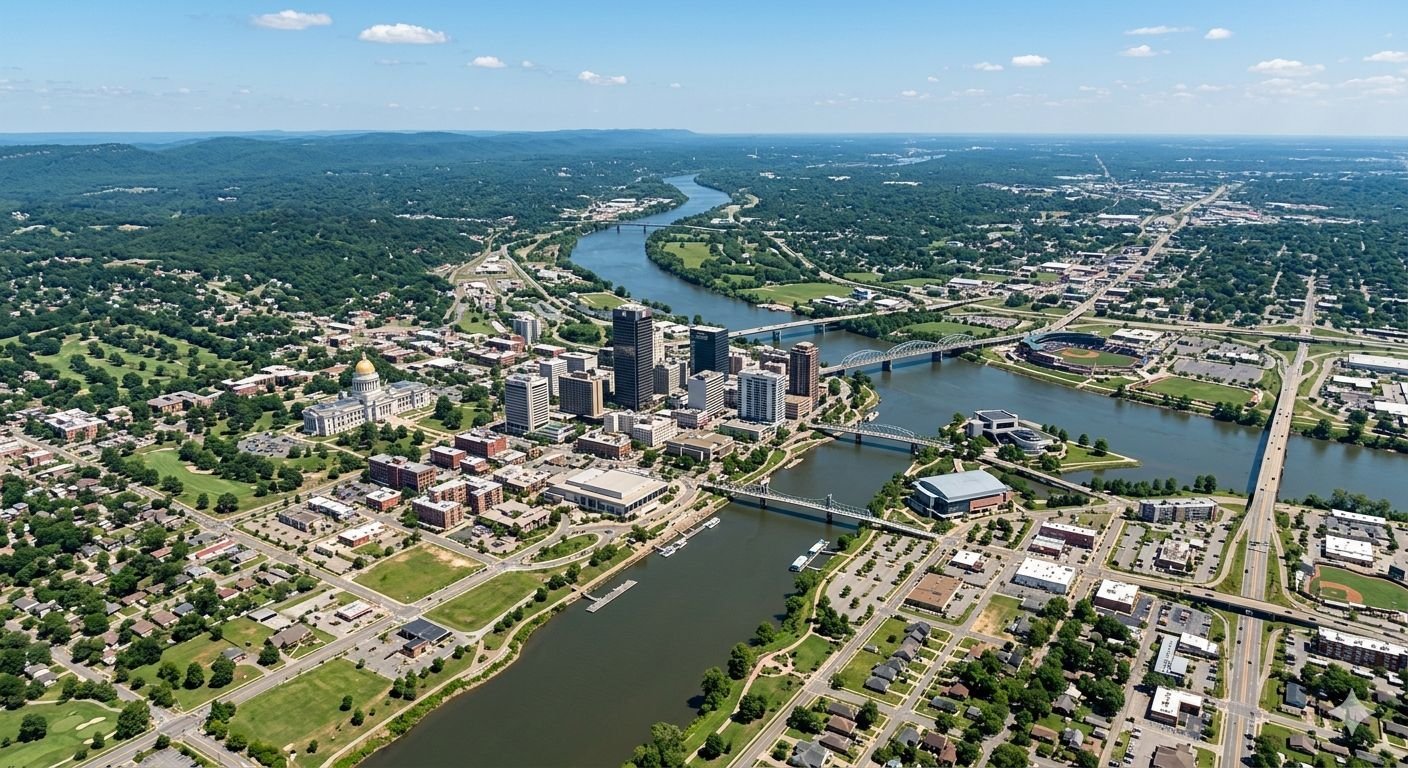
    Little Rock, Arkansas’s capital and largest city, deserves more credit than it typically receives as a travel destination. It is a city of genuine vitality, with excellent restaurants, a lively arts scene, and a riverfront district that has been substantially revitalized in recent years.

    The most historically significant site in the city — and one of the most important in the entire South — is the Little Rock Central High School National Historic Site. In September 1957, nine Black students, known to history as the Little Rock Nine, attempted to integrate the previously all-white Central High School in the face of a hostile crowd and the Arkansas National Guard, called out by Governor Orval Faubus to block integration. President Eisenhower ultimately sent in the 101st Airborne Division to enforce the Supreme Court’s desegregation ruling. The school continues to operate as a high school while simultaneously serving as a national historic site, and the visitor center across the street provides a deeply moving account of this pivotal episode in American civil rights history.

    The William J. Clinton Presidential Library, an architecturally striking glass structure cantilevered over the Arkansas River, tells the story of the 42nd presidency and is one of the largest presidential libraries in the country. The nearby River Market District has transformed the downtown riverfront into a lively neighborhood of restaurants, bars, the Ottenheimer Market Hall, and the Arkansas Museum of Fine Arts, which recently completed a major renovation and expansion, with a collection spanning the 1300s to the present day encompassing 14,000 works.
    The Historic Arkansas Museum in downtown Little Rock preserves the oldest surviving structures in the capital, including several houses from the 1820s, and tells the story of the state’s territorial and early statehood era.

    THE ARKANSAS DELTA: BLUES, HISTORY, AND THE GREAT RIVER
    Eastern Arkansas is a world apart from the mountains and spa towns of the west. Here the land flattens into the Mississippi Delta — an immense, fertile plain of cotton and rice fields, catfish ponds, and hardwood bottomlands that stretches to the great river. This landscape has an austere beauty and a cultural depth that rewards visitors who take the time to explore it.


    Helena, on the Mississippi River, is the epicenter of Arkansas’s blues heritage. The King Biscuit Blues Festival is held here annually, attracting top blues musicians. Additionally, the Delta Cultural Center offers interpretive exhibits to celebrate the region’s rich musical history. The festival and museum draw blues enthusiasts from around the world. The King Biscuit Time radio program, which launched from Helena in 1941, is the longest-running daily blues radio show in the world and continues to broadcast today.

    Johnny Cash was born in Kingsland, Arkansas, and visitors can tour the childhood home in the Arkansas Delta where the Man in Black spent his earliest years, gaining an understanding of the landscape and poverty that shaped one of America’s most important musical voices. The Delta is also deeply connected to the early history of rock and roll — the convergence of blues, gospel, and country music in this region during the 1940s and 1950s was the seedbed from which American popular music grew.
    The Toltec Mounds Archaeological State Park preserves one of the largest and most complex Native American ceremonial and civic centers in the lower Mississippi Valley, with mounds dating back to between 700 and 1100 AD.

    SCENIC DRIVES: THE OZARK AND OUACHITA BYWAYS
    Arkansas rewards the road-tripping traveler more than almost any state in the South. One of the most scenic drives in the nation, Scenic 7 runs from the Louisiana border to Bull Shoals Lake near the Missouri state line, passing through both the Ouachita and Ozark Mountains. Numerous resorts, attractions, and scenic overlooks are found along its route, and Car and Driver magazine named a portion of Scenic 7 Byway as one of the top 10 driving experiences in the United States.

    The Talimena National Scenic Byway, running along the ridge of the Ouachita Mountains from Mena, Arkansas, into Oklahoma, offers dramatic ridgeline views across miles of national forest. The Great River Road follows the Mississippi River’s western bank through the Delta, passing through towns steeped in Civil War and blues history. The Arkansas Scenic 7 Byway and the
    Crowley’s Ridge Parkway round out a remarkable collection of designated scenic routes that make a road trip through Arkansas an endlessly rewarding proposition.

    FOOD AND DRINK: SOUTHERN ROOTS AND NEW FLAVORS
    Arkansas food is Southern to its core, but it is more varied and ambitious than that shorthand suggests. The state has a strong tradition of smoked barbecue — particularly whole hog and pork ribs — and the best pit barbecue joints, often found in rural small towns, are institutions that have been feeding generations of locals and savvy travelers for decades.


    Fried catfish is the signature dish of the Delta and a beloved staple statewide. Catfish farms are common throughout eastern Arkansas, and local fish houses serving farm-raised catfish with hush puppies, coleslaw, and fried pickles represent one of the great regional dining experiences in the American South. Fried chicken, biscuits and gravy, turnip greens, black-eyed peas, and sweet potato pie complete the traditional repertoire.

    The rise of northwest Arkansas as a cultural destination has brought with it a sophisticated restaurant scene. Bentonville, Fayetteville, and Rogers now have nationally recognized chefs, farm-to-table restaurants, and a level of culinary ambition that would surprise visitors who still think of the region as flyover country. The food hall culture and craft brewery scene in northwest Arkansas in particular have expanded dramatically.

    Arkansas is also a surprisingly productive wine region, with wineries concentrated in the Arkansas River Valley near Altus, where German immigrant families planted vineyards in the 1880s. The Post Familie Winery and Wiederkehr Wine Cellars are among the most established, producing wines from both native American grape varieties and European vinifera that pair beautifully with the region’s food traditions.

    Arkansas is the leading rice producer in the United States, with Riceland Foods headquartered in Stuttgart, the world’s largest miller and marketer of rice. Stuttgart also calls itself the Duck Hunting Capital of the World, hosting the World’s Championship Duck Calling Contest each November during the Wings Over the Prairie Festival.

    FESTIVALS AND EVENTS
    Arkansas has a rich and year-round festival calendar that celebrates everything from folk music to blues to diamonds. The Arkansas Folk Festival in Mountain View each April is one of the oldest folk festivals in the country and draws musicians and craftspeople from across the region. The Bikes, Blues, and BBQ rally in Fayetteville in late September is one of the largest motorcycle rallies in America, raising millions for charity alongside its celebration of bikes, music, and barbecue.

    The Wildflower Weekend in the Buffalo National River area each April draws nature enthusiasts to witness the spectacular spring bloom on the Ozark hillsides. The Toad Suck Daze festival in Conway each May is a beloved example of the uniquely Arkansas tradition of small-town celebration — its name derived from a historical tavern at an old river crossing. And the GloWild Lantern Festival at Little Rock Zoo in winter has become one of the state’s most visually spectacular events, turning the zoo grounds into a glowing landscape of illuminated art.

    PRACTICAL TRAVEL TIPS
    Getting There: Little Rock’s Bill and Hillary Clinton National Airport is the main gateway, with connections to major hub cities across the country. Northwest Arkansas Regional Airport in Bentonville-Fayetteville has seen dramatically expanded service in recent years and now offers direct flights from numerous cities. Fort Smith and Jonesboro have smaller regional airports.


    Getting Around: A rental car is essential for exploring Arkansas. The state’s greatest rewards are found off the interstates, on winding mountain highways and rural byways that connect small towns, state parks, and natural areas. Distances between key destinations can be significant, so planning a road-trip route makes the most sense.

    When to Go: Spring, from late March through May, is arguably the finest season — wildflowers are spectacular, rivers run at good floating levels, temperatures are mild, and the Ozark forests are luminously green. Fall, from late September through November, brings spectacular foliage particularly in the Ozarks and Ouachitas, as well as cool hiking weather and harvest festivals. Summer is hot and humid but is prime time for river floating, lake recreation, and outdoor events. Winter is quiet but has its pleasures, especially for birders and those who appreciate the stark beauty of bare-branched Ozark ridgelines against gray skies.

    All 52 state parks are free to enter and offer diverse experiences. Whether you are a history buff, love to hike, paddle, bike, wildlife watch, fish, kick back and relax, or all of the above, there is a state park for you. This makes Arkansas an exceptionally accessible and affordable destination for families and budget-conscious travelers.

    CONCLUSION: Arkansas Rewards Every Kind of Traveler
    Arkansas is proof that the best travel experiences are often found in places that do not advertise themselves loudly. From the art temples of Bentonville to the wild bends of the Buffalo River, from the steaming thermal baths of Hot Springs to the diamond fields of Murfreesboro, from the folk music of Mountain View to the blues festivals of Helena, the state delivers experiences that are genuine, varied, and often spectacular — without the crowds that besiege better-known destinations.

    Many of Arkansas’s attractions remain uncrowded, which makes exploring them feel even more special. Travelers looking for inspiration, quiet adventure, or something a little different will find it here — without having to go far or fight through crowds. With its mix of natural wonder and cultural gems, Arkansas delivers more than most expect.
    Come with an open road, an open mind, and a little extra room in your pocket — you might just bring home a diamond.
  • Kansas: Wider Horizons, Brighter Stars

    Kansas: Wider Horizons, Brighter Stars

    Ask most Americans what they know about Kansas and the answers come quickly: flat, endless wheat fields, tornadoes, and Dorothy wishing she were somewhere else. Ask anyone who has actually traveled through the state and the answers are entirely different. Kansas is a place of extraordinary skies and sweeping horizons, of ancient chalk formations rising from the plains like cathedrals, of some of the most ecologically rare grasslands left on earth, of a history so rich and turbulent it shaped the direction of the entire nation. It is a state where the Wild West is not just a museum exhibit but a living presence in the landscape and culture, where world-class art and space museums appear in the middle of the heartland, and where a drive along a country road at sunset can produce one of the most beautiful views you will ever encounter.

    THE LAY OF THE LAND
    Kansas covers nearly 82,000 square miles and sits at the exact geographic center of the continental United States. The state is generally understood to slope gently upward from east to west, rising from about 700 feet in elevation near the Missouri border to over 4,000 feet in the far southwestern corner near the Colorado line. Kansas is divided into six distinct travel regions: Northeast, Northwest, Southeast, Southwest, North Central, and South Central, each with its own landscape, history, and character.

    The eastern third of the state is more varied than the state’s flat reputation suggests, with rolling wooded hills, river valleys, and the spectacular Flint Hills rising in the east-central region. Moving westward, the terrain opens into the broad High Plains, where the sky becomes the dominant landscape feature and the horizon stretches seemingly to infinity. The western counties hold geological surprises — dramatic chalk formations, canyons, and fossil beds — that startle visitors who arrive expecting only uniformity.

    Two rivers define much of the state’s geography and history. The Kansas River, known locally as the Kaw, runs east across the northern part of the state through Lawrence and Topeka to join the Missouri. The Arkansas River cuts diagonally across the south-central and southwestern plains, passing through Wichita and Dodge City on its way to Oklahoma. Along these waterways, the history of westward migration, cattle drives, and frontier settlement played out in scenes that defined an era of American mythology.

    THE FLINT HILLS: THE LAST GREAT TALLGRASS PRAIRIE
    No landscape in Kansas is more spectacular or more ecologically significant than the Flint Hills, and no experience the state offers is more genuinely moving than a quiet afternoon drive through this ancient grassland. The Flint Hills are a narrow band of rolling hills running north to south through the east-central part of the state, their limestone and chert bedrock making them unsuitable for plowing and thus saving them from the agricultural conversion that destroyed the tallgrass prairie virtually everywhere else.
    At one time there were more than 170 million acres of tallgrass prairie across the United States. Today, less than four percent of it remains, and most of it is right here in Kansas, preserved at the Tallgrass Prairie National Preserve.

    The Tallgrass Prairie National Preserve, located near Strong City in Chase County, protects nearly 11,000 acres of this irreplaceable ecosystem. The preserve is home to diverse plants and animals, including bison herds that roam freely across the grasslands. The visitor center provides educational exhibits on prairie ecology, and several hiking trails lead through scenic overlooks and native wildflower meadows. Popular trails include the Scenic Overlook and Bottomland Nature Trails, both of which feature educational signs that teach about the region’s delicate biodiversity. The historic Spring Hill Ranch house and barn, built in the 1880s, offer a glimpse into the life of the cattle ranchers who have been the Flint Hills’ primary stewards for more than a century.

    The Flint Hills National Scenic Byway, running roughly 47 miles along Highway 177 between Cassoday and Council Grove, is one of the finest scenic drives in the American interior. Stretching through the heart of the Flint Hills, one of the last remaining tallgrass prairie ecosystems in the world, the drive feels like stepping back in time to an era before the prairies were tamed. In spring, the hills turn vivid green and wildflowers dot the roadsides. In summer, ranchers conduct the prescribed burns that have maintained this ecosystem for thousands of years, and the smoke-hazed skies and blackened hillsides give the landscape a primordial quality. In fall, the grasses turn copper and gold and amber in a display that rivals any leaf-peeping destination in New England.

    The small town of Cottonwood Falls sits along this byway and is one of the most charming and unspoiled communities in the state. Its 1873 Chase County Courthouse, built of native limestone in the French Renaissance style, is the oldest operating courthouse in Kansas and one of the most beautiful county courthouses in the country. The surrounding countryside, with its ranches, rocky creek beds, and sweeping hilltop views, is ideal for hiking, cycling, and simply absorbing the profound stillness of the prairie.

    Council Grove, at the northern end of the byway, is a historic town of considerable significance. It was the last major provisioning stop on the Santa Fe Trail before travelers headed into the open plains, and its well-preserved 19th-century streetscape tells that story with quiet authority. The Kaw Mission State Historic Site preserves the stone mission built in 1851 for the Kaw (Kanza) Native American people, from whose name the state itself takes its identity.

    MONUMENT ROCKS: THE CHALK PYRAMIDS OF WESTERN KANSAS
    In the far western reaches of the state, in Gove County, one of America’s most astonishing geological formations rises from the flat plains in almost complete isolation. Monument Rocks — also known as the Chalk Pyramids — are a collection of towering chalk spires and formations, some reaching over 70 feet in height, that were once the floor of a vast inland sea that covered Kansas roughly 80 million years ago. Monument Rocks National Natural Landmark was the first natural landmark chosen by the U.S. government for designation. Legends of Kansas
    Located on private farmland, people are invited to drive the gravel road to visit the monument. While walking around the attraction, you may see cattle roaming about the area.

    The formations bear fossil shells and marine creatures embedded in their chalky walls, and the erosion that carved them continues to shape them slowly with every passing season. The named formations — Charlie the Dog, the Eye of the Needle — have the quality of natural sculpture. There are no entrance fees, no visitor centers, no gift shops. It is simply one of the most extraordinary natural landmarks in America, sitting quietly in the middle of nowhere, waiting for visitors curious enough to find their way to it.
    Nearby Castle Rock is another chalk formation of similar origin, and the two make a perfect combination for a western Kansas geological road trip. The area around Oakley, the nearest town of any size, also has the Buffalo Bill Cultural Center and good access to the surrounding high plains country.

    DODGE CITY: THE LEGENDARY WILD WEST
    No city in America carries a heavier load of frontier mythology than Dodge City, and remarkably, the place largely lives up to its legend. From 1875 to 1886, Dodge City was the end point of the Western cattle trails — the Great Western and the Atchison, Topeka and Santa Fe Railway connected here — and during those years it was simultaneously the most important commercial hub on the southern plains and the most notoriously lawless town in America. Wyatt Earp, Bat Masterson, and Doc Holliday all served as lawmen here. The Long Branch Saloon was a real place. Boot Hill Cemetery earned its name from the cowboys and outlaws buried there with their boots on.

    The Boot Hill Museum is located on the original site of Boot Hill Cemetery and brings the Old West to life with its recreated 1870s main street, complete with authentic shops, saloons, and even a blacksmith’s workshop. Exhibits include artifacts from the frontier days, such as cowboy gear, firearms, and historical documents that reveal Dodge City’s role as a once-bustling cattle town. Daily reenactments, including gunfight shows and cowboy-themed performances, add to the immersive Western experience.

    Today Dodge City embraces its cowboy past. A statue of James Arness as Marshal Matt Dillon stands in front of the visitors center, the perfect spot to begin a walking tour of town. The city’s Trail of Fame recognizes celebrities and locals for their contributions to the city’s success, from sidewalk markers honoring the cast of Gunsmoke to sculptor tributes to Wyatt Earp and Doc Holliday.

    Fort Larned National Historic Site, about 60 miles east of Dodge City, is one of the best-preserved frontier military forts in the country. Built in the 1860s to protect travelers along the Santa Fe Trail, Fort Larned’s stone buildings remain largely intact, and the National Park Service has restored them to their 1860s appearance. Walking the parade ground and through the barracks, officers’ quarters, and blockhouses is an immersive experience in frontier military life.

    The Santa Fe Trail itself left its mark on the landscape around Dodge City. The Santa Fe Trail Ruts near Dodge City represent a two-mile section of the former 1,200-mile trail and are the longest continuous stretch of clearly defined Santa Fe Trail rut remains in Kansas. These wagon ruts, worn deep into the Kansas prairie by tens of thousands of loaded wagons, are a tangible connection to one of the great migration stories in American history. Legends of Kansas

    WICHITA: THE AIR CAPITAL AND ITS CULTURAL LIFE
    Wichita is Kansas’s largest city and, for most visitors, its most complete urban experience. Nicknamed the Air Capital of the World, Wichita is home to several aerospace companies as well as the Kansas Aviation Museum. The aviation industry has been central to Wichita’s identity since the 1920s, when pioneer aviators and aircraft manufacturers established operations here, and the city continues to be a global leader in aircraft design and manufacturing.

    But Wichita is far more than its industrial identity. The city has developed a rich arts and cultural scene, a lively food and brewery culture, and a collection of museums and attractions that make it an excellent base for exploring the south-central part of the state.
    Wichita has emerged from its bustling cow-town era as a progressive, attractive community. The Old Cowtown Museum re-creates 19th-century Wichita right down to plank sidewalks, covering the period following the arrival of trader Jesse Chisholm, who in 1864 brought cattle north from Texas, establishing the Chisholm Trail and Wichita as a major shipping point. The museum’s 23-acre living history complex includes approximately 50 furnished period buildings and hosts reenactments and events throughout the year.

    The Keeper of the Plains, a dramatic 44-foot steel sculpture by Blackbear Bosin at the confluence of the Arkansas and Little Arkansas rivers, is one of the most striking public art installations in the Midwest. The surrounding Mid-America All-Indian Center tells the story of the Native peoples of the Great Plains through art and cultural programming.
    Botanica, the Wichita Gardens, is a beautiful 17-acre botanical oasis in the heart of the city, offering a diverse collection of plants, themed gardens, and educational programs. The Wichita Art Museum has a strong collection of American art, and the Exploration Place science museum is an excellent family destination. The Sedgwick County Zoo, one of the largest in the Midwest, houses over 2,500 animals and draws visitors year-round.

    Wichita’s Old Town district, a revitalized warehouse neighborhood of restaurants, breweries, music venues, and shops, is the city’s social heart. The area anchors a craft beer scene that includes Wichita Brewing Company, Central Standard Brewing, and River City Brewery, among others.

    TOPEKA: HISTORY, JUSTICE, AND A MAGNIFICENT CAPITOL
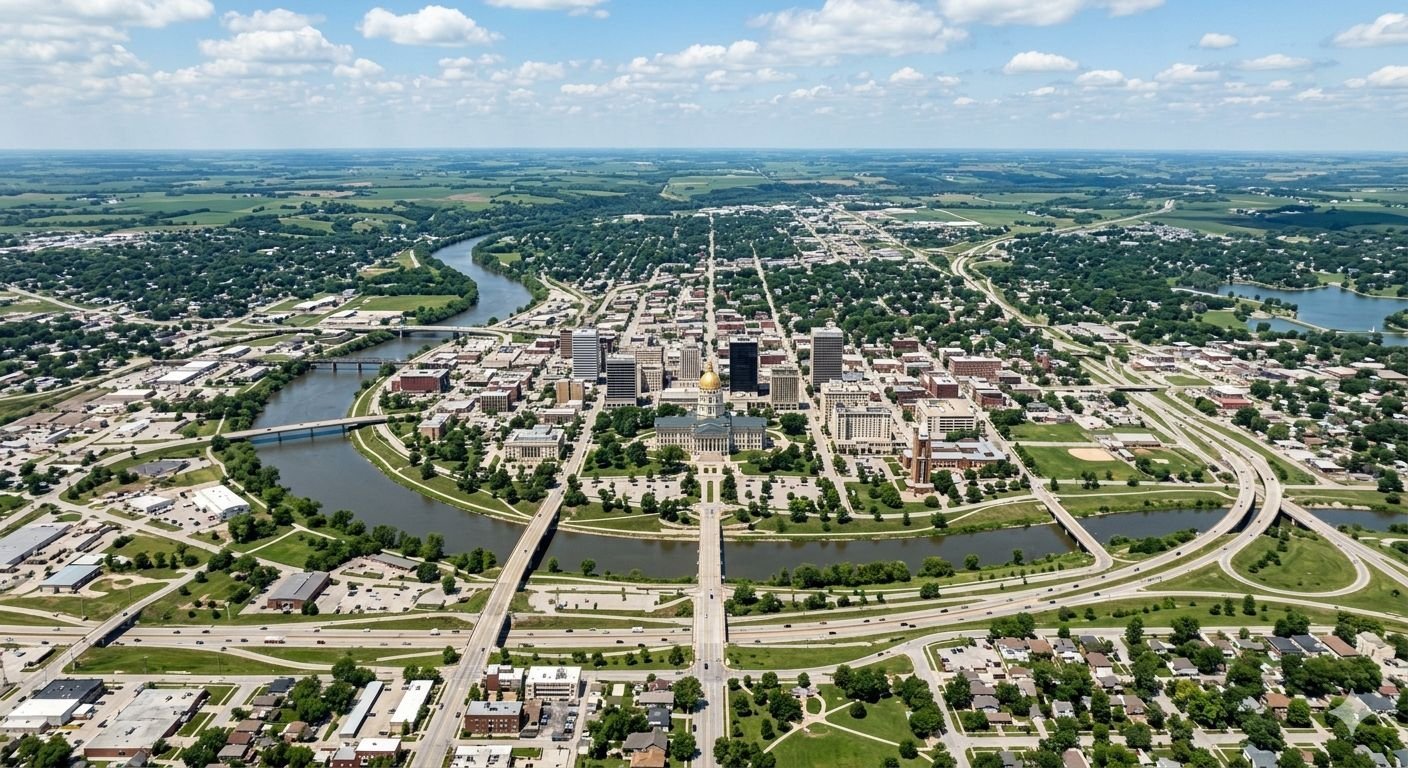
    Topeka, the state capital, punches above its weight as a destination for historically minded travelers, anchored by two sites of genuine national significance.
    The Brown v. Board of Education National Historic Site, located in the former Monroe Elementary School, commemorates the landmark 1954 Supreme Court decision that declared racial segregation in public schools unconstitutional. The case took its name from Oliver Brown, a Topeka resident who was one of the plaintiffs. The visitor center and museum provide a deeply moving account of the legal battle and its aftermath, and the building itself — the school that Black children attended while their white counterparts attended the better-resourced Sumner School just a few blocks away — gives the story a powerful physical presence.

    The Kansas State Capitol is one of the architectural gems of the Great Plains, a French Renaissance structure whose dome rises 304 feet above the city. Free guided tours take visitors through the building’s richly decorated interior, including murals by John Steuart Curry depicting the abolitionist John Brown in the dramatic Tragic Prelude, one of the most stirring works of public art in the Midwest. Visitors can climb to the dome for panoramic views across Topeka and the surrounding prairie.

    The Kansas Museum of History tells the comprehensive story of the state from its Native American origins through the present, with exceptional collections related to the Santa Fe Trail, the Civil War in Kansas, and the pioneer homesteading era.

    ABILENE: EISENHOWER’S HOMETOWN AND WILD WEST ROOTS
    Abilene occupies a unique place in Kansas history: it was both the childhood home of the 34th President of the United States and, in the early 1870s, the original terminus of the Chisholm Trail and one of the roughest cattle towns on the frontier. This combination of presidential legacy and Wild West history makes it one of the most rewarding small-city stops in the state.
    The Eisenhower Presidential Library, Museum, and Boyhood Home in Abilene offer a comprehensive look at the life and legacy of Dwight D. Eisenhower. The museum features detailed exhibits on World War II, the D-Day invasion, and Eisenhower’s time as Supreme Commander of the Allied Expeditionary Forces in Europe. The boyhood home where Eisenhower grew up with his six brothers has been meticulously preserved, and the Place of Meditation where Eisenhower and his wife Mamie are interred completes the complex with a moment of quiet reflection. The Tourist Checklist
    The Old Abilene Town complex on South Buckeye Avenue re-creates the wild cattle-town era of the early 1870s, when Wild Bill Hickok served as marshal and the longhorn drives from Texas ended here. The Dickinson County Heritage Center provides additional context on the region’s agricultural and social history.

    LAWRENCE: THE FREE STATE CITY AND ITS UNIVERSITY SPIRIT
    Lawrence, home of the University of Kansas, is one of the liveliest and most culturally vibrant cities in the state. Founded in 1854 by New England abolitionists determined to make Kansas a free state, Lawrence endured the infamous Quantrill’s Raid of 1863 — in which Confederate guerrillas burned much of the town and killed nearly 200 men and boys — and rebuilt with a determination that became part of the city’s identity.

    Lawrence revolves around Massachusetts Street, the main drag lined with art galleries, independent eateries, and an abundance of quirky or vintage boutiques. As a college town, the area is also home to plenty of great local breweries and nightlife spots. The University of Kansas campus has a number of impressive buildings and has been compared to the fictional school of Hogwarts from the Harry Potter universe.

    The Spencer Museum of Art on the KU campus has a collection of over 45,000 objects spanning centuries and continents. The Watkins Museum of History tells the story of Lawrence and Douglas County with depth and nuance. Free State Brewing Company, one of the first brewpubs to open in Kansas after prohibition-era restrictions were lifted, remains a Lawrence institution.
    The Haskell Indian Nations University, also in Lawrence, is an accredited university for federally recognized Native American tribes and a place of profound historical significance. Founded in 1884 as a residential boarding school for American Indian children, a self-guided walking tour map is available featuring 12 campus buildings designated as U.S. National Historic Landmarks. Legends of Kansas

    THE COSMOSPHERE: HUTCHINSON’S WORLD-CLASS SPACE MUSEUM
    One of the most unexpected cultural institutions in the American Midwest sits in the small south-central city of Hutchinson. The Kansas Cosmosphere and Space Center — usually just called the Cosmosphere — is the second-largest space museum in the world, trailing only the Smithsonian’s National Air and Space Museum in Washington, DC, and it contains collections that even the Smithsonian does not have.

    In the Carey Digital Dome Theater, visitors can watch movies about space exploration on a two-story, domed screen. Hanging from the ceiling is a glamorous black SR-71 Blackbird spy plane. The museum also offers a live rocket science demonstration, a planetarium, a space museum with lots of space suits, and the Apollo 13 command module. The Hall of Space Museum tells the story of the Space Race from its earliest rocketry experiments through the Apollo program and beyond, with an astonishing collection of original hardware, astronaut suits, and mission artifacts. Dr. Goddard’s Lab, a live science performance, brings the history of early rocketry to life for audiences of all ages.

    Hutchinson is also home to the Kansas State Fair, held every September and one of the largest state fairs in the Great Plains, drawing hundreds of thousands of visitors for agricultural competitions, carnival rides, live entertainment, and the full range of fair food traditions.

    Nearby, the Strataca Underground Salt Museum offers a uniquely subterranean experience — visitors descend 650 feet below the surface into a working salt mine to explore underground chambers and learn about the geology and industry that has been a quiet but significant part of Kansas’s economic story for over a century.

    FORT SCOTT AND SOUTHEAST KANSAS: BLEEDING KANSAS AND THE CIVIL WAR
    The southeastern corner of Kansas was the site of some of the most violent episodes in the state’s pre-Civil War history, when the question of whether Kansas would enter the Union as a free or slave state drew armed partisans from both sides into a brutal guerrilla conflict known as Bleeding Kansas. Fort Scott, established in 1842 and now a National Historic Site, played a central role in this history.

    Fort Scott played a major role in Bleeding Kansas and the early Civil War. It was one of the first places in the nation where Black soldiers served in the Union Army. Visitors can still walk the parade grounds where those men trained, fighting for a country that hadn’t yet promised them equality. Detail Oriented Traveler
    The town of Fort Scott itself has a remarkably intact Victorian-era commercial district and a collection of historic homes that make it one of the most architecturally interesting small cities in the state. The surrounding Ozark plateau country — wooded, hilly, and distinctly different from the open plains — gives southeastern Kansas a character quite unlike the rest of the state.

    Mine Creek Battlefield near Pleasanton preserves the site of one of the largest cavalry engagements of the Civil War, where Union forces decisively defeated a Confederate army in October 1864. It is a sobering and historically significant place, largely unknown outside of serious Civil War scholarship.

    THE SYMPHONY IN THE FLINT HILLS
    One of the most singular cultural events in America takes place every June in a different location within the Flint Hills each year. The Symphony in the Flint Hills brings the Kansas City Symphony to the open prairie for an outdoor concert at sunset, with the grasslands stretching to the horizon and the enormous Kansas sky providing a backdrop that no concert hall can match. Thousands of attendees spread blankets and picnic on a hillside while the music carries across the wind-brushed grass. It is an experience that is simultaneously deeply local and genuinely transcendent, and it has become one of the most beloved annual events in the state.

    CHEYENNE BOTTOMS: A BIRDING PARADISE
    Just north of Great Bend in central Kansas, the Cheyenne Bottoms Wildlife Area is one of the most important wetland complexes in the interior of North America. The Cheyenne Bottoms Wildlife Area is a notable stopover for North American shorebirds. During spring migration, the wetlands fill with hundreds of thousands of shorebirds, waterfowl, and wading birds funneled through this critical stopover on the Central Flyway. Sandpipers, dowitchers, avocets, white pelicans, whooping cranes — Cheyenne Bottoms has recorded more species than perhaps any comparable area of its size in the region. It is a destination that birders from across the country and internationally make pilgrimages to visit during the spring migration window from April through mid-May.
    Quivira National Wildlife Refuge, a short drive to the southwest, offers similar wetland birding in a quieter, more intimate setting.

    SUNFLOWER FIELDS: KANSAS IN ITS MOST ICONIC FORM
    Every August, a scattered but spectacular phenomenon transforms the Kansas landscape: the sunflowers bloom. While the Sunflower State’s association with its namesake flower is well known, the experience of driving through a field of sunflowers stretching to every horizon under a brilliant blue sky is one that photographs cannot adequately convey. Kansas sunflower fields peak in late summer, typically August, and they are found throughout the state but concentrated particularly in the north-central and western regions. Stafford County in south-central Kansas has become especially well known for its sunflower fields and hosts events tied to the bloom each season.

    The drive along state highways through sunflower country in late August, with the flat landscape punctuated by miles of yellow-headed flowers all turned to face the morning sun, is the kind of experience that converts skeptics into believers about Kansas’s singular visual power.

    FOOD AND DRINK: PLAINS TRADITIONS AND URBAN INNOVATION
    Kansas food culture is rooted in the same agricultural abundance that has defined the state’s economy for a century and a half. Wheat, beef, and pork are the foundations. Kansas City-style barbecue — smoked meats with a thick, sweet sauce built on tomatoes and molasses, applied at the end of the cooking process to caramelize over the heat — is one of the great regional American food traditions, and the Kansas side of the Kansas City metro has no shortage of excellent barbecue joints.

    Bierocks are a Kansas food tradition of German-Russian immigrant origin: stuffed bread rolls filled with seasoned ground beef and cabbage, baked golden, and eaten as a hearty portable meal. Brought to Kansas by Mennonite settlers from Russia in the 1870s, they are found in home kitchens, church suppers, and local restaurants throughout the state and are a uniquely Kansan contribution to American food culture.

    The cinnamon roll has an unlikely but genuine Kansas food connection: for generations, Kansas school cafeterias served cinnamon rolls with chili as a lunchtime combination, and the pairing became so ingrained in the state’s collective memory that it is now considered a comfort food classic. Seek it out at diners and small-town cafes across the state.
    Wichita’s food scene has matured considerably, with a diverse array of restaurants reflecting the city’s increasingly multicultural population. The craft brewing scene is statewide and growing, with notable operations in Wichita, Lawrence, Topeka, and Manhattan. River City Brewery, Wichita Brewing Company, and Central Standard Brewing in Wichita; Free State Brewing Company in Lawrence; and Blind Tiger in Topeka are among the most established and respected.

    Kansas wine is a younger industry but a genuine one, with wineries in the Flint Hills region and across the eastern part of the state producing wines from both native and hybrid grapes that pair well with the region’s food traditions.

    SCENIC DRIVES AND BYWAYS
    Kansas rewards the driver more than almost any other mode of traveler. The state has developed a network of designated scenic byways that thread through its most beautiful and historically significant landscapes.
    Scenic 7 runs from the Louisiana border to Bull Shoals Lake, and Car and Driver magazine named a portion of it as one of the top 10 driving experiences in the United States. The Flint Hills National Scenic Byway through the tallgrass prairie is incomparable in late spring and early fall. The Western Vistas Historic Byway in the southwestern corner of the state passes through buttes, canyons, mesas, and gypsum hills that look nothing like the Kansas of the popular imagination. The Land and Sky Scenic Byway in the northwest traverses the open High Plains under some of the largest and most dramatic skies in the country.

    Driving in Kansas requires a certain disposition — a willingness to be alone on a two-lane highway for miles, to pay attention to subtle variations in landscape that reward close observation, and to stop when something catches your eye, because there may not be another car along for a long time. This is a feature, not a flaw.

    PRACTICAL TRAVEL TIPS
    Getting There: Wichita Dwight D. Eisenhower National Airport is the primary hub for in-state arrivals, with connections to major cities. Kansas City International Airport, just across the state line in Missouri, offers more routes and is a convenient gateway for northeastern Kansas. Amtrak’s Southwest Chief stops in places like Garden City, Dodge City, and Newton, making train travel a viable and romantic option for those approaching from the east or west.

    Getting Around: A rental car is essential for exploring Kansas. The state’s defining experiences — the Flint Hills, Monument Rocks, Dodge City, the scenic byways — all require independent transportation. The interstate system is efficient for covering large distances, but the real Kansas is on the state and county highways.
    When to Go: Spring, from late April through early June, is the finest season for the Flint Hills — the grasses are vivid, wildflowers bloom, and temperatures are pleasant. Fall, from September through November, is the best time for road trips, autumn colors, and cultural events. Summer brings the sunflower bloom in August and the State Fair in September, though July and August can be genuinely hot across the open plains. Winter is cold but offers its own rewards — clear air, quiet landscapes, and excellent museum days.

    Tornadoes: Kansas is indeed in Tornado Alley, and severe weather is a reality of life in the state, particularly in spring and early summer. Visitors should monitor weather forecasts, know the location of the nearest shelter when staying in rural areas, and treat tornado watches and warnings with appropriate seriousness. That said, tornado tourism itself — the chase tour industry based out of several Kansas cities — has become a legitimate and popular form of adventure travel for those who want a guided, safe experience observing one of nature’s most powerful phenomena.

    CONCLUSION: Kansas Earns Your Respect
    Kansas does not beg for your attention the way more obviously dramatic landscapes do. It offers itself quietly, on its own terms, in its own time. The reward for travelers who meet it on those terms is a state that surprises, moves, and stays with them. The Flint Hills at golden hour. The chalk towers of Monument Rocks under a full moon. The Boot Hill reenactments in Dodge City. A concert orchestra playing Beethoven to ten thousand people on an open prairie. The Apollo 13 command module in a museum in the middle of Kansas.

    Arkansas deserves a spot on any travel list, thanks to places that offer beauty, history, and a deep connection to the land. The same is true, with equal conviction, of Kansas. Come with curiosity, come without assumptions, and let the Sunflower State show you what it has always quietly known about itself: that there is more here than meets the eye, and far more than the stereotypes ever suggested.

  • Mississippi: Where Wanderers Welcome

    Of all the states in the American South, none carries a more layered, contradictory, haunting, or ultimately rewarding story than Mississippi. It is a state that gave the world the blues, gave rock and roll its king, produced some of the greatest writers in the English language, stood at the center of the most consequential civil rights struggle in American history, and preserves more antebellum mansions than anywhere else in the country. It has a Gulf Coast of genuine beauty, a river of mythic proportions running its entire western length, and a landscape of flat Delta cotton fields and piney hills that gets under the skin of everyone who travels it seriously.

    More than 100 years ago, the blues was born in Mississippi. The sounds of the state gave country its twang, R&B its soul, jazz its blue note, and rock and roll its king. That musical birthright alone would justify a pilgrimage. But Mississippi offers far more than its musical legacy. Tourism contributes over $18 billion in total economic impact for the state, making it Mississippi’s fourth largest industry. What draws all those visitors is something that is easier to feel than to explain — a depth of experience, a weight of history, a warmth of people, and a food culture of extraordinary richness that together make Mississippi one of the most genuinely memorable destinations in North America.

    THE LAY OF THE LAND
    Mississippi covers about 48,000 square miles and is divided into several distinct geographic and cultural regions. The Delta, in the northwestern part of the state, is a vast, flat alluvial plain between the Mississippi and Yazoo rivers — one of the richest agricultural soils in the world, the heartland of the cotton economy, and the cradle of the blues. East of the Delta, the hills region rolls through the northern part of the state, wooded and quieter, home to Oxford and the literary traditions of William Faulkner. Through the middle of the state runs the Natchez Trace, one of America’s great historic routes. The capital city of Jackson anchors the central region. The southwest is dominated by the great river, the bluffs of Natchez, and the Civil War landscape of Vicksburg. The Pines region fills the southeastern interior, and the Gulf Coast stretches along the south, offering beaches, casinos, seafood, and a distinct culture shaped by French, Spanish, and Creole influences.

    Mississippi is divided into five travel regions: the Delta, the Hills, the Capital/River Region, the Pines, and the Coastal Region, each with its own personality and experience.

    THE MISSISSIPPI DELTA: BIRTHPLACE OF THE BLUES
    No region in America is more deeply associated with a single musical tradition than the Mississippi Delta and the blues. This flat, fertile, often poverty-stricken land between the rivers produced a music of such raw emotional power and cultural fertility that it became the foundation from which jazz, rock and roll, R&B, country, and virtually every other strand of American popular music grew. To travel through the Delta in search of the blues is to take one of the great cultural pilgrimages available anywhere in the world, and the journey rewards visitors at every turn.

    Clarksdale is the undisputed capital of the Delta blues world. Internationally recognized as the birthplace of the blues, the most iconic landmark in Clarksdale is the Crossroads — the famous intersection of Highways 61 and 49 that is immortalized in blues folklore as the site where legendary bluesman Robert Johnson sold his soul to the devil in exchange for his musical talent. Whether or not you believe the legend, standing at that intersection gives you a visceral sense of the mythology that has grown up around this music and this landscape.

    The Delta Blues Museum in Clarksdale, housed in a historic freight depot, is the oldest music museum in Mississippi and a must-see for anyone seeking the roots of American music. Its exhibits trace the origins and evolution of the blues through instruments, photographs, recordings, and personal artifacts of the artists who created them, from Muddy Waters to Son House to Robert Johnson himself.

    The nightlife in Clarksdale is authentic in a way that cannot be manufactured. Ground Zero Blues Club and Red’s Lounge are the most celebrated venues, where live music fills the air and musicians play classic blues tunes that tell stories of life, love, and struggle. Ground Zero Blues Club is co-owned by actor Morgan Freeman, who grew up in the Delta and has been one of its most passionate advocates. The Shack Up Inn, a collection of tin-roofed sharecropper shacks converted into idiosyncratic guest rooms at the historic Hopson Plantation, offers one of the most memorable and characterful lodging experiences in the American South — rustic, soulful, and utterly unlike anything else.

    From Clarksdale, the Blues Highway — U.S. Highway 61, the great artery running south through the Delta — leads to a string of towns whose names are woven into musical history. Cleveland is home to the Grammy Museum Mississippi, and Indianola is the home of the B.B. King Museum and Delta Interpretive Center. The Grammy Museum Mississippi’s collection celebrates not just the blues but the full breadth of Mississippi’s extraordinary musical contribution to world culture, from its interactive exhibits on the evolution of American music to its celebration of the state’s Grammy Award winners. The B.B. King Museum in Indianola is a beautifully designed tribute to the greatest electric blues guitarist of all time, telling the story of Riley B. King’s journey from a sharecropper’s cabin near Indianola to the stages of the world’s greatest concert halls.

    Leland’s Highway 61 Blues Museum, in the town of Leland near Greenville, has more visual art — paintings and photography by Delta artists — than most music museums, and the staff will do their best to have musicians show up to play while visitors browse its collection.

    The Delta tamale is the great culinary mystery of the region. Hot tamales — not the Mexican variety but a thinner, spicier version cooked in corn husks — are a staple of Delta food culture, brought to the region by Mexican migrant workers in the early 20th century and adopted so completely by the local culture that they are now considered quintessentially Mississippian. A culinary trail runs through the Mississippi Delta region from Vicksburg to Tunica, featuring this popular Latin American dish that was introduced to the area over a century ago. Clarksdale’s Hick’s World Famous, Abe’s Bar-B-Q, and The Ranchero all feature hot tamale dishes. Eating tamales from a paper bag in the parking lot of a Delta gas station is one of the most unexpectedly wonderful food experiences in the American South.

    THE MISSISSIPPI BLUES TRAIL
    The Mississippi Blues Trail is a statewide network of historical markers identifying the people, places, and events that shaped the blues as it developed across the entire state, not just in the Delta. With well over 200 markers, the trail stretches from the Gulf Coast to the Tennessee border and provides an organizing framework for anyone interested in tracing the deep roots of American music through the landscape that produced it.

    The Mississippi Blues Trail marks story-rich birthplace sites stretching from Clarksdale to Delta juke joints. Stops include the childhood home of Muddy Waters, the churches where gospel music shaped the blues sensibility, the recording studios and radio stations that first broadcast these sounds, and the juke joints where Saturday night music provided release from the grinding labor of the cotton fields. Following the trail is an education in American cultural history that no classroom can replicate.

    NATCHEZ: ANTEBELLUM GRANDEUR AND THE GREAT RIVER
    Natchez, perched on the bluffs above the Mississippi River at the southern end of the Natchez Trace, is the oldest city on the Mississippi River and one of the most historically layered in the entire South. Founded in 1716 by French colonists, Natchez was once one of the wealthiest towns in America due to its cotton trade and is now a living museum of antebellum architecture, historic churches, and Southern hospitality. Its over 1,000 antebellum structures are listed on the National Register of Historic Places.

    The antebellum mansions of Natchez are in a class of their own anywhere in the United States. Stanton Hall, a palatial mansion built in the 1850s, is known for its grandeur and opulence, and guided tours of its lavish interiors are a must. Rosalie Mansion and Longwood are two additional antebellum homes available for tourists to visit. Longwood is perhaps the most haunting of all — an enormous octagonal mansion whose interior was never completed because the Civil War broke out before the construction workers could finish, leaving the upper floors as an empty shell above the furnished ground floor, exactly as the family left them in 1861. It is one of the most peculiar and affecting historic houses in America.

    The Natchez Pilgrimage, held each spring and fall, allows visitors to tour private antebellum homes and gardens that are not otherwise accessible, with guides in period costume telling the stories of the families — and the enslaved people who made their wealth possible — who lived in them. It is the most comprehensive house tour event in the South and a genuinely unique cultural experience.

    The Natchez National Historical Park includes Melrose Estate, a magnificently preserved antebellum plantation complex, and the William Johnson House, the townhouse of a free Black man who was one of the most prosperous citizens of antebellum Natchez and whose diary provides one of the most valuable firsthand accounts of life in the antebellum South. Together these two sites tell a more complete story of pre-Civil War Natchez than any single mansion tour can offer.

    Natchez Trace Parkway begins — or ends, depending on which direction you are traveling — in Natchez, and the town’s setting on the bluffs above the river is spectacular, especially at sunset when the wide Mississippi turns gold and the lights of Louisiana twinkle on the far shore.

    THE NATCHEZ TRACE PARKWAY: AMERICA’S ANCIENT ROAD
    The Natchez Trace Parkway is among the most beautiful and historically significant scenic drives in the United States. This gorgeous two-lane ribbon of asphalt follows an 8,000-year-old trail from Natchez, Mississippi, to Nashville, Tennessee, used by everyone from ancient Native Americans to Spanish conquistadors to early settlers. The Parkway is administered by the National Park Service, which maintains it as a controlled-access scenic road — no commercial vehicles, no billboards, no strip malls — creating an experience of the landscape that feels like traveling through a nature reserve.

    The 444-mile scenic drive takes travelers through stunning landscapes where Native Americans settled almost 10,000 years ago. The parkway features hiking, biking, camping, and horseback riding, as well as historic markers and sites along its entire length. The Mississippi portion of the Trace, which covers the vast majority of the route, passes through forests of magnolia and tupelo, across creek bridges and through meadows, with pull-offs at ancient Native American mound sites, Civil War skirmish sites, the ghost town of Rocky Springs, waterfalls, and wildlife observation areas. It is one of the finest road trips in the American South and can be driven in a long day or savored over several.

    VICKSBURG: THE GIBRALTAR OF THE CONFEDERACY
    Vicksburg occupies one of the most dramatically situated positions on the Mississippi River — high bluffs commanding a hairpin bend in the river — and it was this position that made it one of the most strategically vital cities of the Civil War. President Lincoln called Vicksburg the key to the Confederacy, and its fall after a 47-day siege in July 1863 effectively split the Confederate states in two and gave the Union control of the entire Mississippi River.

    Vicksburg National Military Park commemorates the Siege of Vicksburg and contains over 1,800 acres with over 1,340 monuments, a restored ironclad gunboat — the USS Cairo — and Vicksburg National Cemetery. A self-guided tour follows the 16-mile road through the park. The scale of the park is extraordinary — the preserved earthworks, trenches, and cannon positions stretch across the hills and hollows of the landscape in a way that makes the desperate nature of the siege, fought in summer heat with both sides dug in for weeks, viscerally comprehensible. The USS Cairo, raised from the Yazoo River in the 1960s, is one of the best-preserved Civil War ironclad warships in existence and its accompanying museum is excellent.

    Beyond the military park, Vicksburg is a city of considerable charm and genuine historical depth. The Old Courthouse Museum, housed in a magnificent antebellum building on a hilltop above the city, contains one of the finest collections of Civil War artifacts in the state. Ghost tours of the city explore its storied past through the lens of the supernatural, and the riverfront casinos provide a more modern entertainment option along the great river.

    JACKSON: THE CAPITAL AND CIVIL RIGHTS HISTORY
    Jackson, the capital and largest city of Mississippi, is the urban center of the state and the primary gateway for visitors arriving by air. It is a city of genuine cultural vitality with a strong arts scene, excellent restaurants, and two museums of profound national significance.

    The Two Mississippi Museums — the Museum of Mississippi History and the Mississippi Civil Rights Museum — opened in 2017 as companion institutions that together tell the full sweep of the state’s story from its earliest Native American inhabitants to the present day. The Museum of Mississippi History and the Mississippi Civil Rights Museum in Jackson are among the most significant heritage institutions in the state. The Civil Rights Museum in particular is one of the finest civil rights institutions in the country, with deeply moving and rigorously researched exhibitions on the Freedom Riders, the murders of Medgar Evers and Emmett Till, the integration of Ole Miss, and the courage of countless ordinary Mississippians who risked everything in the struggle for equality. It is not an easy museum to visit, but it is an essential one.

    Eudora Welty’s home in Jackson has been preserved exactly as the great writer left it — her books on the shelves, her garden tended, her photographs on the walls — and tours are offered on a limited schedule. Welty, who won the Pulitzer Prize and is one of the towering figures of American literature, lived in this house for virtually her entire life, and the intimacy of the experience is remarkable.

    The Mississippi Museum of Natural Science features a full indoor swamp ecosystem with native wildlife — alligators, turtles, fish, and birds in a climate-controlled wetland environment — and is one of the finest natural history museums in the South.

    Jackson’s food scene has grown considerably in recent years. The city has excellent soul food, outstanding barbecue, and a restaurant culture that reflects the state’s diverse culinary heritage. The Fondren neighborhood, an arts district of galleries, boutiques, and restaurants in restored mid-century commercial buildings, gives Jackson a bohemian energy that surprises visitors who expect only government buildings and chain hotels.

    OXFORD: LITERARY CAPITAL OF THE SOUTH
    Oxford, tucked into the wooded hills of northern Mississippi, is one of the most beloved small cities in the American South — a place of independent bookstores, lively restaurants, passionate football culture, and a literary heritage that rivals any comparable city in the country. It is home to the University of Mississippi, known as Ole Miss, and it was the lifelong home of William Faulkner, the Nobel Prize-winning novelist whose work mapped the landscape, history, and psychology of the South with unparalleled depth and moral seriousness.
    Rowan Oak, Faulkner’s farm on the edge of Oxford, is now a museum set on over 29 acres where he wrote many of his works. The grounds and home are preserved much as he left them. Walking through the rooms where Faulkner wrote The Sound and the Fury and As I Lay Down — including the one where he famously outlined the plot of A Fable directly on the wall of his study — is a pilgrimage for any serious reader.

    Oxford’s charming town square, surrounded by historic buildings, is lined with bookstores, boutiques, art galleries, and restaurants, all just begging to be visited. The town also hosts several cultural events, including the Oxford Film Festival and the Double Decker Arts Festival, which showcase local and regional music, arts, and food.
    Square Books, on the town square, is one of the finest independent bookstores in America — a three-story cathedral of Southern literature, with a cafe on the upper floor and a schedule of author readings that draws major American writers throughout the year. Ole Miss football, played in the Grove — a 10-acre tailgating paradise of tents, chandeliers, and elaborate food spreads under ancient oak trees — is one of the great spectacles of Southern college sports culture and worth experiencing in its own right.

    TUPELO: THE KING’S BIRTHPLACE
    Tupelo, in the northeastern hills of Mississippi, has a proud and permanent place in world cultural history as the birthplace of Elvis Presley. The two-room house in Tupelo where the King of Rock and Roll was born in 1935 is preserved and open to visitors. The Elvis Presley Birthplace complex includes the modest shotgun house where Elvis was born, the church where he first heard gospel music, a museum tracing his life from Tupelo to Memphis to the world stage, and a memorial chapel. For Elvis fans, it is a site of genuine pilgrimage. For everyone else, it is a fascinating window into the Depression-era South that shaped the most influential musician in American popular history.

    Tupelo is also the site of one of the most significant Civil War battles in Mississippi — the Battle of Tupelo in 1864 — commemorated in a small but well-interpreted national battlefield site. The Natchez Trace Parkway passes through the city, providing easy access to the parkway for visitors entering from the northeast.
    The broader hills region of which Tupelo is part offers the most varied outdoor landscape in northern Mississippi, with the Tishomingo State Park in the foothills of the Appalachians providing hiking, rock climbing, and canoeing through genuinely dramatic terrain for those who venture into this less-visited corner of the state.

    THE GULF COAST: BILOXI, GULFPORT, AND THE SHORE
    Mississippi’s Gulf Coast is a different world from the Delta and the hills — sun-drenched, salt-air-scented, oriented toward the sea, and shaped by a French and Spanish colonial heritage that gives it a cultural texture unlike the interior of the state. Coastal Mississippi offers 62 miles of shoreline, vibrant coastal towns, Gulf-to-table cuisine, world-class casinos, and cozy beachfront stays.

    Biloxi is the coast’s largest and most active city, known for its casino resorts lining Beach Boulevard, its seafood industry, and its role as what locals call the birthplace of American Mardi Gras — the French established Mardi Gras celebrations here even before New Orleans was founded. The Biloxi Lighthouse, standing since 1848, remains one of the most photographed structures on the Gulf Coast, and visitors can climb to the top for sweeping views of the shoreline. The Ohr-O’Keefe Museum of Art, designed by the legendary architect Frank Gehry in a complex of swooping, metallic-clad pavilions, honors George Ohr, the eccentric early-20th-century potter known as the Mad Potter of Biloxi, whose wildly experimental ceramics were decades ahead of their time and are now recognized as masterworks of American craft.

    Ocean Springs, just across the bay from Biloxi, is the artistic soul of the coast — a small city of galleries, studios, independent restaurants, and moss-draped live oak streets that has been a center of creative life since the late 19th century. Ocean Springs calls to travelers seeking more than sun and sand, inviting them to stroll with curiosity, eat with delight, and breathe in a quiet coastal magic.

    Bay St. Louis, at the western end of the coast, has developed into one of the most charming and artistically vibrant small cities on the entire Gulf Coast. Bay St. Louis blends history, creativity, and Southern hospitality, with historic buildings now housing colorful art galleries, quirky boutiques, and inviting cafes under oak trees covered in moss, attracting creative people and free spirits.

    The Gulf Islands National Seashore, accessible by boat from Gulfport and Biloxi, protects a chain of barrier islands with some of the most pristine white-sand beaches on the Gulf of Mexico. Ship Island, the most visited, has clear, calm water on one side and open Gulf surf on the other, a historic fort from the Civil War era, and a sense of wild remoteness remarkable given its proximity to the developed coast.

    CIVIL RIGHTS HISTORY: A TRAIL OF COURAGE
    No honest accounting of Mississippi as a travel destination can avoid the depth and tragedy of its civil rights history. Mississippi was the site of some of the most extreme racial violence in American history — the murders of Emmett Till, Medgar Evers, and three civil rights workers in 1964 among many others — and it was also the site of some of the most courageous organizing, protest, and moral witness in the entire movement.

    The Mississippi Civil Rights Museum in Jackson and Freedom Trail locations maintained throughout the state document the important contributions of Medgar Evers, Emmett Till, James Meredith, Fannie Lou Hamer, and others to the U.S. Civil Rights movement. The Mississippi Freedom Trail, a network of historical markers similar in concept to the Blues Trail, identifies sites connected to the movement across the state — from the spot in Money where Emmett Till was abducted, to the Sixteenth Street Church in Birmingham, to the Neshoba County Fairgrounds where the three civil rights workers were murdered in 1964. Following this trail requires emotional courage from visitors, but it is one of the most important journeys available anywhere in the American South.

    MISSISSIPPI FOOD: THE DEEP SOUTH KITCHEN
    Mississippi food is Southern food at its most uncompromising and its most delicious. Fried catfish is the signature dish — thick fillets of farm-raised catfish, cornmeal-battered and fried golden, served with hush puppies, coleslaw, and hot sauce. Nearly every small town has a catfish house, and the ones that have been feeding their communities for generations are reliably excellent.
    State specialties include catfish, often served fried. For catfish pate served free as an appetizer, head to The Crown Restaurant in Indianola. Soul food — collard greens, black-eyed peas, cornbread, smothered pork chops, sweet potatoes, buttermilk pie — is as deeply embedded in Mississippi’s food culture as anywhere in the country, a tradition shaped by the African American community that created and sustained it across centuries.

    Barbecue in Mississippi leans toward slow-smoked pork, with a tang and smoke depth that differs from the sweeter Kansas City style or the vinegar-forward Carolinas tradition. The Delta is also home to wonderful roadside tamale stands, catfish buffets, and the kind of humble, honest cooking that can be found in church suppers and community gatherings across the state.
    The comeback sauce — a tangy, slightly spicy condiment made from mayonnaise, ketchup, chili sauce, and spices — is Mississippi’s own contribution to condiment culture and is found on everything from salads to burgers to fried seafood throughout the state.

    The Gulf Coast adds a distinct seafood dimension to Mississippi’s food culture, with Gulf shrimp, oysters, crab, and red snapper prepared in every style from simple boiled to richly seasoned Creole preparations. Fresh Gulf seafood eaten at a casual waterfront restaurant in Biloxi or Ocean Springs is one of the great pleasures of the coastal South.

    OUTDOOR MISSISSIPPI: RIVERS, FORESTS, AND WETLANDS
    Mississippi’s natural landscape is underappreciated as an outdoor destination, but it offers real rewards for those who seek it. The Gulf Islands National Seashore provides beach recreation and barrier island exploration. The De Soto National Forest in the southern part of the state covers hundreds of thousands of acres of longleaf pine country with hiking, camping, and excellent wildlife. The Bienville National Forest in the center of the state offers similar opportunities.
    Hunting, fishing, boating, camping, and other outdoor activities are among the most popular forms of leisure in Mississippi. The state’s rivers, lakes, and the Gulf of Mexico provide abundant fishing for bass, catfish, crappie, and saltwater species alike.

    Tishomingo State Park in the northeast, where the Appalachian foothills reach into Mississippi, is perhaps the state’s most dramatic natural landscape, with rock outcropping trails, canoe trails along Bear Creek, and a rugged character unlike the rest of the flat Delta and piney south.
    The Mississippi River itself, forming the entire western border of the state, is an ever-present and awe-inspiring natural presence. Watching the river from the bluffs at Natchez or Vicksburg — the sheer volume and power of the water, the breadth of the channel, the sense of continental forces at work — gives a visitor something that no photograph can convey.

    FESTIVALS AND EVENTS
    Mississippi’s festival calendar reflects the depth of its cultural traditions. The King Biscuit Blues Festival in Helena, Arkansas, just across the river, draws massive crowds from the Delta and remains one of the most important blues events on the American calendar. In Mississippi itself, the Clarksdale Blues Festival each August, the Juke Joint Festival each spring, and dozens of smaller music gatherings throughout the Delta keep the living tradition of the blues in front of audiences all year.

    The internationally acclaimed Mississippi Delta Tennessee Williams Festival takes place over an October weekend in Clarksdale, honoring the playwright’s childhood home with literary conferences, porch plays, live drama, and live music. The Natchez Pilgrimage in spring and fall, the Oxford Conference for the Book in spring, and the Mississippi State Fair in Jackson each October are among the state’s most beloved annual events.

    PRACTICAL TRAVEL TIPS
    Getting There: Jackson-Medgar Wiley Evers International Airport is the main gateway, with connections to hub cities across the country. The Gulf Coast is served by Gulfport-Biloxi International Airport. Memphis International Airport, just across the Tennessee border, provides an excellent gateway for travelers focusing on the Delta region.
    Getting Around: A rental car is essential for exploring Mississippi. The state’s most rewarding experiences — the Blues Highway, the Natchez Trace, the back roads of the Delta — all require independent transportation. The Delta in particular is so flat and the roads so straight that navigation is simple, and the sense of driving through a landscape of almost cinematic scale and historical depth is part of the experience.

    When to Go: Spring, from March through May, is arguably the finest season — the weather is mild, the azaleas and dogwoods are in bloom, the Natchez Pilgrimage is in full swing, and the rivers are running high for fishing and paddling. Fall brings cooler temperatures, football culture, and the autumn gathering of festivals. Summer is hot and humid — the Delta summer is punishing — but this is the height of music festival season and the time when the juke joints are at their liveliest. Winter is the quietest season but is genuinely pleasant on the Gulf Coast, with mild temperatures and uncrowded beaches.

    Pace yourself: Mississippi’s history is dense and its emotional weight considerable, particularly at civil rights sites. Allow time to sit, reflect, and absorb what you are experiencing. The hospitality of the people you encounter along the way — at diners, in small museums, in juke joints — will ease the journey and enrich every mile of it.

    CONCLUSION: Mississippi Demands to Be Understood
    Mississippi is not a state that can be visited lightly or understood quickly. Its beauty is real but its history is heavy, its music is transcendent but its past is painful, its food is magnificent and its landscape is haunting. It asks more of its visitors than many destinations do — asks them to sit with complexity, to honor suffering, to listen carefully, and to recognize that the blues, the literature, the civil rights movement, and the food culture are not separate things but all expressions of the same deep human experience.
    From Natchez’s antebellum splendor to Oxford’s literary legacy, Vicksburg’s war-torn past to Clarksdale’s deep blues roots, these communities provide a fascinating journey through the rich history and culture of the Magnolia State, showcasing its diversity and soulful depth of character.

    Come to Mississippi with open eyes and an open heart, and you will leave with something that stays with you for the rest of your life — the sound of a blues guitar on a hot Delta night, the silence of a Civil War battlefield in the morning mist, the taste of a catfish po’boy eaten on a levee above the great river, and the knowledge that you have been to one of the places where American history, American music, and the American soul were most deeply forged.

  • Santa Fe, New Mexico: Where Art And History Come Alive

    There is no city quite like Santa Fe. Perched at 7,000 feet above sea level in the high desert of northern New Mexico, the capital of the Land of Enchantment has earned its official nickname — “The City Different” — through sheer force of character. It is one of the oldest continuously inhabited cities in the United States, a place where Native American, Spanish colonial, Mexican, and Anglo-American cultures have layered upon one another for centuries, producing something genuinely unlike anywhere else in the country.

    Santa Fe’s adobe architecture glows warm amber in the afternoon light. Its sky is a shade of blue that painters have been chasing for over a century. Its streets are scented with pinon wood smoke in winter and the wild fragrance of high desert sage in summer. Its art scene is internationally significant. Its food is an education in itself. And its pace — unhurried, contemplative, and quietly confident — is an antidote to the frenetic energy of most American cities.

    Whether you come for art, history, hiking, food, indigenous culture, spiritual renewal, or simply the incomparable quality of the light, Santa Fe is the kind of place that changes people. Visitors who expect a quaint Southwestern town discover a city of genuine cultural depth and unexpected sophistication. Those who plan a long weekend often end up extending their stay. Many never fully leave.

    This guide covers everything you need to know to experience Santa Fe at its finest.

    A BRIEF HISTORY

    The story of Santa Fe is one of the oldest and most layered in North America. Long before the Spanish arrived, this high desert valley was home to indigenous Pueblo peoples. The area around present-day Santa Fe was inhabited by the ancestors of today’s Pueblo communities for centuries — the nearby Ogha Po’oge, a Tewa-speaking pueblo, was occupied well before European contact.

    In 1609 and 1610, the Spanish governor Pedro de Peralta established Santa Fe as the capital of the province of Nuevo Mexico, making it the oldest state capital in the United States. The Palace of the Governors, constructed at that time, is the oldest continuously occupied government building in the country — a remarkable distinction that is still tangible today when you stand in front of its long portal.

    The Spanish colonial period was neither peaceful nor uncomplicated. In 1680, the Pueblo peoples of New Mexico launched the Pueblo Revolt, a coordinated uprising that successfully drove the Spanish out of Santa Fe for twelve years — one of the most decisive indigenous resistance movements in North American history. The Spanish returned in 1692, and the colonial period continued until Mexican independence in 1821, when Santa Fe became part of the new republic of Mexico.

    American control came in 1846, during the Mexican-American War, and New Mexico was eventually admitted to the United States as a state in 1912. The arrival of the railroad in 1880 brought new economic life and waves of new arrivals, including artists who were captivated by the light, the landscape, and the ancient cultures they found there. By the early twentieth century, Santa Fe had established itself as one of the most significant art colonies in the world — a reputation it has never relinquished.

    Today, Santa Fe is a city of roughly 85,000 permanent residents, swelled considerably each year by millions of visitors drawn to its extraordinary combination of history, culture, cuisine, and natural beauty.

    WHEN TO VISIT

    Santa Fe’s elevation gives it a climate that surprises many visitors. Despite its desert location, the city experiences genuine seasons, and the altitude means temperatures are noticeably cooler than in Albuquerque or Phoenix, even in midsummer.

    Spring (March through May) is beautiful but unpredictable. Temperatures are mild and the desert begins to bloom, but late-season snowstorms are possible even in April. Spring is an excellent time to visit for those who prefer smaller crowds, more affordable accommodations, and the fresh energy of a city shaking off winter. The Santa Fe Farmers Market reopens and the gallery scene is active.

    Summer (June through August) is the high tourist season and the most festive time to visit. Days are warm and sunny — typically in the low 80s Fahrenheit (mid-20s Celsius) — but the altitude keeps conditions comfortable compared to lower-elevation desert cities. Afternoon thunderstorms, part of the summer monsoon season, arrive reliably and dramatically most afternoons in July and August, cooling temperatures and illuminating the sky in spectacular fashion. The Santa Fe Opera season runs through the summer, and the city’s major festivals cluster in this period. Book well in advance for summer visits.

    The Spanish Market and the Santa Fe Indian Market — two of the most important indigenous and Hispanic arts markets in the country — take place in July and August respectively, drawing serious collectors, artists, and art lovers from around the world. The Indian Market, held on the Plaza in August, is considered one of the premier events in the Native American art world and has been held annually for over a century.

    Fall (September through November) is many regular visitors’ favorite season. The weather is ideal — warm days and cool nights, with the aspens in the surrounding mountains turning brilliant gold in late September and October. The Balloon Fiesta takes place in nearby Albuquerque in early October. Crowds thin noticeably after Labor Day, prices moderate, and the city takes on a quiet, golden quality that is deeply appealing.

    Winter (December through February) is magical. Snow dusts the mountains and occasionally the city itself. Canyon Road hosts its legendary Christmas Eve Farolito Walk, when thousands of farolitos — small paper lanterns traditionally lit with candles — line the entire length of the street, creating one of the most beautiful and atmospheric experiences in the American Southwest. The Santa Fe ski area, just 16 miles from downtown, opens in late November or December and attracts skiers and snowboarders through the spring. Winter lodging rates are generally the most affordable of any season.

    A note on altitude: at 7,000 feet (2,134 meters), Santa Fe’s elevation is significant enough to affect visitors who are not acclimatized. Common effects include mild headache, fatigue, shortness of breath with exertion, and disrupted sleep, particularly in the first day or two. Drink water generously, reduce alcohol consumption initially, and take it easy on your first day. Most people adapt quickly.

    GETTING THERE AND GETTING AROUND

    Santa Fe Regional Airport (SAF) is a small airport with limited direct service, primarily to Dallas and Denver. Most visitors fly into Albuquerque International Sunport (ABQ), about 65 miles south of Santa Fe via Interstate 25 — roughly an hour’s drive. Shuttle services run between Albuquerque’s airport and Santa Fe, and renting a car in Albuquerque is a common and practical choice that gives you flexibility for day trips.

    By car, Santa Fe sits on Interstate 25, making it accessible from Albuquerque to the south, Colorado to the north, and beyond. The drive from Denver is approximately six hours; from Phoenix, approximately seven. The Turquoise Trail (State Road 14) is a scenic alternative route between Albuquerque and Santa Fe that winds through old mining towns and high desert landscapes and is worth taking at least one way.

    Within Santa Fe, the historic downtown core — centered on the Plaza — is compact and eminently walkable. Most of the major museums, galleries, historic sites, and restaurants within the city center can be reached on foot. Canyon Road is an easy fifteen-minute walk from the Plaza.

    For attractions farther afield — Museum Hill, Meow Wolf, and Ten Thousand Waves — a car, taxi, or rideshare is necessary. Rideshare services operate in Santa Fe but can be slow during peak times. The Santa Fe Trails public bus system is inexpensive and covers much of the city, though service is less frequent than in larger cities.

    THE PLAZA: HEART OF THE CITY

    Every visit to Santa Fe begins at the Plaza. Established in 1610 as the central gathering place of the new Spanish colonial capital, the Plaza has served as the social, commercial, and ceremonial heart of Santa Fe for over four hundred years. It is surrounded by some of the city’s most significant buildings and is framed by strings of chile ristras — dried red chiles — hanging from the lampposts.

    The Plaza itself is a pleasant public square with benches, trees, and a central gazebo where free summer concerts take place on many evenings. It is always animated, with locals and visitors mingling in roughly equal measure, vendors selling roasted corn and other street foods from carts, and the general pleasant buzz of a genuinely public space.

    On the north side of the Plaza stands the Palace of the Governors, completed around 1610 and the oldest continuously occupied government building in the United States. Under the Palace’s long, shaded portal, Native American artisans from New Mexico’s 22 pueblos and tribes lay out their handmade jewelry, pottery, and crafts on blankets each day, as they have for generations. This is one of the best places in the world to purchase authentic, handcrafted Native American art directly from the makers. The artists are vetted by the state, ensuring that everything sold is genuinely handmade by members of New Mexico’s pueblo and tribal communities. Take time to speak with the artists — they are often generous with information about their traditions, their materials, and their communities.

    The Palace of the Governors now serves as part of the New Mexico History Museum, whose entrance is adjacent to the Palace and which houses extensive exhibits on New Mexico’s history from its ancient indigenous past through the twentieth century.

    Just a short walk east of the Plaza, the Cathedral Basilica of Saint Francis of Assisi is one of the most striking buildings in Santa Fe. Constructed between 1869 and 1886 by Archbishop Jean-Baptiste Lamy (the historical model for the protagonist of Willa Cather’s novel “Death Comes for the Archbishop”), the Romanesque Revival cathedral feels almost incongruous amid the low adobe buildings around it — a deliberate assertion of European Catholic authority in a city that had its own deep religious traditions. The interior is serene and beautiful, and the cathedral welcomes visitors respectfully throughout the day.

    A few blocks south of the Plaza, the Loretto Chapel is famous for its mysterious “miraculous staircase” — a circular wooden staircase with no visible means of central support, built in the 1870s by an unknown craftsman. Whatever its structural secrets, the staircase is an engineering marvel and an object of enduring fascination.

    CANYON ROAD: THE WORLD’S GREATEST ART STREET

    If the Plaza is the historic heart of Santa Fe, Canyon Road is its creative soul. This half-mile, tree-lined street southeast of the Plaza contains the highest density of art galleries in the United States — well over one hundred galleries, studios, boutiques, and restaurants packed into a stretch of charming adobe buildings that were once private homes and agricultural properties.

    Canyon Road’s origins stretch back to the thirteenth century, when it was a trail leading from a Tewa pueblo in the area of present-day Santa Fe up into the mountains. After the Spanish founded the city in 1610, settlers built homes, gardens, and an irrigation ditch — the Acequia Madre — along the trail. Artists began moving into the neighborhood in the early twentieth century, and by the 1960s, when the area was rezoned for commercial use, Canyon Road had transformed into the gallery district it is today.

    The art on Canyon Road spans an extraordinary range — from traditional Pueblo pottery and Navajo weaving to nineteenth-century landscape paintings, contemporary abstract sculpture, photography, glass art, and work by emerging artists from across New Mexico and the world. Galleries like Zaplin Lampert feature early Santa Fe Art Colony painters alongside contemporary Native American artists. Other galleries specialize in Western art, Spanish colonial religious pieces, or cutting-edge contemporary work. Many of the galleries have established relationships with major collectors and appear regularly at top art fairs and museum exhibitions across the country.

    Canyon Road is best explored on foot and at a leisurely pace. Most galleries are open daily from roughly 10 AM to 5 PM. Do not feel obligated to buy — gallery staff are generally welcoming to browsers, and simply walking through the spaces and engaging with the art is its own reward. On Friday evenings throughout the summer, many galleries open late and host receptions with wine and light refreshments, turning Canyon Road into one long, informal open-air art party. These Friday evening openings are free to attend and are among the most enjoyable social events in Santa Fe.

    At the upper end of Canyon Road, the street transitions into Upper Canyon Road, where the galleries thin out and the environment becomes quieter, more residential, and greener. The Randall Davey Audubon Center and Sanctuary, set in a historic mill house surrounded by wooded trails, offers a peaceful nature escape within walking distance of the gallery district.

    For food on Canyon Road, The Compound Restaurant is one of Santa Fe’s finest dining destinations, housed in a beautifully restored adobe building that was once the centerpiece of a private family compound. The Teahouse, toward the upper end of Canyon Road, is a beloved local institution offering more than 150 varieties of tea along with breakfast, lunch, and dinner in a cozy, art-filled interior. El Farol, one of Santa Fe’s oldest bars and restaurants, is the place to stop for Spanish tapas and live music in an atmosphere thick with history and character.

    THE GEORGIA O’KEEFFE MUSEUM

    No cultural institution in Santa Fe better captures the city’s artistic identity than the Georgia O’Keeffe Museum, located a short walk from the Plaza on Johnson Street. Dedicated to the life and work of America’s most celebrated female artist, the museum houses the largest collection of O’Keeffe’s art in the world — more than 3,000 works spanning the full arc of her career.

    Georgia O’Keeffe first visited New Mexico in 1929 and was immediately and permanently transformed by the landscape. She returned every summer, eventually settling permanently in the village of Abiquiu, about an hour north of Santa Fe, in 1949. The New Mexico desert — its bleached bones, its sculptural cliffs, its overwhelming sky — became the central subject of her mature work, producing the iconic flower paintings, skull-and-sky compositions, and abstract landscape studies that remain among the most recognizable images in American art.

    The museum presents O’Keeffe’s work with scholarly depth and visual intelligence, contextualizing each period of her career and tracing the evolution of her singular vision. The building itself, a converted adobe, is sympathetic to both the art and the city. Special exhibitions rotate regularly and often bring in significant related works and archival materials.

    Tours of O’Keeffe’s home and studio in Abiquiu are offered by advance reservation only and are extremely popular — book months ahead if you wish to visit. The home has been preserved largely as it was during her lifetime, and spending time there, surrounded by the landscape she painted for decades, is one of the most affecting artistic pilgrimages in the American Southwest.

    MUSEUM HILL

    A short drive or a pleasant uphill walk southeast of the Plaza, Museum Hill is one of the finest concentrations of museums in any American city of Santa Fe’s size. Four world-class institutions cluster around a central plaza with sweeping views of the Sangre de Cristo Mountains.

    The Museum of International Folk Art is a revelation. Its permanent collection holds more than 135,000 objects from over 100 countries — an astonishing accumulation of handmade objects, textiles, toys, religious art, and everyday functional items from cultures around the world. The main gallery presents thousands of objects together in dense, kaleidoscopic installations that are simultaneously overwhelming and joyful. For those interested in how people make things with their hands across cultures and centuries, there is no better museum in the American Southwest.

    The Museum of Indian Arts and Culture presents the artistic and cultural heritage of the Native peoples of the American Southwest, with particularly strong holdings in pottery, textiles, jewelry, and contemporary Native American art. The permanent exhibition “Here, Now and Always” provides a comprehensive introduction to Pueblo, Navajo, and Apache cultures and is one of the most respectful and thoughtfully curated presentations of indigenous culture in American museology.

    The Wheelwright Museum of the American Indian was founded in 1937 in collaboration with Navajo ceremonial leaders and has evolved into one of the country’s finest institutions for contemporary and historical Native American art. Its building is modeled after a traditional Navajo hogan.

    The Museum of Spanish Colonial Art focuses on the art, culture, and heritage of the Spanish colonial period in New Mexico, from the sixteenth century to the present. Its collection of santos (religious figures), textiles, furniture, and devotional objects is unparalleled.

    Between and around the museums, the sculpture garden on Museum Hill offers impressive outdoor works and panoramic views of the mountains that are worth the trip on their own.

    MEOW WOLF: IMMERSIVE ART FOR THE 21ST CENTURY

    No description of Santa Fe’s art scene would be complete without Meow Wolf, which has become one of the city’s most visited and most talked-about attractions since its permanent installation opened in 2016. Located inside a converted bowling alley in the Sanbusco Market area south of downtown, Meow Wolf’s House of Eternal Return is a 20,000-square-foot immersive, interactive art installation unlike anything else in the world.

    The premise involves a mysterious house that has experienced some kind of reality-fracturing event, leaving its rooms connected to portals leading to bizarre and beautiful alternate dimensions. Visitors explore freely, crawling through refrigerators and fireplaces that open into entirely different worlds, climbing through tunnels, discovering hidden passages, and encountering a constantly surprising sequence of elaborately designed rooms, each created by different artists from the collective.

    The experience is simultaneously playful and genuinely strange, filled with glow-in-the-dark environments, interactive sound and light installations, cryptic narrative clues, and a level of artistic and craft detail that rewards repeated visits. It is equally engaging for children and adults, though for very different reasons. Children experience it as a wild, sensory adventure; adults find it philosophically provocative and visually stunning.

    Meow Wolf was co-founded with support from Santa Fe resident George R.R. Martin, author of the Game of Thrones series, who helped the collective acquire and renovate the bowling alley building. The Santa Fe installation’s success spawned locations in Denver and Las Vegas, but the original remains a pilgrimage site for fans and a point of local pride. Book timed-entry tickets in advance, particularly on weekends and during summer, as it sells out regularly.

    THE RAILYARD DISTRICT

    South of the Plaza, the Railyard District has emerged as one of Santa Fe’s most dynamic and contemporary neighborhoods. Centered on a reclaimed rail yard that once served the Atchison, Topeka and Santa Fe Railway, the area has been thoughtfully redeveloped into a mixed-use district with parks, galleries, restaurants, shops, and cultural venues.

    Railyard Park itself is a beautifully designed public space with native plantings, seating areas, walking paths, and mountain views. On Tuesday mornings and Saturday mornings, the Santa Fe Farmers Market takes place in the Railyard, offering locally grown produce, herbs and spices, prepared foods, artisan goods, and live music. The market is one of the best in the American Southwest and a wonderful way to engage with the local food culture.

    SITE Santa Fe, located in the Railyard District, is one of the premier contemporary art spaces in the American Southwest, presenting ambitious exhibitions by nationally and internationally significant artists in a large, flexible gallery building. A satellite of the New Mexico Museum of Art also opened in the district in recent years. The Railyard Arts District complements Canyon Road’s more traditional gallery scene with a commitment to contemporary and experimental work.

    The Railyard is also home to some of Santa Fe’s best and most innovative restaurants, reflecting the neighborhood’s younger, more experimental spirit. The area is particularly active on weekend afternoons and evenings.

    NATIVE AMERICAN CULTURE AND HERITAGE

    Understanding Santa Fe requires engaging with the Native American cultures that shaped it long before European contact and that remain a living, vital presence in the city and the surrounding region today. New Mexico is home to 23 federally recognized tribes and pueblos, and the influence of Pueblo, Navajo, and Apache cultures is woven into virtually every aspect of Santa Fe’s art, food, architecture, and civic life.

    The Palace of the Governors portal, where indigenous artisans sell their work daily, is the most visible expression of this presence in the heart of the city. The experience of meeting the artists, learning about their traditions, and purchasing directly from them is one that visitors consistently describe as among their most meaningful in Santa Fe.

    The Indian Pueblo Cultural Center in Albuquerque (about an hour south) offers the most comprehensive introduction to the nineteen Pueblos of New Mexico — their history, governance, art, and contemporary life — and is an excellent starting point for visitors who want a deeper understanding of Pueblo culture before visiting the pueblos themselves.

    Several of New Mexico’s pueblos welcome visitors, though opening days, hours, and policies vary. Tesuque Pueblo is just a few minutes north of Santa Fe. San Ildefonso Pueblo, about 25 miles north of the city, was the home of Maria Martinez, the legendary potter who revived the ancient black-on-black pottery tradition in the twentieth century — a tradition her descendants continue today. The San Ildefonso Pueblo Museum presents the history of the community and the evolution of its distinctive pottery tradition.

    Visitors should approach pueblo communities with respect. Photography policies vary by pueblo and should be strictly observed. Many pueblos are not open to visitors on certain religious feast days, and private or sacred areas are clearly marked and must be respected. When in doubt, ask — pueblo staff and community members are generally welcoming to respectful visitors.

    NEW MEXICAN CUISINE: A FOOD TRADITION UNLIKE ANY OTHER

    New Mexican cuisine is not Mexican food, not Tex-Mex, and not Southwestern fusion. It is its own tradition — ancient, specific, and deeply rooted in the agricultural and cultural history of the region. At its core are three elements: beans, corn, and chile. But it is the chile that defines everything.

    New Mexico’s red and green chiles, grown primarily in the Hatch Valley to the south, are unlike any other chile in the world — distinct in flavor, heat, and culinary versatility. Green chile is picked fresh and has a bright, herbaceous heat. Red chile comes from dried, ripened green chile and has a deeper, earthier, more complex flavor. When you order New Mexican food, you will invariably be asked “red or green?” — the most important question in the state. “Christmas” is the answer you can give when you want both, and many visitors quickly discover that “Christmas” is the correct answer.

    The classic New Mexican dishes that every visitor should try include:

    Red and Green Chile Enchiladas: corn tortillas, cheese or meat, smothered in one or both chiles. Humble, perfect, irreplaceable.

    Sopapillas: light, puffy fried dough pillows served with honey, traditionally at the end of a New Mexican meal. Sopapillas are simultaneously bread, dessert, and a vehicle for the honey that soothes the chile heat.

    Posole: a hominy and pork stew seasoned with red chile and topped with oregano, cabbage, and lime — warming, complex, and deeply satisfying.

    Tamales: masa (corn dough) stuffed with pork, cheese, or chile and wrapped in corn husks. New Mexican tamales tend toward the spare and flavorful.

    Fry Bread: a staple of Pueblo and Navajo cuisine, fry bread is a flat, golden disc of fried dough that can be served sweet (with powdered sugar or honey) or savory as a Fry Bread Taco (also called an Indian Taco), topped with beans, meat, cheese, and chile.

    The Green Chile Cheeseburger has achieved something approaching religious significance in New Mexico. The state takes it seriously enough to have an official Green Chile Cheeseburger Trail spanning dozens of locations statewide, each claiming the definitive version.

    For dining in Santa Fe, the range of options spans the full spectrum from casual to world-class.

    The Shed, located in a 300-year-old hacienda between the Plaza and the Cathedral, is one of the definitive addresses for traditional Santa Fe cuisine. It almost always has a wait, but the red chile here is considered by many to be among the best in the city.

    Cafe Pasqual’s, a few steps from the Plaza, has been a Santa Fe institution for decades. It serves bold, globally influenced New Mexican cooking in a colorful, mural-covered dining room. Breakfast and brunch are particularly celebrated, and the line often forms before the doors open. Reservations are recommended.

    The Compound Restaurant on Canyon Road represents Santa Fe’s fine dining at its most accomplished — sophisticated contemporary cuisine in an adobe setting of quiet elegance.

    Jambo Cafe, a local favorite in the Railyard neighborhood, brings African and Caribbean flavors to the Santa Fe table in ways that feel both surprising and perfectly at home in this multicultural city. The goat stew is legendary.

    Izanami at Ten Thousand Waves serves Japanese small plates in an atmosphere of mountain-resort serenity, making dinner there an experience as much as a meal.

    The Santa Fe Margarita Trail connects visitors to more than 40 restaurants, bars, and local hangouts across the city, each serving creative takes on the classic cocktail. Some lean traditional with fresh lime and tequila; others incorporate local ingredients like chile, lavender, or prickly pear cactus. The trail can be followed via a downloadable app or a paper passport. It is worth noting that Santa Fe has a historically significant relationship with tequila — the city is reportedly the first place in the New World to import the spirit from Mexico.

    The Chocolate Trail is a related program connecting visitors with local chocolatiers, pastry chefs, and cafes producing artisan chocolate confections with New Mexican flavors and ingredients.

    The Santa Fe Brewing Company, founded in 1988, is New Mexico’s oldest and largest craft brewery and a good stop for those interested in local beer.

    TEN THOUSAND WAVES: MOUNTAIN SPA SANCTUARY

    About three miles up the mountain from downtown Santa Fe, Ten Thousand Waves is one of the most distinctive and beloved hospitality experiences in the American Southwest. Inspired by the traditional Japanese mountain hot spring resorts (onsen), Ten Thousand Waves offers private and communal outdoor soaking tubs, a full spa menu, Japanese-style lodging, and the Izanami restaurant, all set against a backdrop of wooded mountain terrain.

    The soaking tubs — filled with hot mineral water and surrounded by pine and juniper — are available in private configurations for couples or groups and in communal arrangements open to all guests. Women’s-only communal tubs, saunas, and cold plunges are also available. The combination of mountain air, hot water, pine scent, and mountain views produces a state of relaxation that visitors consistently describe as transformative.

    The lodging at Ten Thousand Waves consists of Japanese-inspired casitas and suites on the hillside, each with private hot tub access and mountain views. Staying overnight is a particular luxury in the winter, when snow dusts the trees and the hot tubs steam against the cold air.

    Book well in advance for any visit to Ten Thousand Waves, especially on weekends and during summer. It is one of Santa Fe’s most popular experiences and regularly sells out.

    For those seeking additional spa and hot spring experiences in the region, Ojo Caliente Mineral Springs Resort and Spa, about an hour north of Santa Fe, offers natural mineral-fed soaking pools in a stunning desert landscape. Multiple distinct pools contain different mineral compositions — iron, arsenic, soda, and lithia — each with reputed therapeutic properties. The resort also offers lodging, dining, and full spa services.

    OUTDOOR ACTIVITIES AND HIKING

    Santa Fe sits at the foot of the Sangre de Cristo Mountains, part of the southern Rocky Mountains, and the outdoor recreation available within a short drive of the city is exceptional.

    The Santa Fe National Forest begins immediately east of the city and offers hundreds of miles of trails for hiking, mountain biking, and, in winter, cross-country skiing and snowshoeing. The Winsor Trail in the Pecos Wilderness is one of the most popular day hikes, climbing through aspen and spruce forest to alpine meadows with sweeping views. The Dale Ball Trail System, with more than 22 miles of interconnected trails beginning near the edge of the city, is easily accessible for visitors without a car and offers beautiful high-desert hiking with mountain views.

    The Ski Santa Fe resort, located just 16 miles from downtown via the Ski Basin Road, sits at a summit elevation of 12,075 feet (3,680 meters) and offers excellent skiing and snowboarding from late November through early April, depending on snowfall. The drive up the Ski Basin Road is itself one of the most scenic routes in New Mexico, particularly in autumn when the aspens turn golden.

    Hyde Memorial State Park, on the way to the ski area, offers camping, picnicking, and access to the trail network at a more relaxed pace.

    The Randall Davey Audubon Center and Sanctuary, on Upper Canyon Road, protects 135 acres of riparian and upland habitat along the Santa Fe River and offers gentle nature trails and excellent birdwatching within walking distance of the gallery district.

    BANDELIER NATIONAL MONUMENT AND BEYOND

    Santa Fe’s position in northern New Mexico places it within easy reach of some of the most significant archaeological and natural landscapes in North America.

    Bandelier National Monument, about 45 miles west of Santa Fe, is one of the most compelling and accessible archaeological sites in the American Southwest. The monument preserves the ancestral homeland of the Pueblo peoples who lived in the canyons of the Pajarito Plateau for thousands of years. Visitors walk through Frijoles Canyon to reach remarkable cliff dwellings carved directly into the soft volcanic tuff — rooms, kivas, and ceremonial spaces accessible via wooden ladders that allow visitors to climb into spaces where people lived six hundred or more years ago. The landscape, where canyon walls glow pink and orange in the afternoon light, is as striking as the archaeology.

    The Manhattan Project National Historical Park in Los Alamos, adjacent to Bandelier, preserves and interprets the history of the secret wartime laboratory where the atomic bomb was designed and built between 1943 and 1945. The Los Alamos National Laboratory remains one of the country’s premier scientific research facilities, and the history museum offers a nuanced and thought-provoking account of one of the most consequential scientific projects in human history.

    Taos, about 70 miles north of Santa Fe, is one of the great day trips or overnight extensions for Santa Fe visitors. Taos Pueblo, continuously inhabited for more than a thousand years and designated a UNESCO World Heritage Site, is the most significant indigenous architectural monument in North America. The multi-story adobe buildings of the North and South Houses rise against the Taos Mountain, virtually unchanged in appearance for centuries. The pueblo’s community welcomes visitors on most days, and guided tours led by community members provide an intimate and respectful introduction to Taos Pueblo life.

    The town of Taos itself has its own vibrant art scene, its own historic Plaza, and the Harwood Museum of Art, which houses an important collection of work by the Taos Society of Artists — the early twentieth-century painting movement that, alongside the Santa Fe Art Colony, helped introduce the landscapes and peoples of northern New Mexico to the world.

    The High Road to Taos is one of the most scenic drives in the American Southwest, winding through mountain villages, apple orchards, and piñon forests, with stops at the weaving village of Chimayo (home of El Santuario de Chimayo, one of the most sacred pilgrimage sites in North America) and the art colony of Truchas along the way.

    Abiquiu, about an hour northwest of Santa Fe, is where Georgia O’Keeffe made her home and where the landscape she painted for decades surrounds the visitor on all sides. The multicolored cliffs and mesas of the Piedra Lumbre — red, ochre, white, and grey rock forms rising from the high desert — are as extraordinary in person as they appear in her canvases. Ghost Ranch, a conference and retreat center on the road to Abiquiu, offers trail rides, hiking, and paleontological tours of badlands rich with dinosaur fossils.

    THE SANTA FE OPERA

    The Santa Fe Opera is one of the great opera companies in North America and one of the most beloved summer traditions in the American Southwest. Founded in 1957, the company performs in an architecturally stunning, partially open-air amphitheater in the foothills just north of the city, with the mountains visible behind the stage and the desert sky overhead.

    The open-air design means that performances often occur against a backdrop of sunset light fading to stars — an experience that has no parallel in the opera world. The company produces five operas each summer season (typically July and August), a mixture of standard repertoire and rarities, presented in the original language with supertitles.

    Tailgate picnics before performances are a beloved Santa Fe Opera tradition. Visitors arrive early, spread blankets and folding chairs on the hillside, and enjoy elaborate picnics that have evolved over decades into something of a competitive sport. The opera’s parking lot on a summer evening, filled with candlelit tables and picnic spreads, is a scene entirely its own.

    Tickets range from affordable spots in the uppermost sections to premium seating in the center orchestra. Advance booking is strongly recommended, particularly for popular productions.

    ARTS EVENTS AND FESTIVALS

    Santa Fe’s festival calendar is rich and worth planning around.

    The Santa Fe Indian Market, held annually in August on and around the Plaza, is the largest and most prestigious Native American art market in the world. For over a hundred years, artists from more than 200 indigenous nations have gathered to sell their work — pottery, jewelry, textiles, sculpture, paintings, and more — directly to collectors and the general public. The quality of work is exceptional, and the event draws serious collectors from across the country and around the world. Arrive early on the first morning for the best selection.

    The Spanish Market, held in July, celebrates the living traditions of Spanish colonial art in New Mexico — woodcarving, tinwork, weaving, embroidery, and the religious folk art forms that have been practiced in northern New Mexico for centuries.

    The Santa Fe Fiesta, held in September, is the oldest community celebration in the United States, marking the Spanish reconquest of Santa Fe in 1692 with parades, religious ceremonies, music, and dancing. It is a living expression of the city’s complex cultural identity.

    The International Folk Art Market, held in July on Museum Hill, brings master folk artists from dozens of countries to sell their work directly to visitors — an extraordinary opportunity to purchase exceptional handmade objects from cultures around the world.

    The Christmas season in Santa Fe is magical, culminating in the Canyon Road Farolito Walk on Christmas Eve, when thousands of farolitos light the entire length of Canyon Road and carolers sing in the streets.

    SHOPPING AND MARKETS

    Santa Fe is one of the finest shopping destinations in the American West, with an emphasis on art, craft, jewelry, and handmade goods over mass-market retail.

    Turquoise jewelry is the defining Santa Fe purchase for many visitors, and buying it well requires a little knowledge. The finest turquoise in the American Southwest comes from mines in New Mexico, Arizona, Nevada, and Colorado, each producing stones with distinct color and matrix characteristics. Authentic Navajo, Zuni, and Hopi silverwork is distinguished from mass-produced imitations by the quality of the silverwork itself, the quality and authenticity of the stones, and the hallmark of the artist. The Native American artisans selling under the Palace of the Governors portal offer some of the most reliably authentic work in the city, backed by state vetting requirements.

    On Museum Hill, Canyon Road, the Railyard District, and the streets around the Plaza, visitors will find galleries, boutiques, and shops selling art, textiles, furniture, ceramics, clothing, and artisan food products. Seret and Sons, near the Plaza, is a remarkable store specializing in Central Asian hand-carved furniture, antique textiles, and architectural salvage elements.

    The Santa Fe Farmers Market, held in the Railyard on Tuesday and Saturday mornings, is the best place to buy local produce, heirloom chile, artisan cheeses, and prepared foods made from traditional New Mexican recipes.

    WHERE TO STAY

    Santa Fe’s accommodations reflect the city’s character: adobe-wrapped, art-filled, and often surprising in their quality and individuality.

    La Fonda on the Plaza is the grande dame of Santa Fe hotels. Located on the corner of the Plaza and San Francisco Street, an inn has occupied this site since the early seventeenth century. The current building dates primarily from the 1920s, and its public spaces — the lobby, the La Plazuela restaurant, the bar — are among the most beautiful interiors in the city. Staying here is staying at the literal center of four centuries of Santa Fe history.

    The Inn of the Five Graces, a Relais and Chateaux property just off the Plaza, is one of the most extraordinary boutique hotels in North America. Its interiors are decorated with antique textiles, intricate tile mosaics, and furnishings imported from Afghanistan, India, Morocco, and other cultures — an aesthetic that somehow feels deeply appropriate to Santa Fe’s layered cultural identity. The spa added in 2021 has been warmly received.

    Inn and Spa at Loretto, adjacent to the Loretto Chapel, occupies a beautifully maintained building modeled on the Taos Pueblo architecture. Its spa and courtyard are popular, and its location puts guests within easy walking distance of the Plaza.

    El Farolito and Four Kachinas are charming, smaller bed-and-breakfast properties near Canyon Road that offer intimate, personalized hospitality and a genuine sense of place.

    For those seeking a spa resort experience in a more secluded setting, Encantado Resort, a Auberge property in the foothills above the city, offers stunning mountain views, a full spa, and a level of luxury that complements Santa Fe’s own particular brand of refinement.

    Ten Thousand Waves, as described above, offers mountain-retreat lodging for those who want to make the spa experience the center of their stay.

    PRACTICAL TIPS FOR VISITORS

    Sun and Altitude: The combination of high altitude and New Mexico’s intense sunshine requires more sun protection than most visitors anticipate. Wear broad-spectrum sunscreen, carry sunglasses, and stay hydrated. The UV index at 7,000 feet is significantly higher than at sea level.

    Dress in Layers: Temperature swings between day and night are pronounced, particularly in spring and fall, when afternoons can be warm and evenings quite cool. A light jacket is useful year-round.

    Water: Drink more water than you think you need. The dry desert air accelerates dehydration, and the altitude compounds its effects. Many visitors mistake the fatigue of dehydration for altitude sickness.

    Tipping: Standard American conventions apply. Plan on 18-20 percent at restaurants.

    Art Purchases: Santa Fe is one of the best places in the country to purchase fine art, indigenous jewelry and craft, and folk art. Take your time, ask questions, and buy from artists and galleries you trust. If authenticity matters — and it should, particularly for Native American work — purchase from verified sources.

    Photography: Ask before photographing people, particularly Native American artisans at the Palace of the Governors portal. Many are happy to be photographed but appreciate being asked. In pueblo communities, photography policies are strictly enforced — respect them always.

    Reservations: Book restaurant reservations, hotel rooms, and tickets to the Santa Fe Opera and Meow Wolf well in advance, especially in summer. Popular breakfast and brunch spots can have long waits on weekends.

    Day Trips: Build at least one day trip into any visit of four days or more. Taos, Bandelier, Abiquiu, and the High Road to Taos are all exceptional and add enormous depth to a Santa Fe itinerary.

    CONCLUSION: WHY SANTA FE ENDURES

    Santa Fe has been described as a “museum of living cultures,” and while that phrase might suggest something static or preserved behind glass, the reality is far more dynamic. The cultures that make Santa Fe extraordinary — Pueblo, Navajo, Spanish colonial, Hispanic New Mexican, and Anglo American — are all actively alive here, in tension and conversation with one another, producing art, food, architecture, and ceremony that evolve continuously while remaining rooted in centuries of tradition.

    There is a spiritual quality to Santa Fe that even the most secular visitor tends to notice. It may be the quality of the light, which painters have been documenting as something extraordinary since the early twentieth century. It may be the altitude, which creates a sense of physical closeness to sky and mountains that is literally true. It may be the accumulated weight of human habitation going back thousands of years — the sense that this high desert valley has been the site of human searching, ceremony, and creativity for an almost incomprehensible span of time.

    Whatever its source, that quality is real and it is why Santa Fe occupies a place in the American imagination that no city of its modest size has any right to hold. Come prepared to be surprised by depth where you expected mere scenery, moved by history where you expected museums, and utterly seduced by a city that has been enchanting strangers for four hundred years and shows no sign of stopping.

    QUICK REFERENCE: TOP THINGS TO DO IN SANTA FE

    1. Walk the Santa Fe Plaza and meet the artisans under the Palace of the Governors portal
    2. Spend a morning on Canyon Road visiting galleries and studios
    3. Visit the Georgia O’Keeffe Museum
    4. Explore Museum Hill: Museum of International Folk Art, Museum of Indian Arts and Culture, Wheelwright Museum
    5. Attend Meow Wolf’s House of Eternal Return (book tickets in advance)
    6. Soak in the mountain tubs at Ten Thousand Waves
    7. Try a complete New Mexican meal — red and green chile enchiladas, sopapillas, posole
    8. Visit the Cathedral Basilica of St. Francis of Assisi and Loretto Chapel
    9. Attend the Friday evening gallery openings on Canyon Road (summer)
    10. Shop the Santa Fe Farmers Market in the Railyard on Saturday morning
    11. Attend a performance at the Santa Fe Opera (summer season)
    12. Take a day trip to Bandelier National Monument
    13. Drive the High Road to Taos, stopping in Chimayo and Truchas
    14. Walk the Canyon Road Farolito Walk on Christmas Eve (December)
    15. Plan a day in Taos, including Taos Pueblo

    ESSENTIAL FESTIVALS AND EVENTS:

    August: Santa Fe Indian Market (world’s premier Native American art market)
    July: Spanish Market / International Folk Art Market
    July-Aug: Santa Fe Opera summer season
    September: Santa Fe Fiesta (oldest community celebration in the U.S.)
    December: Canyon Road Christmas Eve Farolito Walk
    Year-round: Friday evening gallery openings on Canyon Road (May-October)

  • New Mexico: Where Every Horizon is a Masterpiece

    There are few places in the United States that manage to be simultaneously ancient and alive, desolate and dazzling, otherworldly and deeply human. New Mexico is one of them. Nicknamed the Land of Enchantment, this Southwestern state has been casting its spell on visitors for centuries, and it continues to do so with remarkable ease. Whether you arrive chasing red-rock sunsets, Indigenous history, green chile cuisine, world-class art, or strange desert skies full of stars, New Mexico delivers something rare: an experience that feels entirely unlike anywhere else on Earth.

    Claimed by Native Americans, Spaniards, and Mexicans before becoming a U.S. state in 1912, New Mexico has a history rich in cultural diversity that few places can rival. That layered past is not tucked away in museums alone — it breathes through the architecture, the food, the festivals, and the faces of the people you meet. New Mexico is more than just desert. The state earned its nickname honestly, and there is plenty to justify it.
    This guide will take you through the highlights of this extraordinary state, region by region, attraction by attraction, and season by season, so you can make the most of every mile.

    A LAND OF DRAMATIC LANDSCAPES
    New Mexico sits in the American Southwest, bordered by Colorado to the north, Texas and Oklahoma to the east, Arizona to the west, and sharing an international border with Mexico to the south. It is the fifth-largest state by area, and its geography is nothing short of theatrical.

    With varied landscapes ranging from red rock mesas to snow-capped mountains, New Mexico encapsulates all of the geological features that attract visitors to the American Southwest. No other state, however, has such a unique palette of light-infused colors, which is why so many artists call New Mexico home.

    The terrain shifts dramatically as you travel across the state. The north is dominated by the southern reaches of the Rocky Mountains, where peaks climb above 13,000 feet and alpine meadows give way to deep river gorges. The central corridor follows the Rio Grande, New Mexico’s great river, which has carved dramatic canyons and sustained civilizations for thousands of years. The south opens into the vast Chihuahuan Desert, the largest desert in North America, where gypsum dunes shimmer white under an impossibly blue sky. And across the western reaches, ancient lava fields, volcanic craters, and sandstone canyon systems create landscapes that look borrowed from another planet.

    New Mexico has one of the most diverse landscapes, ranging from Chihuahuan deserts to Alpine mountains rising above the tree line. This diversity means that travelers can, in the span of a single road trip, hike through ancient cliff dwellings, ski down mountain slopes, wade through warm springs, and stand on dunes that glow like snow.

    THE SIX REGIONS
    New Mexico’s tourism authority divides the state into six distinct regions, each with its own personality and its own set of unmissable experiences.

    NORTHWEST NEW MEXICO
    Northwest New Mexico is home to the Navajo Nation, Zuni — the state’s largest pueblo — and the Jicarilla Apache Nation. It bursts with culture and adventure, from hiking among Ancestral Puebloan dwellings to mountain-biking Slickrock. This region is perhaps the most deeply rooted in Indigenous heritage, and travelers who come here with curiosity and respect will be rewarded with perspectives on history, spirituality, and community that cannot be found anywhere else.

    Chaco Culture National Historical Park is the crown jewel of the northwest. A UNESCO World Heritage Site, Chaco offers a profound look into the past, though with limited amenities, suggesting a visit here is for those who are somewhat adventurous and self-sufficient. The park preserves the ruins of one of the most sophisticated pre-Columbian civilizations in North America, with massive “great houses” aligned with astronomical precision that still baffles researchers today. Come prepared: the roads into Chaco are unpaved, there is no cell service, and the site is intentionally remote. That remoteness, however, is also its magic.

    NORTH CENTRAL NEW MEXICO
    The highlights of this slice of northern New Mexico are varied: mountain landscapes, natural hot springs, and wild rivers. It is known for the artists who have worked for generations in Abiquiú, Santa Fe, and Taos.
    This is perhaps the most visited region of the state, and for good reason. The drive north from Santa Fe toward Taos along the High Road to Taos is one of the most cinematic routes in America, winding through mountain villages, aspen forests, and ancient adobe churches. The scenery has inspired painters, writers, and photographers for over a century, and it is easy to see why.

    NORTHEAST NEW MEXICO
    More plains than peaks, this region’s rippling short-grass prairie is dotted with hidden lakes. Once the domain of Santa Fe Trail pioneers and cattle barons, the northeast remains home to working ranches, rugged Westerners, and storied landscapes. This corner of New Mexico is often overlooked by tourists, which makes it one of the state’s most rewarding secrets. History lovers will find echoes of the Santa Fe Trail, while outdoor enthusiasts can explore Cimarron Canyon State Park and the sprawling Philmont Scout Ranch.

    CENTRAL NEW MEXICO
    The Central Region is a cultural hub and outdoor playground, offering a cornucopia of adventures, world-class cuisine, memorable road trips, and internationally recognized festivals and events. Albuquerque, the state’s largest city, anchors this region and serves as the primary gateway for most visitors arriving by air.

    SOUTHWEST NEW MEXICO
    The southwest is wild, remote, and deeply rewarding for those willing to venture off the main highways. The Gila Wilderness, established in 1924 as the world’s first designated wilderness area, sprawls across 3.3 million acres of pine forest, canyon country, and hot spring valleys. The Gila Cliff Dwellings, constructed during the 13th century by the Ancestral Puebloans of the Mogollon area, are the main attraction of the national monument there. The ancient dwellings were carved into six natural caves on the canyon wall and divided into rooms with stones and mortar hauled up from the canyon floor 180 feet below. Steps, rocks, and ladders lead visitors into the caves, which contain a total of 42 rooms.

    SOUTHEAST NEW MEXICO
    Southeast New Mexico offers epic blue skies, snowy mountain peaks, incredible vistas at White Sands National Park, and the irresistible spectacle of Carlsbad Caverns National Park. These are Billy the Kid’s former stomping grounds. This is the region of legends — outlaw history, alien mythology, and geological wonders on a scale that is genuinely hard to comprehend until you are standing in them.

    TOP ATTRACTIONS

    WHITE SANDS NATIONAL PARK
    White Sands is among the most surreal and spectacular landscapes in the United States. This landscape of 40-foot white sand dunes in New Mexico’s Chihuahuan Desert is described as “like no place else on Earth,” and its story dates back to the last Ice Age. The dunes are formed from gypsum crystals, which means they stay relatively cool underfoot even in summer — a fact that surprises most first-time visitors. The park offers a range of activities from easy nature walks to backcountry camping, and rangers lead guided sunset hikes that are among the most memorable experiences in all of New Mexico. The best time to visit is in the late afternoon, when the low sun turns the dunes a warm amber and the shadows grow long and theatrical.

    CARLSBAD CAVERNS NATIONAL PARK
    The Carlsbad Caverns are part of a vast cave complex situated in southeastern New Mexico near the town of Carlsbad. The main attraction is the Big Cave, which contains one of the world’s largest underground chambers, known as the Big Room. Once inside the massive chamber, visitors can walk along a paved pathway to admire electrically lighted stalactites, stalagmites, and natural pools. The second-largest cave chamber in the world was discovered in 1898 by a 16-year-old and a friend. Beyond the Big Room, guided tours lead deeper into more remote sections of the cave system. At dusk each evening from late spring through fall, hundreds of thousands of Brazilian free-tailed bats spiral out of the cave entrance in one of nature’s great spectacles.

    SANTA FE
    Founded by Spanish explorers in 1610, Santa Fe is one of America’s oldest cities and arguably one of the most beautiful. It is also the state capital. Building codes require new construction to maintain the “Santa Fe Style” of pueblo architecture, ensuring that visitors will enjoy picturesque views from every corner of the city.
    Santa Fe is a city unlike any other, truly living up to its tagline, “The City Different,” at every turn. With legendary history and culture around every corner, an art scene that spans from traditional to contemporary, accommodations with a local feel yet world-class status, and award-winning cuisine that is as eclectic as it is sumptuous, there is something to uncover at every visit. Condé Nast Traveler readers declared Santa Fe the second-best small city in the United States for 2025.

    Canyon Road is the heart of Santa Fe’s legendary art scene, lined with more than 100 galleries showcasing everything from ancient Pueblo pottery to contemporary sculpture. The Georgia O’Keeffe Museum celebrates the life and work of the artist most associated with New Mexico’s landscapes. And the historic Plaza, surrounded by adobe buildings and the Palace of the Governors — the oldest continuously occupied public building in the United States — is a perfect starting point for any visit.

    TAOS AND TAOS PUEBLO
    Taos is a small mountain town with an outsized cultural footprint. It sits at around 7,000 feet elevation, backed by the Sangre de Cristo Mountains, and has attracted artists, writers, and free spirits for well over a century. D.H. Lawrence, Georgia O’Keeffe, Ansel Adams, and Kit Carson all spent significant time here. Today, Taos remains one of the most vibrant arts communities in the American West.

    Taos Pueblo, a UNESCO World Heritage Site, showcases centuries-old adobe structures still inhabited by the descendants of New Mexico’s first people. The pueblo has been continuously inhabited for over 1,000 years, making it one of the oldest living communities in North America. Guided tours are available, and the experience of walking through its multi-story adobe buildings and speaking with resident members of the Taos Pueblo tribe is profoundly moving.

    ALBUQUERQUE
    Albuquerque is New Mexico’s largest city and its most accessible entry point, home to the state’s main international airport. It sits along the Rio Grande at an elevation of about 5,300 feet, with the Sandia Mountains rising dramatically to the east. The Sandia Peak Tramway — the world’s longest aerial tramway — carries visitors from the city’s edge to a summit of more than 10,000 feet in about 15 minutes, offering views that stretch for hundreds of miles.

    Cruise down Route 66, where neon signs and classic diners evoke classic Americana. The Pueblo Cultural Center and the National Hispanic Cultural Center are among the city’s most celebrated cultural institutions. Every October, Albuquerque hosts the International Balloon Fiesta, the largest hot-air balloon festival in the world, drawing hundreds of colorful balloons and a million visitors to the city’s skies.

    BANDELIER NATIONAL MONUMENT
    Bandelier National Monument offers a glimpse into the lives of the Pueblo people through its ancient cliff dwellings and stunning landscapes. Located on the Pajarito Plateau near Los Alamos, the monument preserves thousands of archaeological sites including homes carved directly into volcanic cliff faces. Visitors can climb wooden ladders into kiva rooms that were occupied 700 years ago. The canyon setting is also spectacular for hiking, with trails winding through pinyon-juniper forest and alongside rushing Frijoles Creek.

    VERY LARGE ARRAY
    Located to the west of Socorro in central New Mexico is the Very Large Array National Radio Astronomy Observatory, where 27 giant antennas combine to form a single radio telescope. At an elevation of nearly 7,000 feet above sea level, the aptly named array has helped astronomers make key observations about phenomena like black holes, quasars, and cosmic gases. The VLA is also famously recognizable from the film Contact. A self-guided walking tour is free and open daily.

    CUMBRES-TOLTEC SCENIC RAILWAY
    Built in 1880, the highest narrow-gauge steam railroad in the country runs for 64 miles between the city of Chama and Antonito, Colorado, passing over the 10,000-foot Cumbres Pass. Riding the Cumbres-Toltec is the perfect slow-travel experience, with sweeping Rocky Mountain views that delight everyone from excited children to couples on romantic adventures. The full journey takes about six hours one way, with a lunch stop at Osier Station in the mountains.

    FOOD AND DRINK: THE GREEN CHILE GOSPEL
    No visit to New Mexico is complete without a serious immersion in its food culture, which is unlike anything else in the United States. New Mexican cuisine is its own distinct tradition, rooted in Indigenous, Spanish Colonial, and Mexican influences, and centered above all on the chile pepper.

    New Mexico is known for its bold flavors, especially green chile, which you will find in everything from burgers to enchiladas. Every region has unique culinary influences. The state’s signature question — “Red or green?” — refers to which chile sauce you want on your dish, and the answer “Christmas” (meaning both) is always acceptable and often recommended. The Hatch Valley in the south is considered the chile capital of the world, producing peppers of extraordinary flavor that are roasted and sold throughout the state each fall.
    Beyond chile, New Mexico offers a thriving wine industry, craft breweries, and a growing farm-to-table dining scene anchored in the rich agricultural traditions of the Rio Grande Valley. New Mexico-made wines and spirits are also worth sampling.

    ART AND CULTURE
    New Mexico is well-known for its arts community. The state’s art museums feature everything from folk art to glass to sculpture to paintings by Georgia O’Keeffe. The concentration of galleries, studios, and museums in Santa Fe and Taos rivals that of cities many times their size.
    Indigenous art is particularly significant here. The 19 Pueblos of New Mexico each maintain distinct artistic traditions in pottery, weaving, jewelry, and painting that have been practiced for centuries.

    The Indian Pueblo Cultural Center in Albuquerque is an excellent starting point for understanding the diversity and depth of these traditions.
    Parks, museums, fairs, festivals, and tours are held year-round across New Mexico, and visitors can find something special in every county in the state. The Santa Fe Indian Market, held each August, is the largest and most prestigious Native American art market in the world. The Albuquerque International Balloon Fiesta in October is a spectacle of color and engineering that attracts visitors from around the globe.

    OUTDOOR ADVENTURES
    For outdoor enthusiasts, New Mexico is a year-round destination. The state’s varied terrain supports skiing, hiking, mountain biking, whitewater rafting, rock climbing, horseback riding, stargazing, and more.

    The Taos Ski Valley offers world-class powder skiing with a vertical drop of over 3,000 feet. The Rio Grande Gorge, which cuts 800 feet deep through the high desert plateau near Taos, offers dramatic whitewater rafting as well as stunning hiking along its rim. The Valles Caldera National Preserve, a massive ancient volcanic caldera northwest of Santa Fe, is praised by those in the know as one of the state’s most beautiful and underrated landscapes.

    Stargazing under clear desert skies is a highlight for many visitors. New Mexico has some of the darkest night skies in the continental United States, and several designated Dark Sky sites offer conditions that are increasingly rare. The Milky Way, visible to the naked eye on clear nights, stretches across the desert sky in a way that can genuinely change how you see the world.

    PRACTICAL TRAVEL INFORMATION
    Getting There: Albuquerque International Sunport is the state’s main airport, with connections to most major U.S. cities. Santa Fe also has a small regional airport. Renting a car is the best way to explore New Mexico. It gives you the flexibility to visit remote attractions and take in scenic drives. Make sure your vehicle is in good condition, as some areas are quite isolated.

    Best Time to Visit: Spring in New Mexico offers the perfect balance of natural beauty, rich culture, and sunny weather. Fall is a season of color, culture, and crisp mountain air, with aspens turning gold along the Rio Grande and harvest festivals throughout the state. Summer brings heat to the desert lowlands but remains pleasant at higher elevations. Winter is ideal for skiing and for enjoying Santa Fe’s quieter, more intimate atmosphere.

    Health and Safety: If you are visiting places like White Sands or hiking in the mountains, bring plenty of water, sunscreen, and a hat to protect yourself from the sun. Staying hydrated is essential, especially at higher elevations. Altitude can affect visitors who are not accustomed to it; take it easy on your first day or two in cities like Santa Fe or Taos.

    Respecting Local Culture: Be mindful when visiting Native American sites or state parks by respecting local customs and protecting the natural environment. Responsible tourism ensures these places remain special for future visitors. Always ask permission before photographing people or ceremonial spaces, and purchase art and crafts directly from Indigenous artists when possible.

    CONCLUSION
    New Mexico rewards the curious and the patient. It is a state where the landscape itself feels like a conversation — between ancient rock and open sky, between Indigenous tradition and Spanish Colonial history, between solitude and a surprisingly vibrant creative community. New Mexico captivates travelers with vibrant culture, historic charm, and stunning landscapes. Whether you are seeking cultural immersion, scenic exploration, or relaxation beneath stunning sunsets, New Mexico promises unforgettable journeys, genuine warmth, and endless opportunities to experience its unique blend of natural beauty and Southwestern charm.
    Come with time, come with an open mind, and come hungry — both for experience and for green chile. The Land of Enchantment will not disappoint.