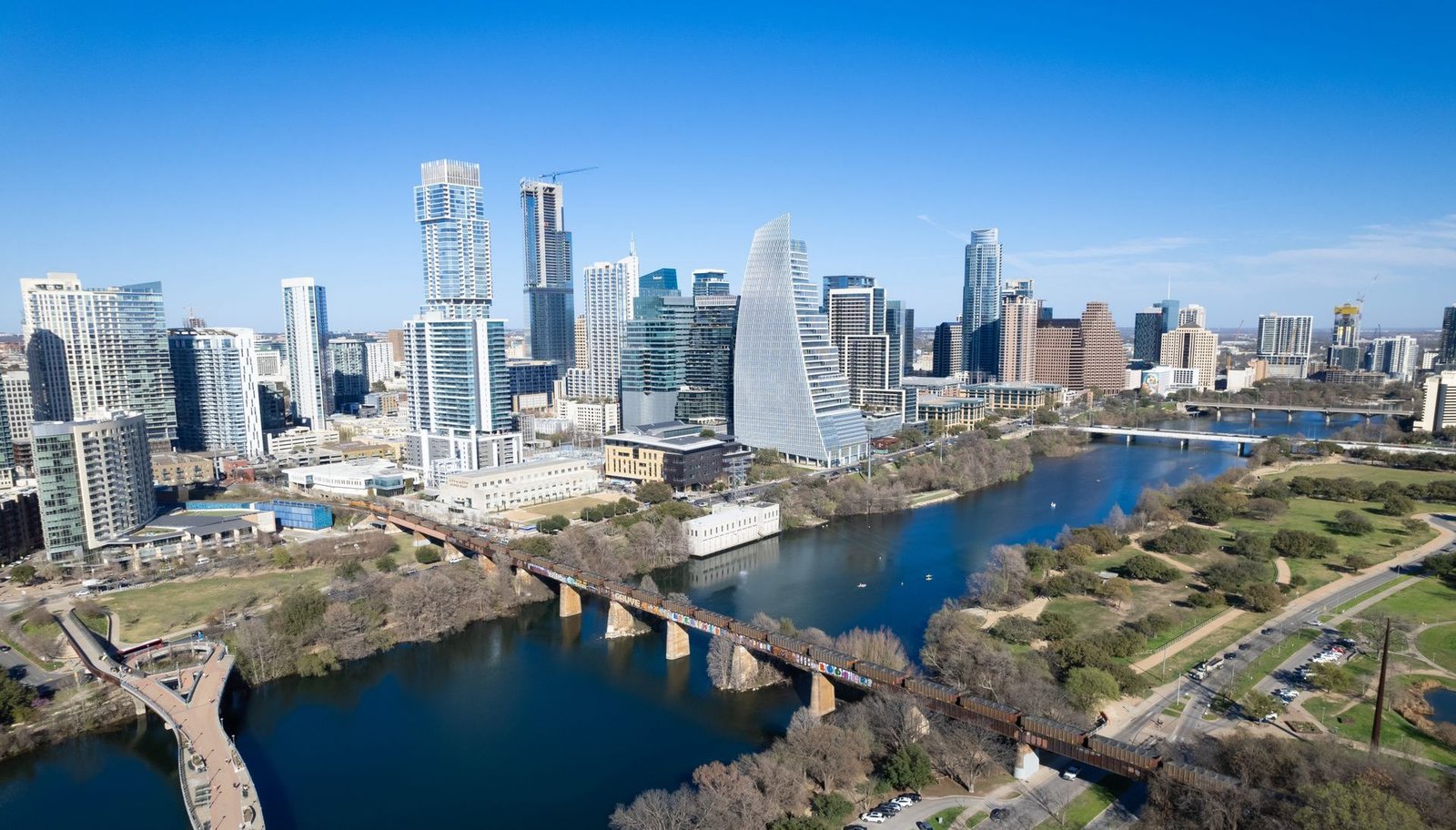
Austin, Texas, is one of those rare cities that defies easy categorization. It is simultaneously a thriving tech hub, a college town, a political capital, a foodie paradise, and the self-proclaimed Live Music Capital of the World. Nestled in the heart of the Texas Hill Country along the banks of the Colorado River, Austin has grown from a quiet government seat into one of the most dynamic and fastest-growing cities in the United States. Whether you are drawn by the promise of toe-tapping blues on Sixth Street, the serenity of Barton Springs Pool, or the sizzling aroma of slow-smoked brisket, Austin delivers experiences that are impossible to forget.
A Brief History
Austin was founded in 1839 and named after Stephen F. Austin, one of the founding fathers of the Republic of Texas. It was chosen as the capital of the newly formed republic largely for its central location and the natural beauty of its surroundings. The city grew steadily through the 19th and early 20th centuries, anchored by state government and the University of Texas at Austin, which was established in 1883.
The music scene began to take root in the 1960s and 1970s, when Austin became a gathering point for counterculture musicians and artists. Figures like Willie Nelson, Janis Joplin, and Stevie Ray Vaughan helped shape Austin’s identity as a city that marched to the beat of its own drum — literally and figuratively. The famous slogan “Keep Austin Weird,” born in the early 2000s, reflects the city’s long-standing embrace of individuality, creativity, and unconventional thinking.
In recent decades, Austin has experienced explosive growth fueled by the technology industry. Companies like Dell, Apple, Tesla, Oracle, and dozens of startups have established major presences here, drawing tens of thousands of workers and transforming the city’s skyline and economy. Yet despite the rapid change, Austin has worked hard to preserve its cultural soul.
Getting There and Getting Around
Austin-Bergstrom International Airport (AUS) serves the city with direct flights from most major U.S. cities and a growing number of international destinations. The airport has undergone significant expansion to accommodate the city’s booming population, and travelers will find it modern, efficient, and relatively easy to navigate.
Once in the city, getting around requires a bit of planning. Austin is car-centric, and having a rental car or using rideshare apps like Uber and Lyft is often the most practical option for visitors. However, the city has been steadily expanding its public transit options. Capital Metro operates bus and rail services, and the MetroRapid lines offer faster connections along key corridors. The city has also invested in bicycle infrastructure, and services like Bird and Lime offer electric scooter rentals throughout central Austin.
Downtown Austin and its surrounding neighborhoods — including South Congress, East Austin, and South Lamar — are walkable once you arrive, making it easy to explore on foot.
When to Visit
Austin is a year-round destination, but timing your trip well can make a significant difference in your experience.
Spring (March through May) is arguably the best time to visit. The weather is warm but not yet brutal, wildflowers bloom across the Hill Country, and the city comes alive with events. March brings the legendary South by Southwest (SXSW) festival, which transforms Austin into a global gathering point for music, film, technology, and ideas. If you plan to visit during SXSW, book accommodations many months in advance.
Summer (June through August) is hot — genuinely hot, with temperatures routinely climbing above 100 degrees Fahrenheit. But Austinites embrace it, flocking to the city’s famous swimming holes and outdoor spaces. If you can handle the heat, summer has its own magic.
Fall (September through November) brings relief from the heat and a packed calendar of events, including the Austin City Limits Music Festival, held over two weekends in October at Zilker Park. This is one of the most beloved music festivals in the country and draws hundreds of thousands of attendees.
Winter (December through February) is mild by most standards, with temperatures often in the 50s and 60s. It is a quieter time to visit, ideal for those who want to explore the city without crowds.
Music: The Heartbeat of Austin
No trip to Austin is complete without immersing yourself in its legendary music scene. The city boasts more live music venues per capita than any other place in the United States, and the sounds spill out from bars, restaurants, rooftops, and street corners on any given night of the week.
Sixth Street is the most iconic music corridor in Austin. The strip runs through downtown and splits into two distinct experiences: Lower Sixth, also known as “Dirty Sixth,” is the raucous, neon-lit bar scene where cover bands and touring acts play to enthusiastic crowds; and East Sixth, which has evolved into a more eclectic stretch of craft cocktail bars and independent music venues with a cooler, more local vibe.
The Rainey Street Historic District offers another dimension of Austin nightlife. Originally a residential neighborhood of bungalow homes, it has been transformed into a street of bars and restaurants that manage to maintain a neighborhood feel even as they attract large crowds.
For a deeper dive into Austin’s musical heritage, visit the Austin City Limits Live at the Moody Center, a premier concert venue, or catch a taping of the legendary Austin City Limits television program at KLRU, the nation’s longest-running music television series.
The Continental Club on South Congress Avenue has been a cornerstone of Austin’s music scene since 1957. It is the kind of place where you can walk in on a Tuesday night and catch extraordinary talent in an intimate setting. Other beloved venues include Stubb’s Amphitheater, an outdoor stage and legendary BBQ joint, the historic Paramount Theatre, and the Antone’s Nightclub, long considered the home of Austin blues.
Genres are wonderfully mixed here. On any given night, you might stumble from a honky-tonk playing classic country into a jazz club, then into a venue featuring indie rock or conjunto music. Austin’s music scene is genuinely democratic and joyfully unpredictable.
Food and Drink: A Culinary Capital
Austin’s food scene has grown into one of the most exciting in the country, built on a foundation of legendary barbecue and expanded by a wave of innovative chefs, food truck culture, and global influences.
Barbecue is, of course, the cornerstone. Franklin Barbecue on East 11th Street has become internationally famous — the line begins forming hours before the doors open at 11 a.m., and the restaurant frequently sells out by early afternoon. The brisket here is widely considered among the finest in the world: deeply smoky, tender, and rich with fat and flavor. La Barbecue, Micklethwait Craft Meats, and Interstellar BBQ are other exceptional options that locals love.
But Austin’s food culture extends far beyond smoked meat. The city’s food truck scene is legendary, with clusters of trailers parked at dedicated lots across the city. South Congress and East César Chávez are particularly rich hunting grounds for food trucks serving everything from Vietnamese banh mi to Korean tacos to artisanal doughnuts.
Tex-Mex is a way of life in Austin. Restaurants like Matt’s El Rancho, Güero’s Taco Bar, and Veracruz All Natural serve the kind of hearty, flavorful food that Texans have built cultural rituals around. Breakfast tacos, in particular, are a beloved Austin institution — a warm flour tortilla filled with scrambled eggs, bacon or chorizo, cheese, and salsa is the definitive Austin morning meal.
The restaurant scene has also attracted national and international attention for its fine dining. Uchi, a Japanese restaurant founded by chef Tyson Cole, has earned national acclaim and spawned a small empire of acclaimed restaurants. Comedor, focused on elevated Mexican cuisine, and Emmer & Rye, which mills its own grains and uses a hyper-seasonal approach to menu creation, are among the many restaurants that have placed Austin firmly on the culinary map.
The craft beer and cocktail scene is equally impressive. Austin has dozens of local breweries, including Jester King, located on a farm outside the city and renowned for its farmhouse ales and wild fermentation, and Austin Beerworks, known for its approachable and well-crafted beers. The cocktail bar scene is sophisticated and inventive, with bartenders who take their craft as seriously as any chef.
Outdoor Life and Natural Beauty
Despite being a major city, Austin has an extraordinary relationship with the outdoors. The city is criss-crossed by trails, parks, and bodies of water that invite residents and visitors to spend time outside year-round.
Barton Springs Pool is perhaps the most beloved outdoor destination in Austin. Fed by underground springs, this three-acre natural swimming pool maintains a temperature of around 68 degrees Fahrenheit throughout the year, making it refreshing in summer and surprisingly comfortable even in winter. It sits within the larger Zilker Metropolitan Park, a 351-acre green space along the Colorado River that also contains the Botanical Garden, the Austin Nature and Science Center, and vast open lawns perfect for picnicking and kite flying.
The Barton Creek Greenbelt is a treasure for hikers, swimmers, and climbers. This 809-acre natural area follows Barton Creek through a series of limestone canyons, swimming holes, and trails. It is a remarkable piece of wilderness accessible from the heart of the city and beloved by locals as a place to escape the heat.
Lady Bird Lake — actually a reservoir on the Colorado River — sits at the center of the city and is ringed by the popular Ann and Roy Butler Hike-and-Bike Trail, a 10-mile path that is one of the most used recreational trails in Texas. Kayaking, stand-up paddleboarding, and canoeing are popular on the lake, and the surrounding parkland is beautiful at any time of year.
For those willing to venture beyond the city limits, the Texas Hill Country awaits within an hour’s drive. This landscape of rolling limestone hills, crystal-clear rivers, wildflower meadows, and charming small towns is one of the most beautiful regions in Texas. Hamilton Pool Preserve, with its stunning natural grotto and waterfall, is a must-visit, though it requires advance reservations. The towns of Fredericksburg, Wimberley, and Marble Falls each offer their own character, wineries, and natural attractions.
Arts, Culture, and Museums
Austin’s cultural life is rich and surprisingly deep for a city its size. The arts community ranges from world-class institutions to grassroots galleries and public murals that have become landmarks in their own right.
The Blanton Museum of Art on the University of Texas campus houses one of the largest university art collections in the United States, with particular strengths in Latin American art, European paintings, and modern American works. Admission is free on certain days, making it accessible to all visitors.
The Bullock Texas State History Museum is one of the finest state history museums in the country. Its collection traces the full story of Texas from prehistoric times through the present day, and the museum includes an IMAX theater and rotating special exhibitions.
The Harry Ransom Center, also on the UT campus, is a remarkable humanities research library and museum with collections that include one of the earliest copies of the Gutenberg Bible, original manuscripts from authors like Ernest Hemingway and James Joyce, and an extraordinary photography archive.
For contemporary and cutting-edge art, the Blanton is complemented by a vibrant network of independent galleries concentrated in East Austin and the Second Street District. The Austin Museum of Art and various alternative art spaces host rotating exhibitions that reflect the city’s experimental spirit.
Public art is woven into Austin’s urban fabric. The “I Love You So Much” mural on South Congress Avenue is one of the most photographed spots in the city. The murals along East César Chávez Avenue celebrate Mexican American heritage and political history. And Graffiti Park, also known as Castle Hill or HOPE Outdoor Gallery, was a beloved institution for street art and urban expression before its location changed — its spirit lives on in new spaces around the city.
Neighborhoods Worth Exploring
South Congress Avenue, affectionately known as SoCo, is one of Austin’s most distinctive corridors. Lined with vintage boutiques, independent restaurants, music venues, and iconic storefronts, it captures the eclectic spirit that Austin has worked hard to preserve. The Hotel San José, a mid-century motel transformed into a design-forward boutique hotel, anchors the strip and is a destination in itself.
East Austin was once a predominantly working-class and Latino neighborhood that has been dramatically transformed by gentrification over the past two decades. Today it is one of the city’s most vibrant areas, with a dense concentration of bars, restaurants, coffee shops, and music venues. The neighborhood retains pockets of its original character, and the tension between old and new Austin is palpable and worth reflecting on.
South Lamar is a neighborhood of local businesses, independent cinemas, food trucks, and some of Austin’s most beloved institutions, including the Alamo Drafthouse Cinema, which was founded in Austin and revolutionized the moviegoing experience by combining food and drink service with a strict no-talking, no-phones policy.
The Domain, in North Austin, is a master-planned mixed-use development that functions as a second downtown of sorts. It is home to high-end retail, restaurants, hotels, and the headquarters of several major tech companies. It offers a different, more polished face of modern Austin.
Family-Friendly Attractions
Austin is an excellent destination for families with children. In addition to the natural attractions already mentioned, the city offers several standout family destinations.
The Austin Zoo, located southwest of downtown, is a rescue zoo that provides a home for animals that cannot survive in the wild. It is smaller and more intimate than traditional zoos, and children particularly enjoy the close encounters it allows.
The Thinkery is Austin’s children’s museum, designed to inspire curiosity and hands-on learning through interactive exhibits focused on science, technology, engineering, art, and mathematics. It is an ideal rainy day destination for families with young children.
Barton Creek Farmers Market, held on Saturdays at the Barton Creek Square parking area, is a wonderful family outing that introduces children to local producers, artisan foods, and the culture of farm-to-table eating that Austin champions.
Practical Tips for Visitors
Wear comfortable shoes. Austin is a walking and outdoor city, and you will cover significant ground whether you are strolling South Congress, hiking the Greenbelt, or navigating a music festival.
Stay hydrated. The Texas heat is not to be underestimated, particularly from June through September. Carry water everywhere and seek shade regularly.
Book accommodations and restaurants well in advance, especially during SXSW, Austin City Limits Music Festival, Formula One weekend at Circuit of the Americas (held in November), and University of Texas football season.
Cash is still king at many food trucks and smaller music venues, so it is useful to carry some on hand even in an increasingly cashless world.
Respect the music culture. Tipping musicians performing live is a deeply ingrained Austin tradition. Even free shows at bars are supported by the generosity of audiences who appreciate the talent on stage.
Finally, embrace spontaneity. Some of the best Austin experiences happen when you follow your nose down an unfamiliar street, duck into a bar because the music sounds good, or strike up a conversation with a stranger at a food truck. The city rewards curiosity.
Conclusion
Austin, Texas, is a city that has never stopped evolving, yet somehow never loses its essential character. It is a place where world-class barbecue is eaten on picnic tables under pecan trees, where software engineers share bar stools with musicians and poets, where the natural beauty of the Hill Country begins just beyond the city limits, and where the music never really stops. It is a city that takes its pleasures seriously — its food, its sound, its open spaces, its creative freedom — and invites visitors to do the same. Whatever brings you to Austin, you are likely to leave already planning your return.
Leave a Reply
You must be logged in to post a comment.